Is Your Tap Water Secretly Alkaline? A BTB Experiment That Will Surprise You
I’m Ken Kuwako, the Science Trainer. Every day is an experiment.
“What color does BTB solution turn when you add it to tap water?”
Many people would probably guess, “It’s drinking water, so it must be neutral… which means green, right?”
Surprisingly, the real answer is quite different. Take a look.
Wait… Tap Water Isn’t Neutral?
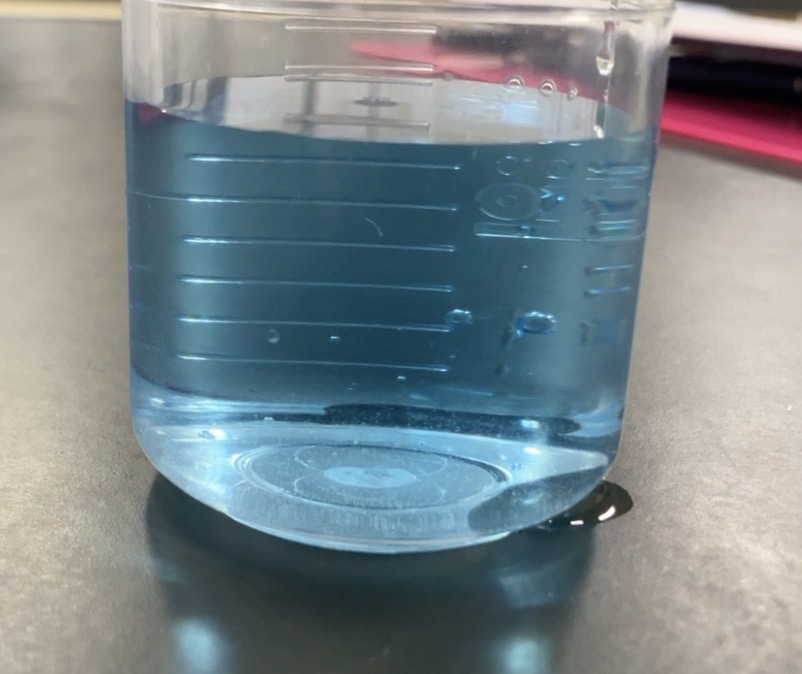
It’s blue!
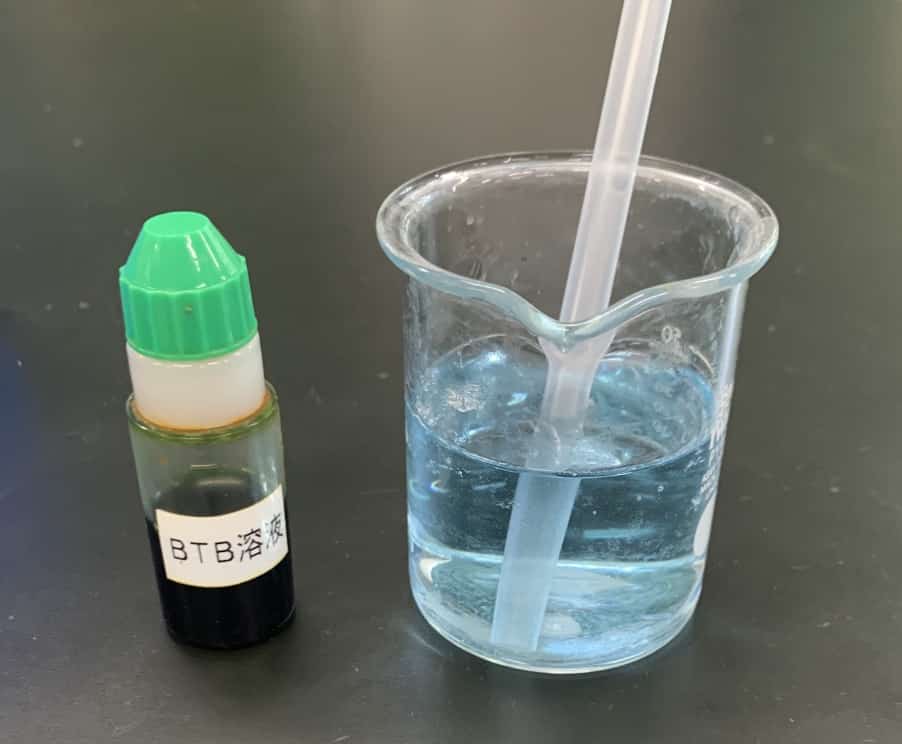
The BTB solution turns blue. This result comes from testing tap water in Chiba Prefecture.
If you’re thinking, “Shouldn’t tap water be neutral?” there’s an interesting piece of chemistry behind the answer.
Tap water is generally close to neutral, but it is often slightly alkaline rather than exactly pH 7. There are two main reasons for this.
First, tap water is disinfected with chlorine-based chemicals (mainly sodium hypochlorite), which tend to make the water slightly more alkaline.
Second, drinking water regulations allow the pH to range from 5.8 to 8.6, meaning it doesn’t have to be exactly neutral. Since BTB solution appears green around pH 6.0–7.6, water that’s only a little above pH 7 can already start looking bluish.
From the Tokyo Metropolitan Government Bureau of Waterworks:
Question: What does the pH of tap water mean?
Answer: pH indicates how acidic or alkaline water is. The scale runs from 0 to 14, with pH 7 being neutral. Lower values are more acidic, while higher values are more alkaline.
Japan’s drinking water standard requires tap water to remain between pH 5.8 and 8.6 to help prevent corrosion in water supply facilities. Tokyo’s tap water typically has a pH of around 7.5, making it close to neutral.
From the Chiba Prefectural Government:
Because lead is less likely to dissolve in alkaline water, Chiba Prefecture has adjusted tap water to be slightly alkaline throughout its water supply system since April 2002.
https://www.pref.chiba.lg.jp/suidou/kyuusui/namari/03qa.html
I also tested the water in my laboratory, and it turned blue as well.
That said, tap water isn’t guaranteed to be alkaline everywhere in Japan.
Although sodium hypochlorite used for disinfection tends to raise the pH, the final value also depends on the original water source—such as rivers, reservoirs, groundwater—as well as local geology and dissolved minerals.
As a result, some regions have water that’s almost perfectly neutral, while others may even be very slightly acidic. So it’s more accurate to say that disinfection generally pushes tap water toward the alkaline side.
Blow Into It… and Watch the Color Change!
Now for the fun part.
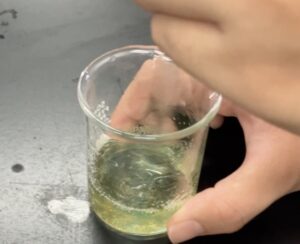
Take the blue tap water and slowly blow into it through a straw. As you do, the color gradually changes from blue → green → yellow.
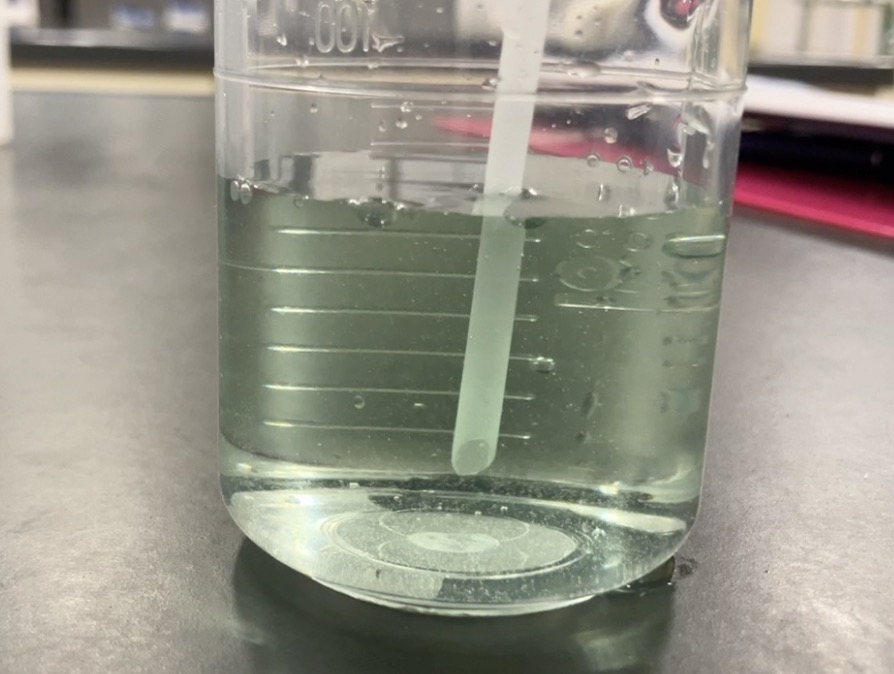
Watch the experiment here.
Comparing the water before and after makes the difference unmistakable.
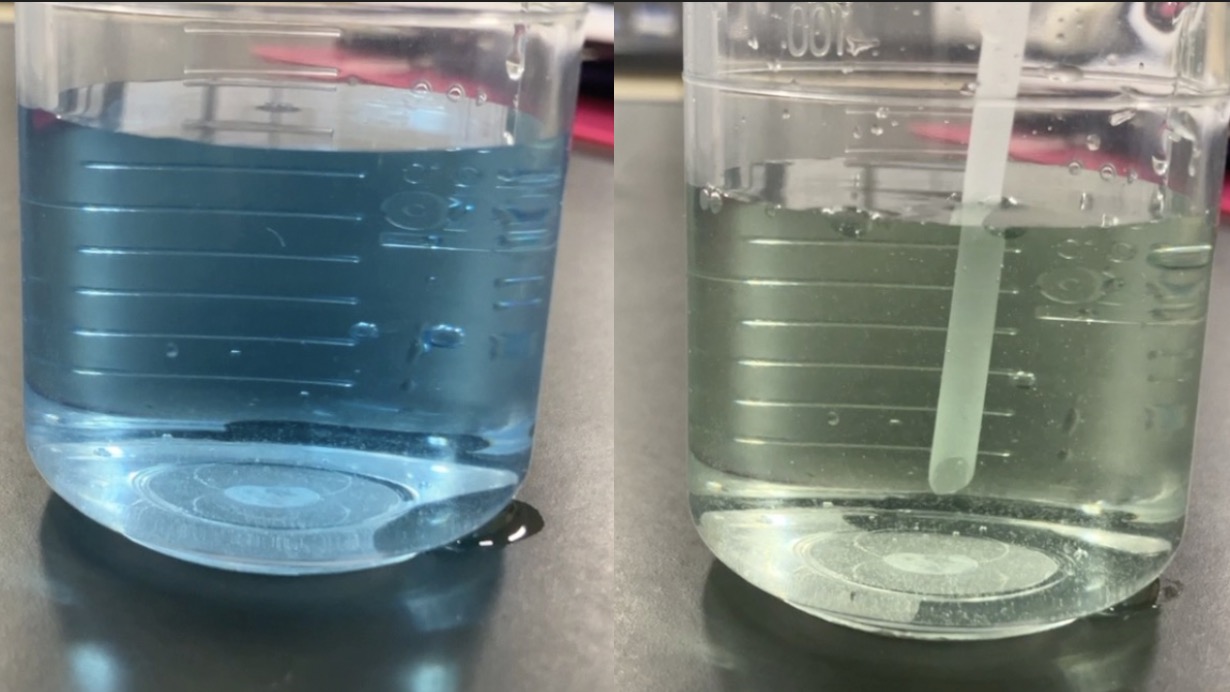
This happens because the carbon dioxide in your breath dissolves into the water, forming carbonic acid. As more carbon dioxide dissolves, the water gradually becomes more acidic.
Interestingly, this is exactly the same process behind one of today’s major environmental issues: ocean acidification. Carbon dioxide from the atmosphere dissolves into seawater, slowly lowering the ocean’s pH.
It’s amazing to think that the tiny color change happening in a glass of water is driven by the very same chemistry affecting our entire planet.
Does Adding Chlorine Make Water Acidic? Clearing Up a Common Misunderstanding
Several readers asked an excellent question:
“Doesn’t adding chlorine make water acidic?”
The answer is a little more nuanced.
Chlorine gas (Cl2) does make water acidic when dissolved, but modern water treatment plants generally use sodium hypochlorite instead. Because sodium hypochlorite is the salt of a weak acid and a strong base, its solution is actually alkaline.
Even though both substances contain chlorine, their chemical behavior is completely different.
Chemistry textbooks often describe the reaction between chlorine gas and water:
Cl2 + H2O ⇌ HClO + HCl
Since this reaction produces two acids—hypochlorous acid (HClO) and hydrochloric acid (HCl)—chlorine gas does indeed make water acidic.
Many older water treatment plants once injected liquefied chlorine gas directly into the water, so this explanation may be familiar from older textbooks.
Today, however, most treatment plants in Chiba Prefecture and many other regions use sodium hypochlorite (NaClO), a liquid disinfectant instead of chlorine gas.
Sodium hypochlorite is the salt formed from a weak acid (HClO) and a strong base (NaOH). When dissolved in water, it undergoes hydrolysis, producing hydroxide ions (OH⁻), which makes the solution alkaline.
ClO⁻ + H2O ⇌ HClO + OH⁻
As a result, adding sodium hypochlorite raises the pH rather than lowering it.
It’s a wonderful example of chemistry: two chemicals made from the same element can produce completely opposite effects simply because they exist in different chemical forms.
Contact & Collaboration
Science is full of surprises, and it’s even more exciting when you can experience it yourself!
On this site, you’ll find easy and enjoyable science experiments that you can try at home, along with clear explanations of the science behind them.
Feel free to explore!
・My book based on Science Notebook is available here.
・Learn more about me here.
・For writing, lectures, science workshops, TV supervision, media appearances, and other collaboration requests, click here.
・Follow me on X for the latest article updates!
 Science Notebook Channel features experiment videos you can enjoy anytime!
9月のイチオシ実験!
お弁当箱をプラバンがわりにしてキーホルダーを作ろう!
テレビ番組監修・イベント等のお知らせ
- 8月27日(木)科学監修番組放送予定
- 9月20日(日)ダビンチマスターズ出演予定
- 10月10日(土)11:15~12:00 千葉市科学フェスタ2026「桑子先生の回転科学ショー」にてサイエンスショーを行います。
- 12月26日(土) ナリカサイエンスアカデミー(教員向け実験講習会)開催
書籍のお知らせ
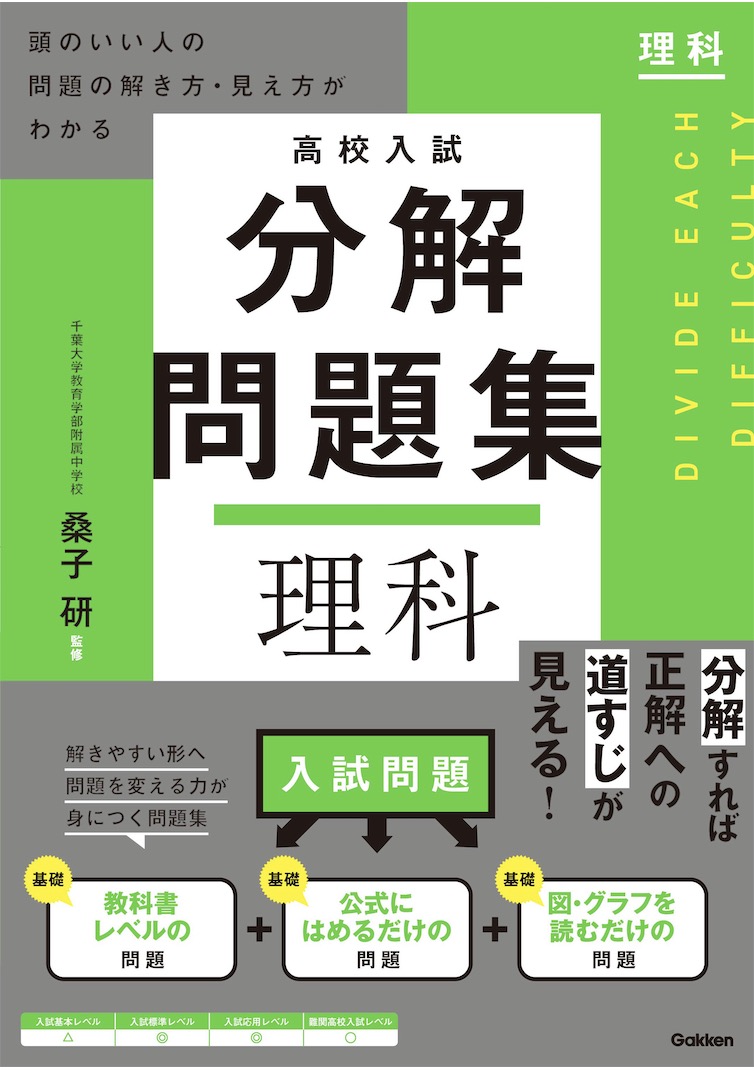
- 『高校入試 分解問題集 理科』(学研)…難しい問題も小さな問題に分解することで、問題を解くことができます。そんな分解の技術が身につくように深く関わりを持って作りました。
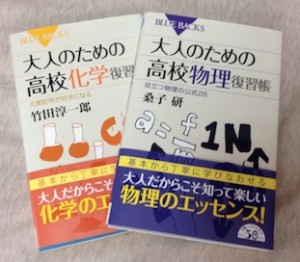
 『大人のための高校物理復習帳』(講談社)…一般向けに日常の物理について公式を元に紐解きました。特設サイトでは実験を多数紹介しています。※増刷がかかり6刷となりました(2026/02/01)
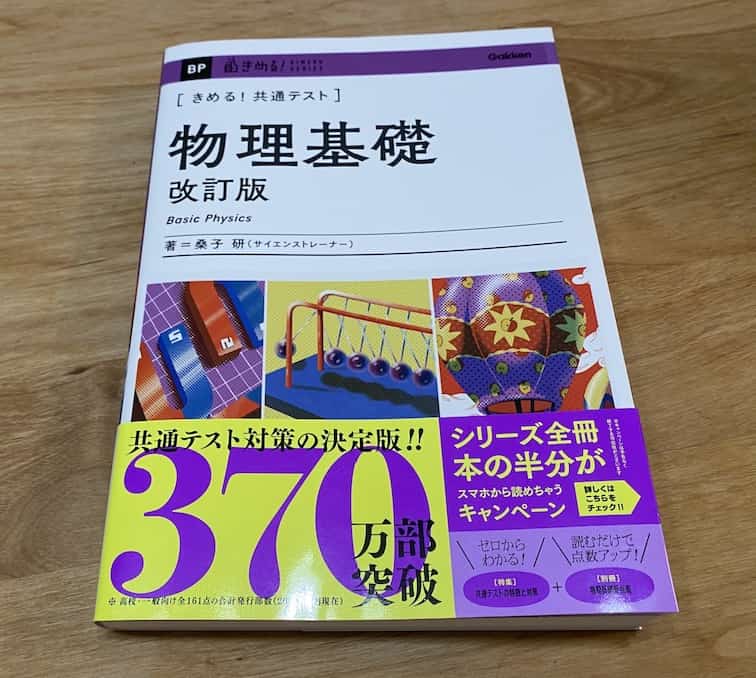
- 『きめる!共通テスト 物理基礎 改訂版』(学研)… 高校物理の参考書です。イラストを多くしてイメージが持てるように描きました。授業についていけない、物理が苦手、そんな生徒におすすめです。特設サイトはこちら。
各種SNS(更新情報をお届け!)
【日本語】X(Twitter)/instagram/Facebook 【英語】BlueSky/Threads
Explore
- 楽しい実験…お子さんと一緒に夢中になれるイチオシの科学実験を多数紹介しています。また、高校物理の理解を深めるための動画教材も用意しました。
- 理科の教材… 理科教師をバックアップ!授業の質を高め、準備を効率化するための選りすぐりの教材を紹介しています。
- Youtube…科学実験等の動画を配信しています。
- 科学ラジオ …科学トピックをほぼ毎日配信中!AI技術を駆使して作成した「耳で楽しむ科学」をお届けします。
- 講演 …全国各地で実験講習会・サイエンスショー等を行っています。
- About …「科学のネタ帳」のコンセプトや、運営者である桑子研のプロフィール・想いをまとめています。
- お問い合わせ …実験教室のご依頼、執筆・講演の相談、科学監修等はこちらのフォームからお寄せください。