See Light Bend Through the Sports Day Whirlwind! The Amazing Mystery of Total Internal Reflection (Huygens’ Principle
This is Kuwako Lab, your science trainer. Every day is an experiment.
“Sensei, why doesn’t total internal reflection happen when light goes from air into water?”
One day, I found this question scribbled in the corner of a student’s notebook. It looks simple at first glance, but it actually opens the door to a surprisingly deep mystery about light. Let’s use this question as a starting point to explore one of the coolest behaviors in physics.
From Air to Water, From Water to Air — How Does Light Change Direction?
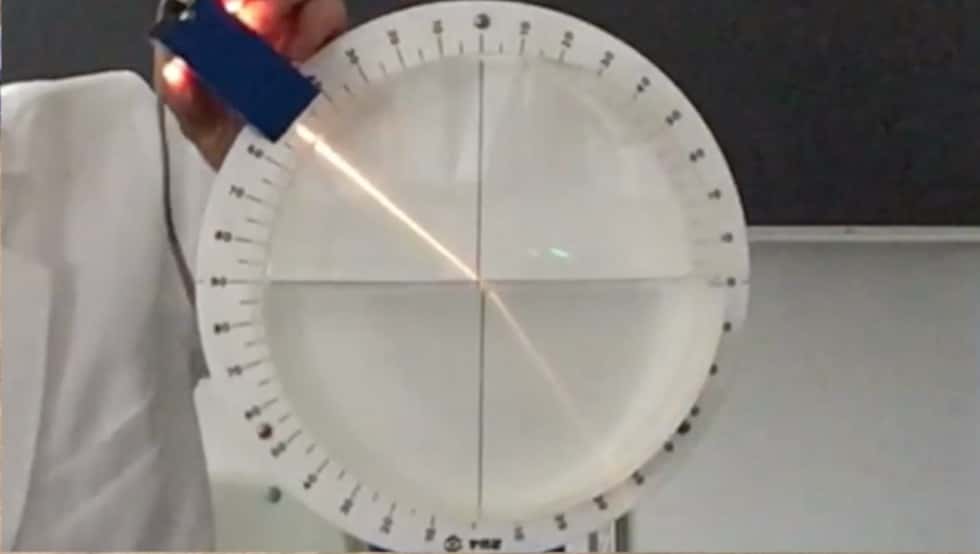
When light travels from air into water, both reflection and refraction occur at the same time, and no matter the angle, some of the light always enters the water.
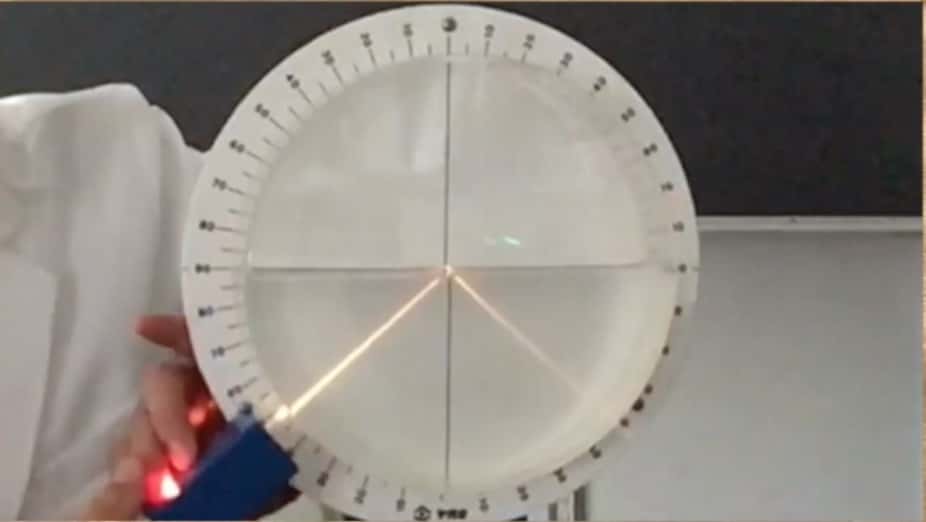
But things change when light tries to go from water back into air. Once the angle becomes larger than a certain value, called the critical angle, the light can no longer escape the water at all. Instead, it reflects completely inside the water.
That phenomenon is called “total internal reflection.”
So why can total internal reflection happen from water to air, but not from air to water?
In a way, this question reaches the level of “that’s simply how light behaves.” But there is actually a beautiful way to understand it using something called Huygens’ Principle.
Understanding Huygens’ Principle Through a Sports Day Game
Huygens’ Principle explains how waves move by imagining that every point on a wave creates tiny new waves of its own. It’s a standard concept in high school physics, but let’s explain it with a much more familiar example.
Imagine the classic Japanese sports festival event “Typhoon Eye,” where several students hold a long pole and race around a cone together.
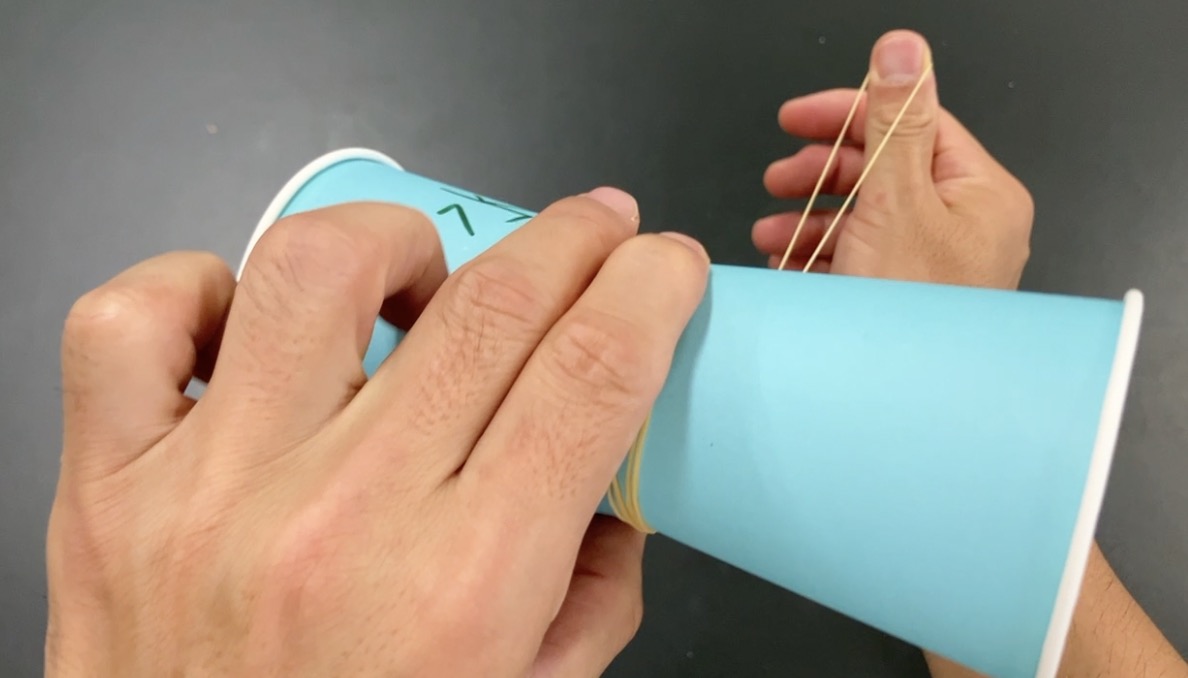
Now picture two people holding a pole while running. When they go around the cone, if the person on the inside slows down while the outside runner keeps the same speed, the pole naturally rotates.
In other words, when one side moves more slowly than the other, the whole object changes direction instead of moving straight ahead.
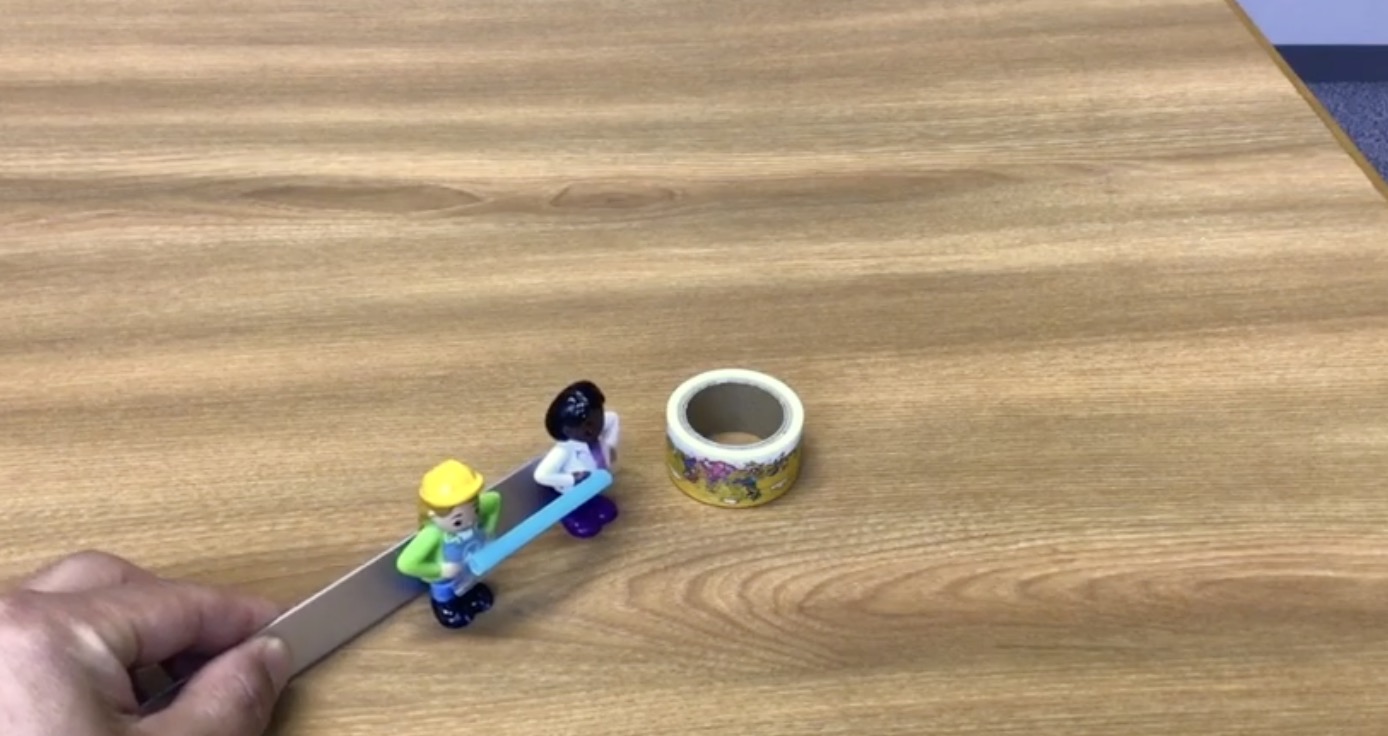
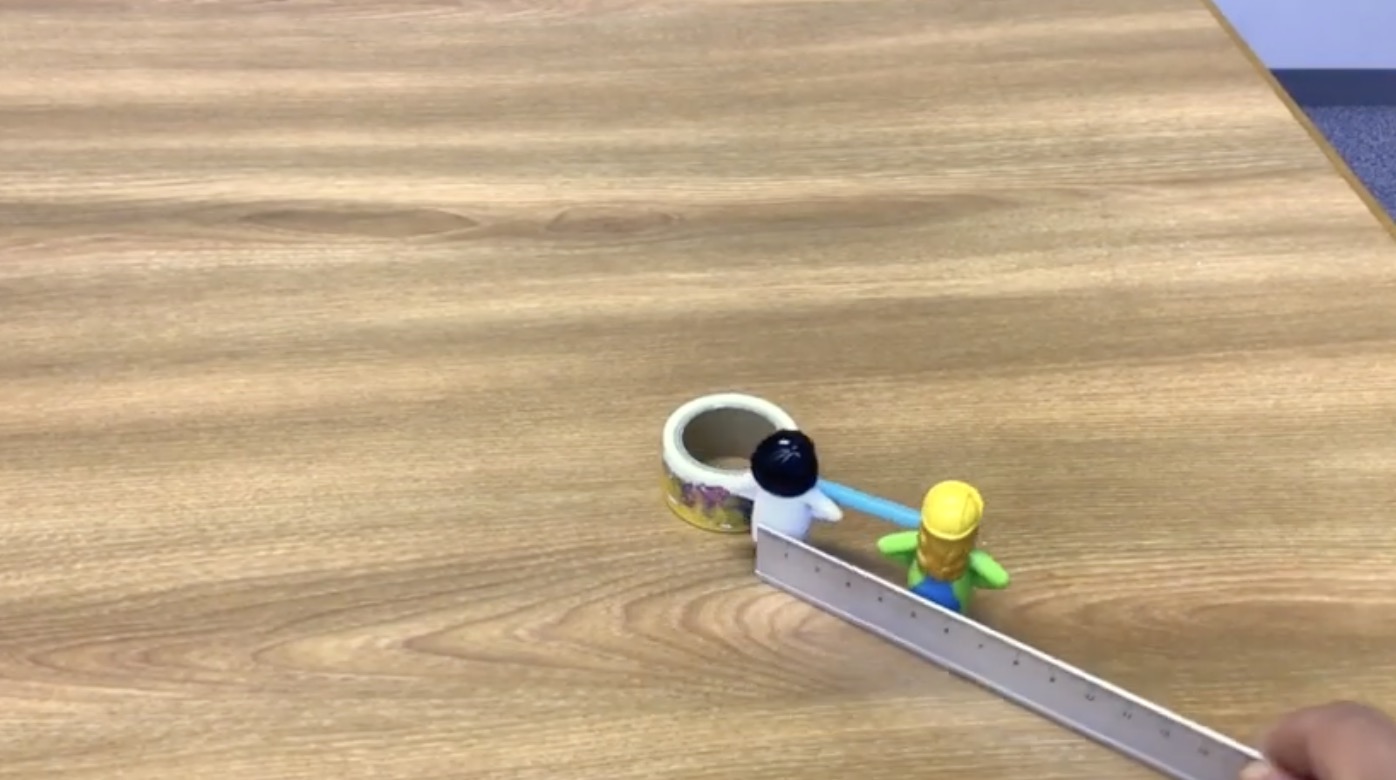
Light behaves in almost exactly the same way.
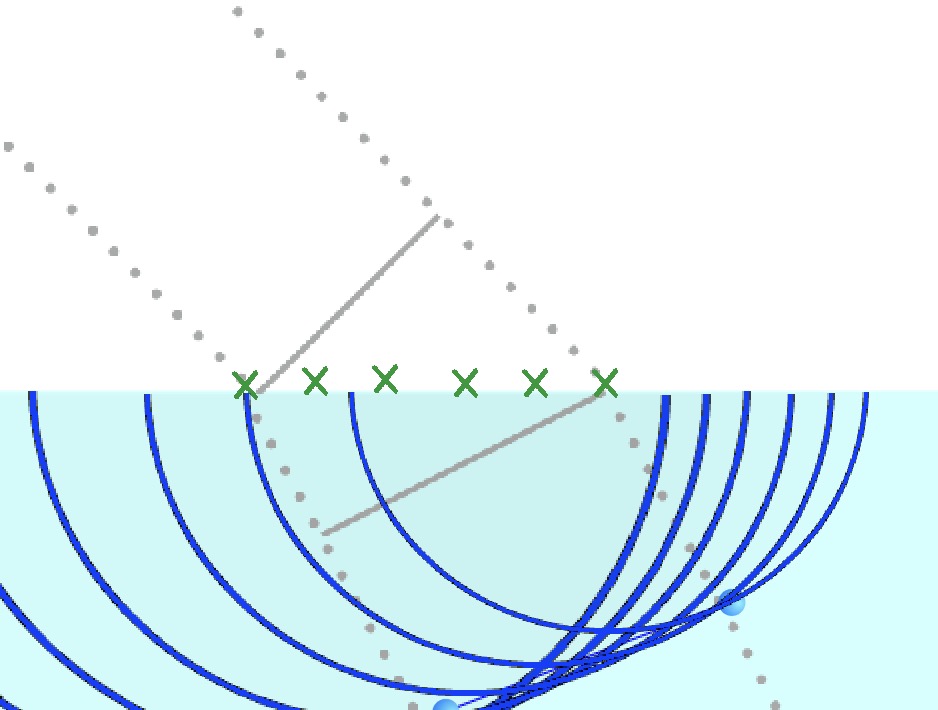
In a single medium like air, light travels straight ahead, perpendicular to its wavefront.
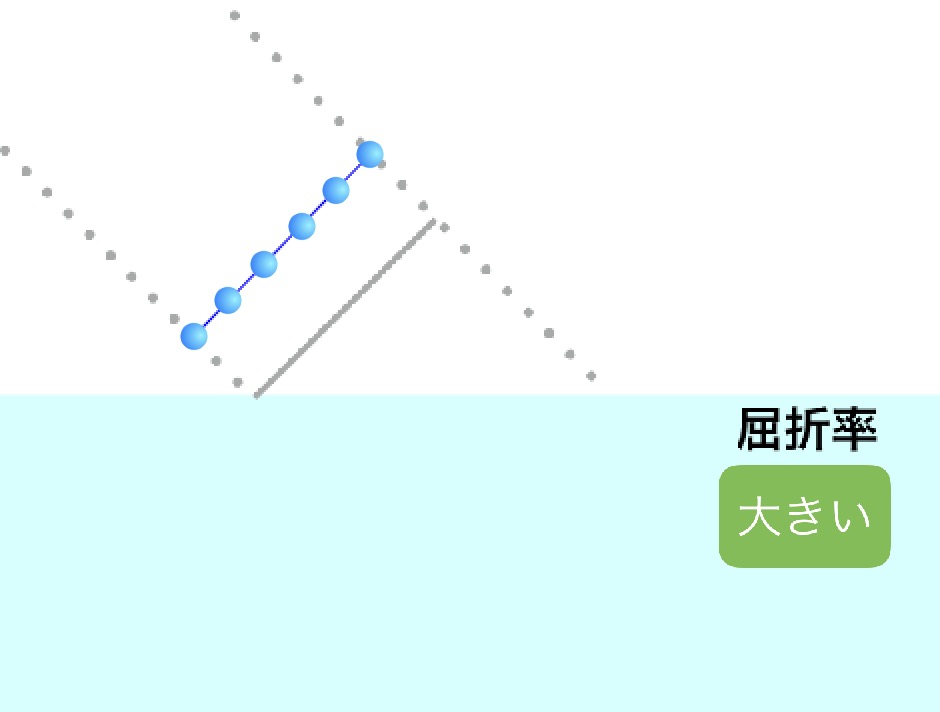
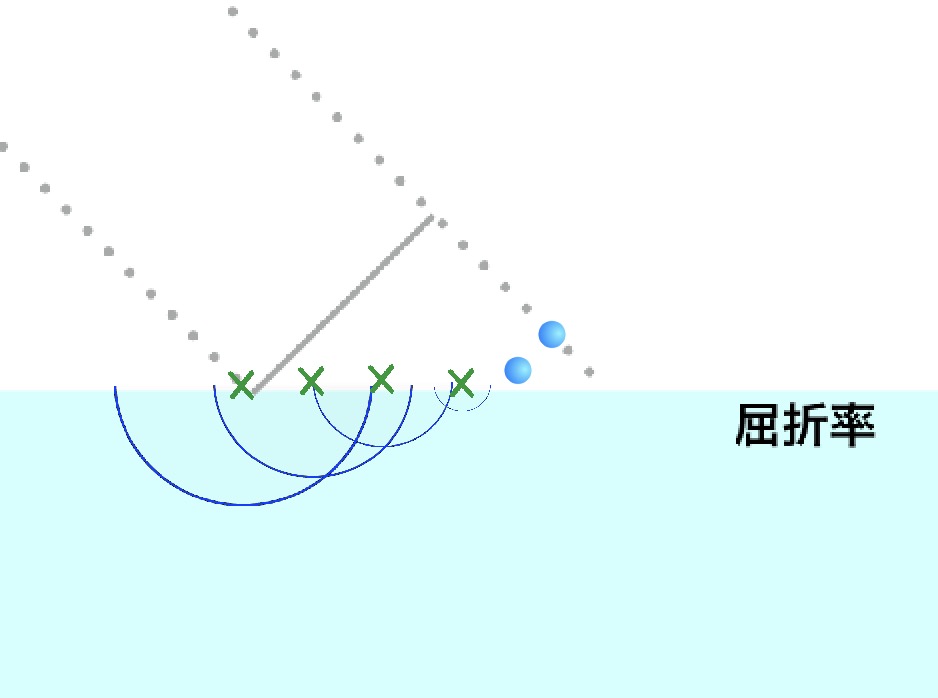
But when part of the wavefront enters water, that portion slows down. Going back to the sports-day example, it’s like the inside runner suddenly reducing their speed.
As a result, the wavefront bends, and the direction of the light changes too.
That bending is exactly what we call refraction.
The Secret Behind Total Internal Reflection
Now let’s return to the original question.
When light moves from air into water, it slows down after entering the water. The wavefront bends toward the water side, and the light always continues into the water, no matter the angle.
That means total internal reflection can never happen in this direction.
But when light travels from water into air, the opposite happens: the light speeds up as it exits into the air.
The wavefront bends outward toward the air side. If the incoming angle becomes too large, the refracted light would need to bend beyond 90 degrees — essentially skimming along the surface and then trying to go even farther.
At that point, there is no physically possible direction for the light to escape.
So instead, all of the light reflects back inside the water.
That is total internal reflection.
In short:
Total internal reflection does not occur when light moves from a faster medium into a slower one.
It only occurs when light travels from a slower medium into a faster one.
That’s the fundamental reason why air → water never produces total internal reflection, while water → air can.
Try the Simulation Yourself
Some things are much easier to understand when you can actually see them move. I created a Scratch simulation so you can experiment with total internal reflection yourself.
Interestingly, total internal reflection isn’t just a classroom curiosity — it powers technology we use every day.
Optical fiber cables are one famous example. Light repeatedly reflects inside incredibly thin glass fibers, allowing information to travel long distances at high speed. The internet, medical endoscopes, and modern communications all rely on this phenomenon.
Pretty amazing when you realize that a tiny question in the corner of a student’s notebook connects directly to the technology behind the modern world.
Contact & Requests
Science becomes much more exciting when you can experience it for yourself! On this site, you’ll find plenty of fun science experiments you can try at home, along with easy-to-understand explanations and tips.
・The “Science Notebook” content is now available as a book. Learn more here.
・Learn more about Kuwako Lab here.
・For requests such as writing, lectures, science workshops, TV supervision, or appearances, click here.
・Follow updates on X!
 Science Note Channel features experiment videos!
10月のイチオシ実験!
テレビ番組監修・イベント等のお知らせ
- 10月27日(火) テレビ監修番組放送予定
- 11月27日(金) テレビ監修番組放送予定
- 12月26日(土) ナリカサイエンスアカデミー(教員向け実験講習会)開催
書籍のお知らせ
- 『高校入試 分解問題集 理科』(学研)…難しい問題も小さな問題に分解することで、問題を解くことができます。そんな分解の技術が身につくように深く関わりを持って作りました。
 『大人のための高校物理復習帳』(講談社)…一般向けに日常の物理について公式を元に紐解きました。特設サイトでは実験を多数紹介しています。※増刷がかかり6刷となりました(2026/02/01)
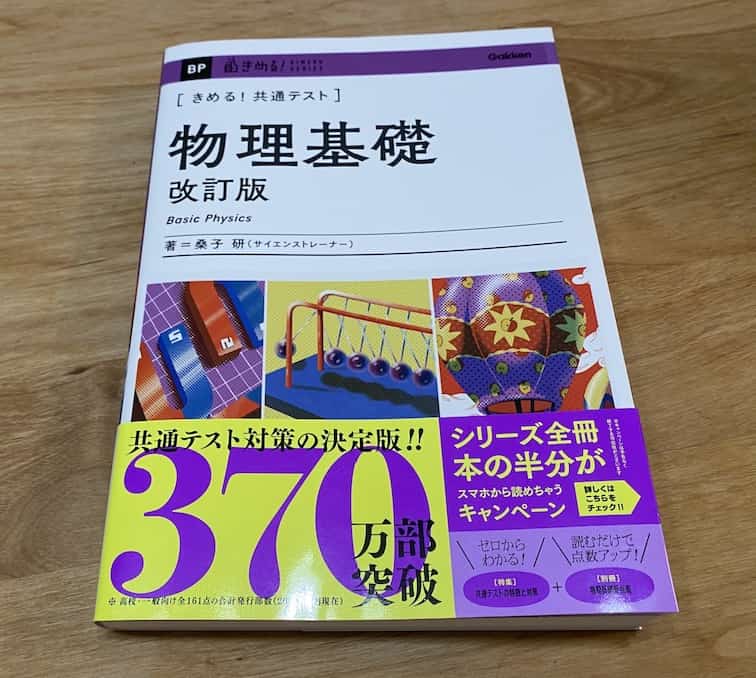
- 『きめる!共通テスト 物理基礎 改訂版』(学研)… 高校物理の参考書です。イラストを多くしてイメージが持てるように描きました。授業についていけない、物理が苦手、そんな生徒におすすめです。特設サイトはこちら。
各種SNS(更新情報をお届け!)
【日本語】X(Twitter)/instagram/Facebook 【英語】BlueSky/Threads
Explore
- 楽しい実験…お子さんと一緒に夢中になれるイチオシの科学実験を多数紹介しています。また、高校物理の理解を深めるための動画教材も用意しました。
- 理科の教材… 理科教師をバックアップ!授業の質を高め、準備を効率化するための選りすぐりの教材を紹介しています。
- Youtube…科学実験等の動画を配信しています。
- 科学ラジオ …科学トピックをほぼ毎日配信中!AI技術を駆使して作成した「耳で楽しむ科学」をお届けします。
- 講演 …全国各地で実験講習会・サイエンスショー等を行っています。
- About …「科学のネタ帳」のコンセプトや、運営者である桑子研のプロフィール・想いをまとめています。
- お問い合わせ …実験教室のご依頼、執筆・講演の相談、科学監修等はこちらのフォームからお寄せください。