One LED, Seven Colors? Master the “Primary Colors of Light” with This Palm-Sized Experiment!
I’m Ken Kuwako, your science trainer. Every day is an experiment!
Think about the dazzling light shows in the night sky or the smartphone screen you’re looking at right now. They are incredibly vibrant, but did you know that all those colors are created by combining just three simple colors? Today, I’d like to introduce a fascinating electronic component that lets you experience this “light magic” right in the palm of your hand.
A Magic Light Bulb? The “RGB LED” That Shines in Three Colors
I recently picked up some RGB LEDs, which pack three different types of light-emitting diodes into a single tiny package. While they look like ordinary LEDs at first glance, their most striking feature is the number of “legs”—they actually have four!
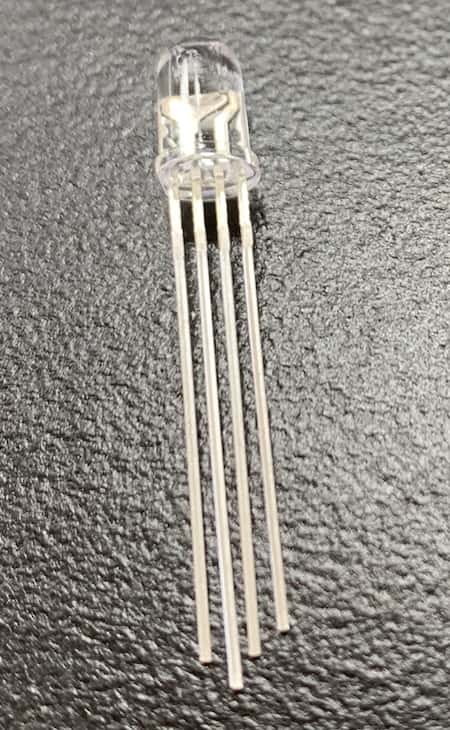
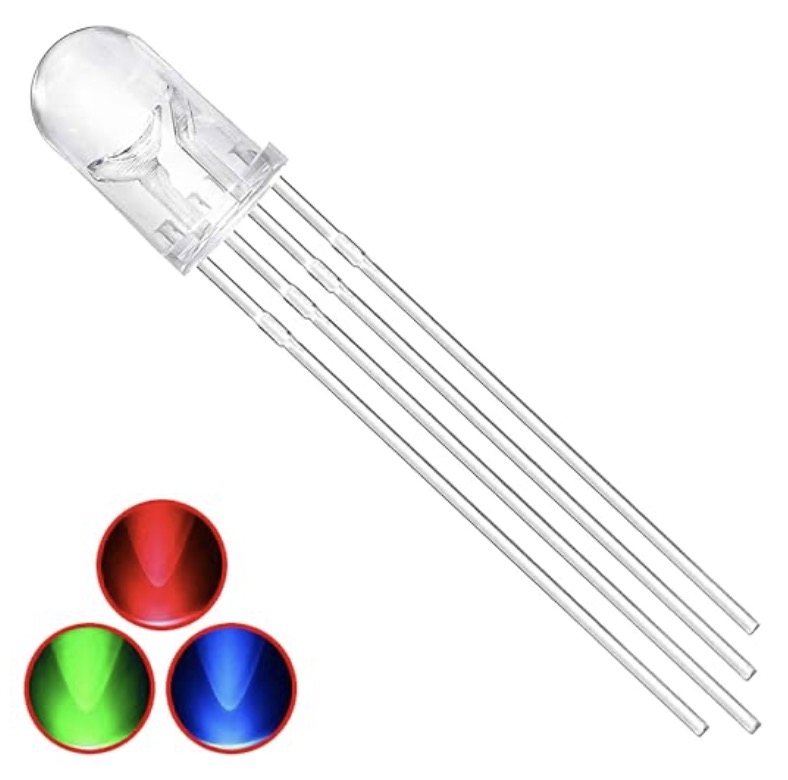
5mm RGB LED Common Cathode 4-Pin (Amazon)
The longest leg is the anode (positive terminal), while the other three legs are responsible for Red, Green, and Blue light. Let’s try lighting them up one by one using a 3V button battery.
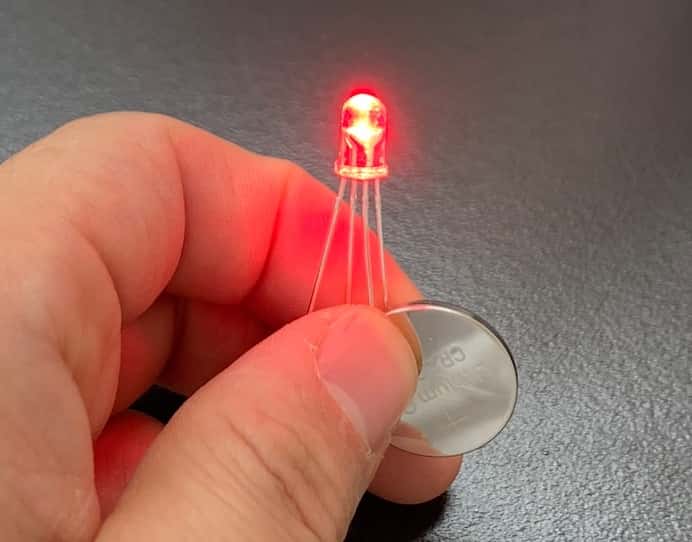
A passionate Red glow.
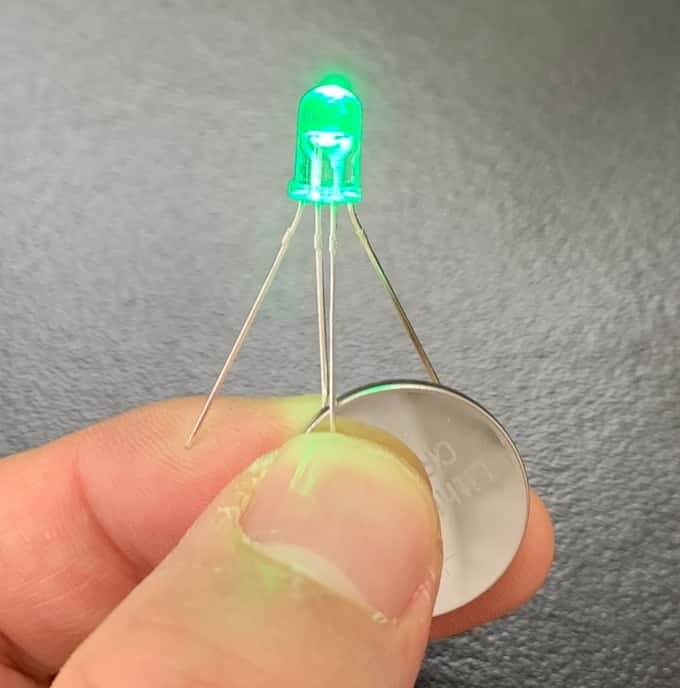
A very vivid Green light.
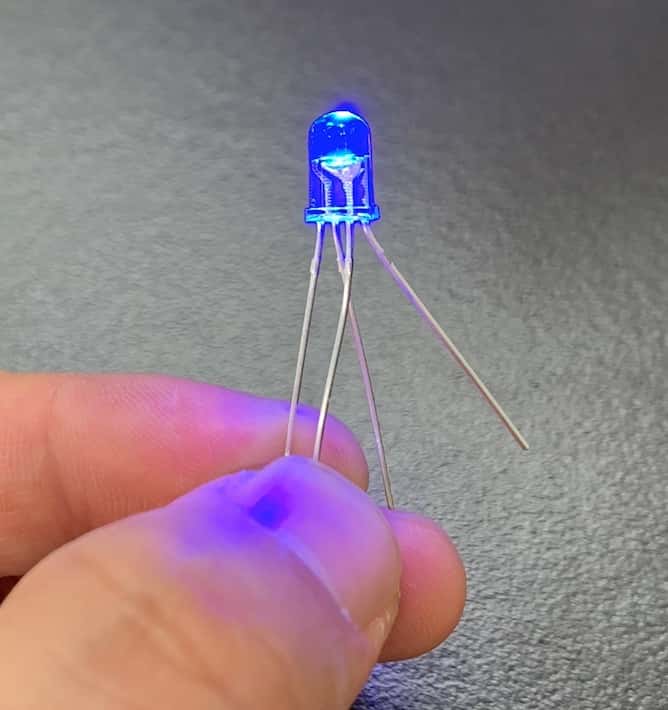
A deep, cool Blue hue.
These three are known as the “Three Primary Colors of Light.” By mixing them in different ways, we can recreate almost every color in the visible world.
The Mixing Experiment: Theory vs. Reality
I couldn’t wait to see what happened when I mixed them, so I started connecting multiple legs to the battery at once.
First, Green and Blue.
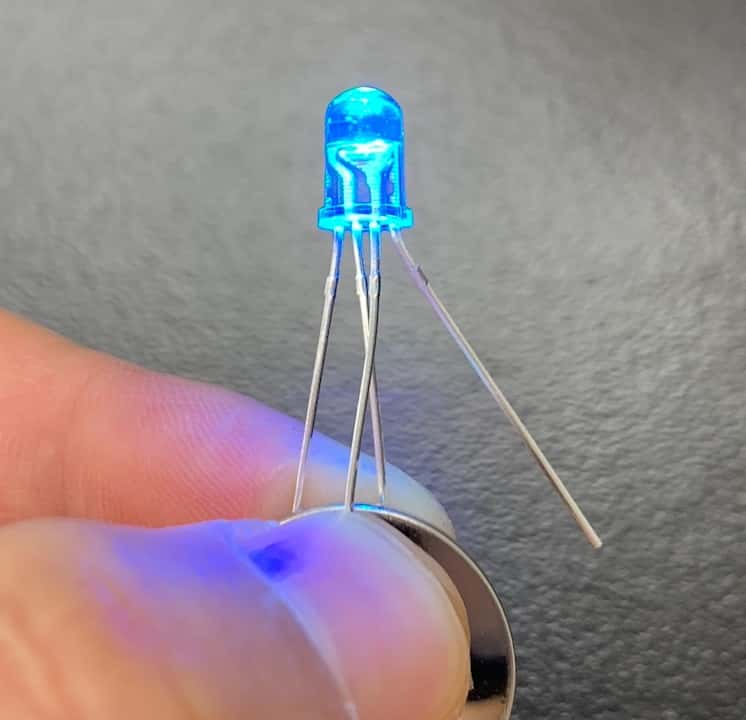
The overlap created a beautiful Cyan (light blue)!
Next, Red and Green. Theoretically, this should give us yellow, but…
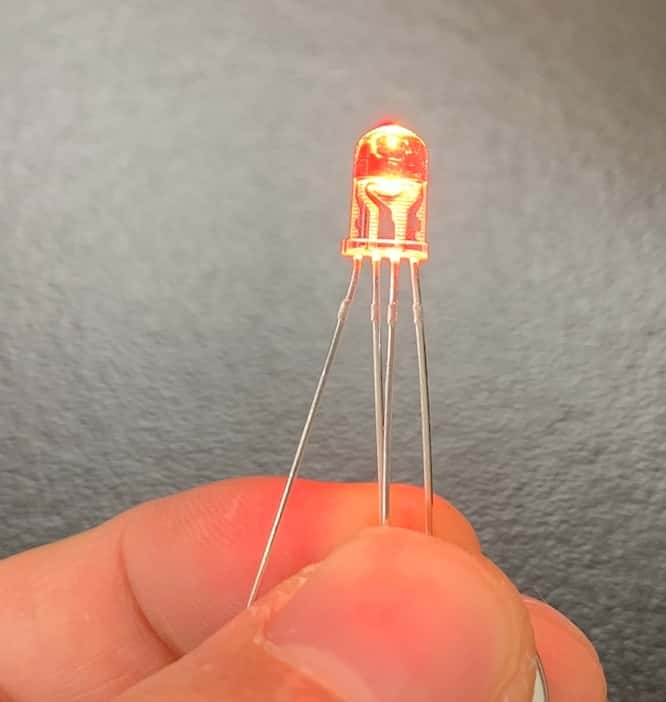
It looks more like a warm Orange than a pure yellow.
Finally, Blue and Red. I was expecting “Magenta (purple),” however…
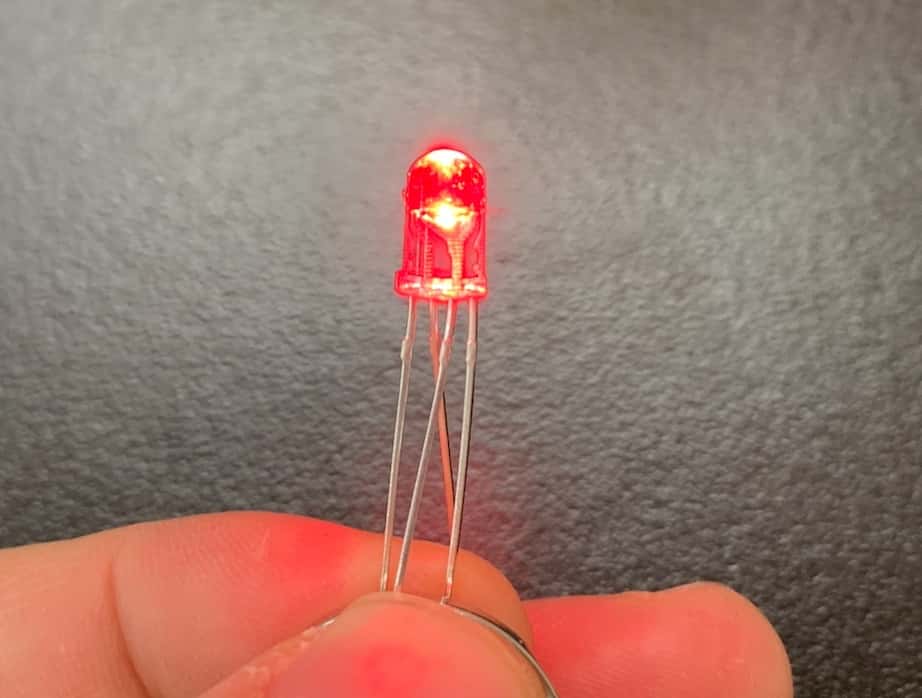
The Red completely dominated the mix! There’s hardly a trace of purple here.
Decoding the “Personality” of LEDs: Why the Color Imbalance?
Our experiment revealed an interesting challenge: “The Red is too strong.”
As it turns out, LEDs have different “forward voltages” (the voltage required to start glowing) depending on their color. Generally, Red LEDs are very efficient and glow brightly even at low voltages. In contrast, Blue and Green LEDs require a bit more “push” (higher voltage) to reach their full potential. When connected to the same 3V battery, the current rushes into the Red diode, causing it to overpower the others.
To fix this, you would need to add a resistor to the Red leg to throttle the current slightly. This kind of “fine-tuning for individual characteristics” is exactly how we achieve perfect whites or purples in professional displays.
The world of the primary colors of light is contained within a single LED. It’s a wonderful teaching tool that doesn’t just “light up”—it makes you think about the physics behind the colors we see every day. Next time you see a glowing screen, take a moment to imagine the tiny Red, Green, and Blue dance happening behind it!
Inquiries and Requests
Let’s make the wonders of science more accessible! I share fun experiments you can do at home and the secrets behind them. Feel free to explore my other content!
My “Science Notebook” series is now a book! Details here.
Learn more about the author, Ken Kuwako, here.
For work requests (writing, lectures, workshops, TV supervision, etc.), click here.
– Stay updated on X (formerly Twitter)!
 Check out my experiment videos on the Science Material Channel!
9月のイチオシ実験!
お弁当箱をプラバンがわりにしてキーホルダーを作ろう!
テレビ番組監修・イベント等のお知らせ
- 8月27日(木)科学監修番組放送予定
- 9月20日(日)ダビンチマスターズ出演予定
- 10月10日(土)11:15~12:00 千葉市科学フェスタ2026「桑子先生の回転科学ショー」にてサイエンスショーを行います。
- 12月26日(土) ナリカサイエンスアカデミー(教員向け実験講習会)開催
書籍のお知らせ
- 『高校入試 分解問題集 理科』(学研)…難しい問題も小さな問題に分解することで、問題を解くことができます。そんな分解の技術が身につくように深く関わりを持って作りました。
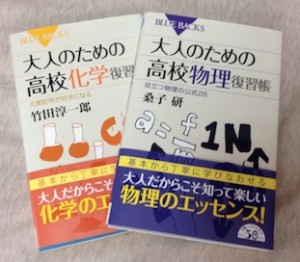
 『大人のための高校物理復習帳』(講談社)…一般向けに日常の物理について公式を元に紐解きました。特設サイトでは実験を多数紹介しています。※増刷がかかり6刷となりました(2026/02/01)
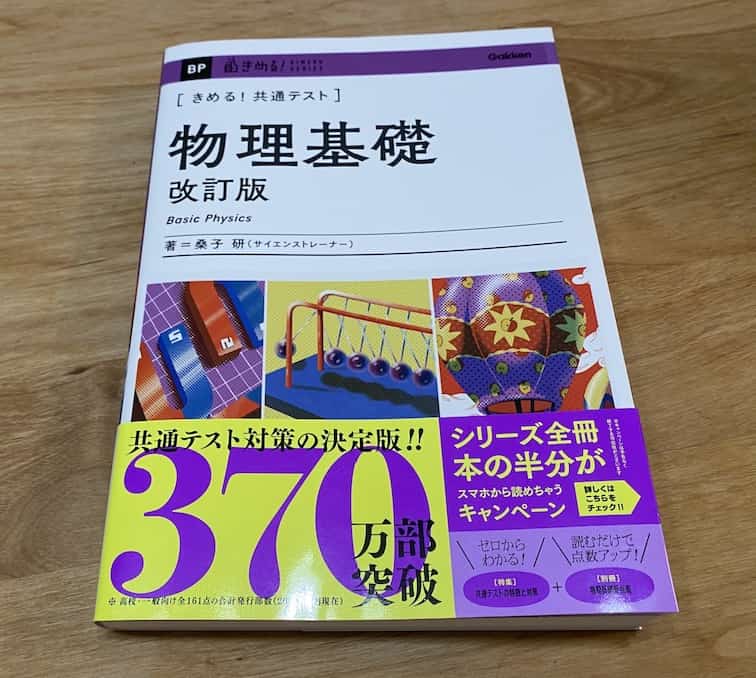
- 『きめる!共通テスト 物理基礎 改訂版』(学研)… 高校物理の参考書です。イラストを多くしてイメージが持てるように描きました。授業についていけない、物理が苦手、そんな生徒におすすめです。特設サイトはこちら。
各種SNS(更新情報をお届け!)
【日本語】X(Twitter)/instagram/Facebook 【英語】BlueSky/Threads
Explore
- 楽しい実験…お子さんと一緒に夢中になれるイチオシの科学実験を多数紹介しています。また、高校物理の理解を深めるための動画教材も用意しました。
- 理科の教材… 理科教師をバックアップ!授業の質を高め、準備を効率化するための選りすぐりの教材を紹介しています。
- Youtube…科学実験等の動画を配信しています。
- 科学ラジオ …科学トピックをほぼ毎日配信中!AI技術を駆使して作成した「耳で楽しむ科学」をお届けします。
- 講演 …全国各地で実験講習会・サイエンスショー等を行っています。
- About …「科学のネタ帳」のコンセプトや、運営者である桑子研のプロフィール・想いをまとめています。
- お問い合わせ …実験教室のご依頼、執筆・講演の相談、科学監修等はこちらのフォームからお寄せください。