Hands-On Learning: Dissecting a Chicken Brain for Real Science!
I’m Ken Kuwako, a science trainer. Every day is an experiment.
A Brain from a Can?! Observing a Chicken’s Brain!

“What, a brain from a can?!” When I first heard it, I couldn’t believe it. But when I actually opened the can, it was packed full of real chicken heads.
In this article, I’ll introduce a “chicken brain observation” lesson conducted in a junior high school science class. I was invited to observe the class led by a teacher named Mr. Y. At first, the students were surprised, but they quickly became absorbed in the observation, their eyes sparkling with curiosity. There’s no educational material more impactful than a real specimen they can hold and examine with their own hands. In science class, topics like “the structure of the brain” and “the function of sensory organs” are covered, but hands-on observation with a real specimen provides students with a “three-dimensional understanding” that can’t be gained from a textbook alone.
What is a “Chicken Head Can”?
The students used a can called “Chicken Head Can” for the observation. It’s mainly sold as dog food or reptile feed, and it surprisingly contains about 15 whole chicken heads.
amazon “Chicken Head Boiled in Water“
|
|
![[商品価格に関しましては、リンクが作成された時点と現時点で情報が変更されている場合がございます。]](https://hbb.afl.rakuten.co.jp/hgb/2c87aae9.92f4de68.2c87aaea.de587780/?me_id=1211165&item_id=10456415&pc=https%3A%2F%2Fthumbnail.image.rakuten.co.jp%2F%400_mall%2Fchanet%2Fcabinet%2F3021%2F302067-1.jpg%3F_ex%3D240x240&s=240x240&t=picttext "[商品価格に関しましては、リンクが作成された時点と現時点で情報が変更されている場合がございます。]")

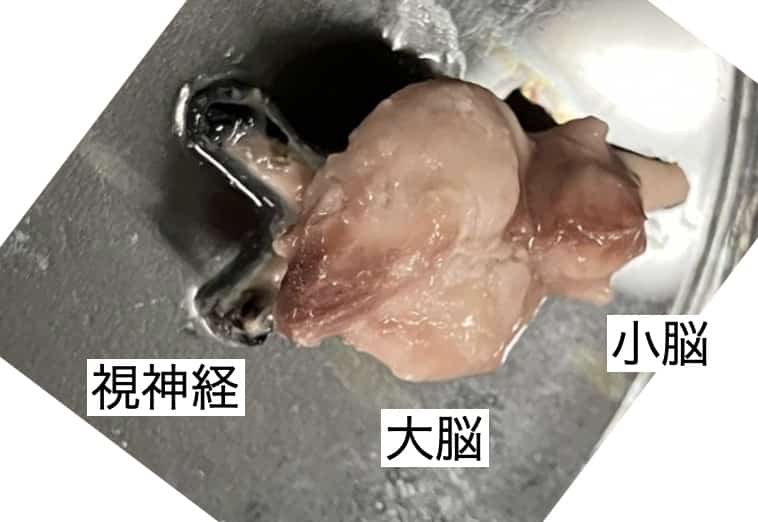
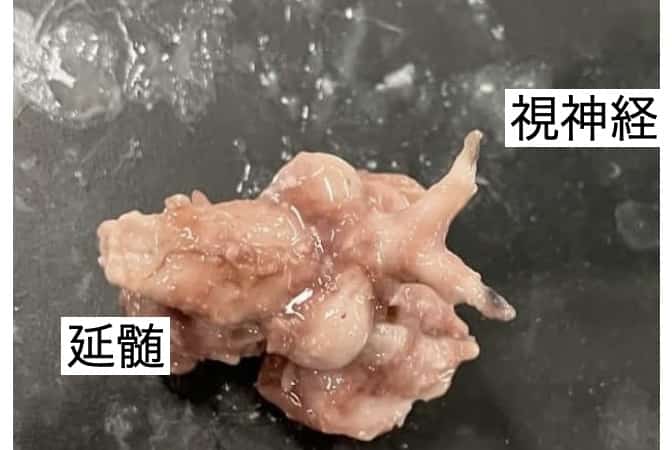
You won’t find these in a regular grocery store, but you can get them at pet shops or some online stores. When you carefully dissect and observe a chicken head from this can, you can see a part of the brain deep inside the eye sockets. While the entire brain isn’t large, the great thing about it is that you can clearly identify the structures of the cerebrum, cerebellum, and brainstem. This allows students to gain a tangible understanding of each part of the brain and its function.
Let’s Take Out the Chicken Brain!
When you open the can… it’s filled with a lot of liquid, so you’ll want to pour that out. Next,gently take out the heads with chopsticksand arrange them on a petri dish.For each group, we prepared two petri dishes: one for the chicken heads and another for the brains after they’ve been removed.
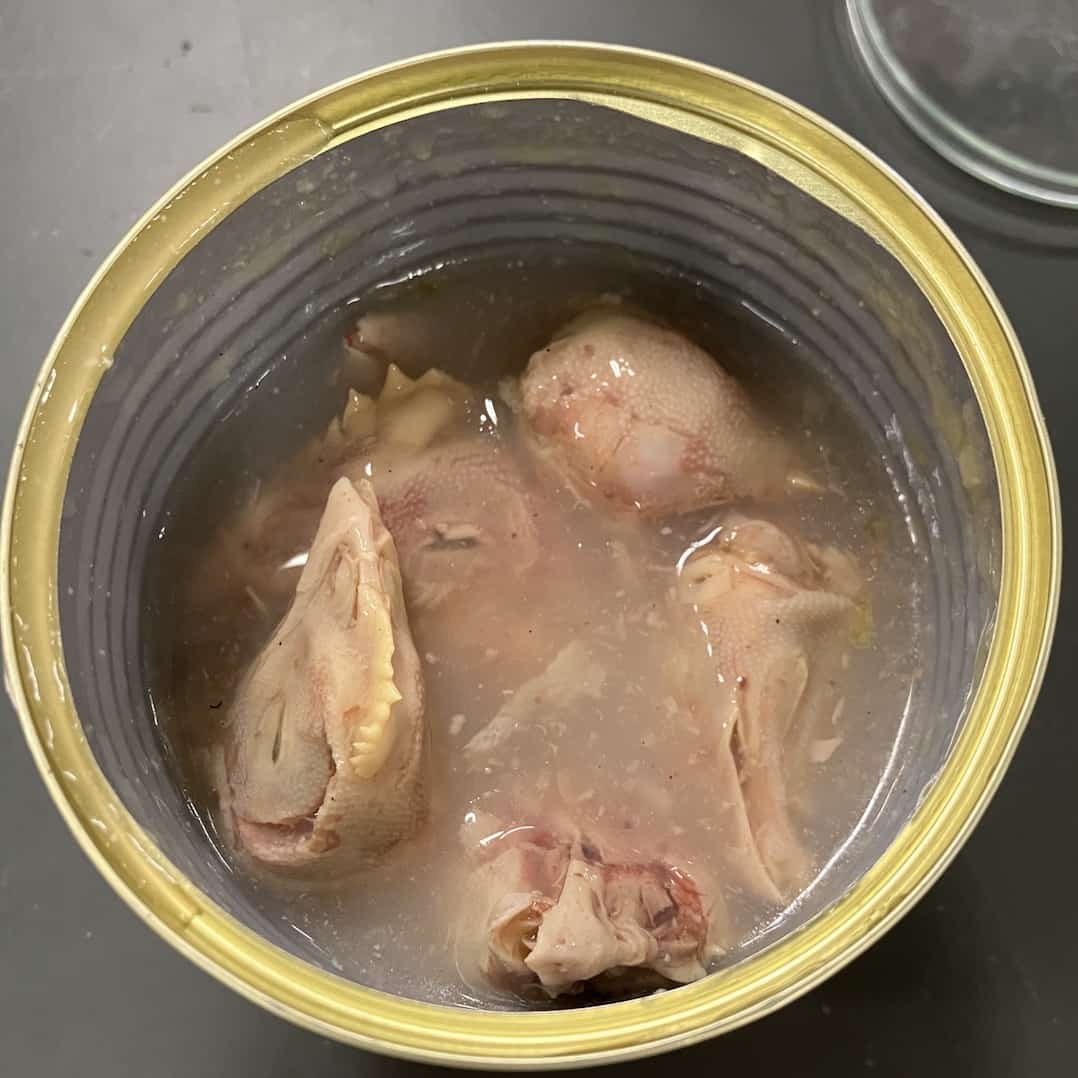
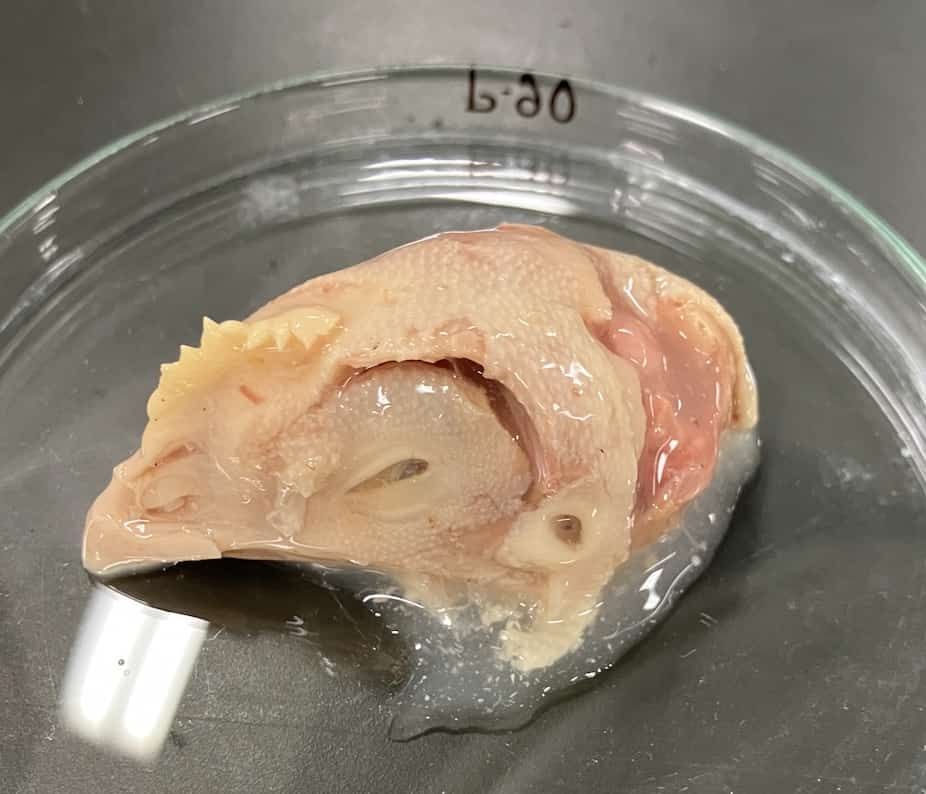
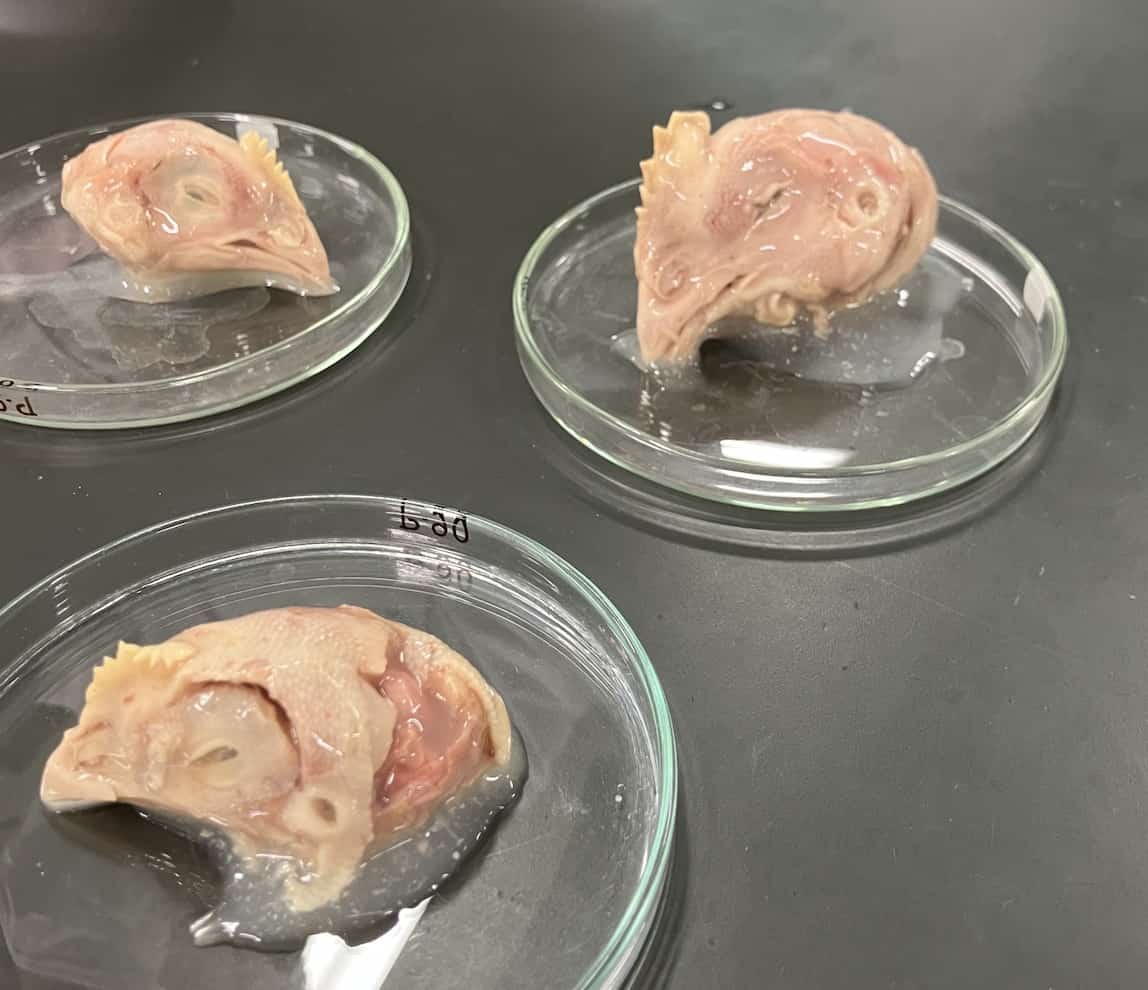
The smell is similar to canned tuna. It’s quite strong, but I didn’t think it was unpleasant. Now, let the dissection begin!
■ Materials Needed
-
Chicken Head Can (one can contains about 15 heads)
-
Dissection tweezers and scissors
- Dissection needle
-
Dissection tray
-
Tissues or kitchen paper towels
-
Odor control (ventilation, masks, etc.)
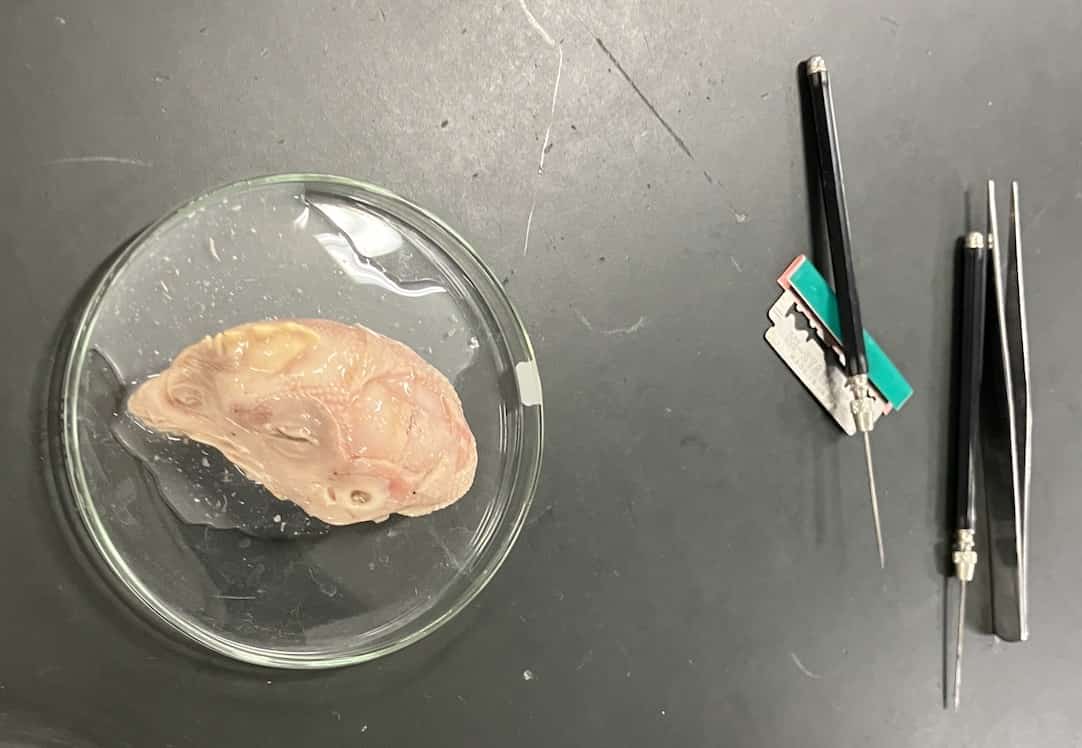
【Key Points for Prior Instruction】
-
Explain the names and functions of the basic brain structures (cerebrum, cerebellum, brainstem)
-
Provide points of focus for the observation, such as “Why is it inside the skull?” and “How is the brain protected?”
-
Don’t forget to instill the ethical awareness that “we are learning from a life that was given.”
【Observation Procedure】
-
Open the Chicken Head Can and place the contents on a tray for observation
-
Carefully peel back the skin and expose the brain along the bone
-
Identify and record the cerebrum, cerebellum, brainstem, etc.
-
If necessary, observe a cross-section to check the internal structure
-
Pay attention to hygiene and clean up thoroughly after the observation
1.Remove the Comb 🐔🔪
Carefully remove the comb using tweezers.
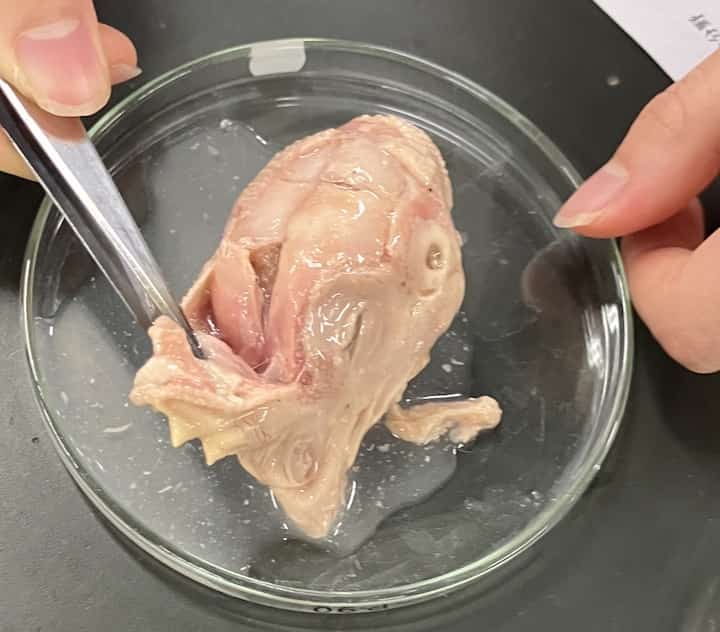
2.Remove the Skull
After removing the bone… the brain becomes visible inside.
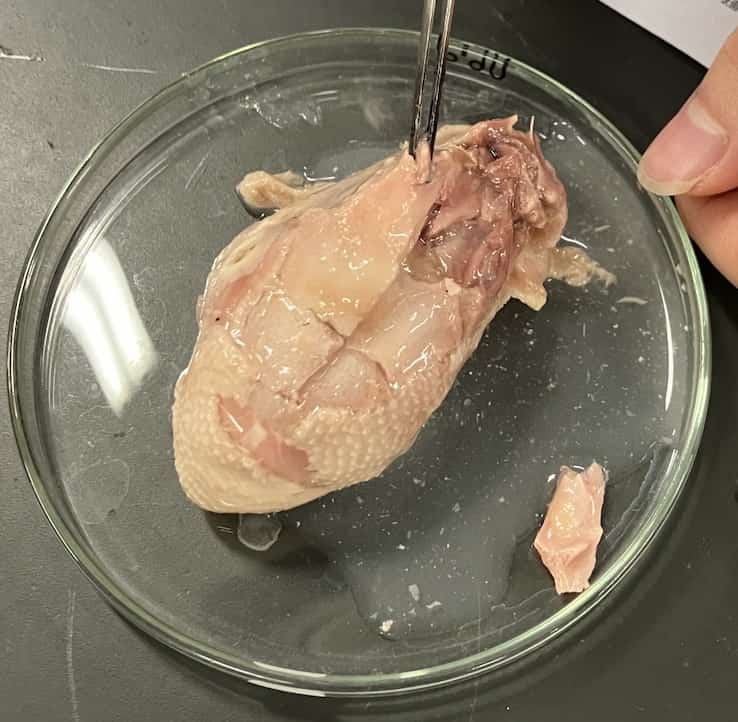
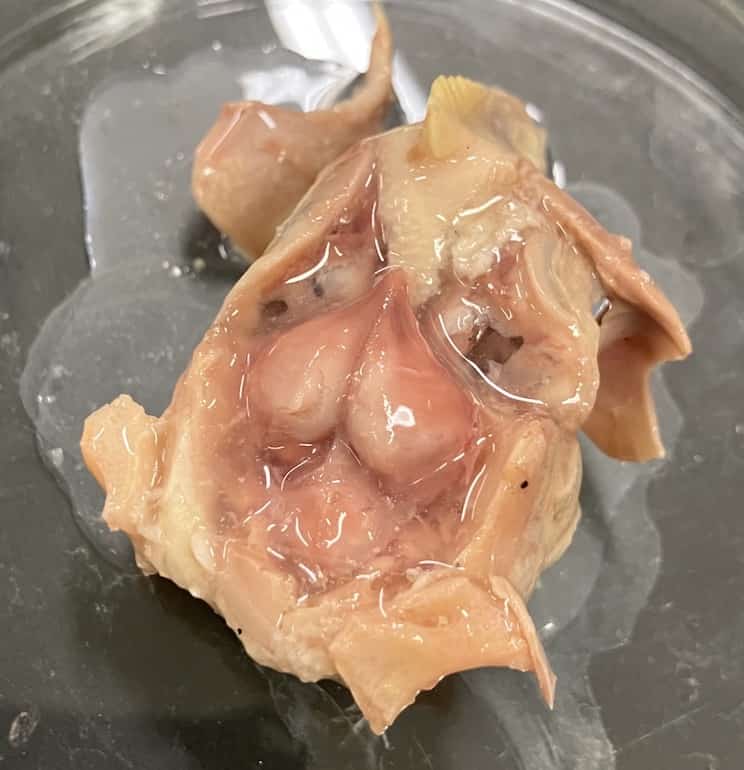
3.Take Out the Brain and Observe! 🧠
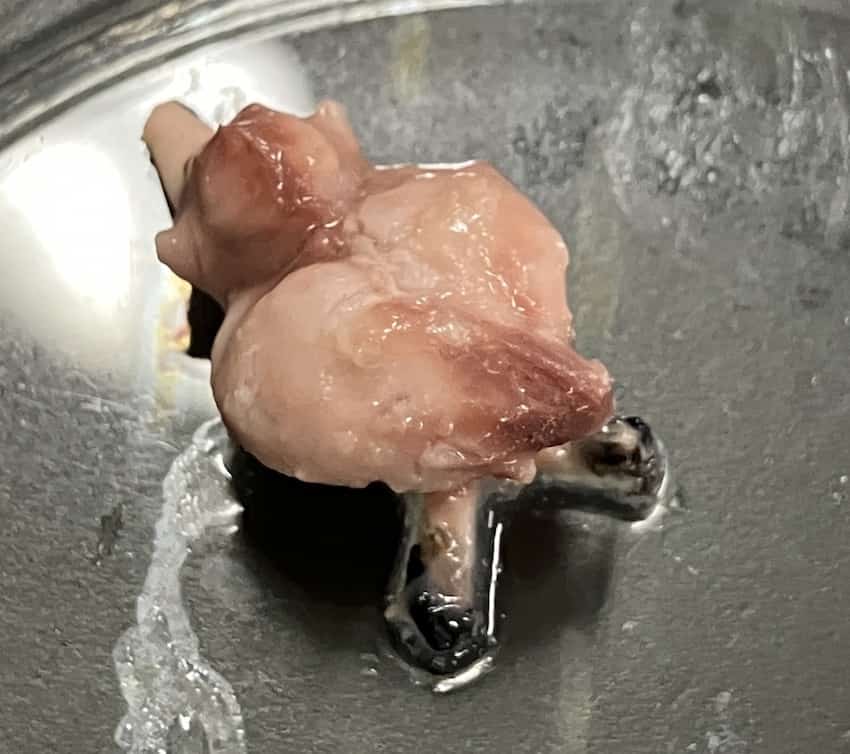
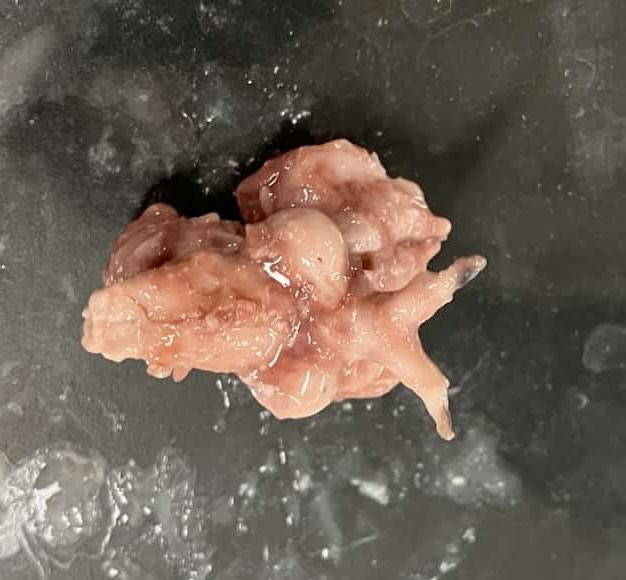
After taking out the brain, weigh it and then sketch it from the top and bottom.
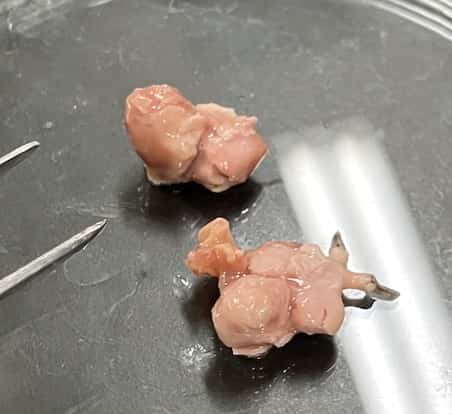
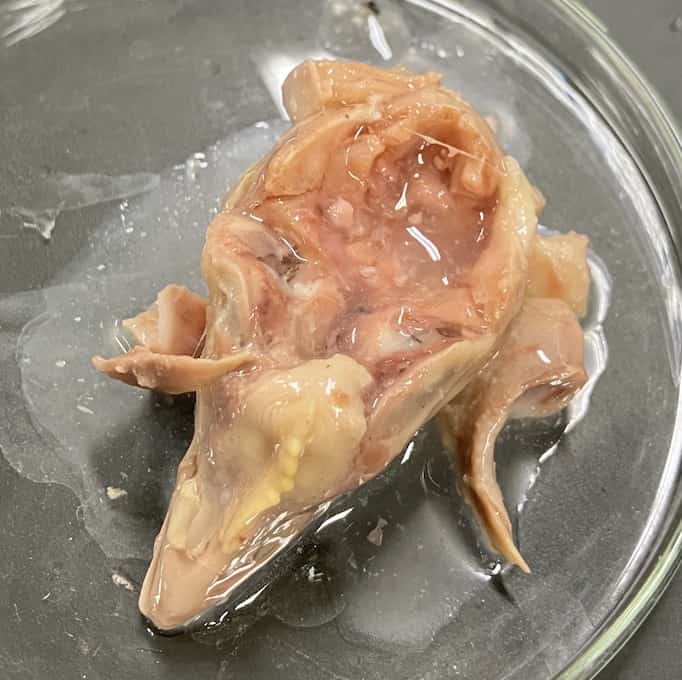
The removed chicken heads are no longer needed and should be collected.
Looking at the brain from the top,
Flipping the brain over and looking from the back,
Pay attention to the shape of the cerebrum and cerebellum while observing.
How Big is a Chicken’s Brain?
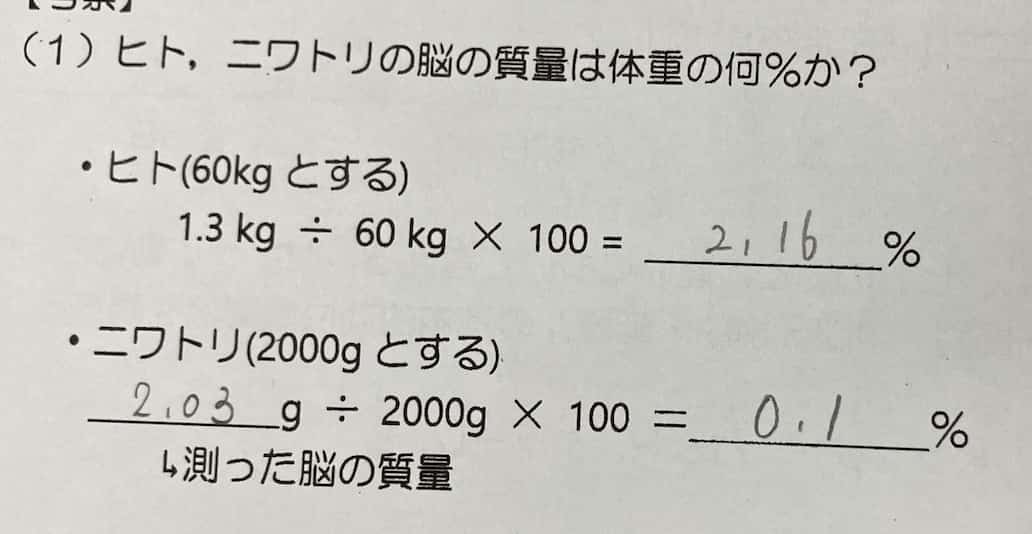
When measured, every group’s brain was about 2g.
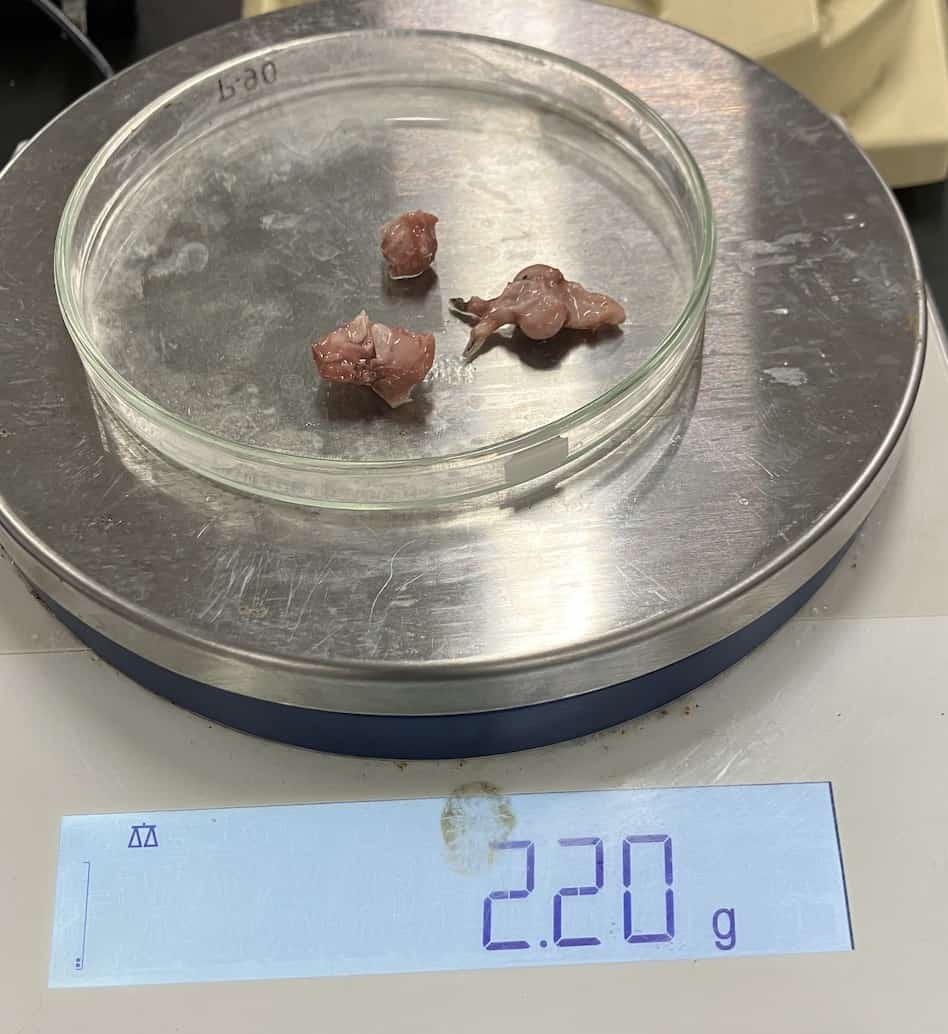
It is overwhelmingly smaller compared to a human brain.
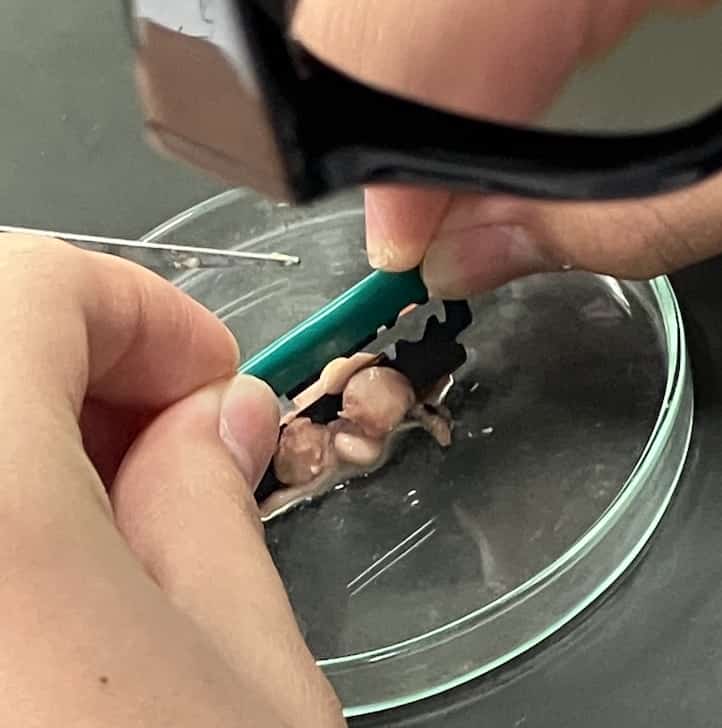
Furthermore, if you use a razor to cut it down the middle and sketch the cross-section…
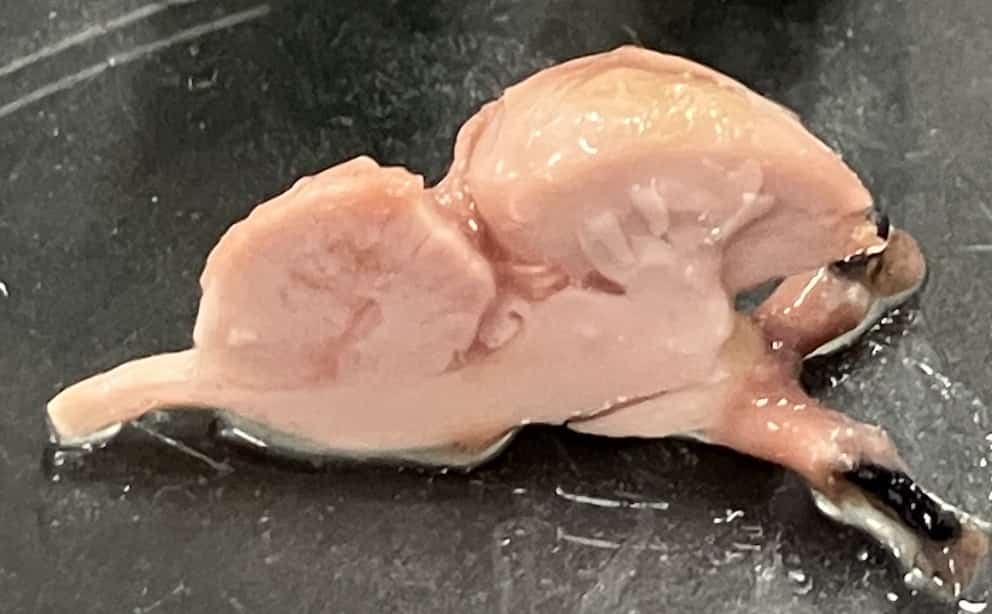
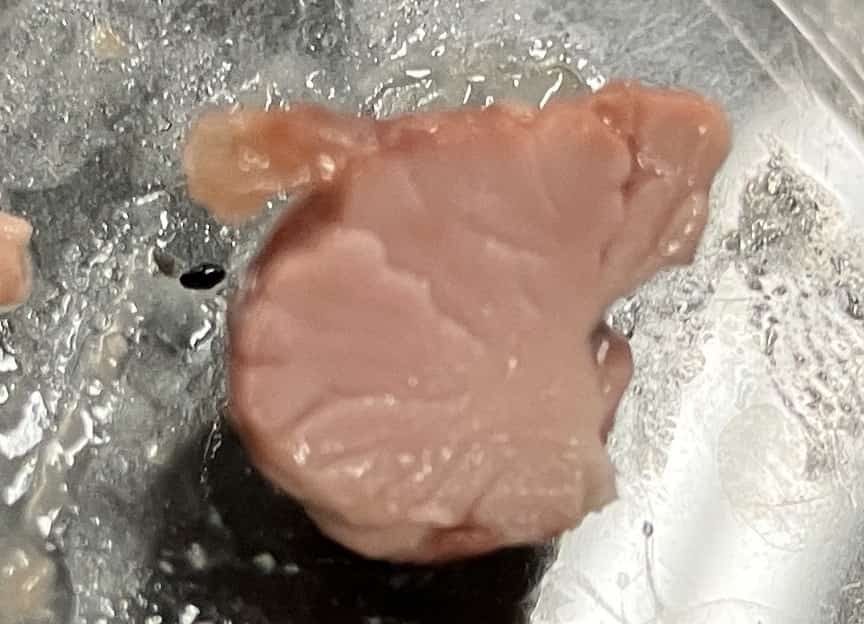
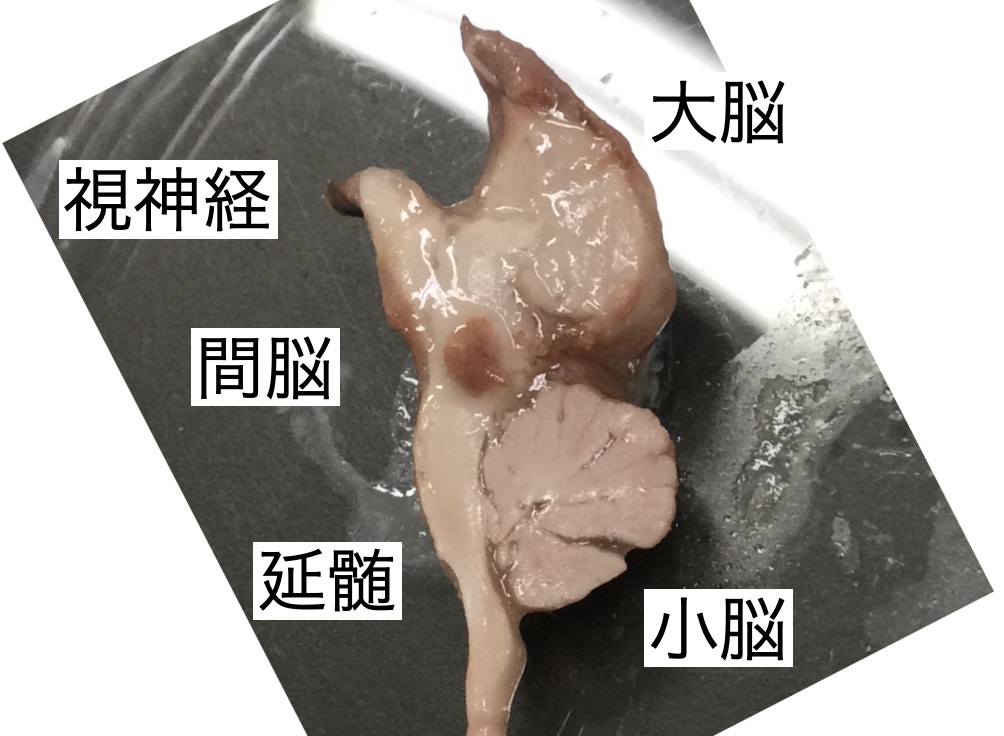
Let’s compare it to a human brain.
You’ll notice that the structure is surprisingly similar to a human brain. Even the small wrinkles are visible—it’s truly amazing!
Why is a Chicken’s Cerebellum so Developed?
Compared to a human’s, a chicken’s brain has a very developed cerebellum. The cerebrum and cerebellum are similar in size. Why is that?It turns out the cerebellum is the part of the brain responsible for motor control.Since chickens need to fly and maintain their balance, their cerebellum may be more developed for that reason.
amazon “Chicken Head Boiled in Water“
■ What Can Students Learn from This Lesson?
-
Students can get a real sense that “the brain is a very important organ, despite its small size.”
-
They can understand the “three-dimensional structure” and the “relationship with surrounding tissues,” which can’t be learned from a diagram.
-
It naturally opens up a discussion about bioethics and the connection between food and life.
This activity offers an interdisciplinary learning experience that combines “Science × Ethics × Life Science.” Observing an animal’s brain is not just about knowing its structure; it’s also a teaching tool that nurtures a student’s “sense of care for living things.” While it’s a high-impact activity, with proper preparation, it can be a safe and profoundly educational lesson. Go beyond the textbook and let your students experience this “authentic learning” that will stay with them for a lifetime.
Contact and Requests
Making the wonders and fun of science more accessible! Here, you’ll find easy-to-understand summaries of fun science experiments you can do at home and tips for doing them. Feel free to browse!
・About the manager, Ken Kuwako: here
・For various requests (writing, lectures, science classes, TV supervision, appearances, etc.): here
・Article updates are delivered via X!
 The Science Channel is where you can find experiment videos!
9月のイチオシ実験!
テレビ番組監修・イベント等のお知らせ
- 9月25日(金)21:00〜 かまいたちの瞬間回答!にて、科学監修を行いました。
- 10月10日(土)11:15~12:00 千葉市科学フェスタ2026「桑子先生の回転科学ショー」にてサイエンスショーを行います。
- 12月26日(土) ナリカサイエンスアカデミー(教員向け実験講習会)開催
書籍のお知らせ
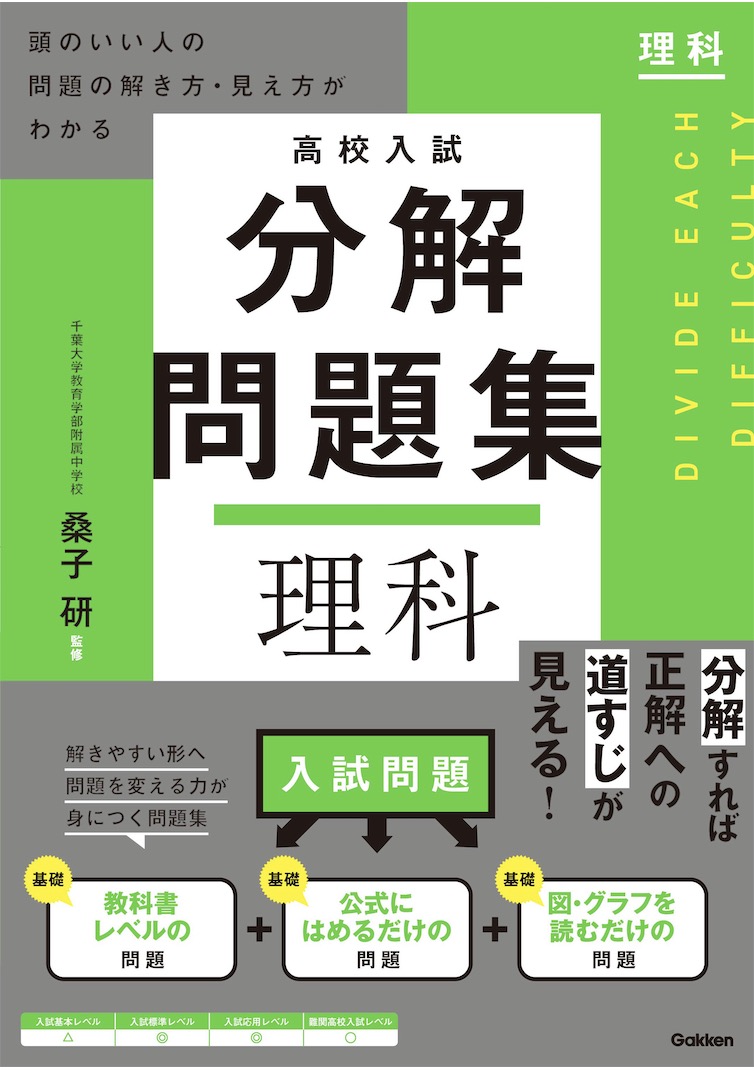
- 『高校入試 分解問題集 理科』(学研)…難しい問題も小さな問題に分解することで、問題を解くことができます。そんな分解の技術が身につくように深く関わりを持って作りました。
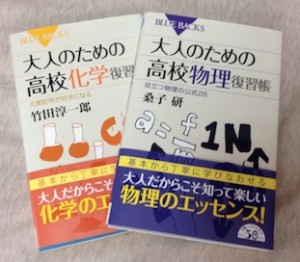
 『大人のための高校物理復習帳』(講談社)…一般向けに日常の物理について公式を元に紐解きました。特設サイトでは実験を多数紹介しています。※増刷がかかり6刷となりました(2026/02/01)
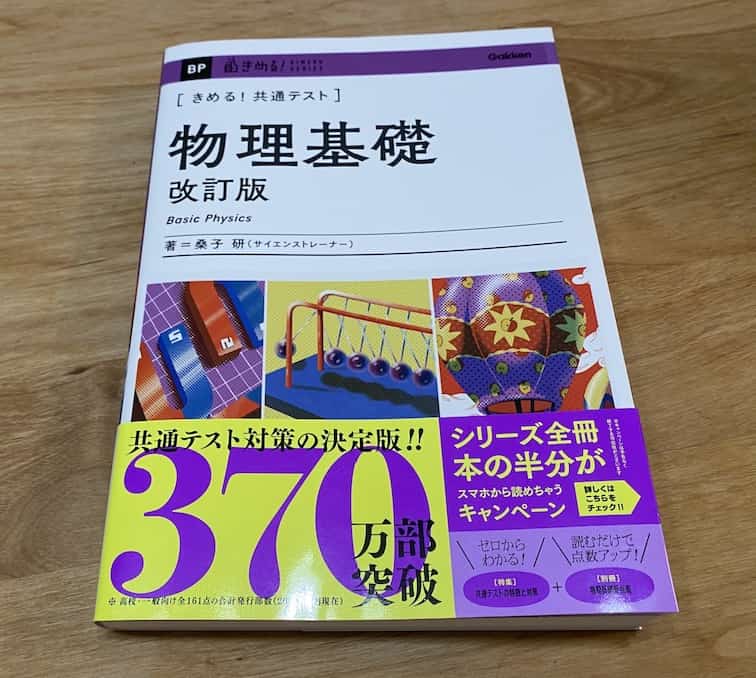
- 『きめる!共通テスト 物理基礎 改訂版』(学研)… 高校物理の参考書です。イラストを多くしてイメージが持てるように描きました。授業についていけない、物理が苦手、そんな生徒におすすめです。特設サイトはこちら。
各種SNS(更新情報をお届け!)
【日本語】X(Twitter)/instagram/Facebook 【英語】BlueSky/Threads
Explore
- 楽しい実験…お子さんと一緒に夢中になれるイチオシの科学実験を多数紹介しています。また、高校物理の理解を深めるための動画教材も用意しました。
- 理科の教材… 理科教師をバックアップ!授業の質を高め、準備を効率化するための選りすぐりの教材を紹介しています。
- Youtube…科学実験等の動画を配信しています。
- 科学ラジオ …科学トピックをほぼ毎日配信中!AI技術を駆使して作成した「耳で楽しむ科学」をお届けします。
- 講演 …全国各地で実験講習会・サイエンスショー等を行っています。
- About …「科学のネタ帳」のコンセプトや、運営者である桑子研のプロフィール・想いをまとめています。
- お問い合わせ …実験教室のご依頼、執筆・講演の相談、科学監修等はこちらのフォームからお寄せください。