The Flame Turned Green! Is It Really Copper? A Test After Electrolysis of Copper Chloride
Ken Kuwako, Science Trainer here. Every day is an experiment.
Which metal do you think of when someone mentions a green flame? The blue-green blooms in a summer fireworks display, it turns out, get their color from a close relative of the copper you’d find in a school science lab. Today’s story starts with a middle schooler asking, “Is this really copper?” and ends up in the colorful world of flames.
What did the electrolysis actually make?
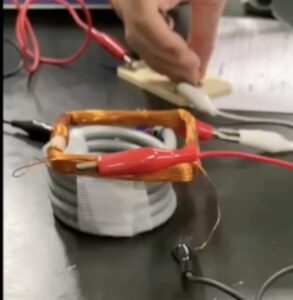
It happened during an experiment on the electrolysis of copper chloride solution. A thick coating of reddish-brown material built up on the surface of the cathode (the negative electrode). When we scraped it onto a piece of filter paper and rubbed it with a lab spoon, it gleamed (a metallic luster, maybe?).
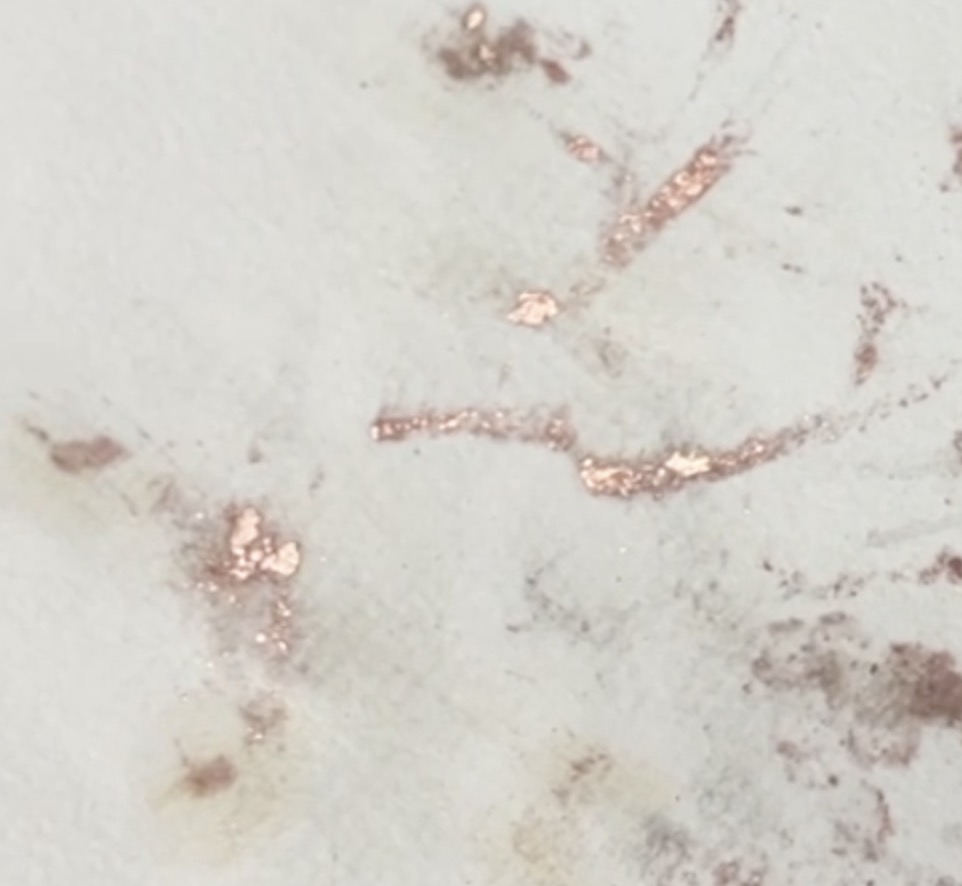
One student spoke up: “I want to find out for myself whether this is really copper.”
Not settling for “because the textbook says so,” and instead wanting to test it with your own hands, is exactly how a scientist thinks.
By the way, chlorine gas is being produced at the anode (the positive electrode). It has a sharp, swimming-pool smell, so this experiment should always be done with good ventilation.
Putting it to the flame test
So we decided to check with a flame test. The method is simple: place the deposited material on a lab spoon and hold it in the flame of a gas burner.
The flame turned a beautiful green.
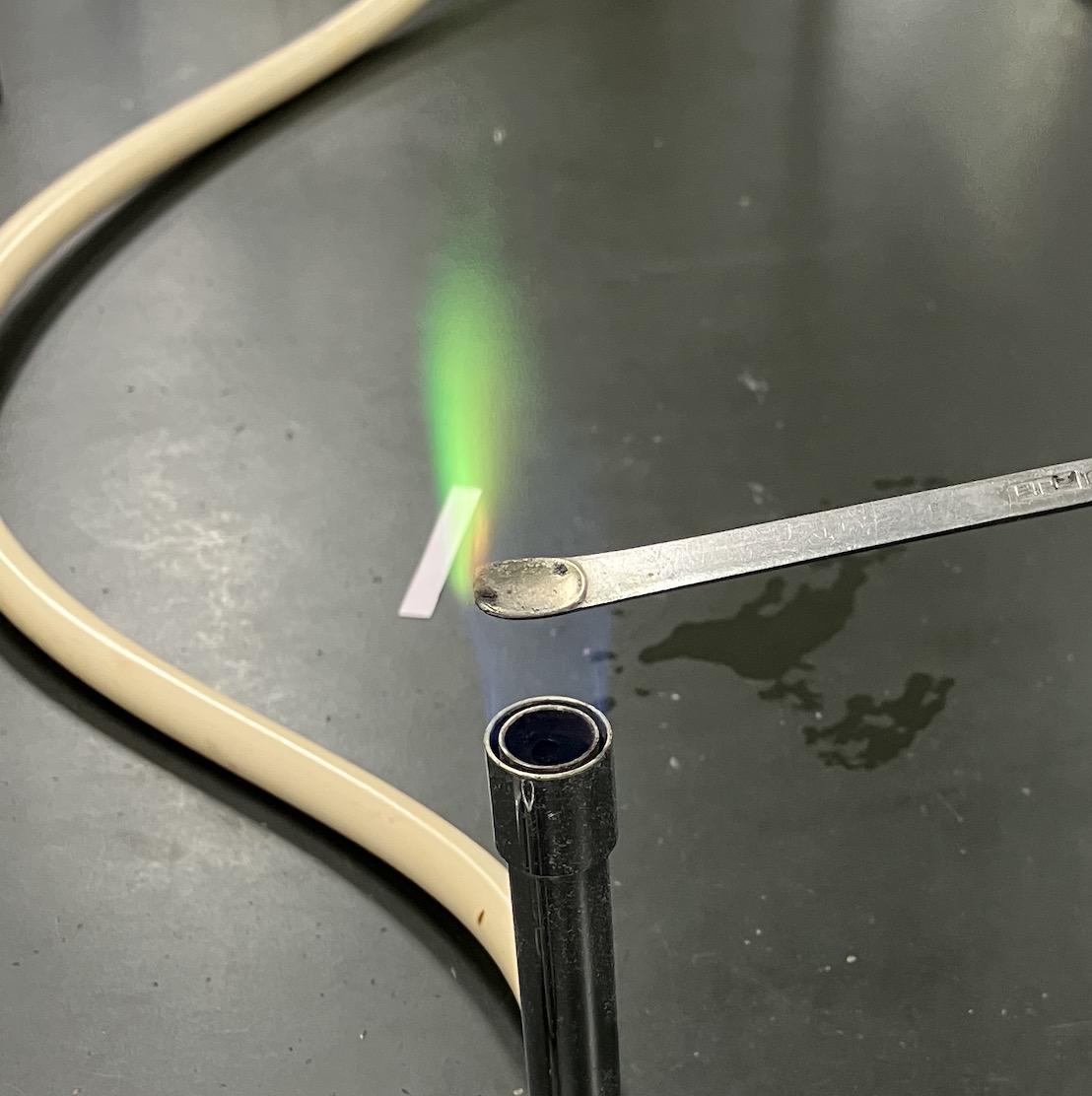
Put the two observations together, a metallic luster and a green flame, and it’s reasonable to conclude that the deposit is copper. Faced with the result, the student sat there looking thoughtful and serious.
Why does a flame change color?
A flame test works because metal atoms absorb heat from the flame. When the electrons inside an atom receive that heat, they jump up to a higher energy state. But they can’t stay there for long. When an electron drops back to its original state, it releases the extra energy as light.
The color of that light is fixed for each element. That’s why you can look at the color of a flame and work out which element is in it. Here are some of the main elements and their flame colors:
・Lithium: red
・Sodium: yellow
・Potassium: reddish-purple
・Calcium: orange-red
・Barium: yellowish-green
・Copper: blue-green
Fireworks use this same mechanism. The blue-green ones are made with copper compounds. Isn’t it exciting to think that what’s happening on a little lab spoon is the same principle behind the huge fireworks lighting up the night sky?
Is a green flame enough to say “it’s copper”?
Now let’s take one more step. Just because the flame turned green, can we say for sure that it’s copper?
In fact, barium also produces a yellowish-green flame, so going by color alone can make the two hard to tell apart. Also, although textbooks describe the copper flame as blue-green, it can look bluer or greener depending on who’s looking and under what conditions. Burning copper compounds that contain chlorine is also known to make the flame look bluer. Since our material came out of a copper chloride solution, a little chlorine-containing residue may have been left on its surface.
On top of that, a flame test only tells you that the element copper is present. It can’t prove that the material is copper metal.
That’s why the student did well to combine two pieces of evidence: the metallic luster and the flame color. Stacking up multiple pieces of evidence makes a conclusion more trustworthy. If you want to be even more certain, here are some other things you could try:
・Rub it with sandpaper or similar and see whether a reddish-brown luster appears
・Test whether it conducts electricity
・Hit it and see whether it stretches instead of shattering (is it malleable?)
The more ways you test it, the stronger the case for “it’s copper” becomes.
From one experiment to the next question
This experiment turned into an investigation of the form “take what you made in one experiment and verify it with another.” Checking the result of one experiment by a different method is the heart of how science works.
Next, it would be fun to run flame tests on other metals and compare their colors. Just imagining what colors of light the metals around us would show in a flame is enough to get you excited.
Contact and requests
Science is more wonderful and closer to home than you think! This site collects fun science experiments you can do at home, along with tips to make them work. Try searching around!
・The contents of Kagaku no Neta-cho (Science Idea Notebook) have been published as a book. Details are here
・To learn more about the site’s author, Ken Kuwako, click here
・For requests of all kinds (writing, lectures, science workshops, TV supervision and appearances, and more), click here
・Get article updates on X!
 Science Neta Channel has experiment videos too!

「科学のネタ帳」は、身近な科学の実験やトピックを幅広く紹介・解説する科学情報総合サイトです。親子で一緒に手を動かしながら、自然の不思議や科学の面白さを体験しましょう!より詳しくはこちら。
テレビ番組監修・イベント等のお知らせ
- 「ネイチャーティーチャー」(TBS)に出演しました。Tverにて11月3日(火)まで配信中です。

- サタプラ(MBS)にて「日常に潜む!ピンチ脱出法について」のコーナーに出演しました。Tverにて11月7日(土)まで配信中です。

- 11/4(水)ZIP(日本テレビ)のコーナー(7:20分ころ放送予定)にて科学監修を担当しました。前回は夏に一度出演しましたが、今回は監修のみです。日常に潜む科学をぜひご覧ください。

- 11月27日(金) テレビ監修番組放送予定
- 12月26日(土) ナリカサイエンスアカデミー(教員向け実験講習会)開催
11月のイチオシ実験!
どうして結露は起こるのか?結露を防ぐためには?実験で確かめよう!
書籍のお知らせ
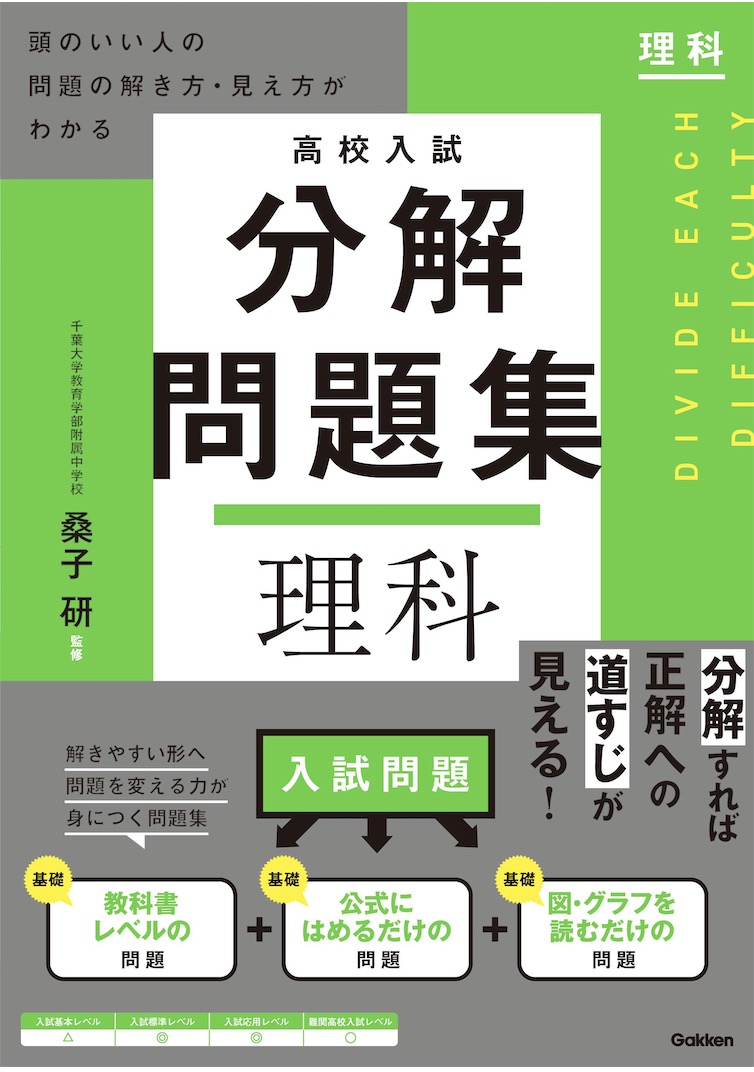
- 『高校入試 分解問題集 理科』(学研)…難しい問題も小さな問題に分解することで、問題を解くことができます。そんな分解の技術が身につくように深く関わりを持って作りました。
 『大人のための高校物理復習帳』(講談社)…一般向けに日常の物理について公式を元に紐解きました。特設サイトでは実験を多数紹介しています。※増刷がかかり6刷となりました(2026/02/01)
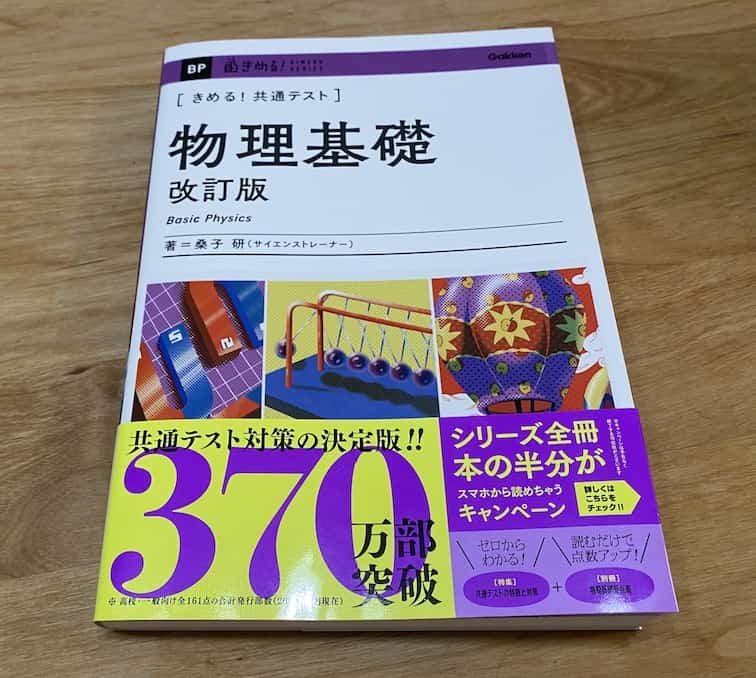
- 『きめる!共通テスト 物理基礎 改訂版』(学研)… 高校物理の参考書です。イラストを多くしてイメージが持てるように描きました。授業についていけない、物理が苦手、そんな生徒におすすめです。特設サイトはこちら。
各種SNS(更新情報をお届け!)
【日本語】X(Twitter)/instagram/Facebook 【英語】BlueSky/Threads
Explore
- 楽しい実験…お子さんと一緒に夢中になれるイチオシの科学実験を多数紹介しています。また、高校物理の理解を深めるための動画教材も用意しました。
- 理科の教材… 理科教師をバックアップ!授業の質を高め、準備を効率化するための選りすぐりの教材を紹介しています。
- Youtube…科学実験等の動画を配信しています。
- 科学ラジオ …科学トピックをほぼ毎日配信中!AI技術を駆使して作成した「耳で楽しむ科学」をお届けします。
- 講演 …全国各地で実験講習会・サイエンスショー等を行っています。
- About …「科学のネタ帳」のコンセプトや、運営者である桑子研のプロフィール・想いをまとめています。
- お問い合わせ …実験教室のご依頼、執筆・講演の相談、科学監修等はこちらのフォームからお寄せください。