The 1,300-View Wall! What Middle Schoolers Learned About “Reaching People” Through Short Videos (Science Communication Course)
Ken Kuwako, Science Trainer here. Every day is an experiment!
“Make something good, and it will sell.” Sound familiar? I spent six months with five ninth-graders trying to figure out how to bring science to the wider world, and together we learned that this idea is only half right. (The students taught me that the hard way!)
I ran an elective course called “Science Communication” for half a year. Five students signed up, and together we thought hard about one question: how can we get more people excited about science, whether they’re other students or the general public? It was a busy, thrilling six months.
Our first challenge: a science poster
We started with science posters. A while back, my experiment “Lifting a Desk with Atmospheric Pressure” was featured on Science Education News, so I suggested we use that as a model and try making a poster of our own. We ended up with two.
The topics were dilatancy and the “water cube.” Dilatancy is that weird phenomenon where cornstarch mixed with water turns hard when you punch it, but flows like liquid when you touch it gently. We hung both posters up at school, and we also sent them to the Science Education News editors with a note saying, “We made these. What do you think?”
We got some kind words, but they didn’t end up using them. Still, I think stepping into the ring to see whether the general public would like our work was a great experience for the students. At school, everyone praises you right away, but out in the real world it’s not so easy, and I hope they got to feel that firsthand.
Our next challenge: short videos
Next, at the students’ request, we made short videos. I offered two topics: the X-Gyro Airplane and the paper cup Gyro Rocket.
“Gyro” refers to the way a spinning object resists changes in its direction. It’s the reason a spinning top doesn’t fall over. Use this trick, and even paper cups can become airplanes and rockets that fly steadily.
We started by studying short videos themselves. The students landed on a three-part structure:
1. Show the finished product
2. Explain how to make it
3. Show how to play with it
They also discovered on their own that using music to keep a good rhythm worked well, and they copied that style. We even made thumbnail images, so it took a long time, but in the end we finished two videos.
Video 1: Mind-blowing! 🔥 The paper cup gyro airplane that got 15-year-olds hooked ✈️
This video shows you how to make a paper cup gyro airplane. It was made in “Science Communication,” an elective for ninth-graders. For detailed instructions and an explanation of how it works, check out the link below.
Video 2: Easy with paper cups 🍌! A gyro rocket that really flies 🚀
This video explains how to make a paper cup gyro rocket. The students in my Science Communication elective researched and made it themselves, so please give it a watch! You’ll find an explanation of the science behind it at the link below.
The results were tougher than we expected
I was amazed at how good the finished videos turned out. We came up with the titles and descriptions together, and then it was time to put them out into the world. We promoted them both inside and outside school.
Here’s how it went:
– At school: about 100 views each in the first week
– General public: 1,300 views and 100 views on YouTube Shorts in the first week
After all that effort, I’d hoped the numbers would climb higher, but the world is a tough place. It made me realize that we needed to put much more energy into getting the word out.
My final message: what science communication means to me
In the last class, I shared my thoughts on science communication.
After asking the students what they thought science communication was, I told them the following:
・ Go up against the pros. Putting your work out there is what matters.
・ “Make something good and it will sell” is a myth.
・ If you make something good, you also have to show people it’s good, or no one will give it a second look.
・ But never promise more than what you’ve actually made.
You might be wondering whether we got any feedback from outside. So far, no comments. It’s a little lonely, but that’s the reality. That’s exactly why we spent plenty of time at the end of the course asking, “What do we want to try next?”
Kuwako’s science communication
As a reference, I also introduced the kinds of science communication I do myself.
Science teacher: Talking to students face to face.
Writing: Books, magazines, science posters, and more. Right now, I’m writing stories about physics.
Science blogging: I’ve updated my blog “Kagaku no Neta-cho” (Science Idea Notebook) every single day for 20 years.
Science shows: Events like the Chiba City Science Festa.
Experiment workshops for teachers: Including those at Narika Science Academy.
TV supervision and appearances: Shows like Toppa File and Nechi Chatty Teacher.
Delivering is just as important as creating
Over the six months, the students learned that “making” and “delivering” are two separate jobs, whether it’s a poster or a video. It’s the same with experiments: building a great setup isn’t enough. Science only spreads once you share the results with everyone.
The view counts didn’t grow the way we’d hoped, but going out into the world and seeing how tough it can be was a huge win in itself. Next, I want to think about how we can deliver our work better, building on what we’ve learned.
Contact and requests
Bring the wonder and fun of science closer to home! This site collects fun experiments you can do at home, along with tips to make them work. Try searching around!
・The content of Kagaku no Neta-cho has been published as a book! Details here
・Learn more about the site’s author, Ken Kuwako, here
・For all requests (writing, lectures, experiment workshops, TV supervision and appearances, etc.), click here
・Get article updates on X!
 Kagaku no Neta Channel features experiment videos!
10月のイチオシ実験!
https://youtube.com/shorts/jLVKYRVI1uY?feature=share
テレビ番組監修・イベント等のお知らせ
- 12月26日(土) ナリカサイエンスアカデミー(教員向け実験講習会)開催
書籍のお知らせ
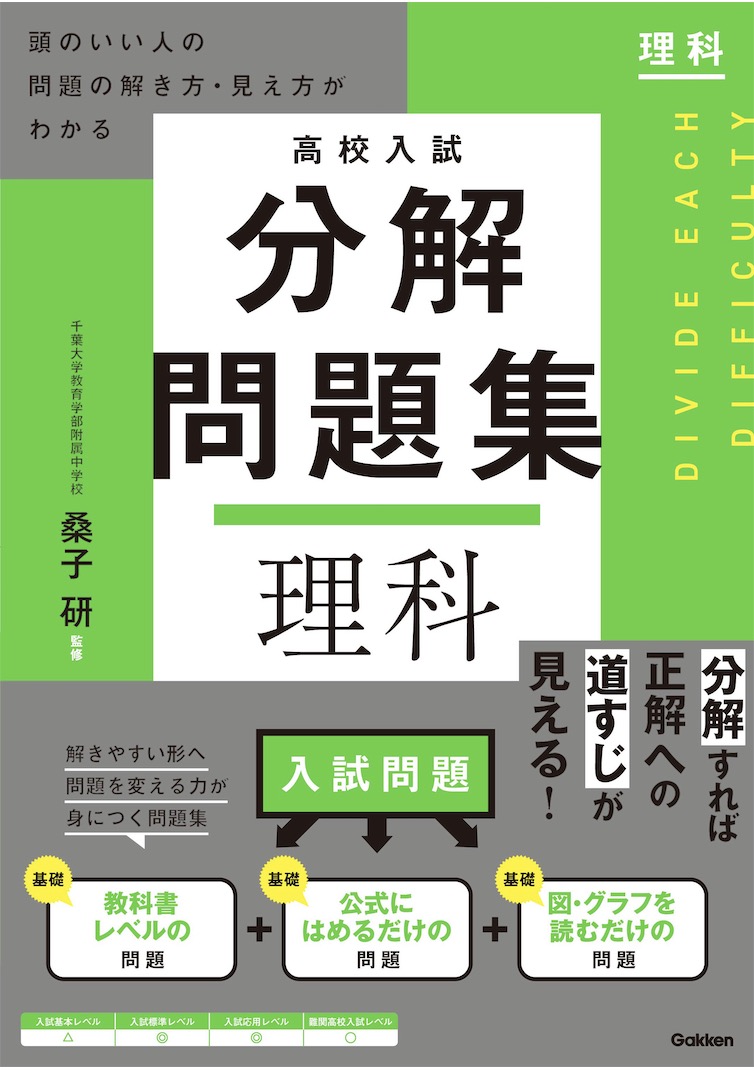
- 『高校入試 分解問題集 理科』(学研)…難しい問題も小さな問題に分解することで、問題を解くことができます。そんな分解の技術が身につくように深く関わりを持って作りました。
 『大人のための高校物理復習帳』(講談社)…一般向けに日常の物理について公式を元に紐解きました。特設サイトでは実験を多数紹介しています。※増刷がかかり6刷となりました(2026/02/01)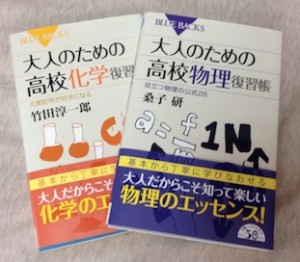
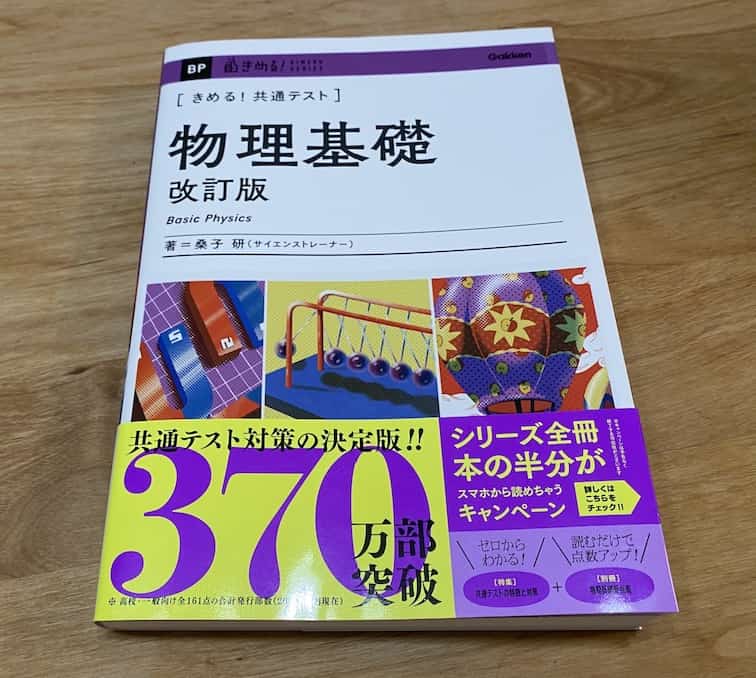
- 『きめる!共通テスト 物理基礎 改訂版』(学研)… 高校物理の参考書です。イラストを多くしてイメージが持てるように描きました。授業についていけない、物理が苦手、そんな生徒におすすめです。特設サイトはこちら。
各種SNS(更新情報をお届け!)
【日本語】X(Twitter)/instagram/Facebook 【英語】BlueSky/Threads
Explore
- 楽しい実験…お子さんと一緒に夢中になれるイチオシの科学実験を多数紹介しています。また、高校物理の理解を深めるための動画教材も用意しました。
- 理科の教材… 理科教師をバックアップ!授業の質を高め、準備を効率化するための選りすぐりの教材を紹介しています。
- Youtube…科学実験等の動画を配信しています。
- 科学ラジオ …科学トピックをほぼ毎日配信中!AI技術を駆使して作成した「耳で楽しむ科学」をお届けします。
- 講演 …全国各地で実験講習会・サイエンスショー等を行っています。
- About …「科学のネタ帳」のコンセプトや、運営者である桑子研のプロフィール・想いをまとめています。
- お問い合わせ …実験教室のご依頼、執筆・講演の相談、科学監修等はこちらのフォームからお寄せください。
- Seeing the World Through an Insect’s Eyes? The Hidden Secrets of Dandelions and Azaleas

- Did the Chopstick Snap? Did It Move Backward? The Strange Images in a Glass of Water
- Making the Invisible Visible: A Laser and Fog Machine Light Show!

- The 1,300-View Wall! What Middle Schoolers Learned About “Reaching People” Through Short Videos (Science Communication Course)

- Is the Image on Your Retina Upside Down? Discover the Magic of Light with a Squid Eye Experiment

- We Built a Volcano—and It Was Explosively Fun! The Ultimate Experiment Recipe Using Plaster and Baking Soda!
- Data So Clean It’ll Wow You! Cracking the Link Between Potential Energy and Work with Just a Rail and a Marble

- Why Are the Top and Bottom of a Leaf Different Colors? The Surprising Link Between Light and Cell Density
- 4x Faster Than Sunlight?! The Secret of Plant Factories Growing Lettuce Under Red Light (Plot Twist: It Was Purple Light!)