Why Does It Only Stick on One Side? The Magnetic Mystery of Magnet Sheets (Single-Sided Multipole Magnetization)
I’m Ken Kuwako, your Science Trainer. Every day is an experiment!
Have you ever noticed the advertising magnet sheets stuck to your refrigerator—those thin magnets from water-leak repair companies and other businesses? They may look like nothing more than simple promotional items, but hidden inside these thin sheets is a surprisingly clever magnetic structure. When I tried a simple experiment with the magnet sheets that often arrive in our mailboxes, my students were fascinated, shouting, “Why? Why does that happen?” Today, I’d like to show you the experiment and reveal the unexpected secret hidden inside these ordinary magnets.
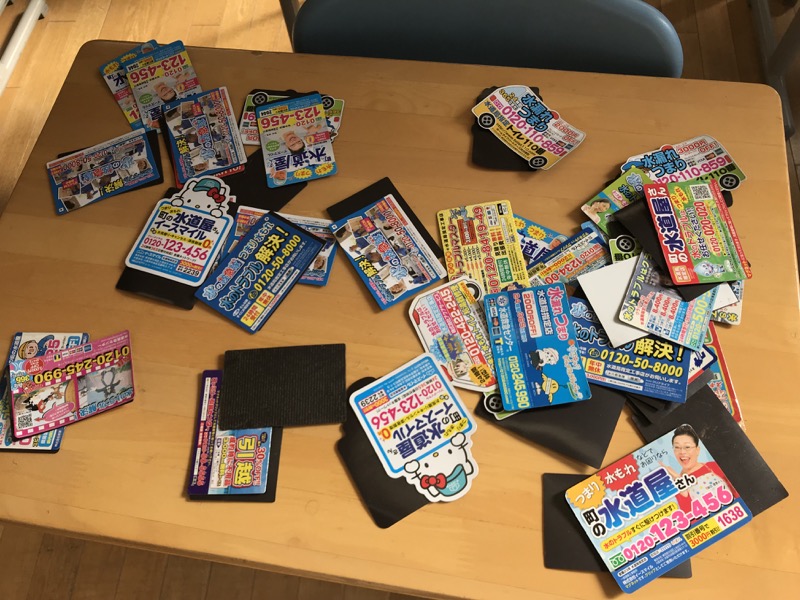
Do you have a magnetic sheet stuck to your refrigerator? Maybe one of those promotional sheets from a “water-leak repair” company that was slipped into your mailbox. Take two of these sheets, place them on top of each other, and try pulling one of them sideways. You’ll feel a surprisingly funny, jerky resistance!
Why is the magnetic force only on one side?
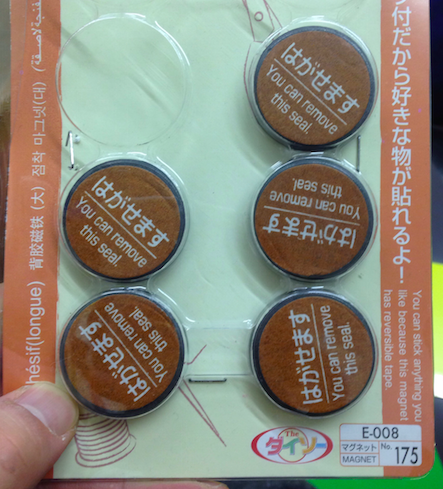
I once visited the laboratory (which was also his home) of Professor Eiji Komori. While experimenting with some magnets bought at Daiso, we sprinkled iron filings over them and noticed something curious: only one side seemed to have magnetic force.
From a practical point of view, this design makes perfect sense—if the magnet only needs to stick on one side, why make both sides magnetic? But how exactly are the magnetic poles arranged inside the sheet? If we think about an ordinary magnet, it always has a north pole and a south pole, so you might expect magnetic field lines to emerge from both sides and allow either side to stick to metal. So we sprinkled iron filings over the surface, and something fascinating appeared!
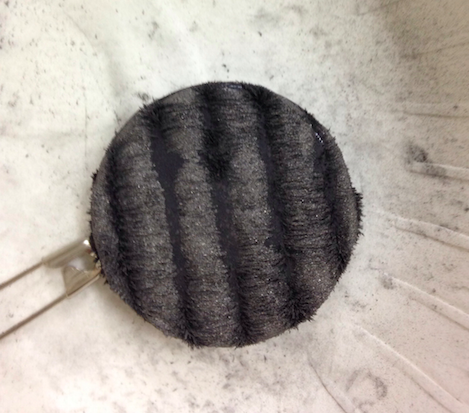
Today, I’d like to introduce a simple experiment that lets you enjoy this fascinating pattern for yourself.
The Science Recipe
What you’ll need
An advertising magnet sheet from your mailbox (or one you buy yourself), iron filings, and a small container such as a film canister
How to do it
① Make several small holes in the lid of the container using an awl or similar tool. Then put the iron filings inside. Your “iron-filings shaker” is ready!
② Sprinkle the iron filings over the magnetic sheet and observe what happens.
③ Place two magnetic sheets together horizontally and pull one of them sideways. Try changing the direction and see how the resistance feels.
The results—and the secret behind the hidden stripes
When you sprinkle the iron filings over the sheet as in step ②, you’ll see a pattern like this.
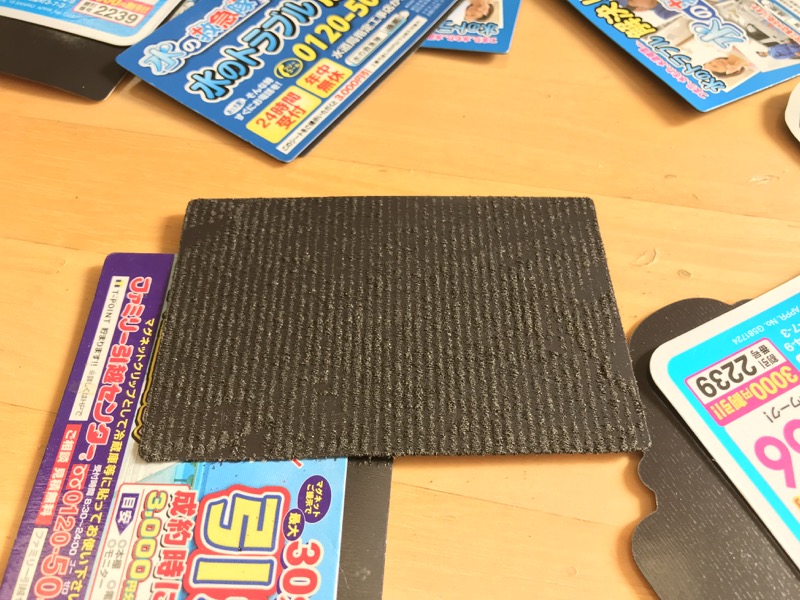
That’s right—the filings form stripes. Pretty cool, isn’t it? If you try the other side, almost no iron filings stick because there is very little magnetic force there. So why does this striped pattern appear? My initial thought was that the north and south poles are arranged alternately in narrow strips, creating a structure that looks like a whole row of tiny U-shaped magnets lined up side by side. With this arrangement, the magnetic field is concentrated so that it emerges mainly from one side, which explains why the opposite side has very little magnetic force.
When you carry out experiment ③, you may notice that pulling the sheets in a particular direction produces a distinctive “clunk, clunk” sensation. This happens because the north and south poles alternate along the striped pattern, so areas where the two sheets attract and areas where they repel switch back and forth as you pull them. We also found that the sensation—the stripe width and the strength of the resistance—varies from one magnetic sheet to another. After looking into it further, it turns out that the magnetic poles really are arranged in alternating strips.
Image courtesy of: Magnet Sheet Workshop Visit date (2026/09/11)
https://www.magnetsheet.net/info/index.html

Apparently, magnets can also have many different arrangements of their magnetic poles. I had no idea that such a seemingly ordinary magnetic sheet could contain such a cleverly designed pattern of magnetic poles. Science is full of surprises! Why not try this experiment at home? If you simply want to experience the strange resistance in step ③, you can feel it almost instantly!
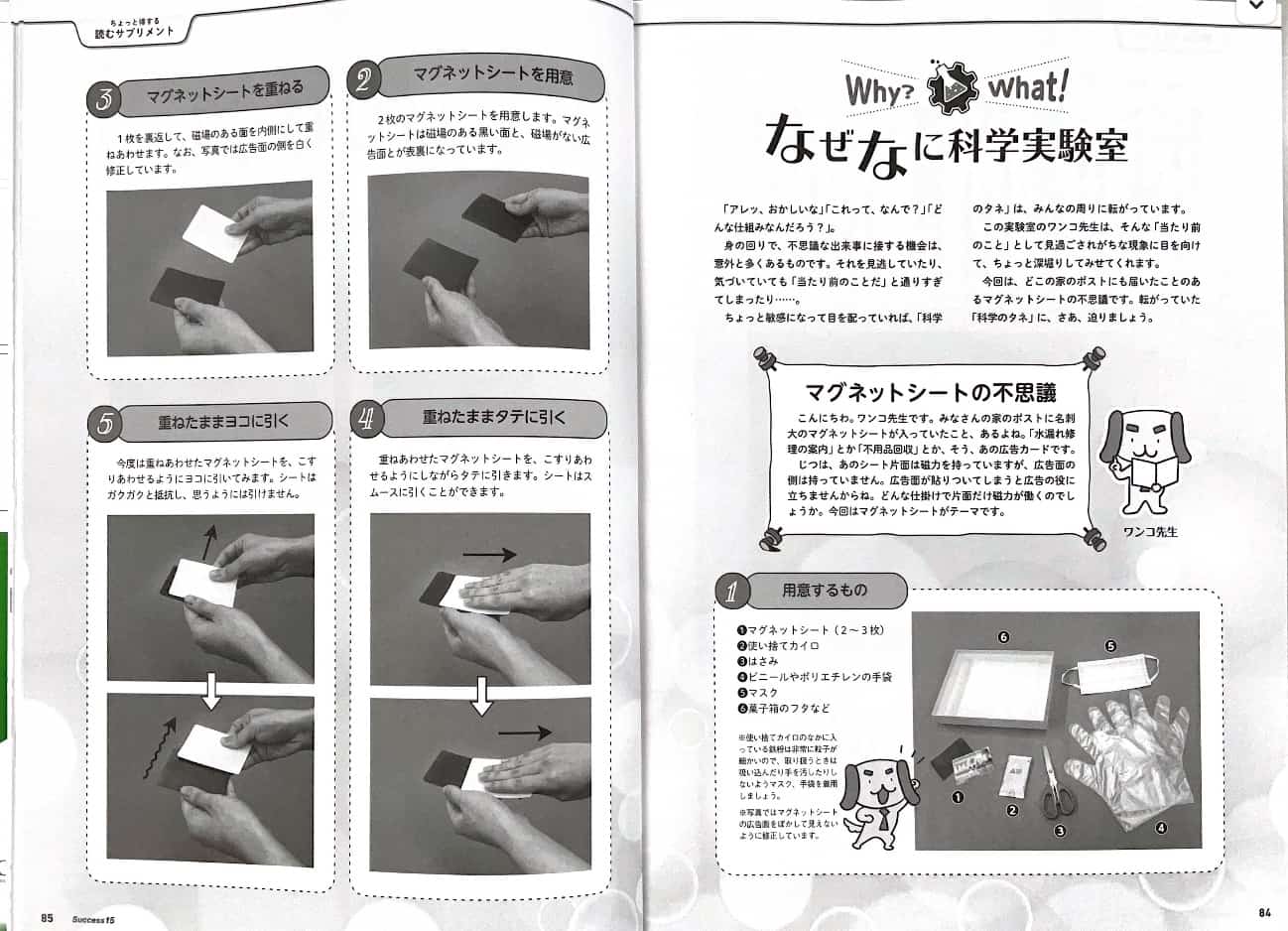
Update: I also contributed to the writing and editing of this experiment for Success 15, “Why? How? Science Experiment Workshop.” If you’re interested, please take a look.
Questions, Requests, and More
Want to bring the wonder and fun of science a little closer to home? I share fun science experiments you can try at home, along with easy-to-understand tips and tricks. Have a look around and search for something that catches your eye!
・The content from Science Notebook has been turned into books. Find out more here.
・Learn more about Ken Kuwako, the creator of this site, here.
・For inquiries and requests, including writing, lectures, science workshops, TV science supervision, and appearances, click here.
・Follow X for the latest article updates!
 Science Notebook Channel features videos of fun science experiments!
9月のイチオシ実験!
お弁当箱をプラバンがわりにしてキーホルダーを作ろう!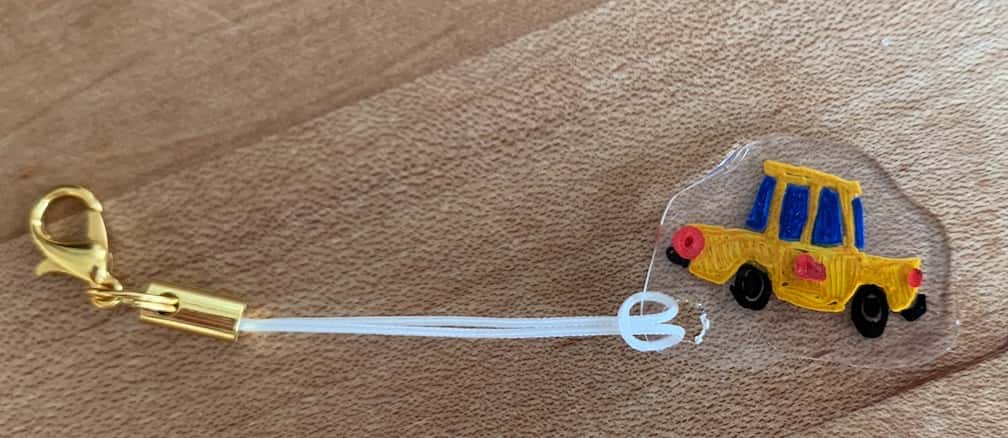
テレビ番組監修・イベント等のお知らせ
- 8月27日(木)科学監修番組放送予定
- 9月20日(日)ダビンチマスターズ出演予定
- 10月10日(土)11:15~12:00 千葉市科学フェスタ2026「桑子先生の回転科学ショー」にてサイエンスショーを行います。
- 12月26日(土) ナリカサイエンスアカデミー(教員向け実験講習会)開催
書籍のお知らせ
- 『高校入試 分解問題集 理科』(学研)…難しい問題も小さな問題に分解することで、問題を解くことができます。そんな分解の技術が身につくように深く関わりを持って作りました。
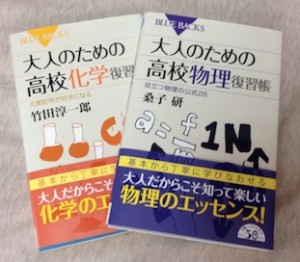
 『大人のための高校物理復習帳』(講談社)…一般向けに日常の物理について公式を元に紐解きました。特設サイトでは実験を多数紹介しています。※増刷がかかり6刷となりました(2026/02/01)
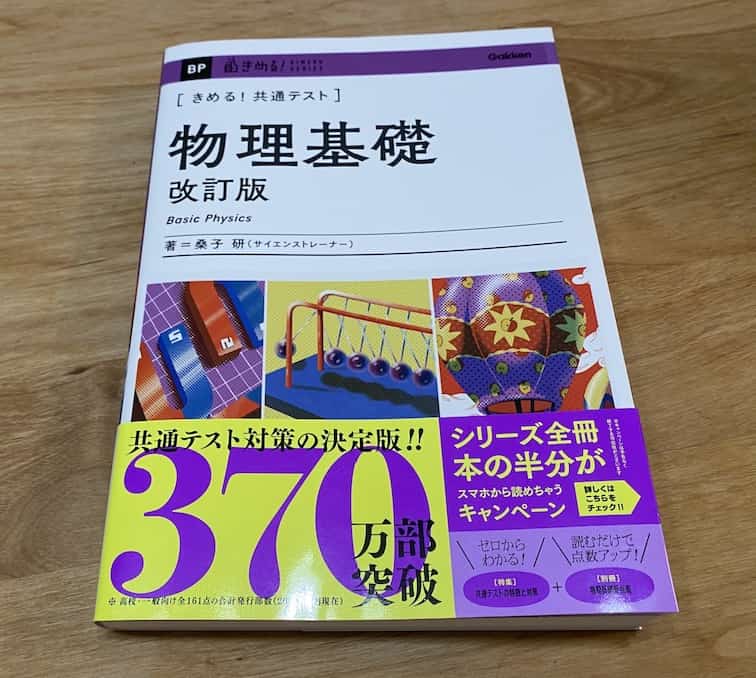
- 『きめる!共通テスト 物理基礎 改訂版』(学研)… 高校物理の参考書です。イラストを多くしてイメージが持てるように描きました。授業についていけない、物理が苦手、そんな生徒におすすめです。特設サイトはこちら。
各種SNS(更新情報をお届け!)
【日本語】X(Twitter)/instagram/Facebook 【英語】BlueSky/Threads
Explore
- 楽しい実験…お子さんと一緒に夢中になれるイチオシの科学実験を多数紹介しています。また、高校物理の理解を深めるための動画教材も用意しました。
- 理科の教材… 理科教師をバックアップ!授業の質を高め、準備を効率化するための選りすぐりの教材を紹介しています。
- Youtube…科学実験等の動画を配信しています。
- 科学ラジオ …科学トピックをほぼ毎日配信中!AI技術を駆使して作成した「耳で楽しむ科学」をお届けします。
- 講演 …全国各地で実験講習会・サイエンスショー等を行っています。
- About …「科学のネタ帳」のコンセプトや、運営者である桑子研のプロフィール・想いをまとめています。
- お問い合わせ …実験教室のご依頼、執筆・講演の相談、科学監修等はこちらのフォームからお寄せください。