Paper Cup Gyro Rocket: Feel the Amazing Power of the Gyroscopic Effect! A Deep Dive into Science Crafting
I’m Ken Kuwako, a Science Trainer. Every day is an experiment!
Why doesn’t a moving bicycle fall over? Why does a spinning top keep spinning without toppling over? The secret lies in something called the “gyroscopic effect.” The gyroscopic effect is the fascinating and rather mysterious property of a rotating object that makes it want to keep its axis of rotation pointing in the same direction.
“For years, I’ve wondered if there was an easy, homemade way to recreate and experience this fascinating phenomenon…”
That thought had been sitting in the back of my mind for several years. Then, just the other day, I finally found the answer in the most unexpected place! It happened at Eiji Komori’s training course for science experiment instructors. What he showed us looked, at first glance, like nothing more than an ordinary “paper cup rocket.” Here’s how to make one.
What you’ll need
Two paper cups, a pair of wire cutters, scissors, and one rubber band.
Making the launch pad
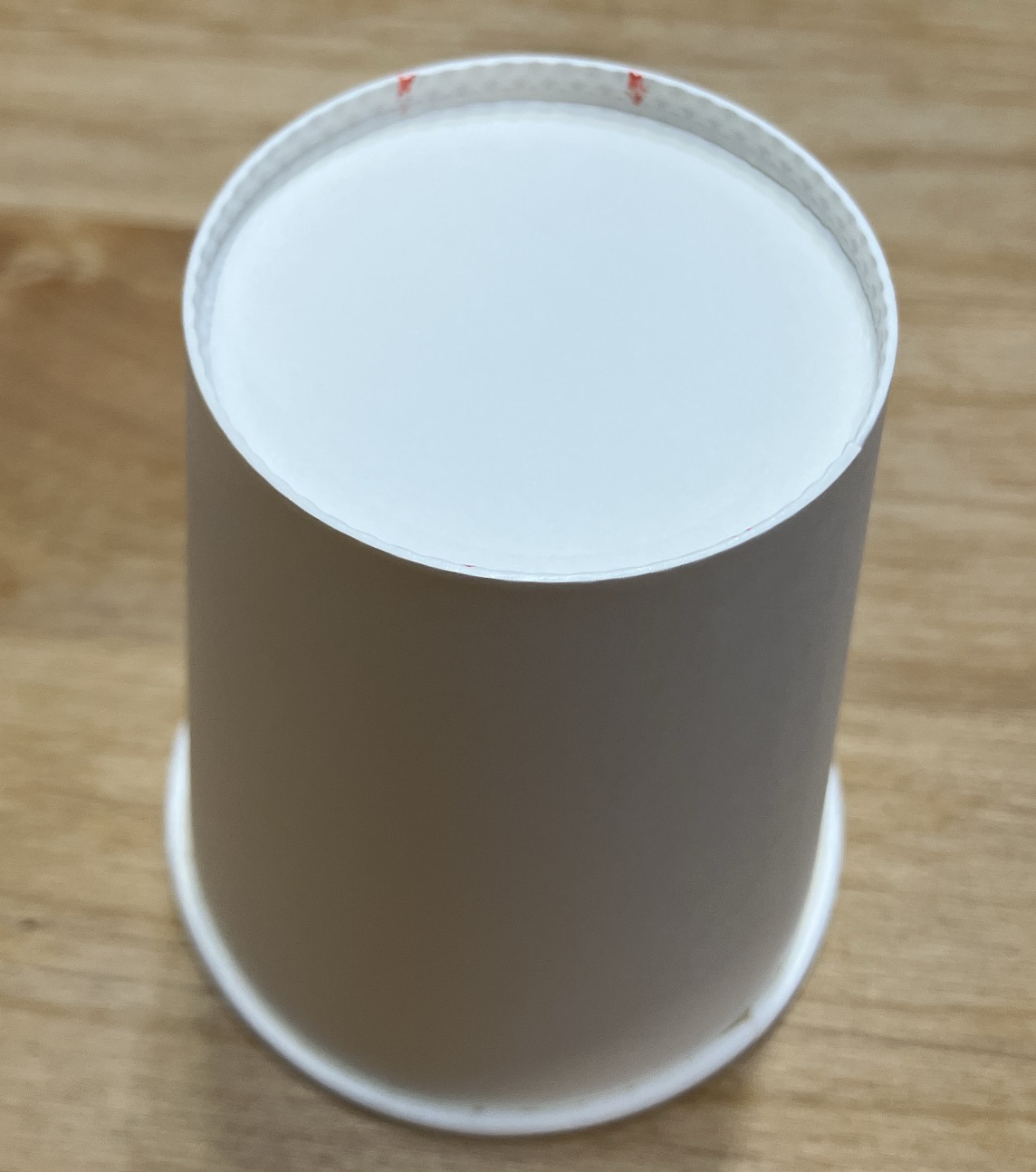
First, make some cuts in the bottom of one of the paper cups. The bottom is fairly tough, so wire cutters work well for this.
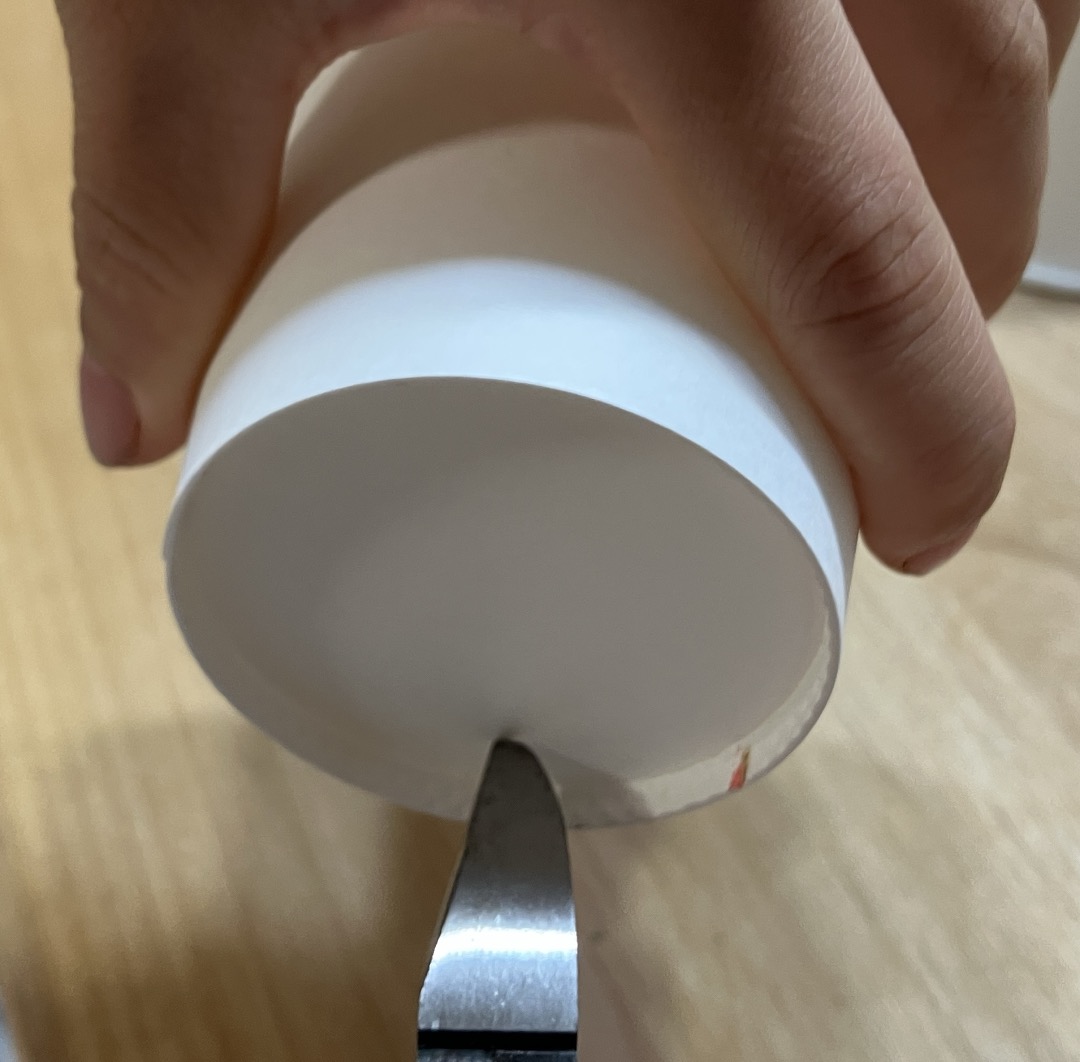
Next, use scissors to cut it as shown in the photo below.
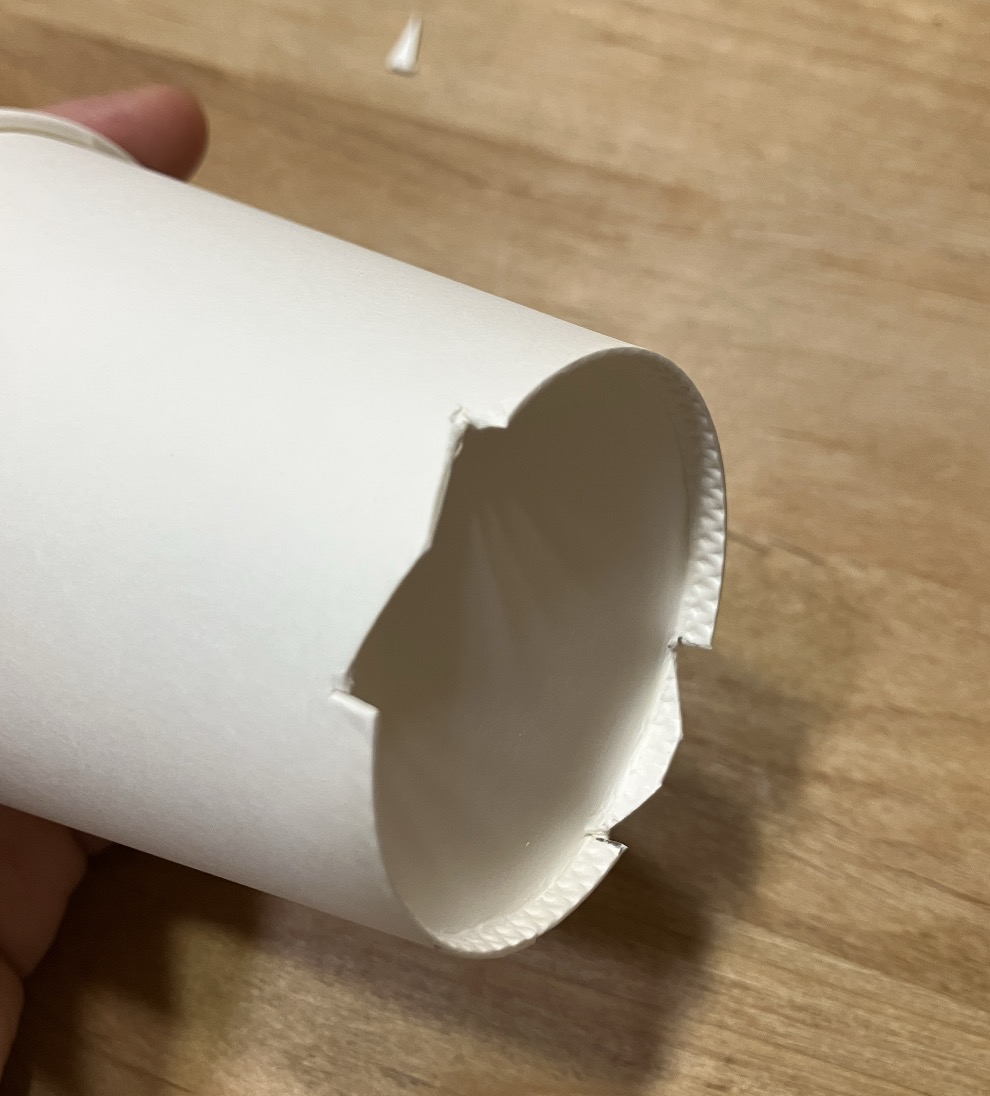
And that’s it—the launch pad is finished!
Next, let’s make the rocket. First, cut some slits into the second cup like this:
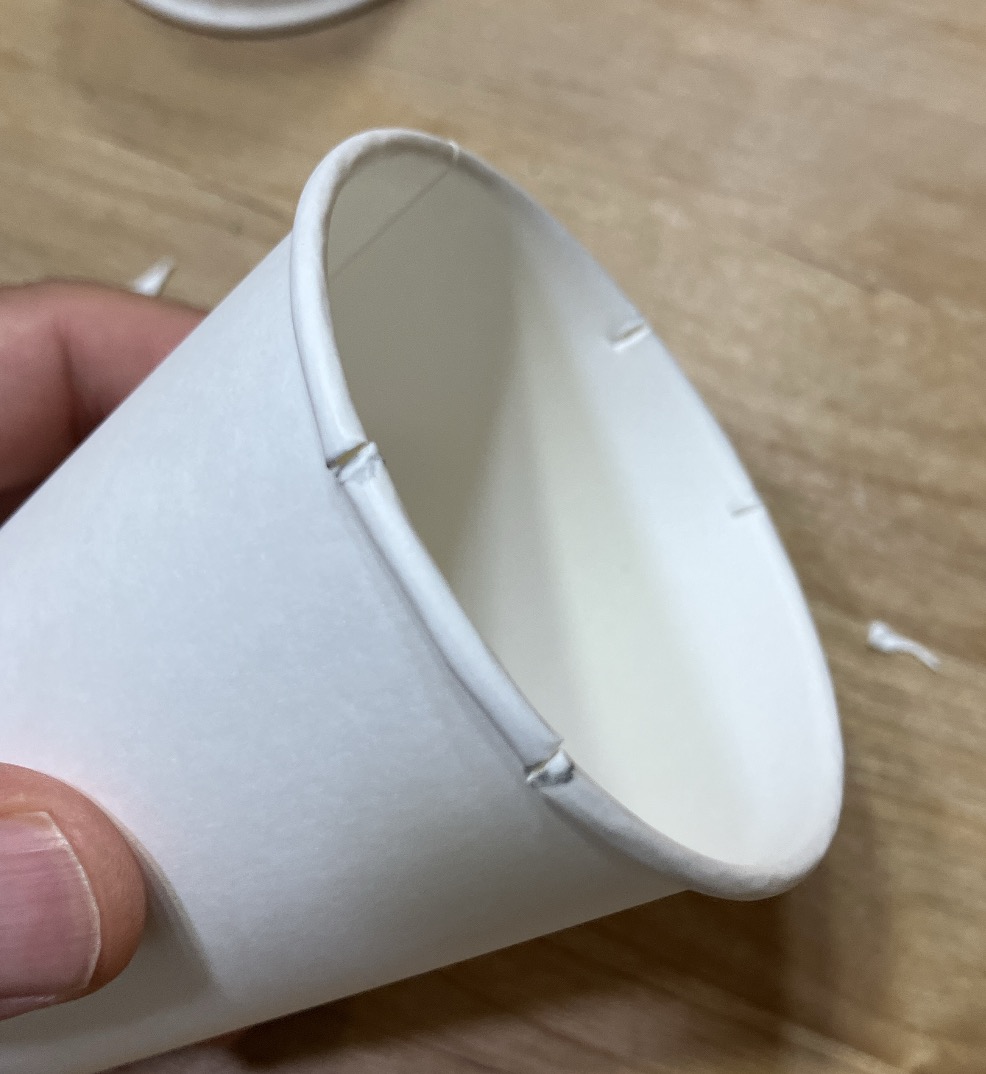
Then stretch the rubber band across the cup in an X shape and hook it into the slits.
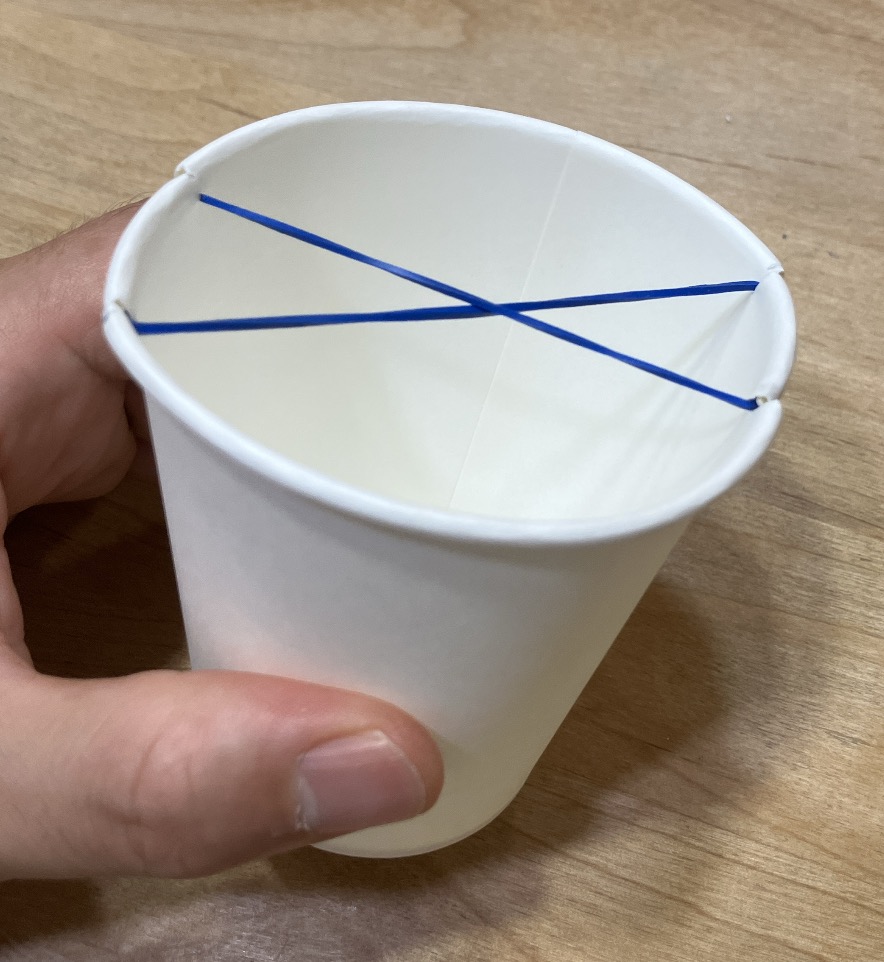
That’s all there is to it! Adding your own design makes it even more fun.
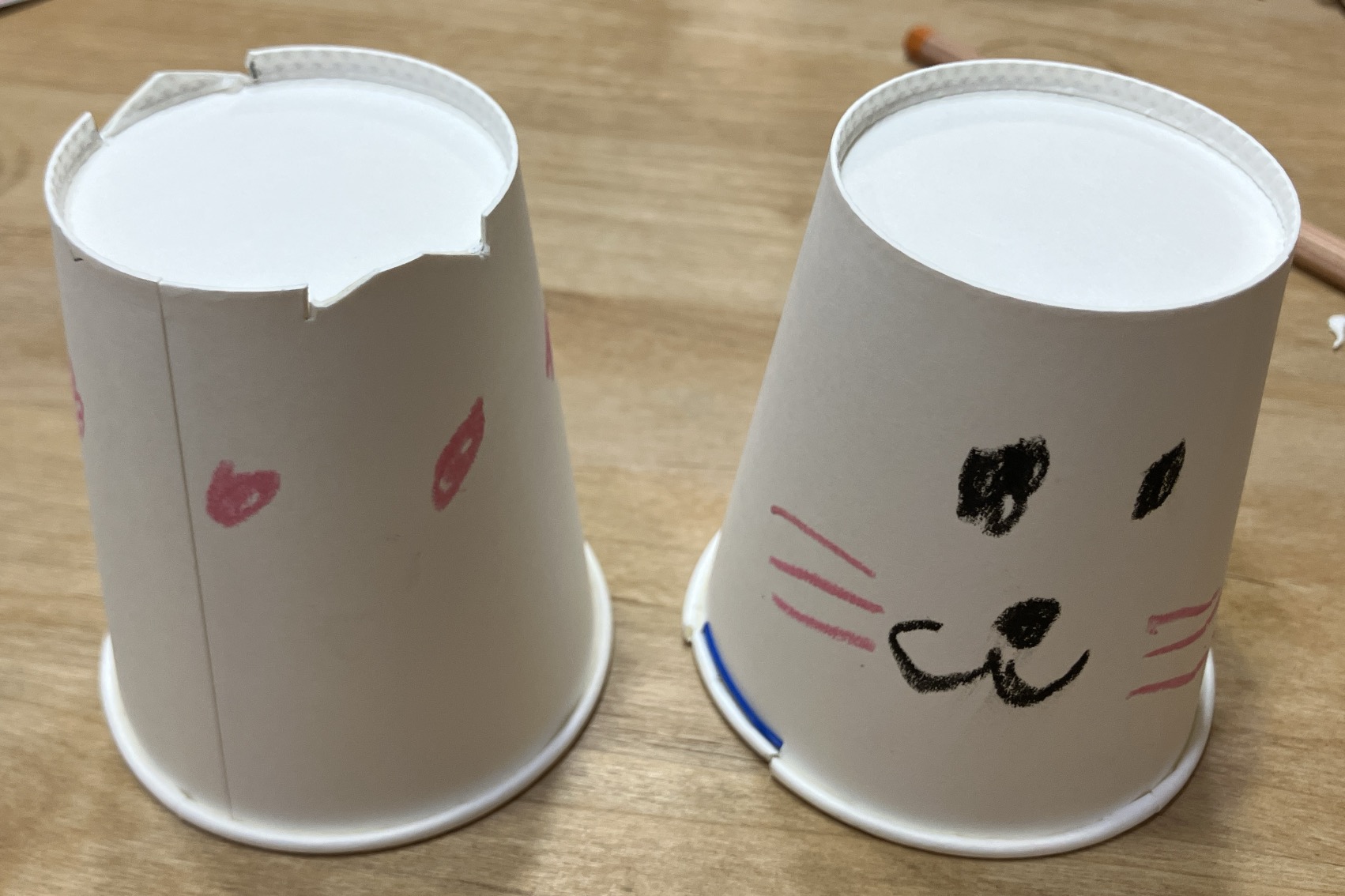
It’s incredibly easy to play with. Place the rocket on the launch pad and push it down from above. This stretches the rubber band.
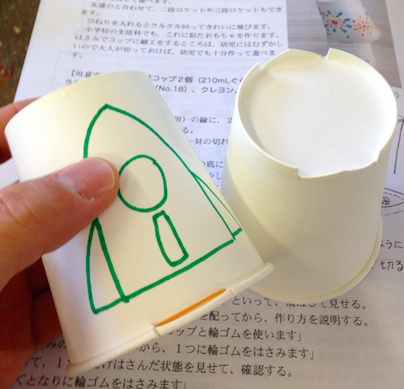
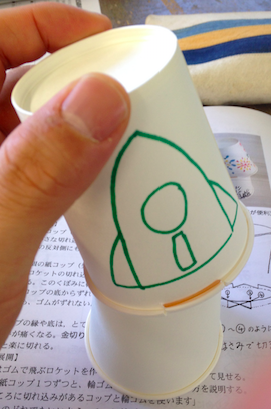
Let go, and off it goes!
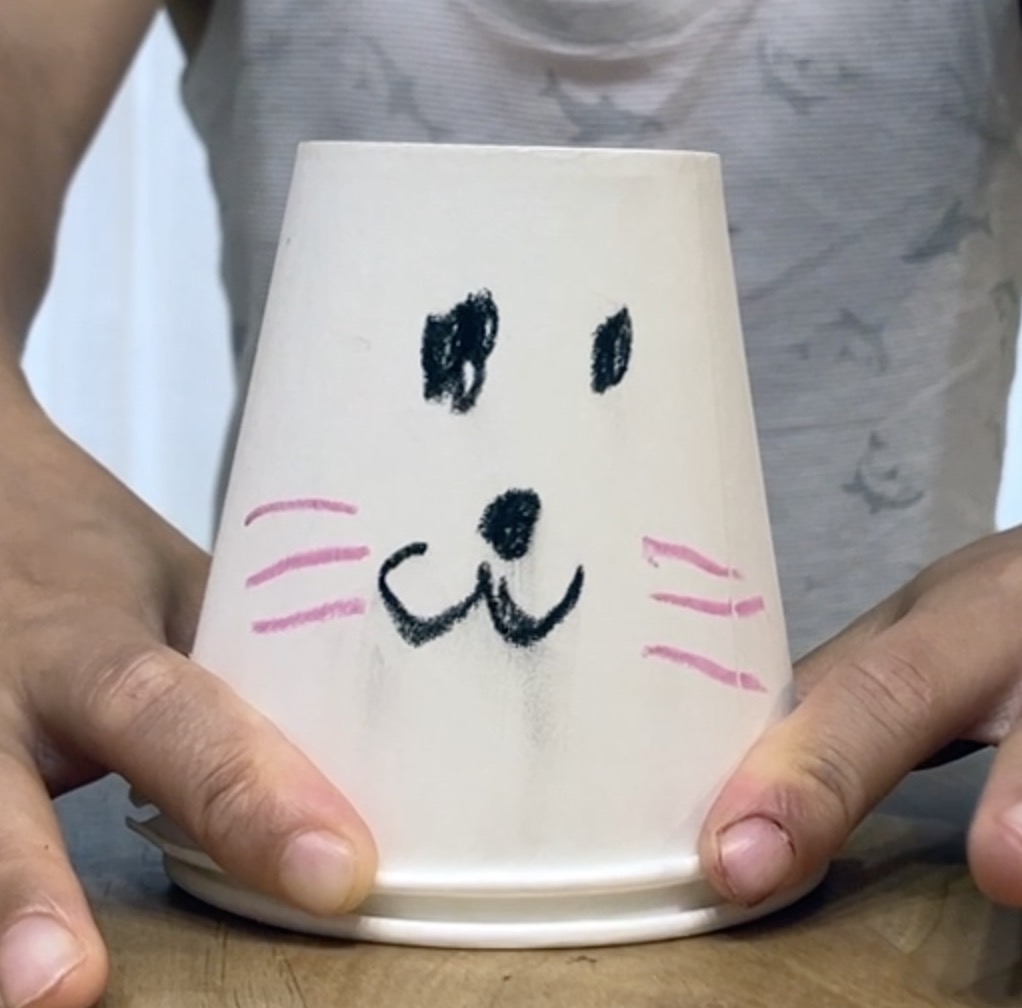
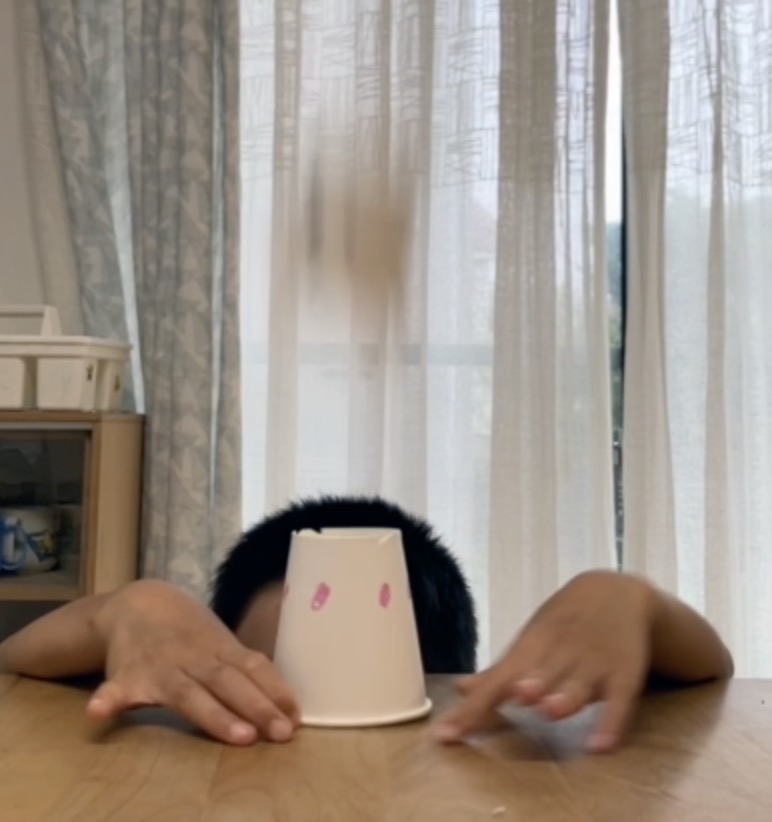
However, if you simply launch the rocket as it is, it quickly loses its balance and comes tumbling down in a chaotic spin.
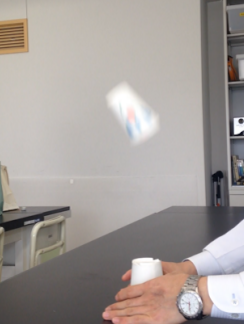
At this point, it’s really just a “flying paper cup.” It loses its orientation as it flies.
Now for the magic trick: Give it a twist!
This is where Professor Komori gave me one magical tip: “Before you launch it, give it a little twist.”
The technique is simple. When you place the rocket on the launch pad, push it down firmly while giving it a slight twist—about 45 degrees. That’s all it takes to completely transform the way the rocket flies.
The moment it launches, the rocket begins spinning beautifully like a screw. It flies smoothly and steadily along a straight trajectory, almost as if it had a perfectly straight spine, going “Whoooooosh!” through the air!
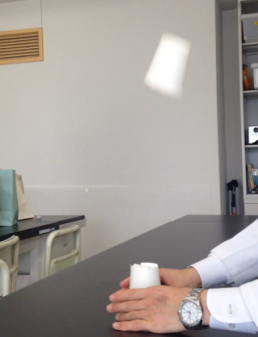
Just adding a twist gives it remarkably stable flight!
This is exactly the homemade version of the gyroscopic effect I had been looking for! Who would have thought that such a simple craft project could hide the same principle of attitude control used in spacecraft?
The reason a rugby ball flies straight when thrown with a beautiful spiral, and the reason bullets from a rifle can travel straight over long distances after being spun by the gun’s spiral grooves, is also the gyroscopic effect.
Everyday science activities are gateways to a much bigger world—a world connected to advanced physical laws studied at university and even to cutting-edge space technology. That’s what makes playing with science so much fun!
My favorite ultimate gyroscopic toy: “Gyro Dora”
I love toys that let you actually feel the gyroscopic effect. I have several old-fashioned gyroscopic tops, but my number-one recommendation is this Doraemon-shaped toy called “Gyro Dora.”
I’ve kept buying replacements with my own money so I can demonstrate it in class, and I’m now on my third one. It’s a little pricey, but it’s absolutely worth it.
What makes Gyro Dora so impressive is its size and power. Inside is a large spinning top—a gyroscope. Once you get it spinning rapidly, it produces such a strange force that it almost feels as if Doraemon himself has suddenly developed a mind of his own.
When I hand a spinning Gyro Dora to students, their arms get pulled sharply in unexpected directions, and everyone gets incredibly excited! Even after demonstrating it countless times, I’m still amazed by this mysterious force.
Even if you tilt the axis and let go, the gyroscopic effect counteracts gravity and Doraemon refuses to fall over. It’s one of those magical moments that makes both children and adults light up with wonder.
Contact & Requests
Want to bring the wonders and excitement of science a little closer to home? I share fun science experiments you can try at home, along with simple tips and tricks to make them work. Take a look around and search for whatever catches your curiosity!
・About the site and Ken Kuwako, the person behind it, click here
・For inquiries and requests (writing, lectures, science workshops, TV science supervision, appearances, etc.), click here
・For updates on new articles, follow me on X!
 The Science Ideas Channel features videos of science experiments!
9月のイチオシ実験!
お弁当箱をプラバンがわりにしてキーホルダーを作ろう!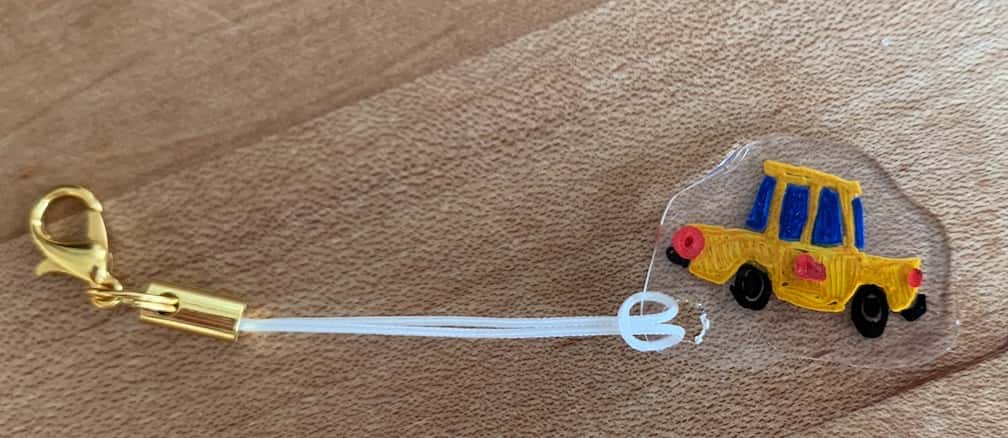
テレビ番組監修・イベント等のお知らせ
- 8月27日(木)科学監修番組放送予定
- 9月20日(日)ダビンチマスターズ出演予定
- 10月10日(土)11:15~12:00 千葉市科学フェスタ2026「桑子先生の回転科学ショー」にてサイエンスショーを行います。
- 12月26日(土) ナリカサイエンスアカデミー(教員向け実験講習会)開催
書籍のお知らせ
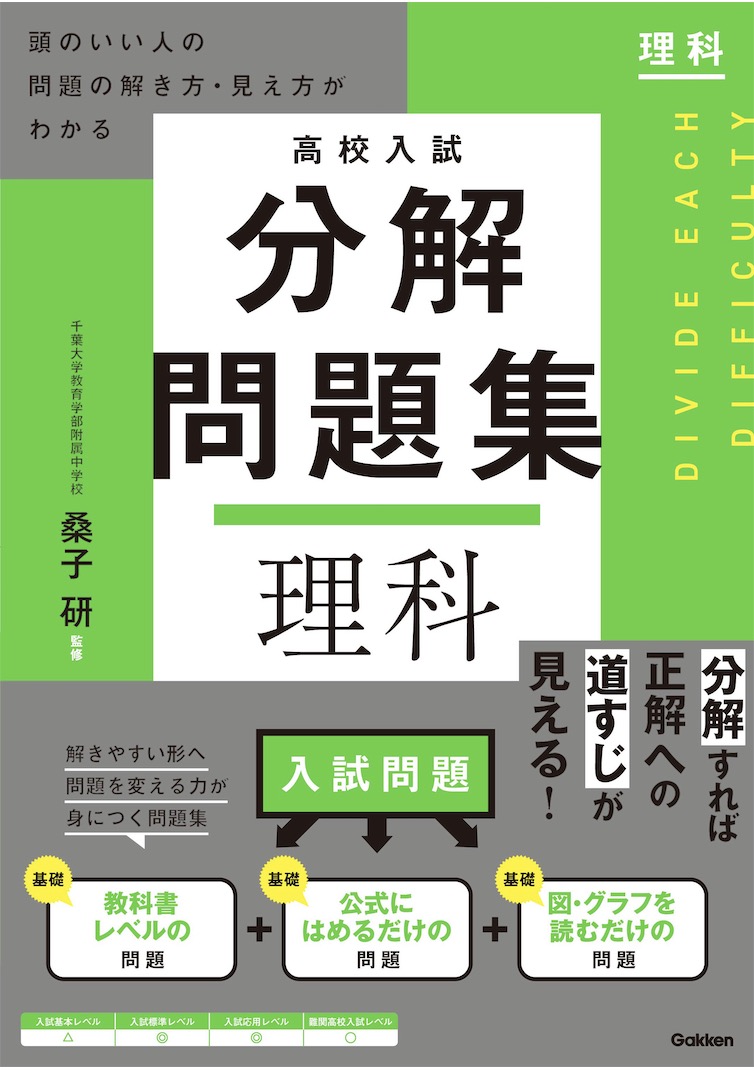
- 『高校入試 分解問題集 理科』(学研)…難しい問題も小さな問題に分解することで、問題を解くことができます。そんな分解の技術が身につくように深く関わりを持って作りました。
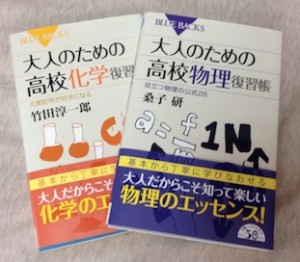
 『大人のための高校物理復習帳』(講談社)…一般向けに日常の物理について公式を元に紐解きました。特設サイトでは実験を多数紹介しています。※増刷がかかり6刷となりました(2026/02/01)
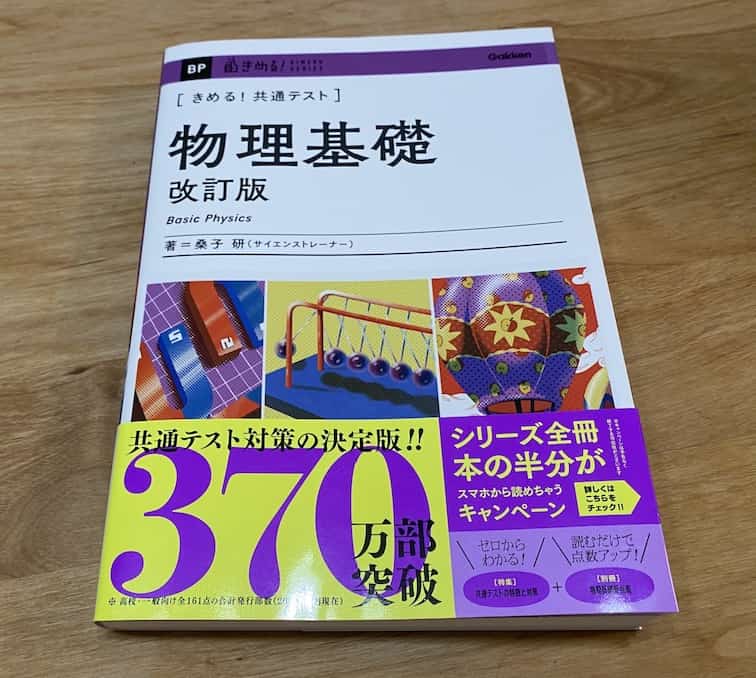
- 『きめる!共通テスト 物理基礎 改訂版』(学研)… 高校物理の参考書です。イラストを多くしてイメージが持てるように描きました。授業についていけない、物理が苦手、そんな生徒におすすめです。特設サイトはこちら。
各種SNS(更新情報をお届け!)
【日本語】X(Twitter)/instagram/Facebook 【英語】BlueSky/Threads
Explore
- 楽しい実験…お子さんと一緒に夢中になれるイチオシの科学実験を多数紹介しています。また、高校物理の理解を深めるための動画教材も用意しました。
- 理科の教材… 理科教師をバックアップ!授業の質を高め、準備を効率化するための選りすぐりの教材を紹介しています。
- Youtube…科学実験等の動画を配信しています。
- 科学ラジオ …科学トピックをほぼ毎日配信中!AI技術を駆使して作成した「耳で楽しむ科学」をお届けします。
- 講演 …全国各地で実験講習会・サイエンスショー等を行っています。
- About …「科学のネタ帳」のコンセプトや、運営者である桑子研のプロフィール・想いをまとめています。
- お問い合わせ …実験教室のご依頼、執筆・講演の相談、科学監修等はこちらのフォームからお寄せください。