If the Sun Were the Size of a Balance Ball, How Big Would Earth Be?
I’m Ken Kuwako, your Science Trainer. Every day is an experiment.
Here’s a question for you. If you shrank the Sun down to a 50 cm diameter balance ball, how big do you think Earth would be? A soccer ball? A ping-pong ball? …Believe it or not, the answer is just 1 mm. It would be so tiny that you’d have to squint to see it! Today, let’s take a journey into the wonderfully surprising world of a “scale model of the Solar System.”
While flipping through a science reference book, I came across an intriguing idea: “What if the Sun were a sphere 50 cm in diameter? What would happen to the other planets?” I immediately decided to make a calculation sheet to find out. For the model Sun, I used a 50 cm diameter balance ball. You can find the spreadsheet here.
The Planets Turn Into Familiar Objects
Once I ran the numbers, I discovered that the other planets could be represented by surprisingly familiar objects when the Sun is scaled down to a 50 cm balance ball.
Bead 8 mm in diameter
Ping-pong ball 44 mm in diameter
Soccer ball 220 mm in diameter
Baseball 70 mm in diameter
Beach ball 260 mm in diameter
Balance ball 500 mm in diameter
I also prepared separate sheets for the questions and answers, with the calculation formulas already entered in the answer sheet. Here are the results.
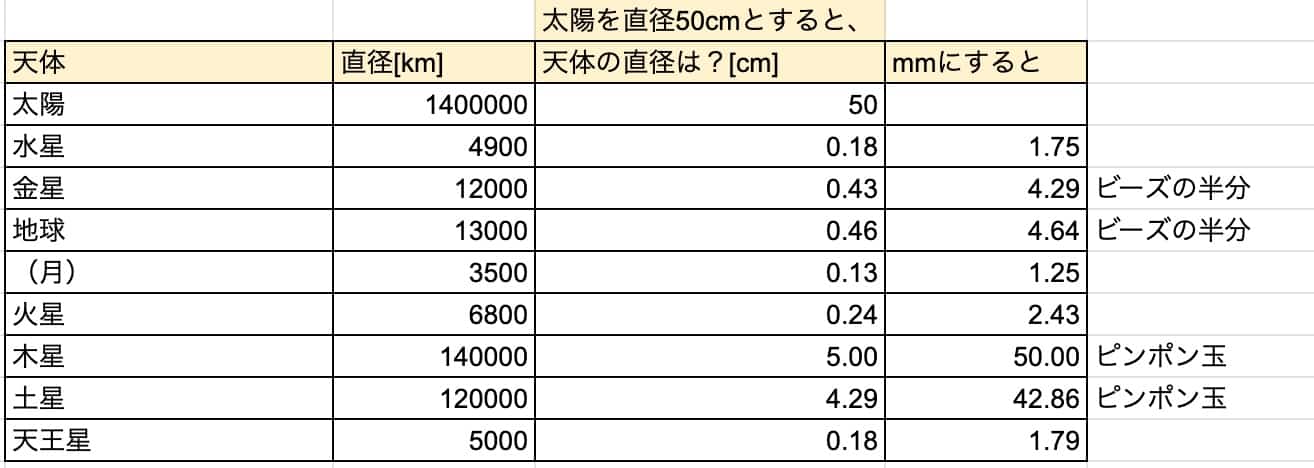
And what about Earth? Its diameter would be a mere 1 mm. “Wait, that tiny?” You’re probably not the only one who finds that surprising. Compared with the size of the Sun, even Jupiter would be no bigger than a ping-pong ball. Suddenly, the enormous scale of the universe becomes something you can almost hold in the palm of your hand.
Let’s Scale the Distances to the Planets, Too
Now that we have our balance ball (the Sun) sitting right in front of us, where would the other planets be orbiting? I ran the numbers for that, too. Here’s what I got.
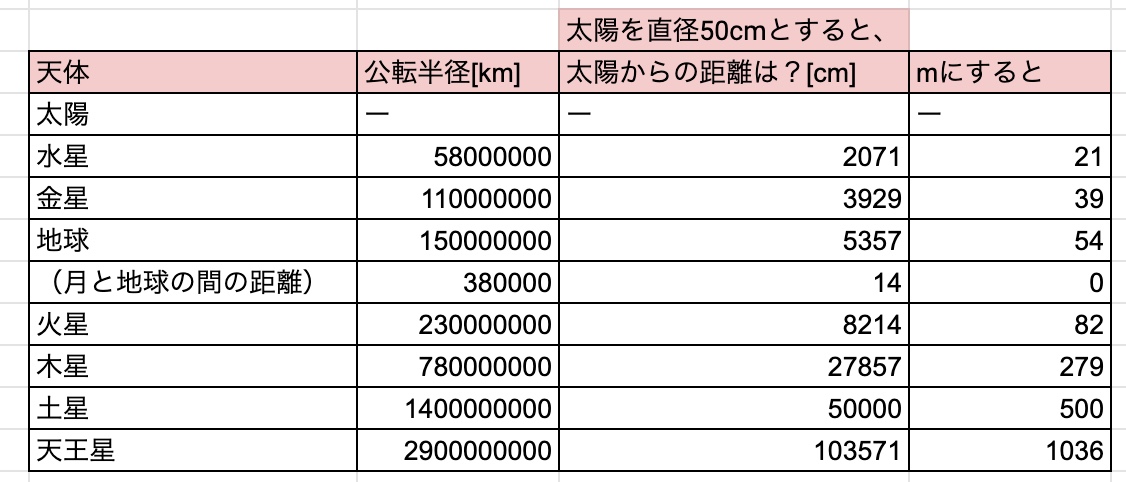
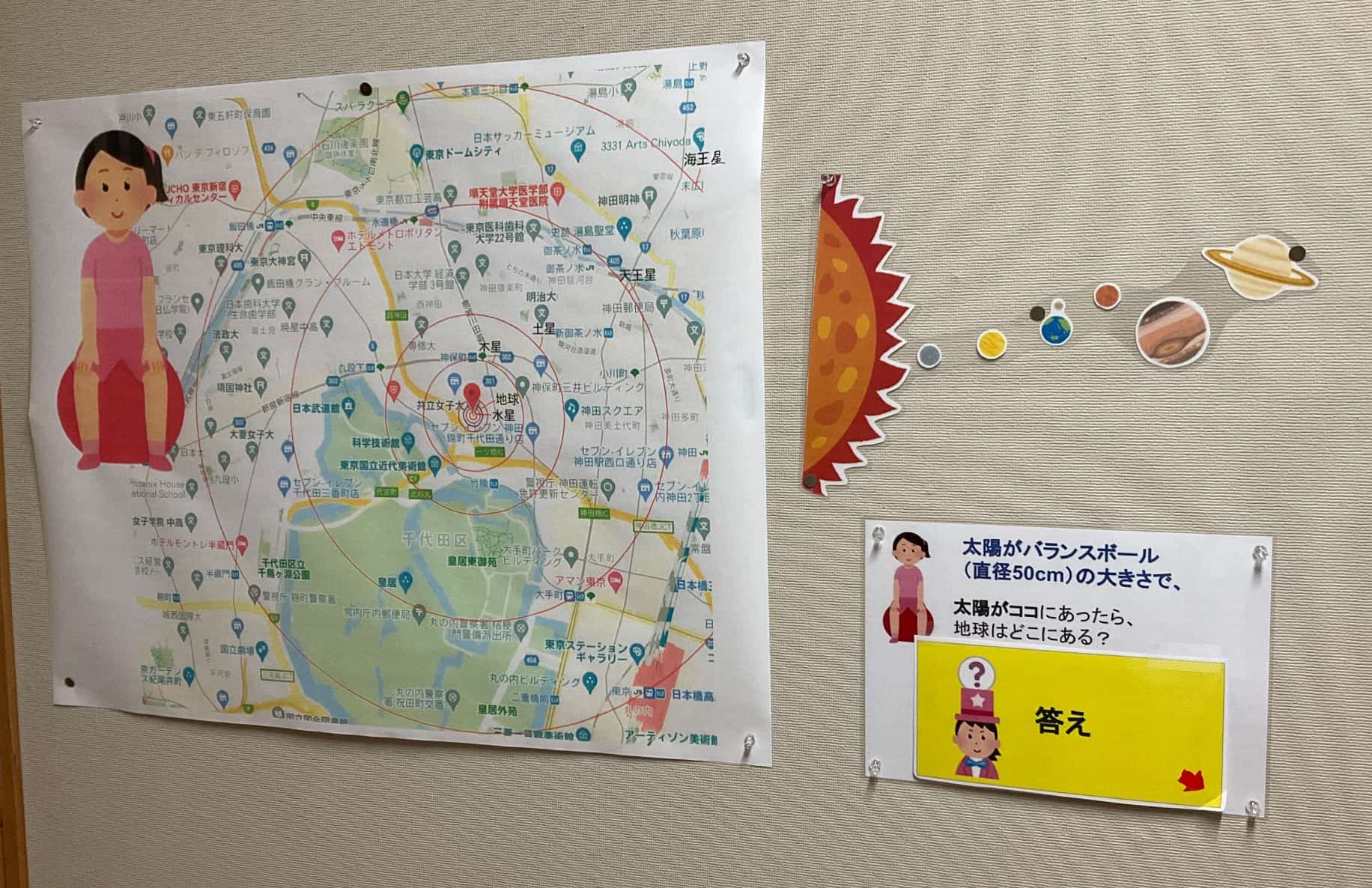
A handy way to visualize these distances is a web service that lets you “draw circles on Google Maps.” Even Mercury, the closest planet to the Sun, would be 21 meters away from our model Sun (the balance ball). That’s already far enough to take you outside the room! Try using the app to draw the circles around your home or school, and you’ll discover some surprisingly interesting things.
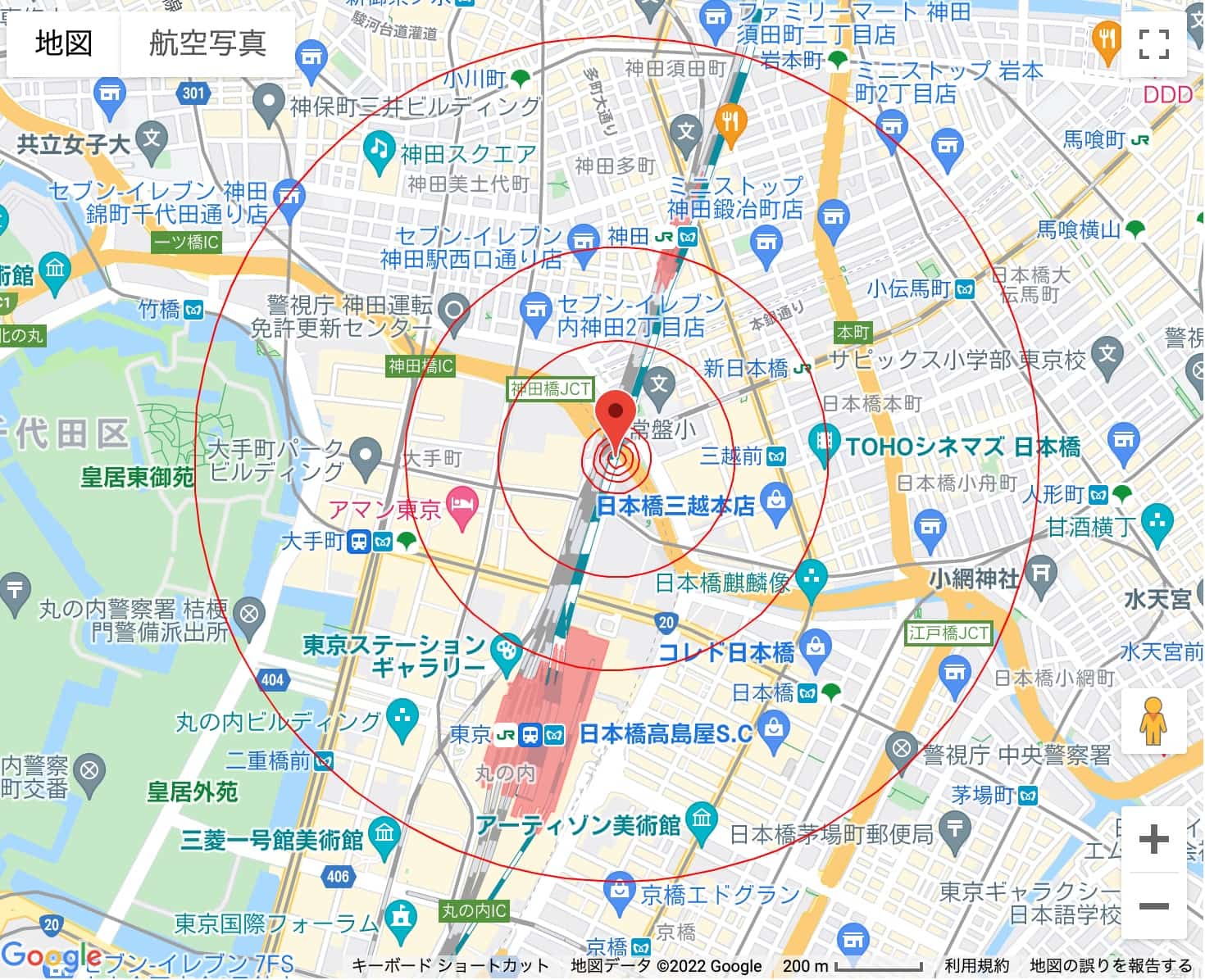
It would look something like this. The Sun sits at the center, with Mercury, Venus, Earth, and the other planets spreading outward.

Overlaying the model on a real map really drives home just how enormous the Solar System is. I’ve also added another version to the spreadsheet where the Sun’s diameter is scaled up to 1 meter (100 cm), so give that one a try, too.

If Earth Were a 100 cm Sphere, What Would Happen to Tokyo?
Apparently, the idea of “What would Earth look like if it were a 100 cm sphere?” has already been turned into a book. And the details are absolutely mind-blowing.
The Moon would be about the size of a beach ball, orbiting roughly 30 meters from Earth. The Sun would be 12 km away and, astonishingly, would be about the size of Tokyo Dome. From the perspective of a 100 cm Earth, the Sun would shine as brightly as 14 billion 100-watt light bulbs switched on at once. It’s an incredible reminder of just how enormous the Sun really is.
Now, if we map these positions onto the JR Tokaido Line, the Solar System looks like this.
・Earth would be around Omori Station in Tokyo, with a diameter of 100 cm.
・Mercury would be around Shinagawa Station, with a diameter of 40 cm.
・Venus would be around Oimachi, with a diameter of 95 cm.
・Mars would be around Kawasaki Station, with a diameter of 50 cm.
・Jupiter would be around Hiratsuka Station, with a diameter of 11 m.
・Saturn would be around Mount Fuji, with a diameter of 9 m.
I wanted to see whether these numbers really checked out, so I did the calculations myself.
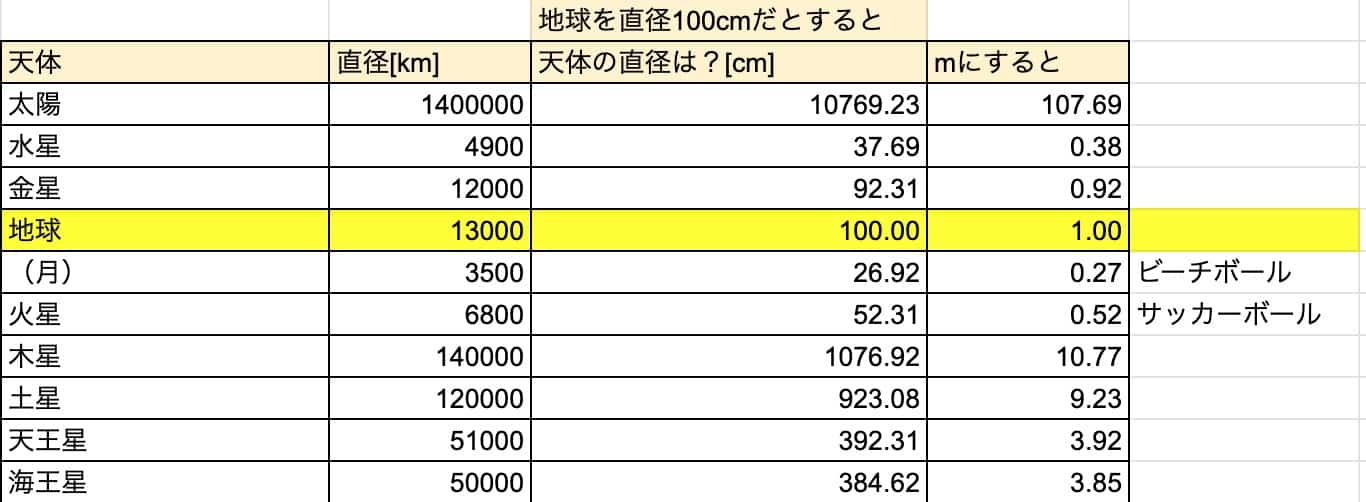
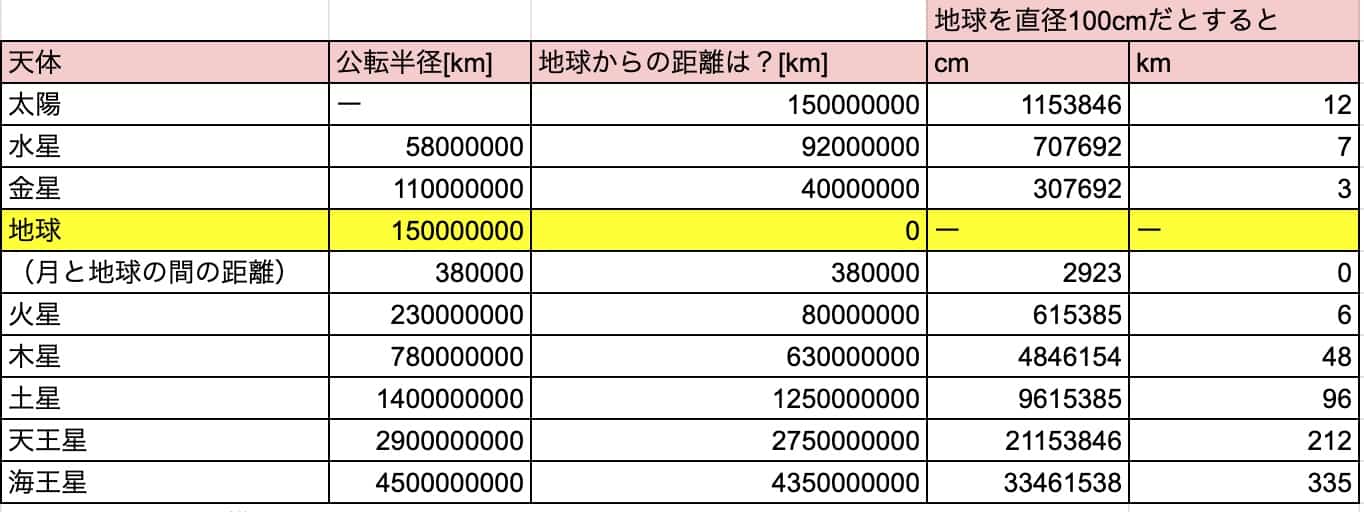
The numbers are slightly different from those in the reference I mentioned earlier, but they’re broadly consistent. According to my calculations, the Sun would be about 100 meters in diameter. “A 100-meter sphere” may still be difficult to picture, but I looked it up and discovered that the giant Ferris wheel that once stood at Palette Town in Odaiba was exactly 100 meters in diameter.
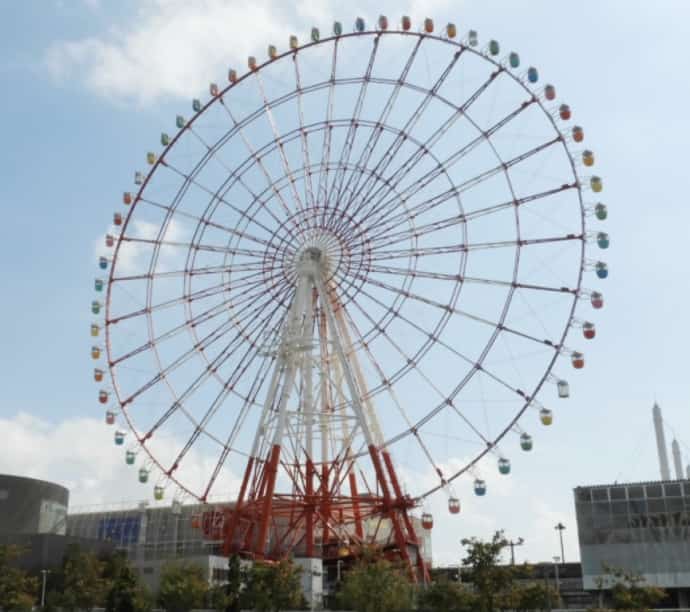
Once you imagine that giant Ferris wheel as the “Sun,” the sheer scale of our Solar System becomes truly astonishing.
Turn It Into a Display and Experience It Together
Based on these calculations, I also created a display poster (Google Slides). If you find it useful, please feel free to use it for your classes, science projects, or other activities.

Later on, I decided to give the display an upgrade. Take a look at this version, too!
These are 45 mm diameter polystyrene balls I bought at Seria, a Japanese 100-yen shop.
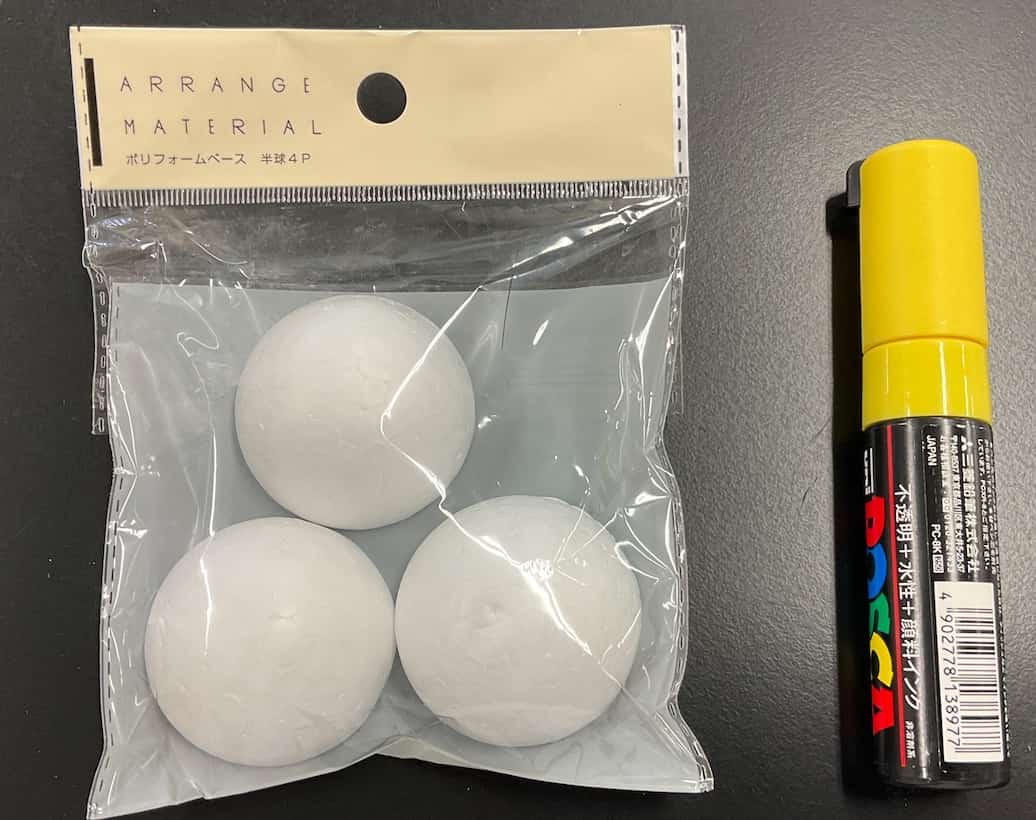
I attached one of them to the display at the “ping-pong ball” position using a hot glue gun.
These are beads I also bought at Seria. They are just 4 mm in diameter.
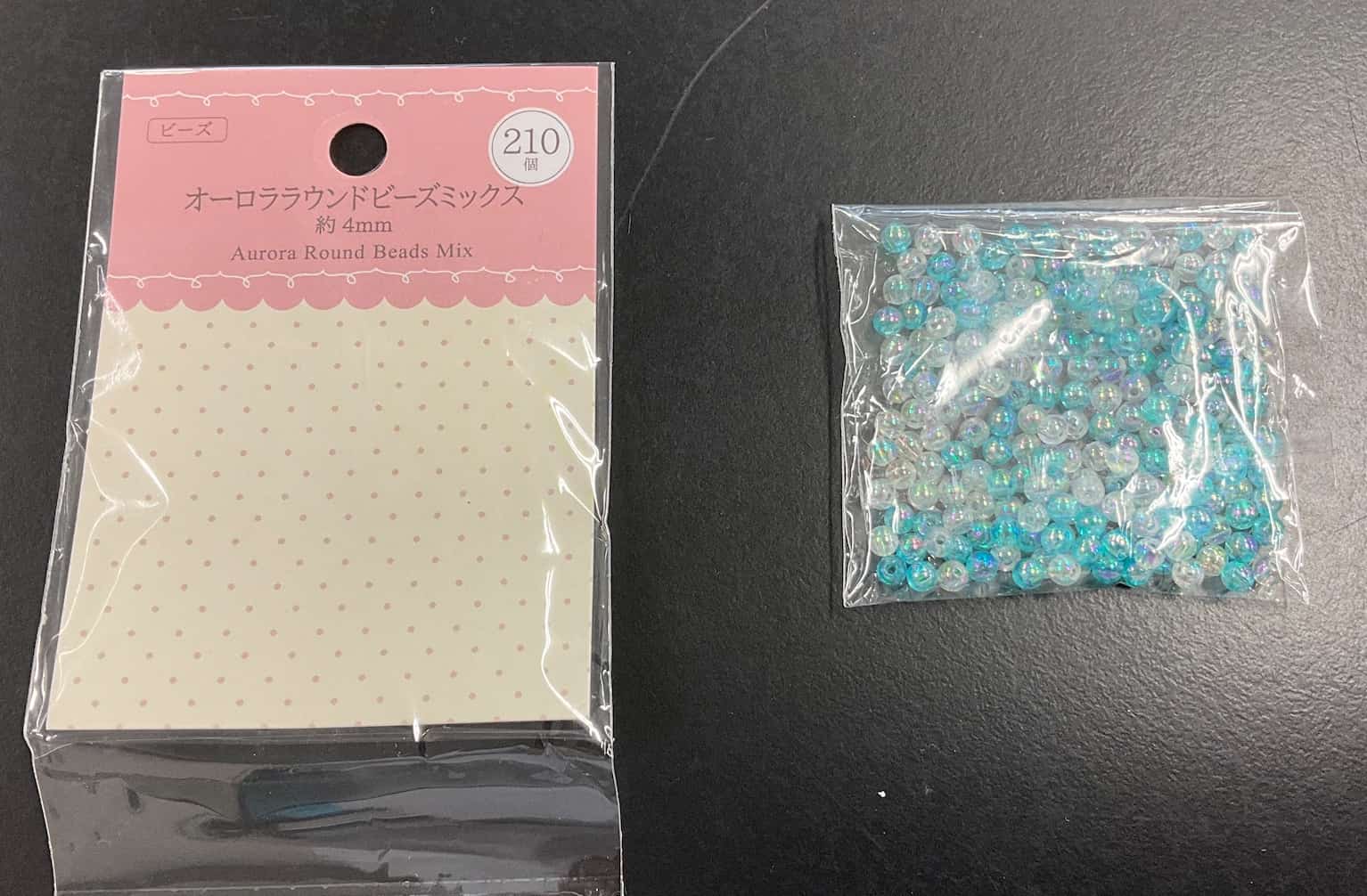
I attached these to the display as well.
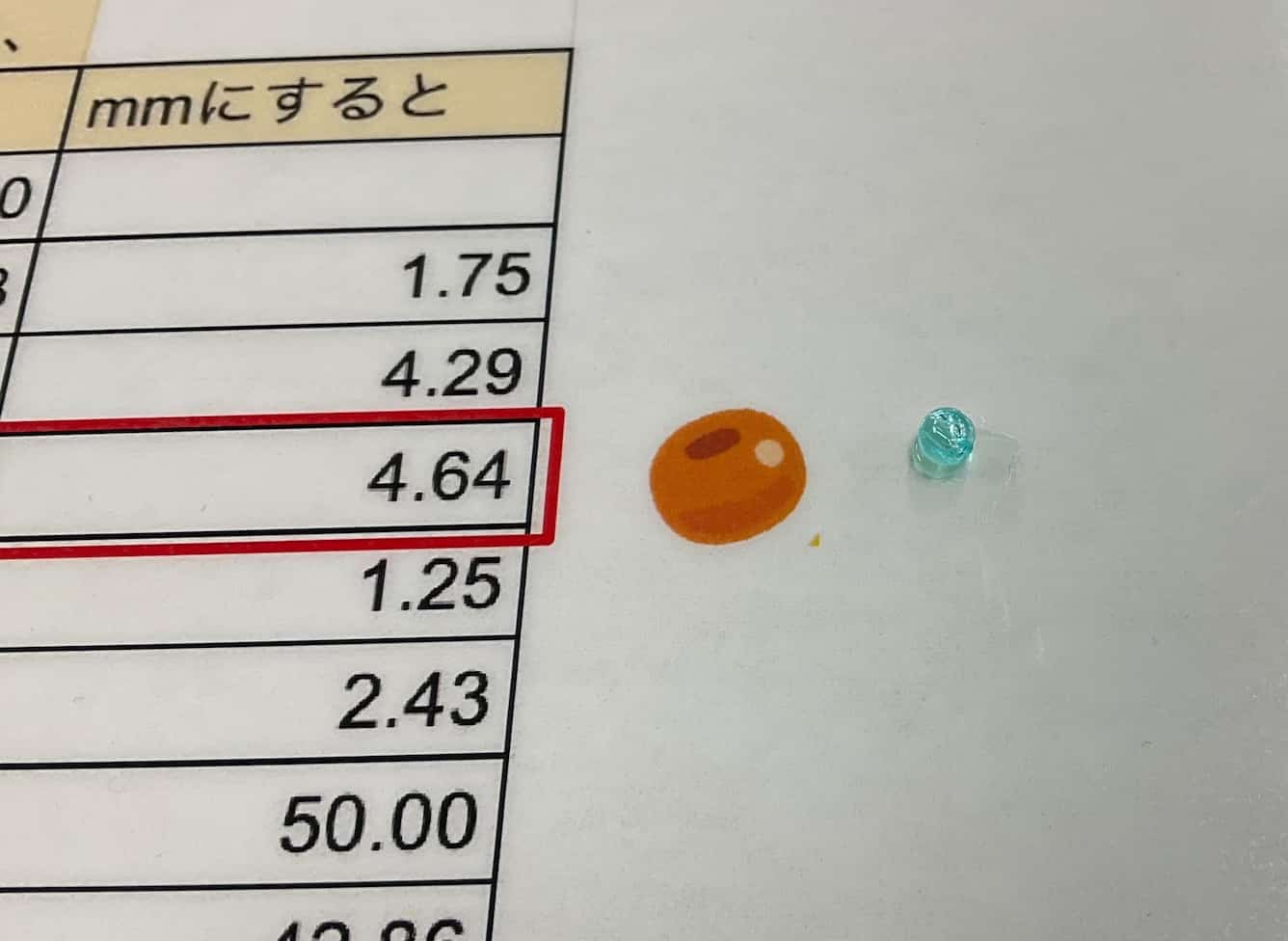
Compared with simply looking at a flat diagram or graph, turning the model into something three-dimensional that students can actually see and touch makes the enormous scale of the Solar System much more engaging—and much easier to appreciate.
Questions, Requests, and More
Let’s bring the wonders and excitement of science a little closer to home! I share fun science experiments you can try at home, along with simple tips and explanations to help you get the most out of them. Feel free to explore the site and see what you can discover!
・The content from Science Notebook has been turned into a book. For more information, click here.
・For more information about Ken Kuwako, the person behind the site, click here.
・For inquiries and requests, including writing, lectures, science workshops, TV science supervision, and appearances, click here.
・Follow X for updates on new articles!
 Science Notebook Channel features videos of science experiments!
9月のイチオシ実験!
お弁当箱をプラバンがわりにしてキーホルダーを作ろう!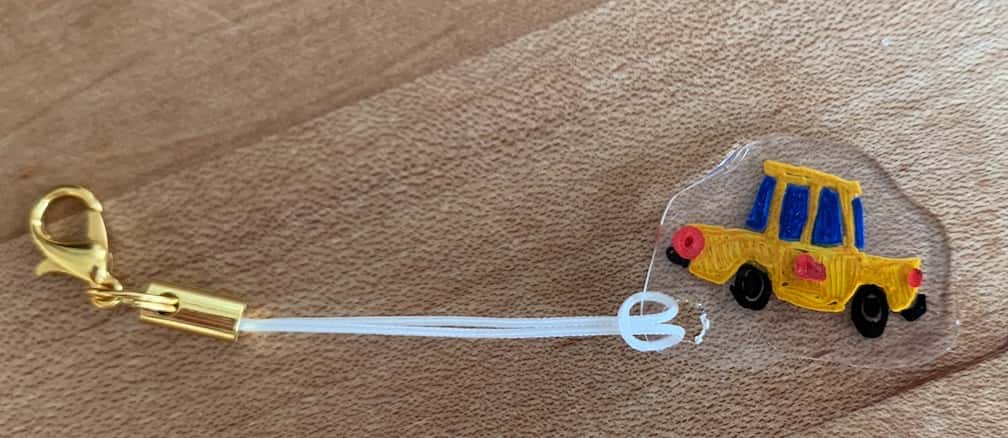
テレビ番組監修・イベント等のお知らせ
- 8月27日(木)科学監修番組放送予定
- 9月20日(日)ダビンチマスターズ出演予定
- 10月10日(土)11:15~12:00 千葉市科学フェスタ2026「桑子先生の回転科学ショー」にてサイエンスショーを行います。
- 12月26日(土) ナリカサイエンスアカデミー(教員向け実験講習会)開催
書籍のお知らせ
- 『高校入試 分解問題集 理科』(学研)…難しい問題も小さな問題に分解することで、問題を解くことができます。そんな分解の技術が身につくように深く関わりを持って作りました。
 『大人のための高校物理復習帳』(講談社)…一般向けに日常の物理について公式を元に紐解きました。特設サイトでは実験を多数紹介しています。※増刷がかかり6刷となりました(2026/02/01)
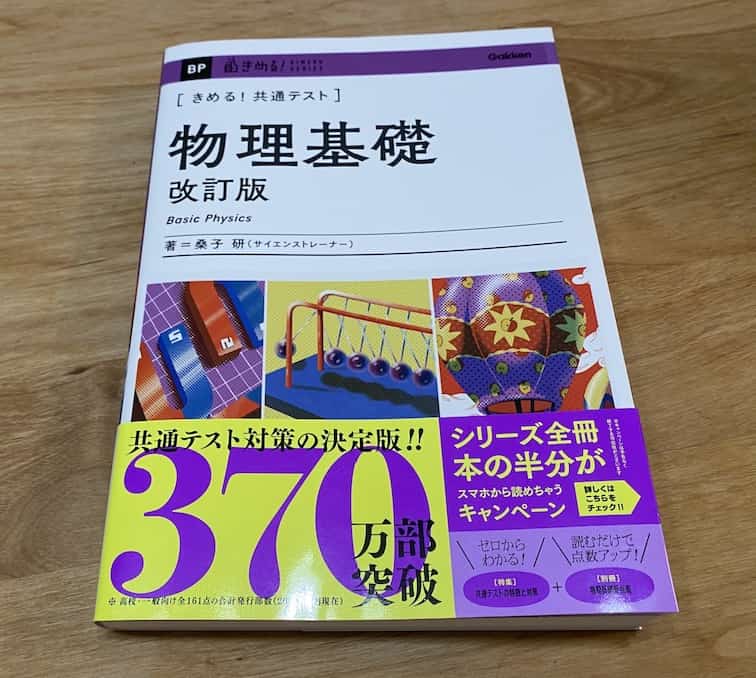
- 『きめる!共通テスト 物理基礎 改訂版』(学研)… 高校物理の参考書です。イラストを多くしてイメージが持てるように描きました。授業についていけない、物理が苦手、そんな生徒におすすめです。特設サイトはこちら。
各種SNS(更新情報をお届け!)
【日本語】X(Twitter)/instagram/Facebook 【英語】BlueSky/Threads
Explore
- 楽しい実験…お子さんと一緒に夢中になれるイチオシの科学実験を多数紹介しています。また、高校物理の理解を深めるための動画教材も用意しました。
- 理科の教材… 理科教師をバックアップ!授業の質を高め、準備を効率化するための選りすぐりの教材を紹介しています。
- Youtube…科学実験等の動画を配信しています。
- 科学ラジオ …科学トピックをほぼ毎日配信中!AI技術を駆使して作成した「耳で楽しむ科学」をお届けします。
- 講演 …全国各地で実験講習会・サイエンスショー等を行っています。
- About …「科学のネタ帳」のコンセプトや、運営者である桑子研のプロフィール・想いをまとめています。
- お問い合わせ …実験教室のご依頼、執筆・講演の相談、科学監修等はこちらのフォームからお寄せください。