Have you ever looked at what you thought was a tree branch, only to realize that it was actually a living creature? I had exactly that experience when my niece showed me a tiny insect called a stick insect. Today, let’s take a closer look at these masters of camouflage and explore their fascinating lifestyles and surprising abilities.
When you hear “stick insect,” don’t you picture a brown insect that looks almost exactly like a twig, just like the ones you see in nature books?
That’s what I imagined, too. But the stick insect my niece showed me was bright green, almost like a praying mantis. It was only about 2 cm long and looked incredibly cute.
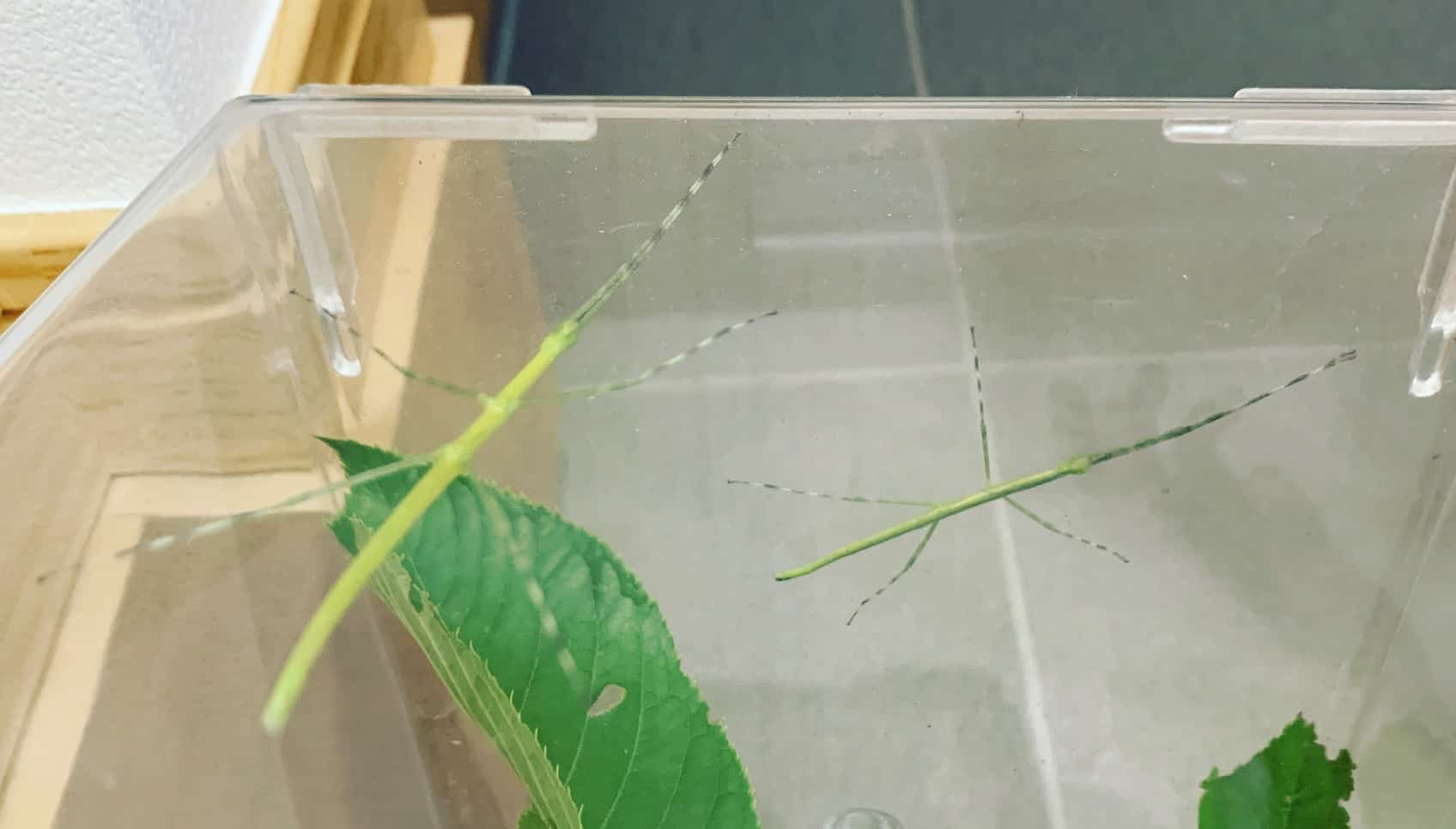
This stick insect was found in Gunma Prefecture.
It was hard not to marvel at the mystery of nature as I wondered how this tiny creature would grow. When I visited again three weeks later, I was amazed to see how much bigger it had become. The speed at which living creatures grow can be much faster than we adults imagine!
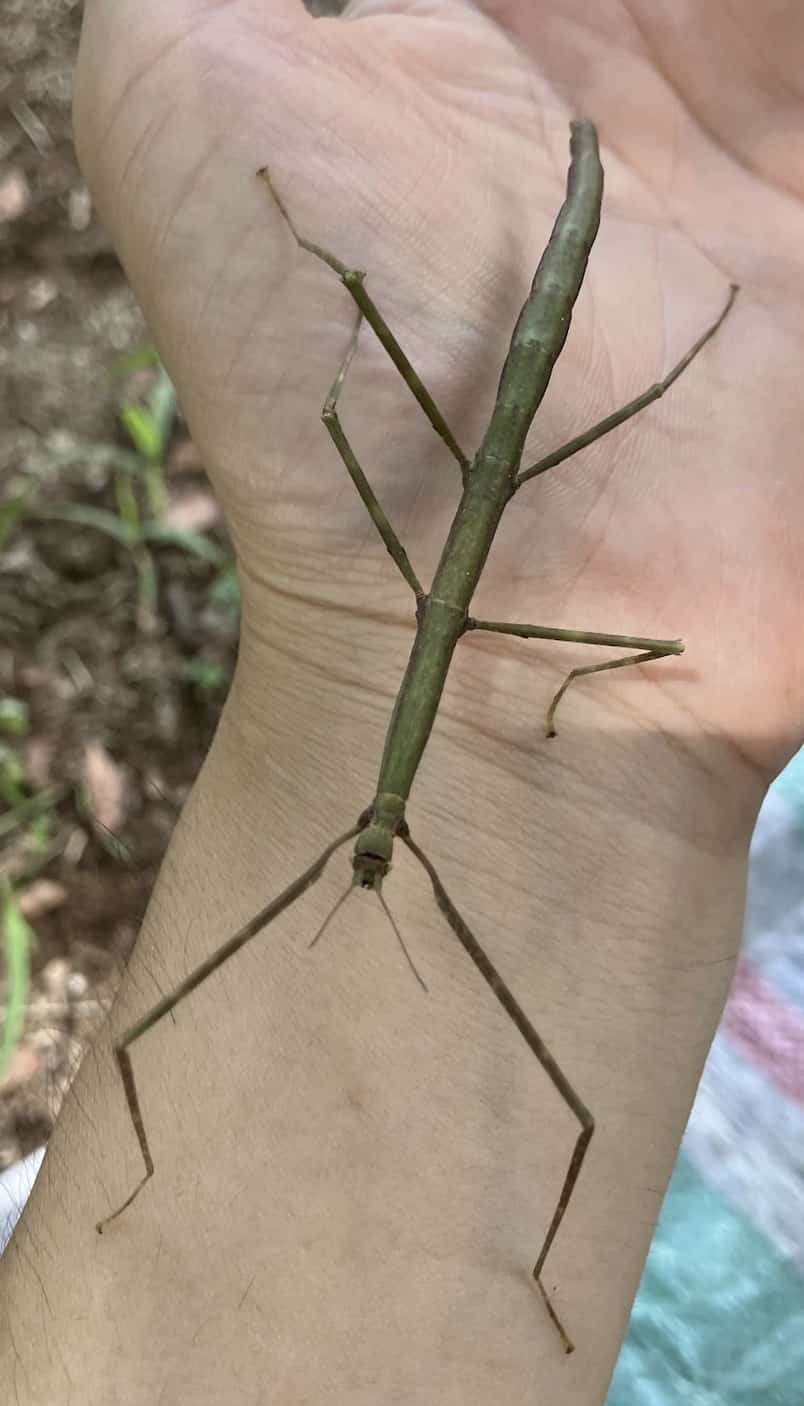
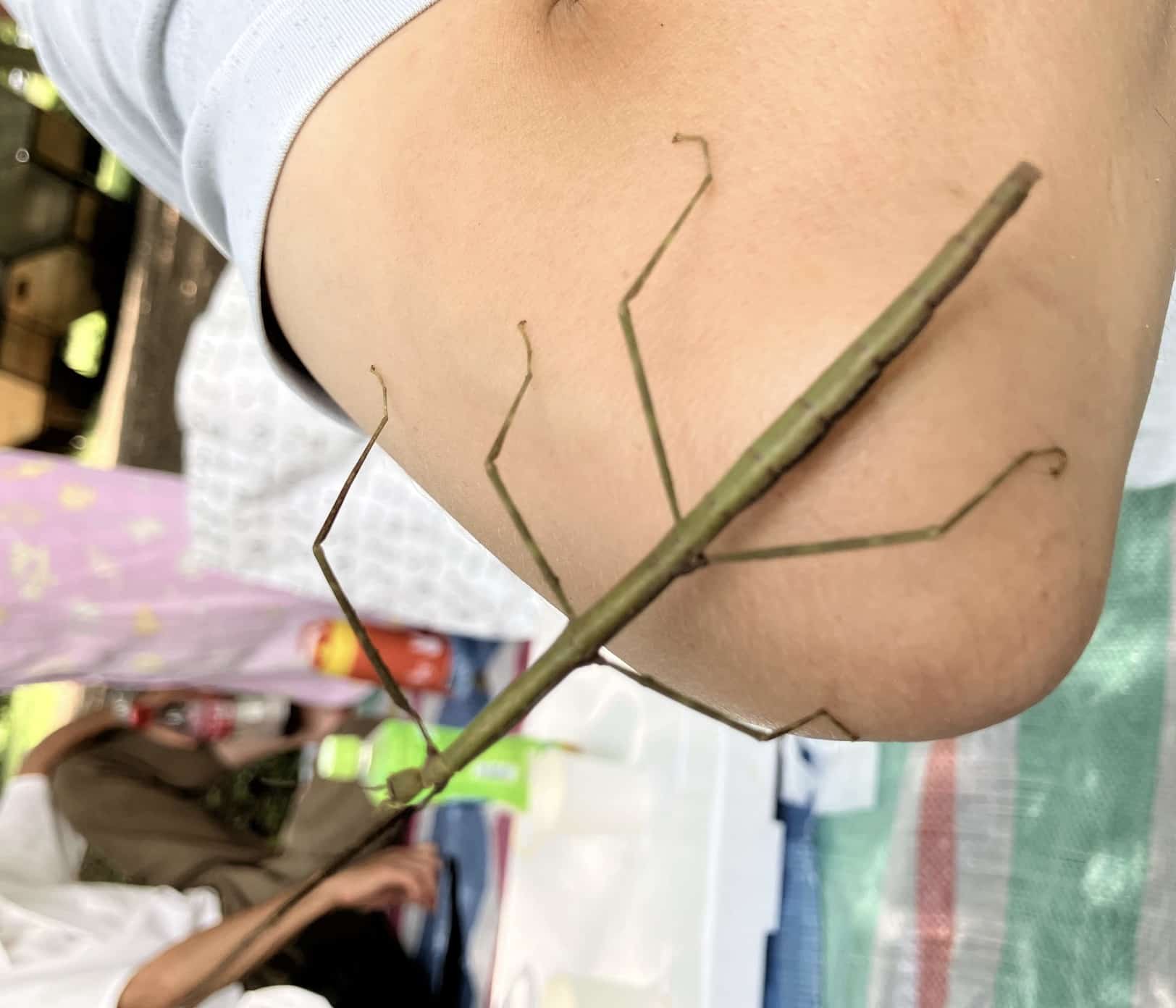
As luck would have it, I also came across a wild stick insect in a park in Gunma Prefecture. Once again, I was impressed by just how good it was at hiding in plain sight. Unless you look closely at the photograph, you might not even notice where it is.
So, let’s dive deeper into the fascinating world of stick insects and discover why the more you learn about them, the more interesting they become!
The Life of a Stick Insect: Who Is This Master of Camouflage?
As their name suggests, stick insects are known for their long, slender bodies and their amazing ability to blend perfectly into their surroundings, looking just like twigs or leaves. Their camouflage is so effective that even when we humans carefully search for them, they can be surprisingly difficult to spot.
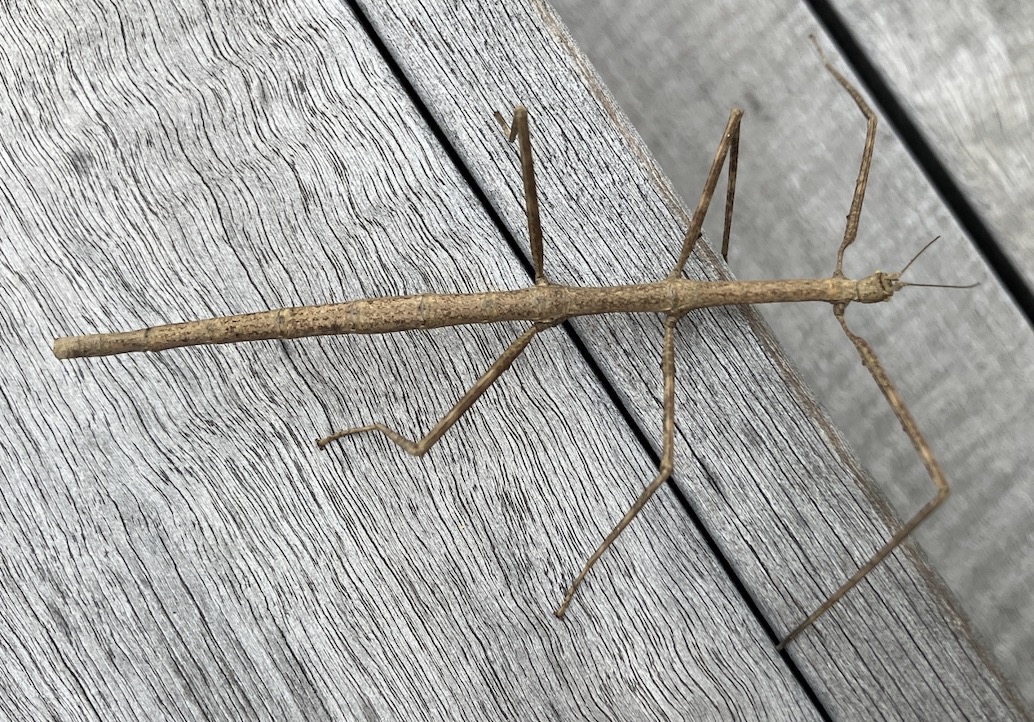
This stick insect was found near my home in Chiba Prefecture (August 11, 2026).
Stick insects are herbivores and mainly feed on the leaves of broadleaf trees such as sawtooth oaks, konara oaks, and cherry trees. Newly hatched nymphs prefer soft young shoots, but as they grow, they become capable of eating tougher leaves as well. In other words, their “taste in food” changes as they grow!
Why Are Stick Insects Such Masters of Camouflage?
A stick insect’s camouflage is about much more than simply looking like a twig. In fact, they have a clever three-part strategy involving their appearance, their behavior, and even the way they behave as young nymphs.
- Camouflage through appearance: Their body shape and color closely resemble twigs and leaves. Brown and green are common, but some species even have spines or patterns that resemble leaf veins. They’re like nature’s very own ninjas!
- Camouflage through behavior: When the wind blows, they sway their bodies back and forth along with it. They look just like branches or leaves moving in the breeze. This brilliant performance helps them fool predators. I even saw one gently swaying and wobbling inside an insect cage. Rather than simply remaining still, deliberately moving in a natural way is an incredibly sophisticated survival strategy.
- Camouflage as nymphs: Young stick insects sometimes spread their legs and remain completely still, mimicking the veins of a leaf. This makes them even harder to spot.
An Amazing Way to Reproduce
Many stick insects reproduce through a fascinating process called parthenogenesis, which allows females to produce offspring without males. In ordinary sexual reproduction, sperm from a male and an egg from a female combine through fertilization to create a new organism. With parthenogenesis, however, an egg develops without being fertilized and grows into a new individual. Genetically, the offspring are essentially clones of their mother. As a result, males are extremely rare, and finding a male stick insect is considered quite a lucky discovery.
And stick insects aren’t the only creatures capable of parthenogenesis. Aphids and water fleas, among others, are also known to reproduce in similar ways. Being able to produce offspring without the need to find a mate can be an extremely efficient survival strategy under the right environmental conditions.
Stick insect eggs are fascinating, too. They look surprisingly similar to plant seeds, and females simply drop their eggs from trees. It is thought that some of these eggs can survive being eaten by birds, pass through the digestive system, and later hatch after being expelled with the bird’s droppings. Since stick insects don’t have wings, this may be one way they expand their range. A creature that can’t fly gets birds to carry its offspring far away for free… Talk about an ingenious way to hitch a ride!
You can see an actual photograph here, so take a look.
https://ikkaku24.exblog.jp/7147605/
Stick insects spend the winter as eggs. Those that hatch in spring grow into adults by summer and often complete their life cycle by autumn. However, individuals kept in captivity may survive through the winter and into the following year. It’s fascinating to see the difference between the harsh conditions of the wild and the protected environment of captivity.
More Fascinating Features of Stick Insects
Stick insects have plenty of other fascinating tricks up their sleeves.
- Autotomy: When they are caught by a predator or sense danger, they can escape by deliberately detaching one of their own legs. This defensive behavior is called autotomy. While they are still nymphs, they can regenerate lost legs through subsequent molts. The insect world has its own version of a lizard dropping its tail!
- Playing dead: When attacked, stick insects can drop to the ground with their bodies stretched out straight like a stick and remain completely motionless for a while. It’s a clever trick that takes advantage of the fact that some predators tend to lose interest in things that don’t move.
Stick insects are truly captivating creatures, with their astonishing camouflage and wonderfully unusual lifestyles. Why not go on a stick insect hunt with your children at a nearby park or in the woods? They may be difficult to find at first, but that only makes the moment you finally spot one all the more exciting. Discovering creatures that have been hiding right under our noses can become an unforgettable encounter with the wonders of nature.