No String Needed! The “Wedge” Physics That Locks Cardboard Boxes in Place (Life Hack)
I’m Science Trainer Ken Kuwako. Every day is an experiment.
Every time an online shopping package arrives, another cardboard box seems to find its way into the corner of the room. Have you ever tried tying a stack of boxes together with string, only to have the whole pile collapse before you could finish?
It turns out there’s a surprisingly simple solution that doesn’t require any plastic twine at all. Even better, the trick is based on a fascinating principle of physics involving wedges and friction. Today, I’d like to share the eco-friendly method I use all the time to bundle cardboard boxes with almost no effort.
How to Bundle Cardboard Boxes Without String
First, gather all the cardboard boxes you want to recycle.
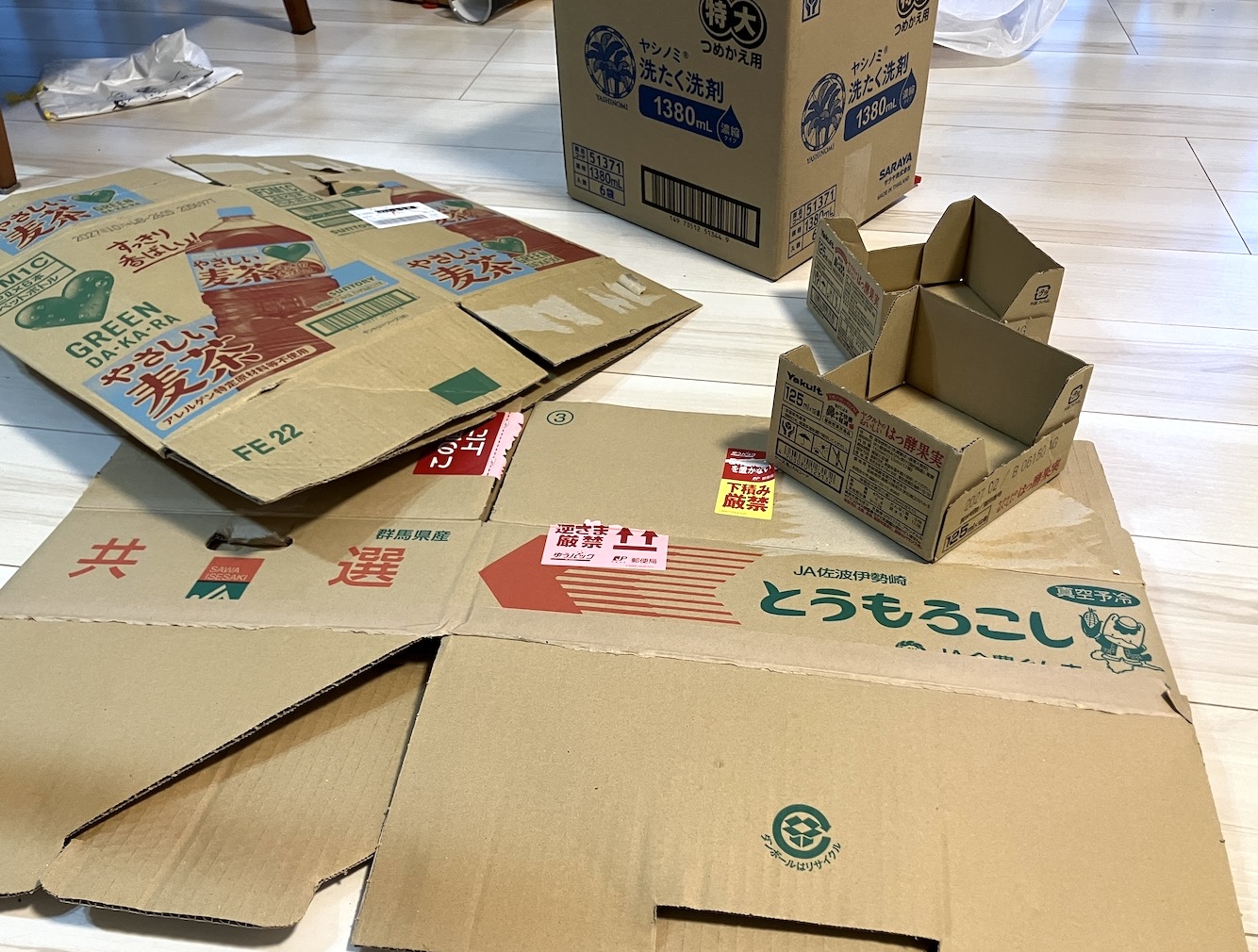
Choose the largest box from the pile.
Fold only one side of its top flaps inward.
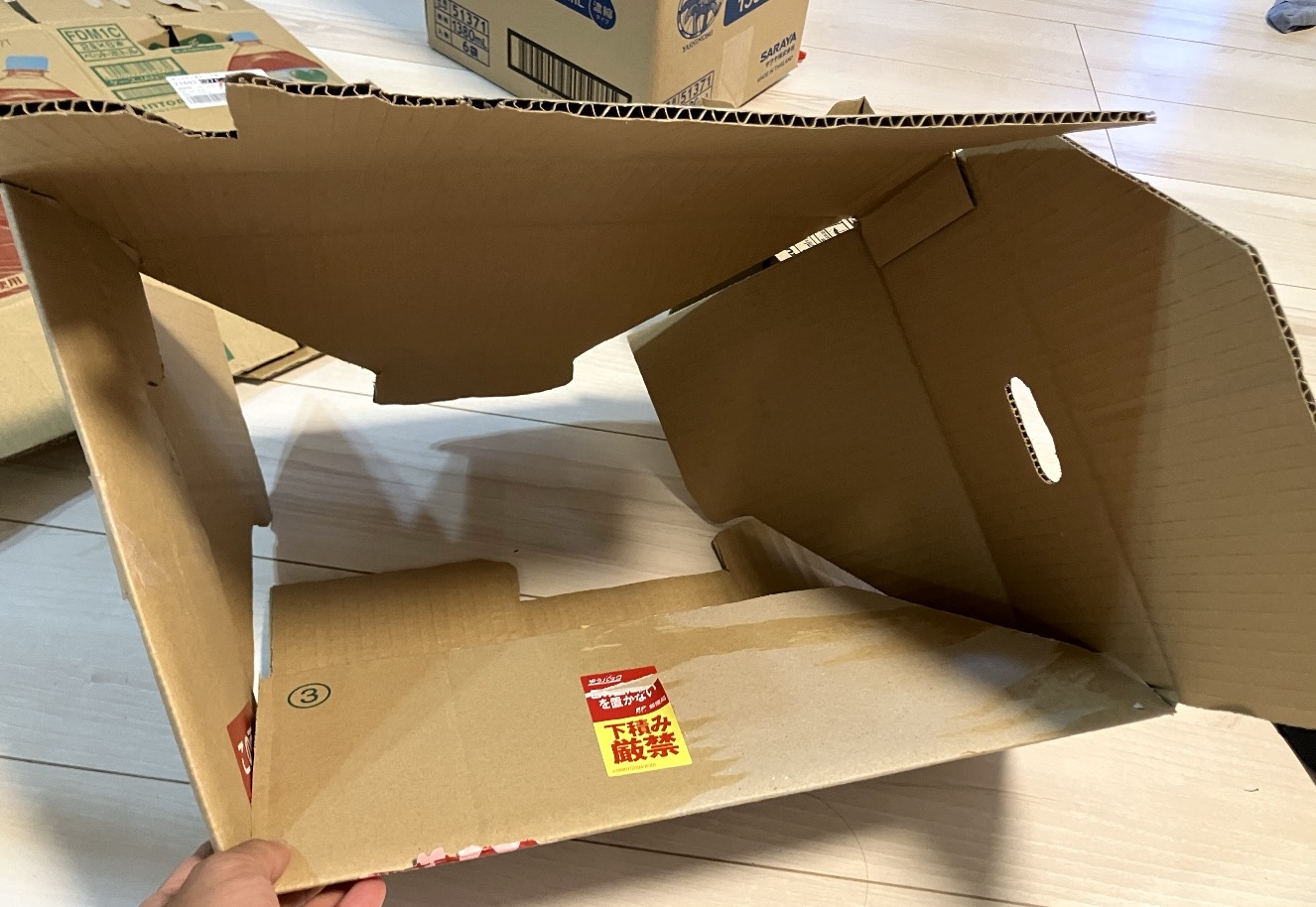
Fold in all four flaps, then stand the box upright with the folded side facing downward.
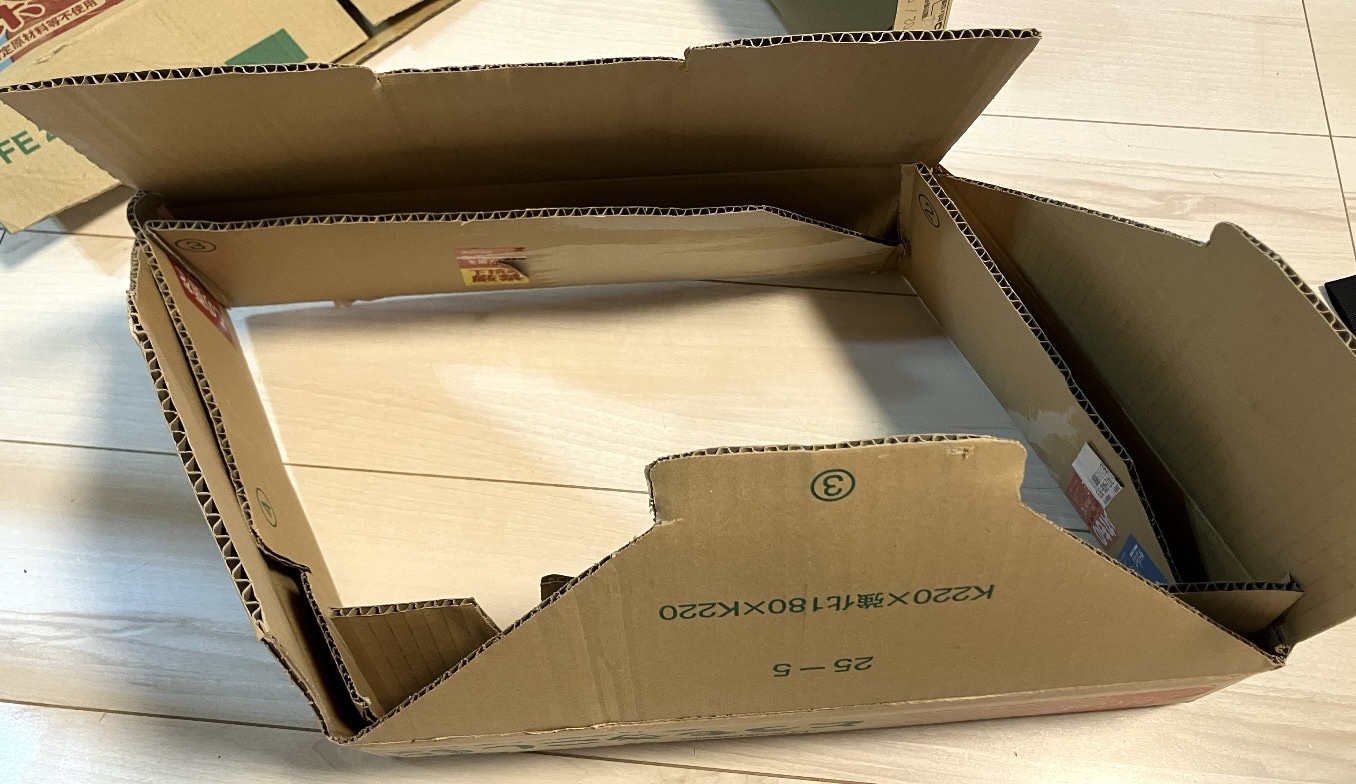
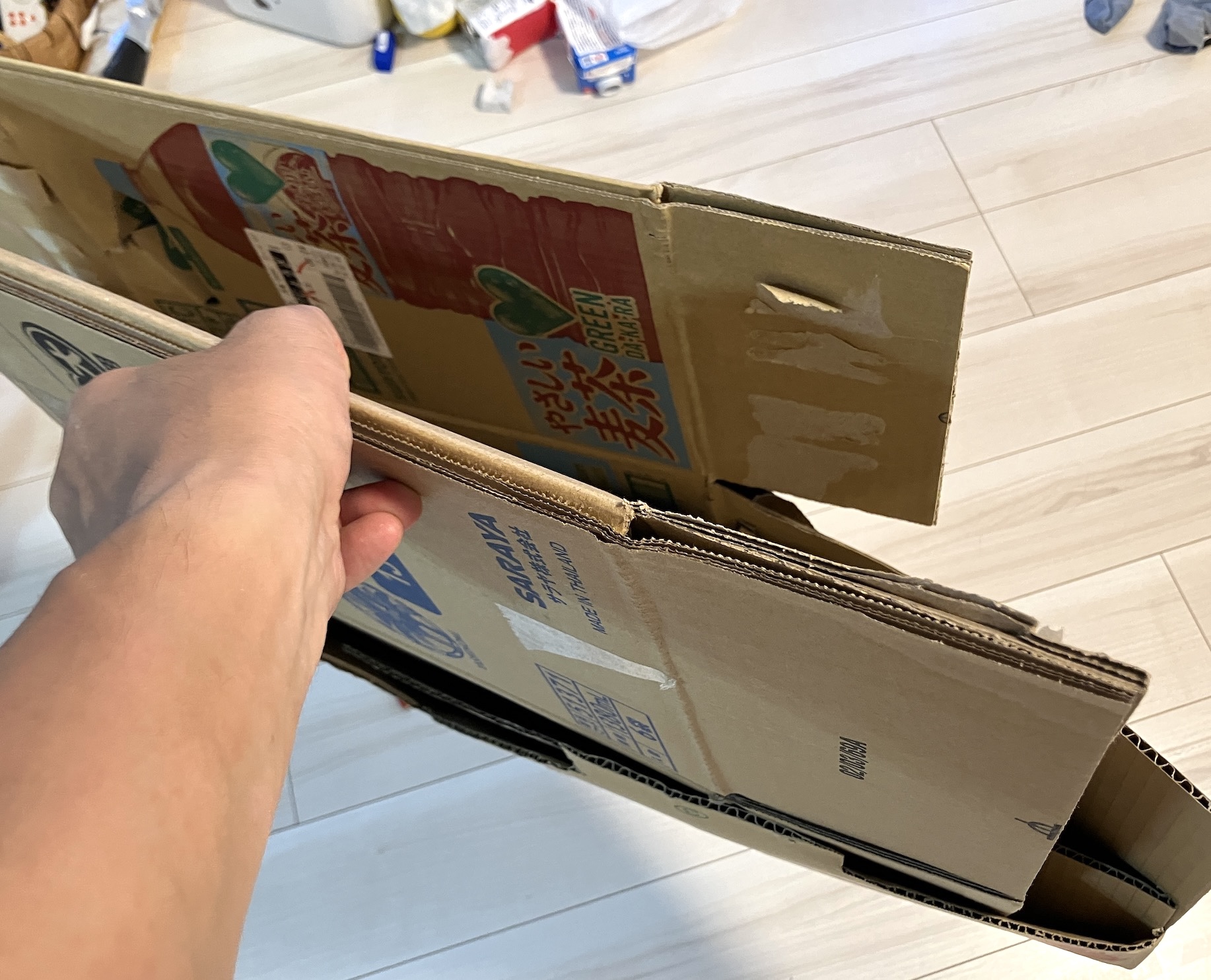
Here’s the key: the gap between each folded flap and the side of the box forms a V-shaped slot.
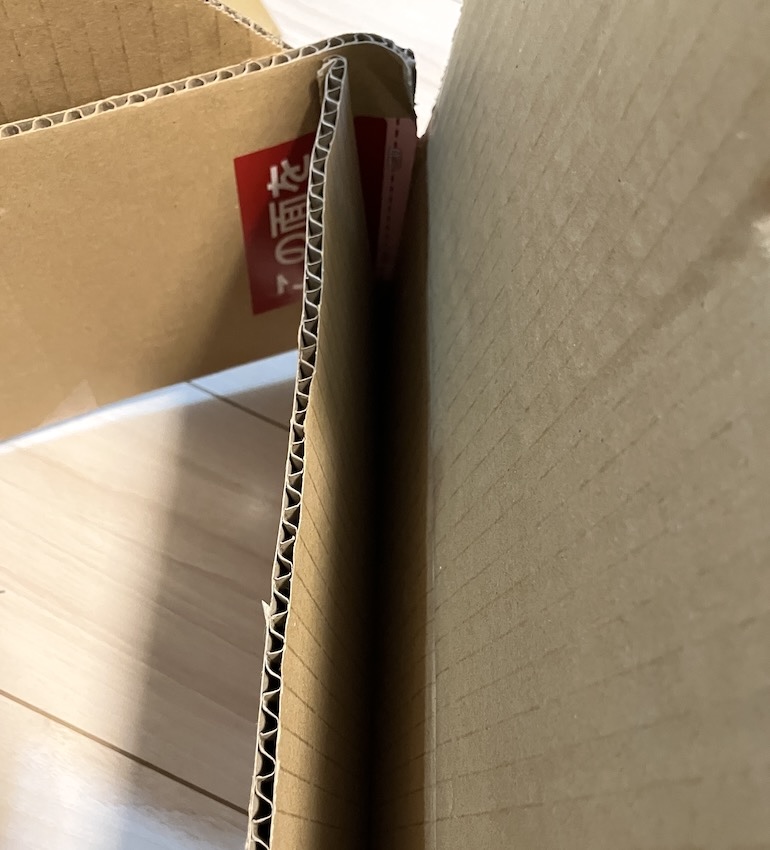
Now slide another flattened cardboard box into one of those V-shaped gaps. Push it in firmly until it goes as far as it can.
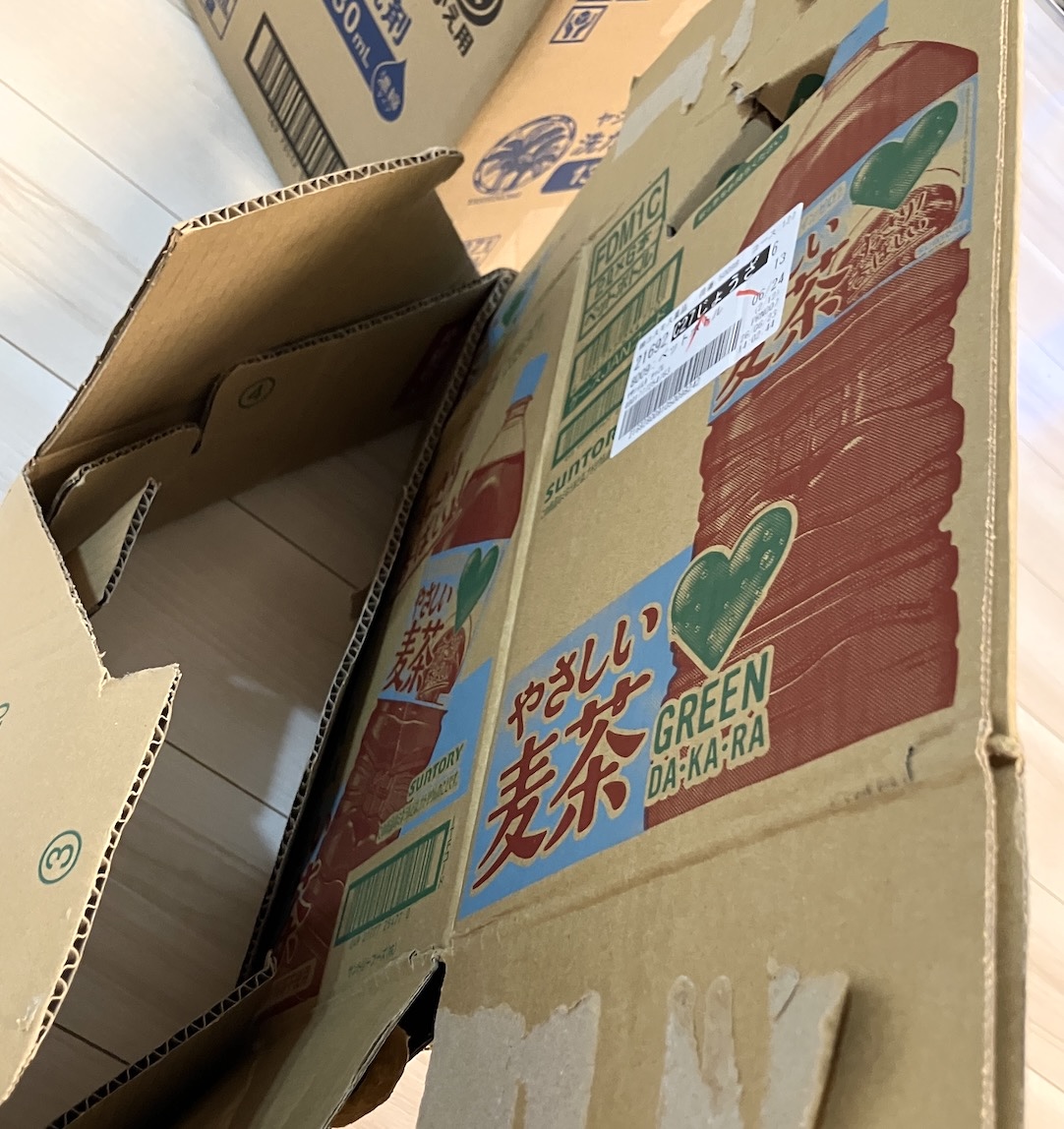
You’ll be surprised at how tightly it locks in place. Even if you lift the inserted box, the entire bundle comes up with it. Here’s what it looks like in action.
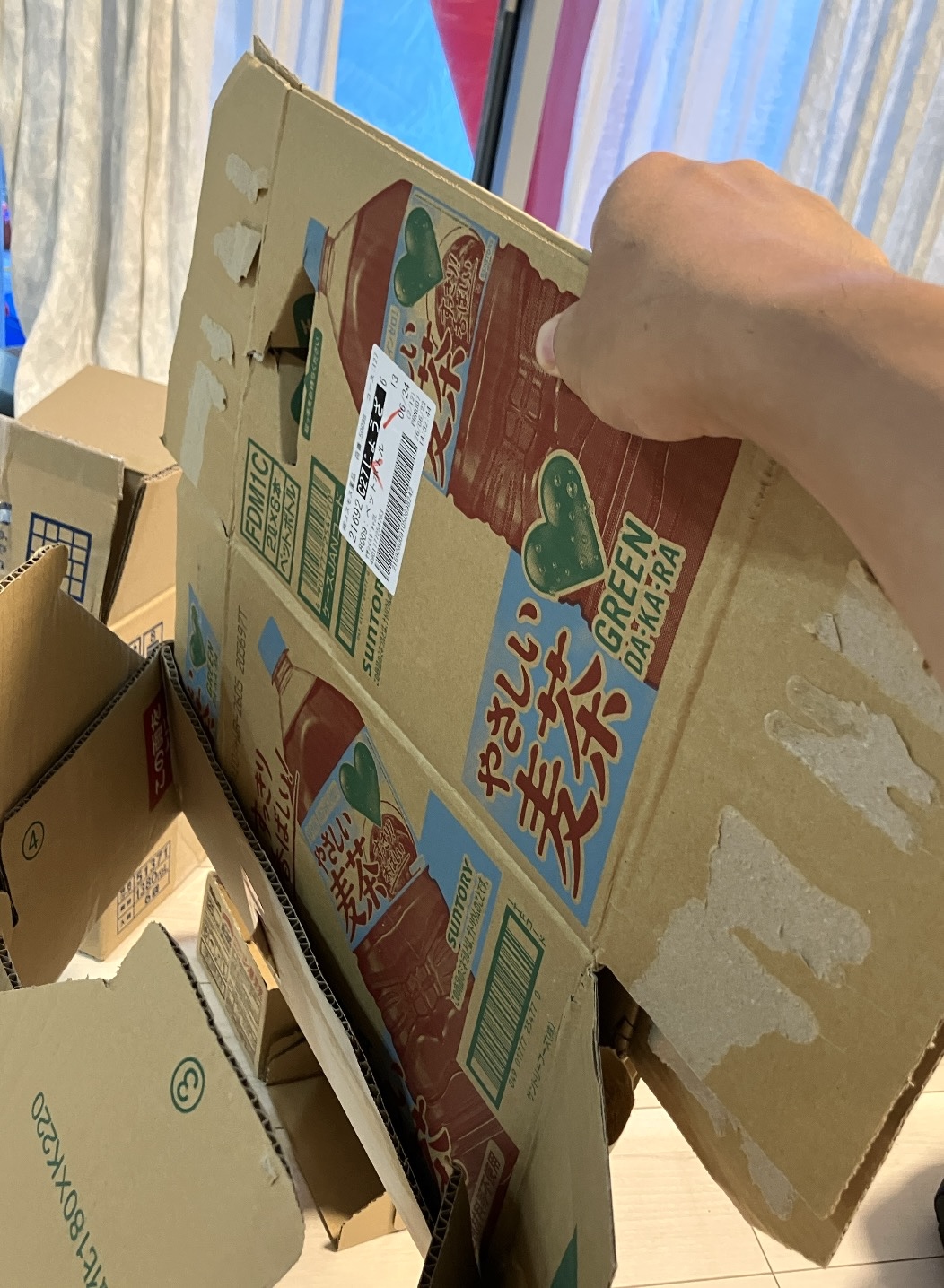
Keep inserting the remaining boxes into the V-shaped slots.
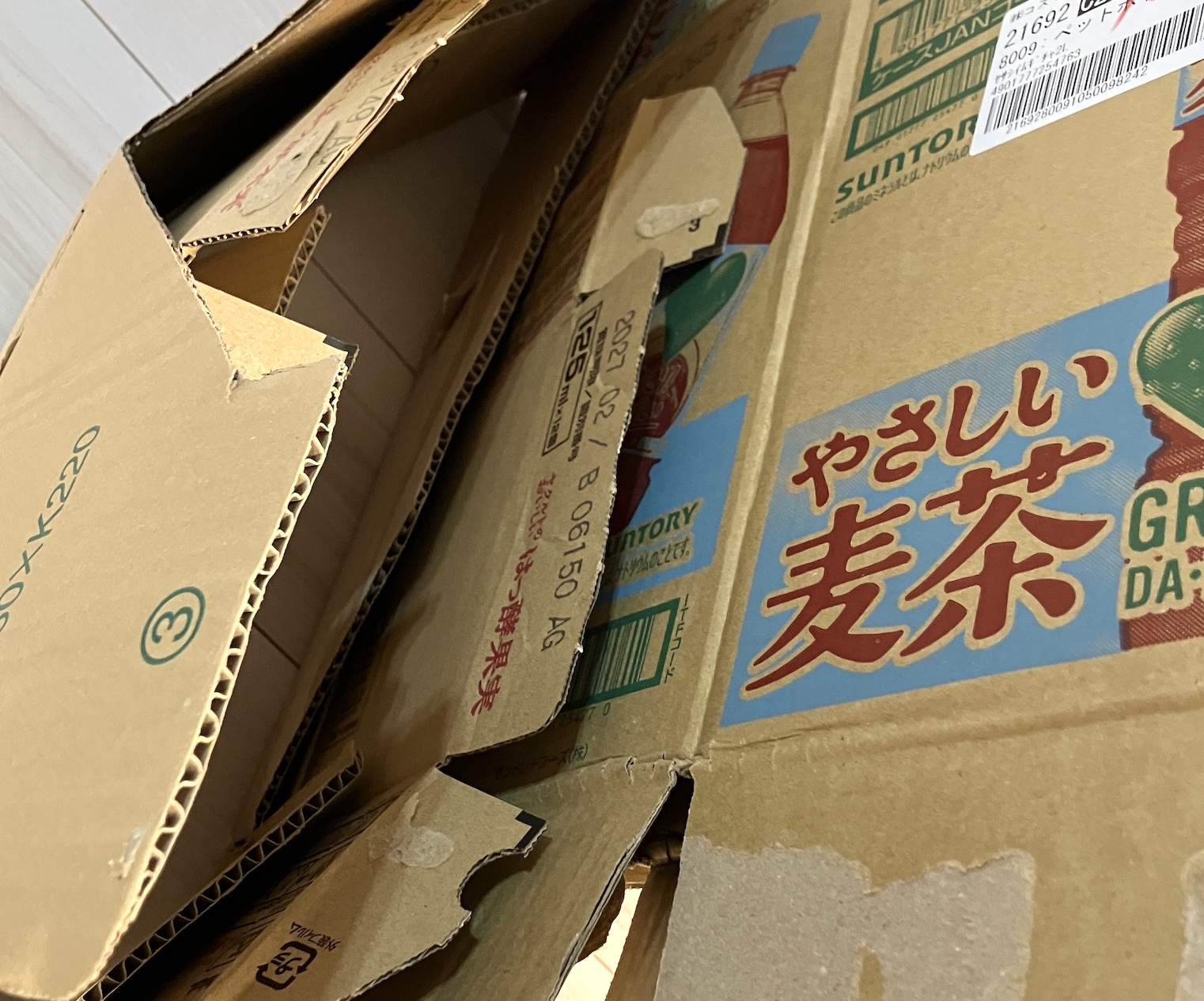
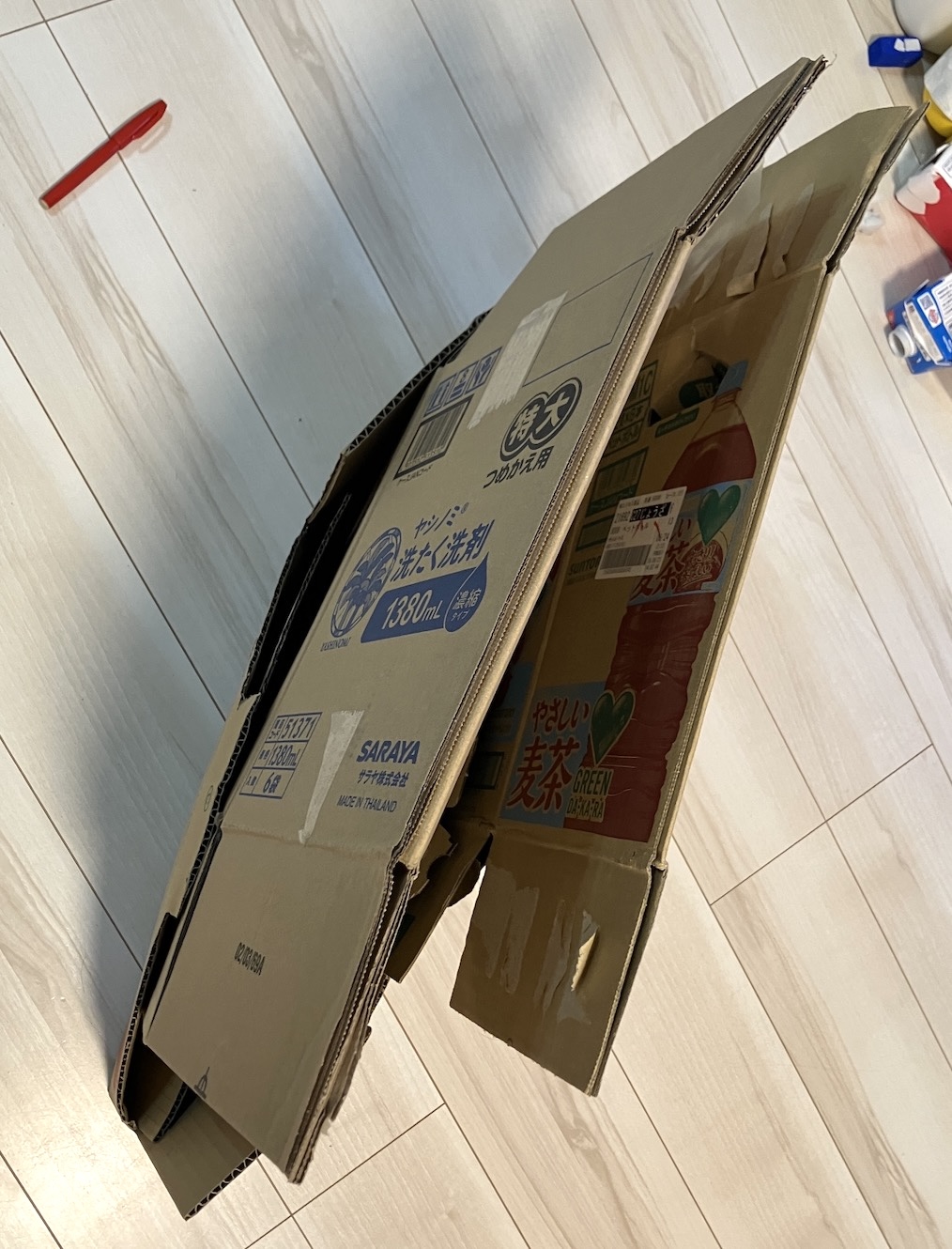
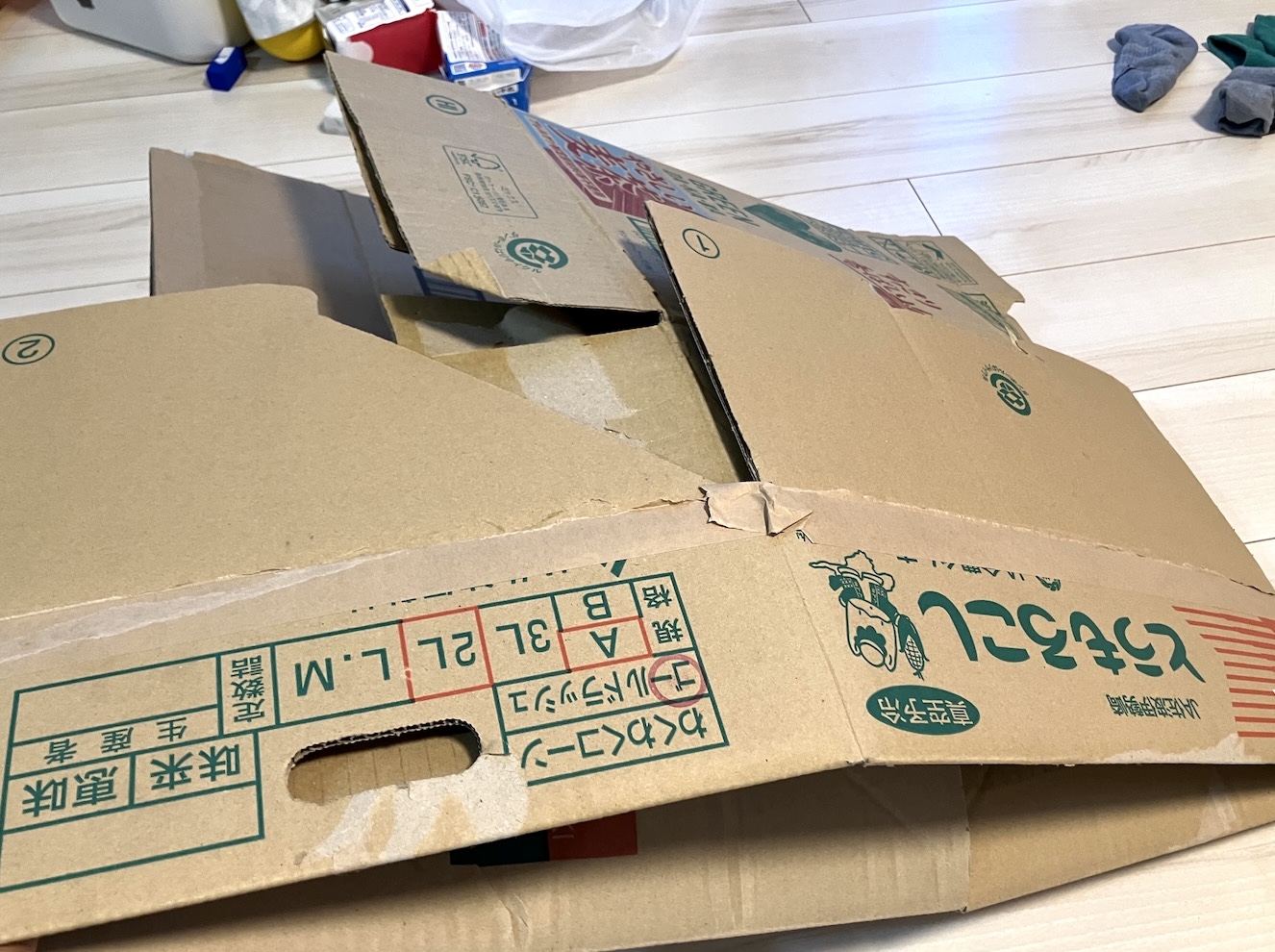
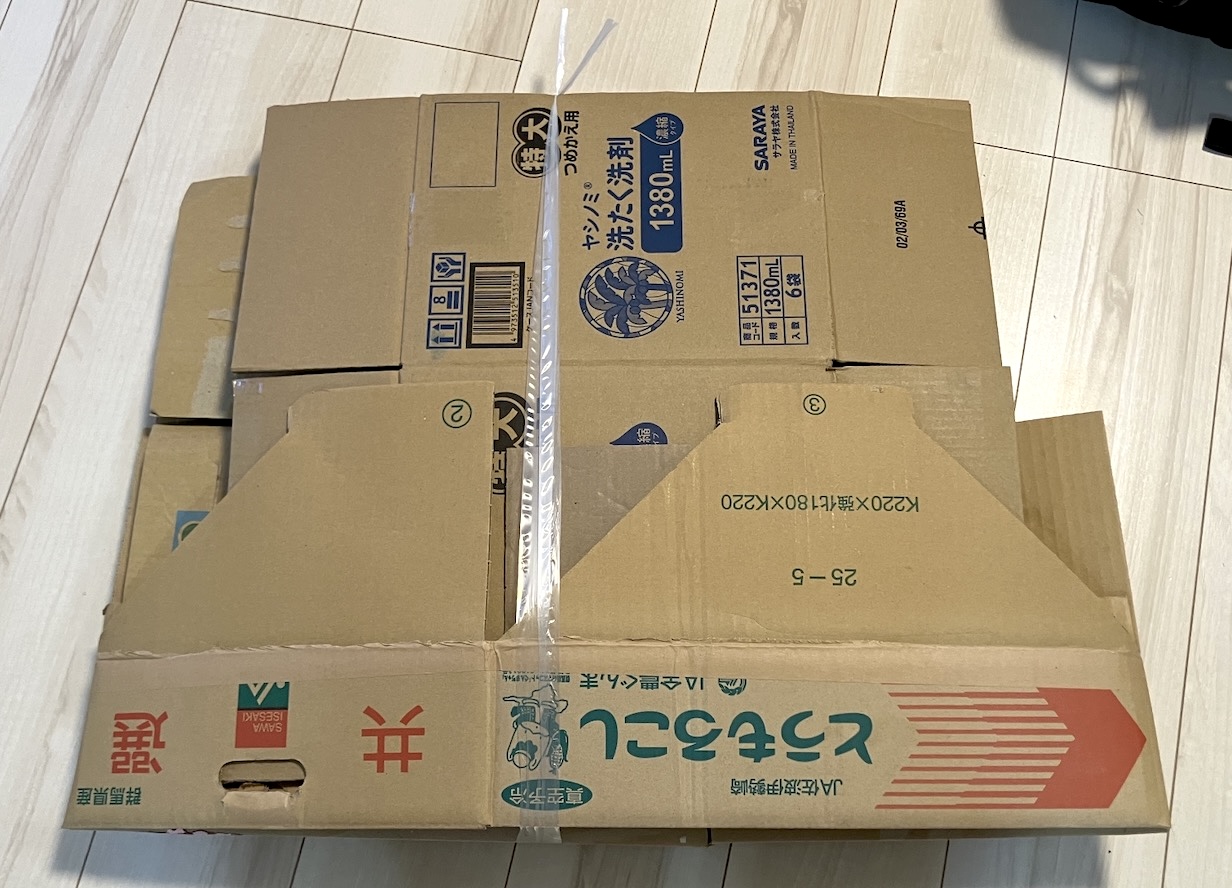
Even without any string, the boxes are held together remarkably well. Try lifting the bundle—it won’t come apart.
That said, this shape isn’t the easiest for recycling collectors to carry. So I usually wrap a single loop of plastic twine around the finished bundle to make it easier to handle.
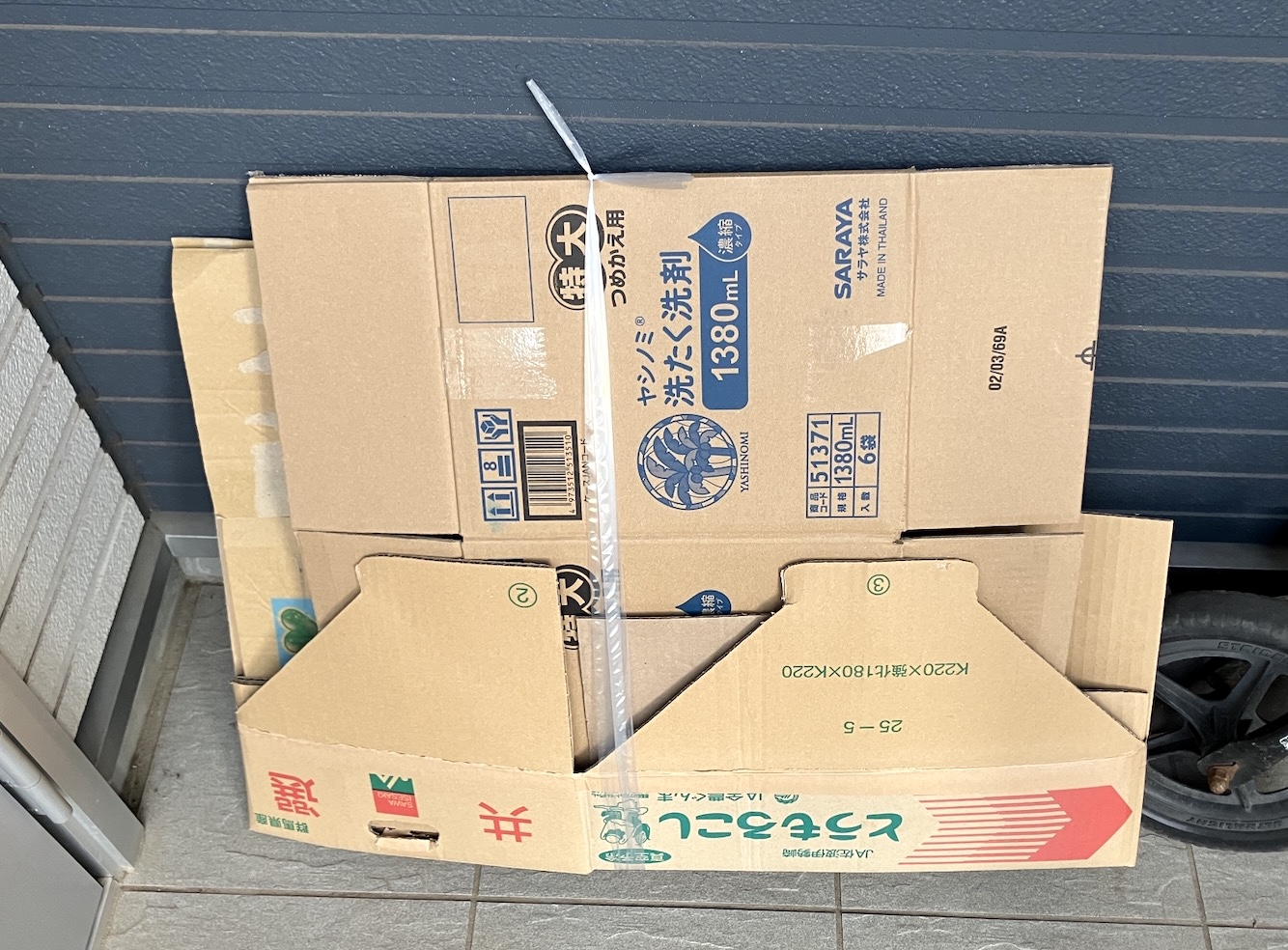
Then simply take it to your recycling collection point. Easy!
How the V-Shaped Gap Creates an Incredible Grip
So why does this simple trick work so well?
The secret is exactly the same principle that makes an axe get stuck in a log. If you’ve ever split firewood, you’ve probably experienced an axe biting into the wood so tightly that pulling it back out becomes a struggle.
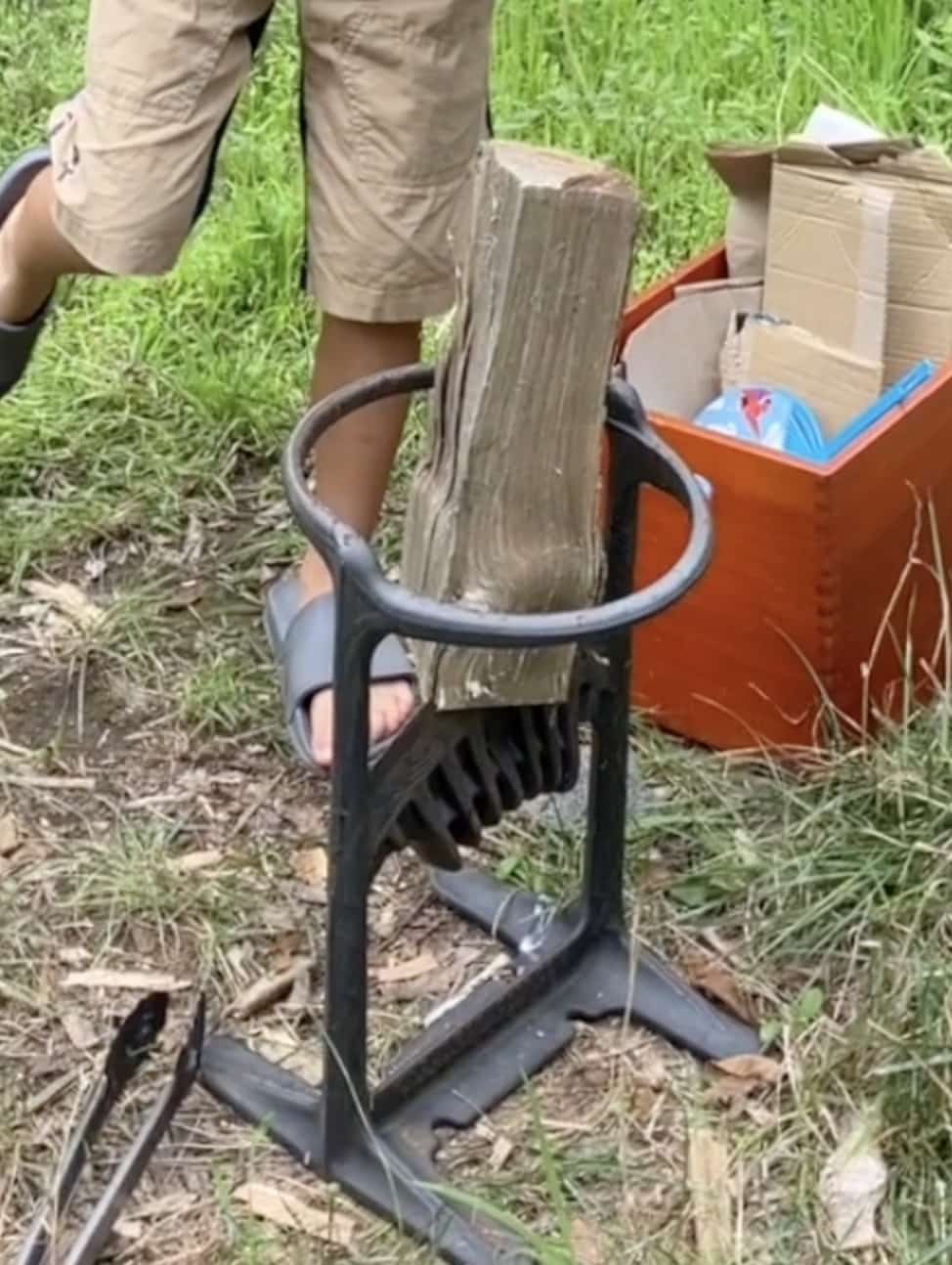
When you push a cardboard sheet into the V-shaped gap, it presses against both sloping walls.
Although you’re pushing downward, the walls are angled. That means the force acts perpendicular to each wall (shown by the red arrows).
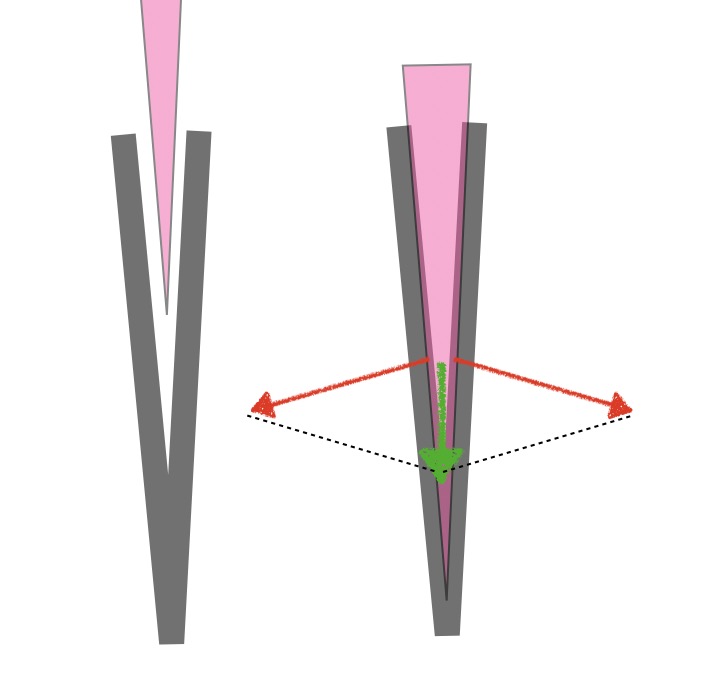
The red arrows show the force applied by the inserted cardboard, while the green arrow shows the combined force.
According to Newton’s Third Law, the walls push back on the inserted cardboard with equal normal forces from both sides. In other words, the cardboard becomes tightly squeezed between the two walls.
At first glance, you might expect the combined upward components of those reaction forces to push the cardboard back out—but that isn’t what happens.
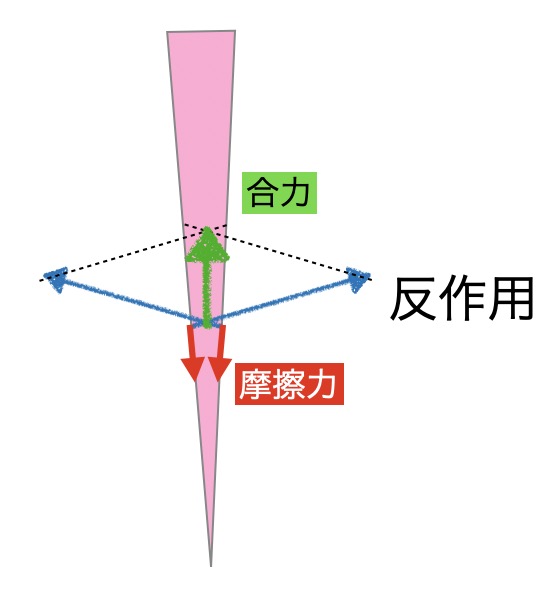
One reason is that cardboard naturally has a fairly high coefficient of friction. More importantly, however, the wedge creates a much larger normal force, which dramatically increases the frictional force between the pieces of cardboard (friction = coefficient of friction × normal force).
As a result, the maximum static friction becomes much larger as well (shown by the red arrows in the diagram). Each individual contact point only contributes a small amount of friction, but the V-shaped gap contains countless contact points working together. Their combined effect creates an impressively strong grip.
That’s why the cardboard slides in smoothly but becomes surprisingly difficult to pull back out.
This is closely related to another classic friction experiment using toothbrushes.
When two toothbrushes are interlocked, each individual bristle produces only a tiny amount of friction. But thousands of bristles together create a large contact area and increase the total normal force, allowing the pair of toothbrushes to lift an entire bunch of bananas.
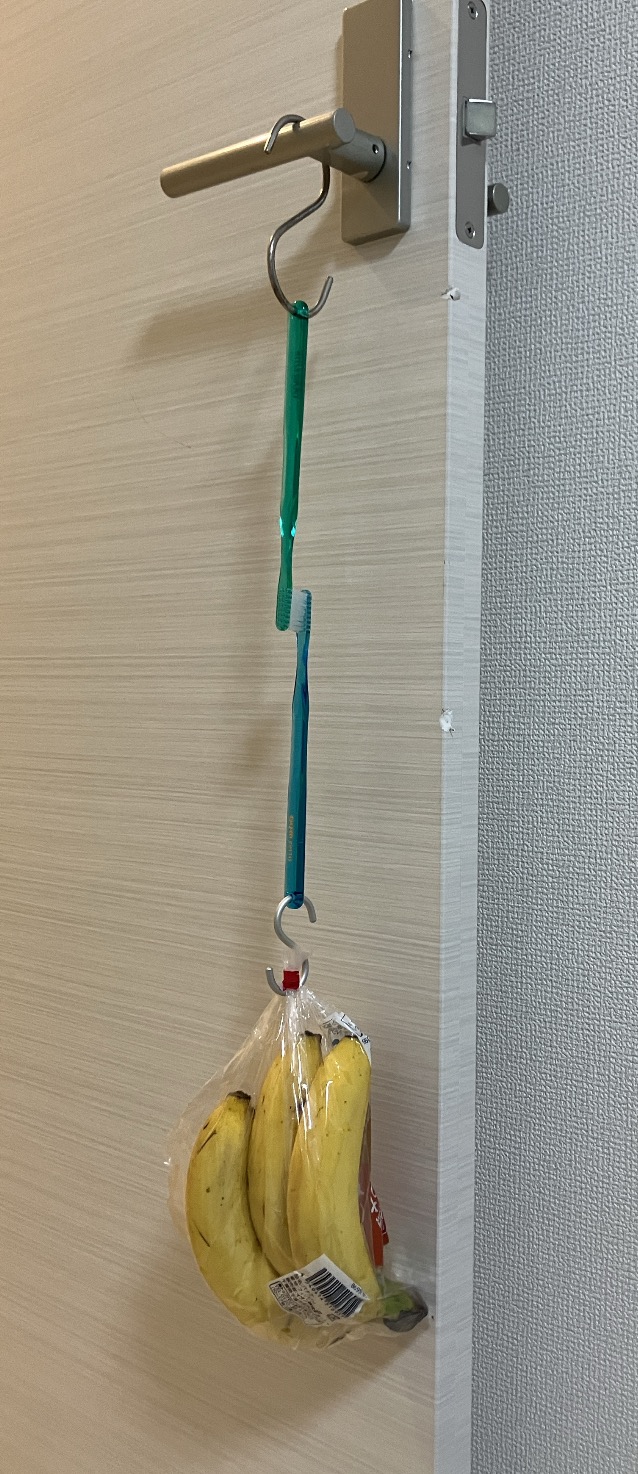
The relationship between normal force and friction actually appears in many unexpected places in everyday life.
Take sumo wrestling, for example. As wrestlers gain weight, they press more strongly against the ring. This increases the normal force between their feet and the ground, which in turn increases friction. That’s one reason heavier wrestlers can maintain such incredible stability during a match—it isn’t just muscle power, but physics working in their favor.
The cardboard trick works for exactly the same reason. By using a V-shaped wedge to convert a downward push into strong sideways pressure, it boosts the normal force and, with it, the friction holding everything together. This clever use of the wedge is one of the oldest mechanical principles in history.
The same physics explains why an axe gets stuck in wood, why a doorstop won’t slide away, and why this simple cardboard hack works so well.
I’ve also explored the fascinating relationship between friction and the classic tablecloth pull trick. If you’re interested, take a look at that article as well.
Contact & Collaboration
Science is full of surprising moments, and my goal is to make them fun and accessible for everyone. Here you’ll find easy science experiments you can try at home, along with clear explanations of the science behind them. Feel free to explore!
– Learn more about me here: About Ken Kuwako
– For writing, lectures, science workshops, TV consulting, media appearances, and other collaborations: Contact
– Follow the latest article updates on X!
 Science Idea Channel features fun science experiment videos!
9月のイチオシ実験!
テレビ番組監修・イベント等のお知らせ
- 9月25日(金)21:00〜 かまいたちの瞬間回答!にて、科学監修を行いました。
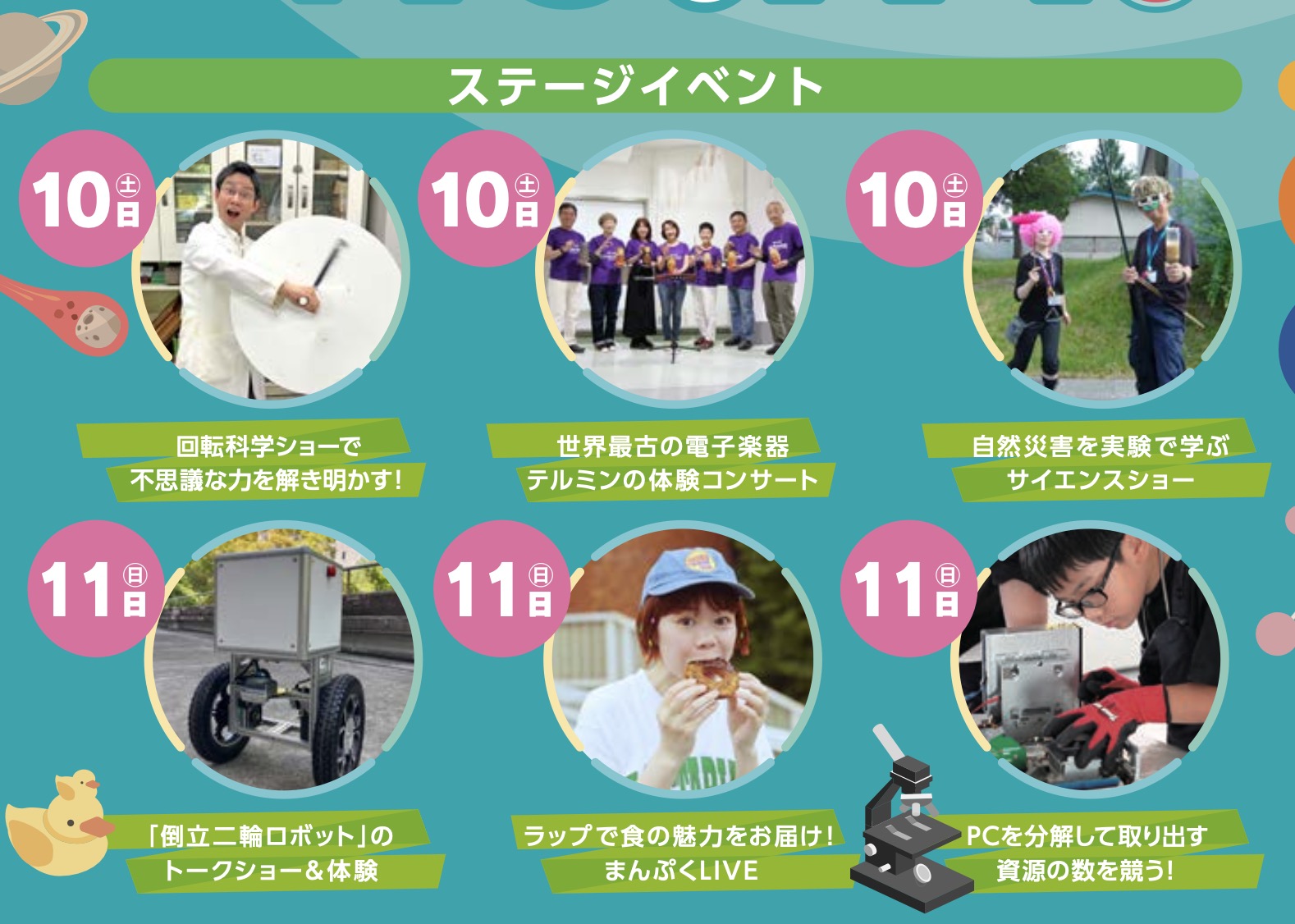
- 10月10日(土)11:15~12:00 千葉市科学フェスタ2026「桑子先生の回転科学ショー」にてサイエンスショーを行います。
- 12月26日(土) ナリカサイエンスアカデミー(教員向け実験講習会)開催
書籍のお知らせ
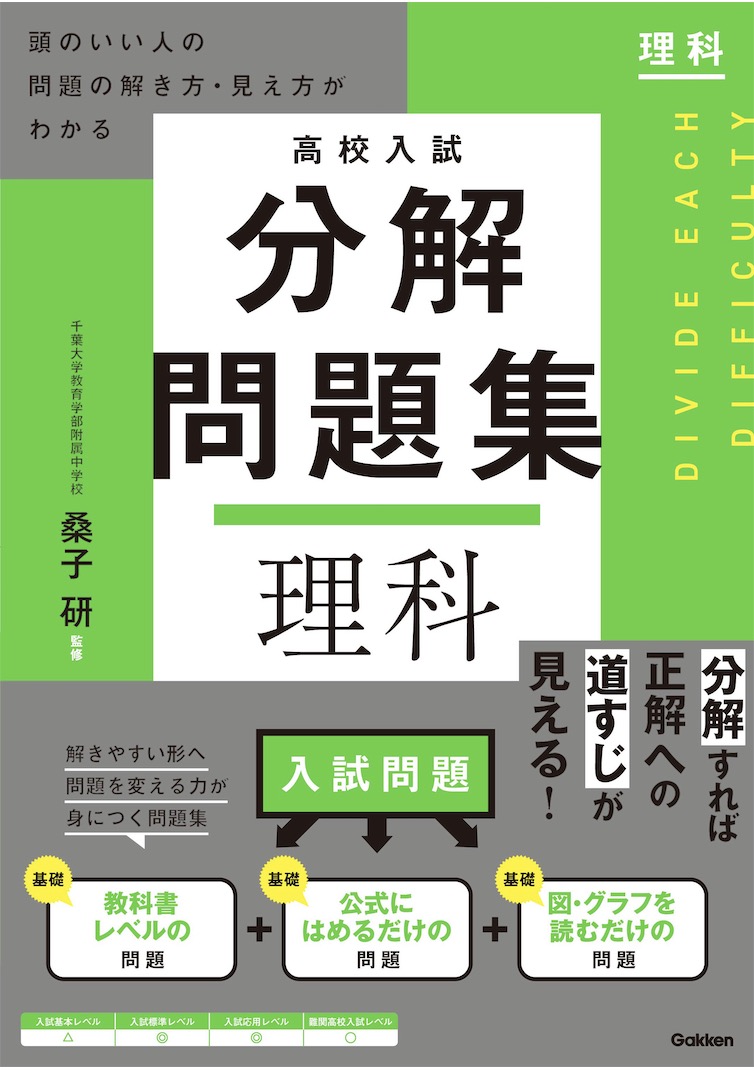
- 『高校入試 分解問題集 理科』(学研)…難しい問題も小さな問題に分解することで、問題を解くことができます。そんな分解の技術が身につくように深く関わりを持って作りました。
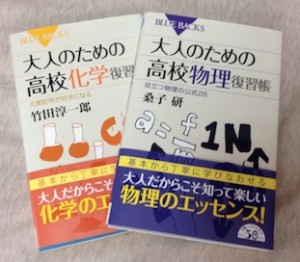
 『大人のための高校物理復習帳』(講談社)…一般向けに日常の物理について公式を元に紐解きました。特設サイトでは実験を多数紹介しています。※増刷がかかり6刷となりました(2026/02/01)
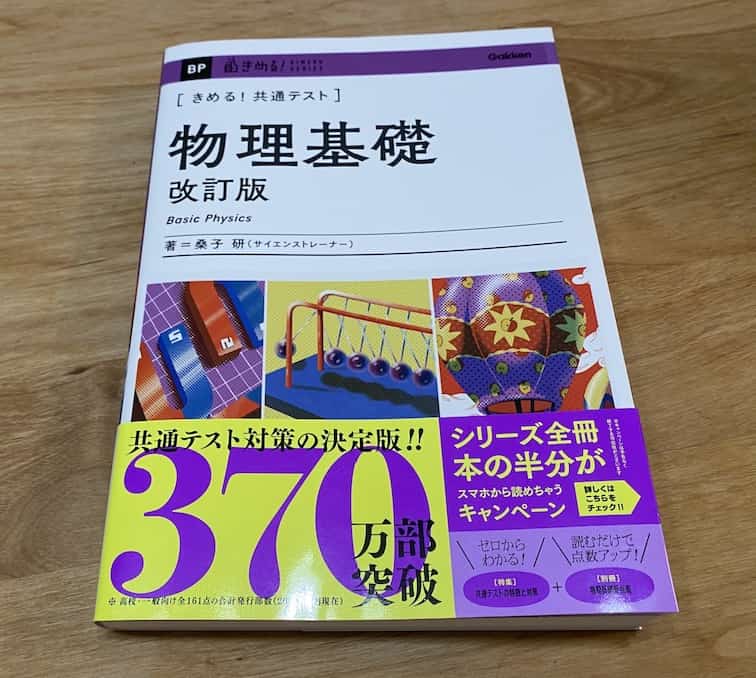
- 『きめる!共通テスト 物理基礎 改訂版』(学研)… 高校物理の参考書です。イラストを多くしてイメージが持てるように描きました。授業についていけない、物理が苦手、そんな生徒におすすめです。特設サイトはこちら。
各種SNS(更新情報をお届け!)
【日本語】X(Twitter)/instagram/Facebook 【英語】BlueSky/Threads
Explore
- 楽しい実験…お子さんと一緒に夢中になれるイチオシの科学実験を多数紹介しています。また、高校物理の理解を深めるための動画教材も用意しました。
- 理科の教材… 理科教師をバックアップ!授業の質を高め、準備を効率化するための選りすぐりの教材を紹介しています。
- Youtube…科学実験等の動画を配信しています。
- 科学ラジオ …科学トピックをほぼ毎日配信中!AI技術を駆使して作成した「耳で楽しむ科学」をお届けします。
- 講演 …全国各地で実験講習会・サイエンスショー等を行っています。
- About …「科学のネタ帳」のコンセプトや、運営者である桑子研のプロフィール・想いをまとめています。
- お問い合わせ …実験教室のご依頼、執筆・講演の相談、科学監修等はこちらのフォームからお寄せください。