Recreate Archimedes’ Discovery at Home! The Secret Buoyancy Lab (Film Canister + Weights)
I’m Ken Kuwako, the Science Trainer. Every day is an experiment.
Have you ever noticed how your body suddenly feels lighter when you step into a bath? That’s buoyancy at work. It’s the same invisible force that lets people float in a swimming pool and keeps massive steel ships afloat on the ocean.
But what exactly determines the strength of buoyancy? Does it increase the deeper an object goes? Is it greater for heavier objects? To answer these surprisingly tricky questions, we carried out a simple experiment using nothing more than a film canister and a few weights. No fancy lab equipment is required, making this an easy experiment to try at home or in the classroom. Let’s dive in!
◆Materials
A film canister with a lid, weights (such as metal nuts), a water tank or clear bucket, a spring scale (around 2 N capacity), and string for suspending the canister.
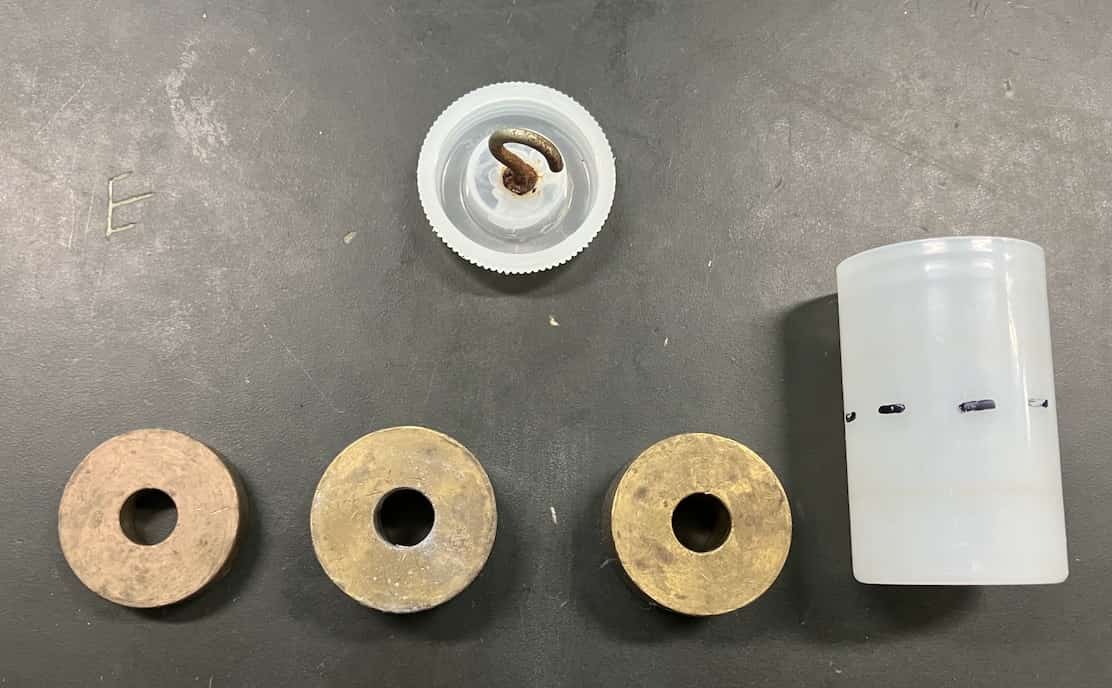
Film canisters have become pretty rare these days, but surprisingly, you can still find them on Amazon. I’m not entirely sure who’s buying them, but I’m certainly grateful they’re still available!

How the Experiment Works
The secret behind buoyancy comes down to one very simple subtraction.
First, measure the object’s weight in air using the spring scale. Then lower it into the water and record its apparent weight underwater. The difference between these two measurements is the upward force exerted by the water—that is, the buoyant force.
Buoyant Force (N) = Weight in Air (N) − Weight Underwater (N)

Procedure
1. Measure the weight in air
Hang the film canister (with weights inside) from the spring scale and record its weight before placing it in water.
We performed two separate trials. In Experiment 1, the canister contained two 70 g weights and one 35 g weight, for a total of 175 g.
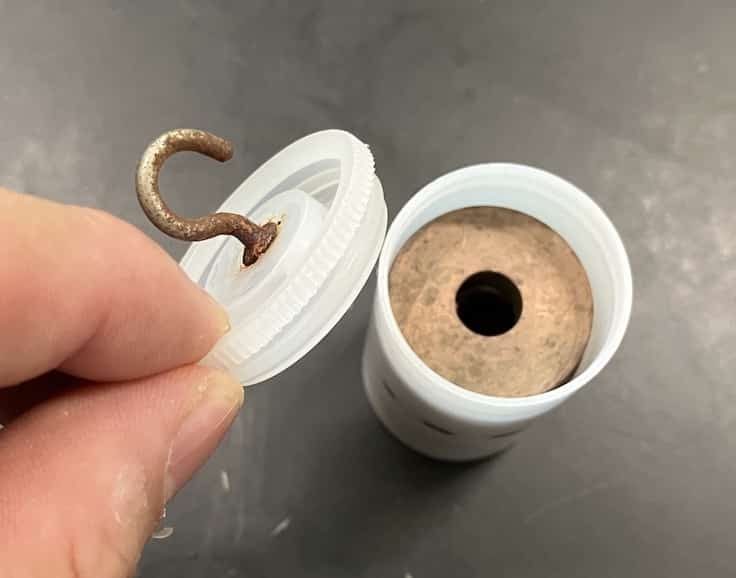
In Experiment 2, the canister contained one 70 g weight and one 35 g weight, totaling 105 g. We used weights originally designed for measuring water pressure.
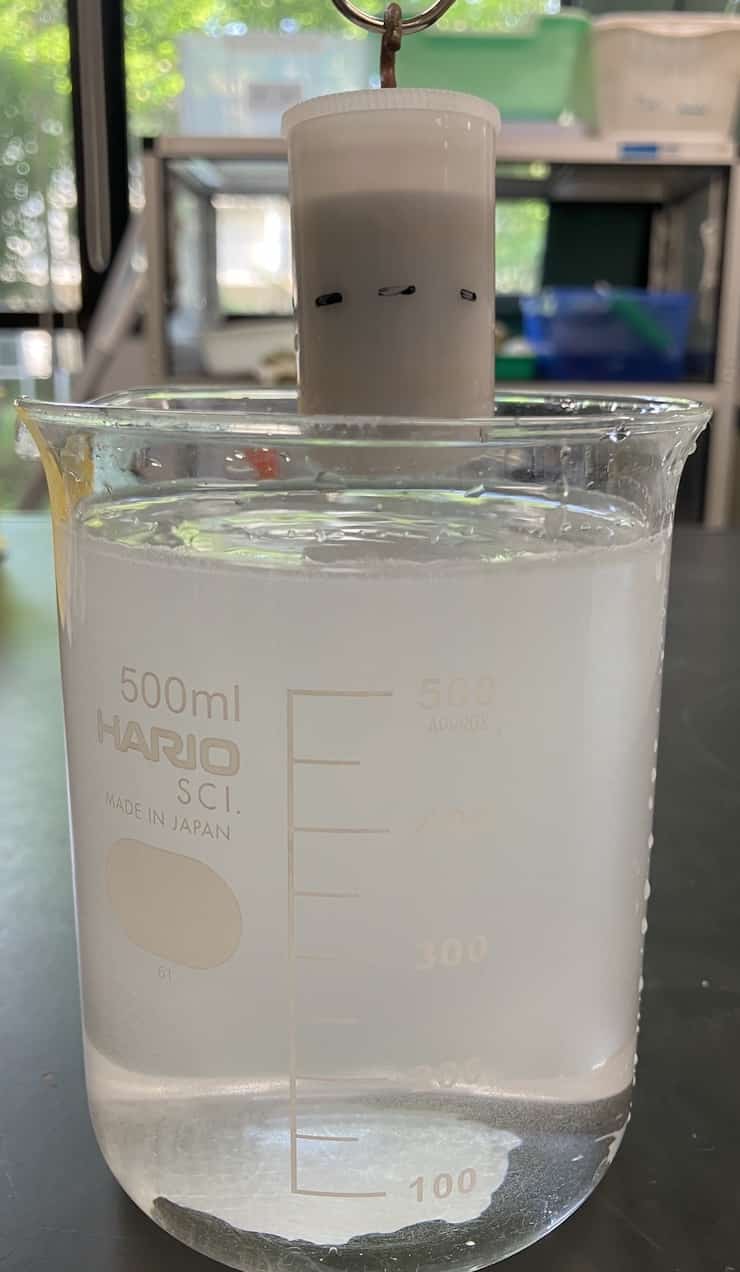
2. Measure while lowering it into the water
First, lower the object until only about half of it is submerged, and record the reading on the spring scale.
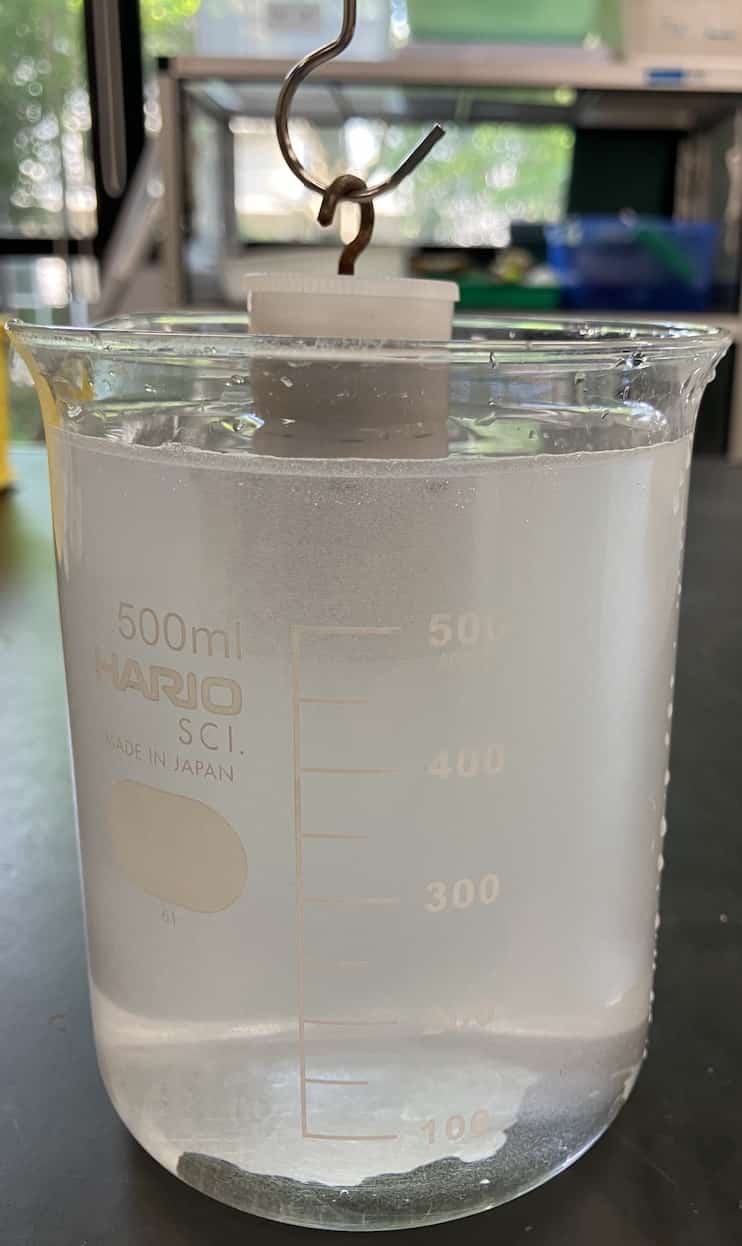
Next, submerge the object completely and record the new reading.
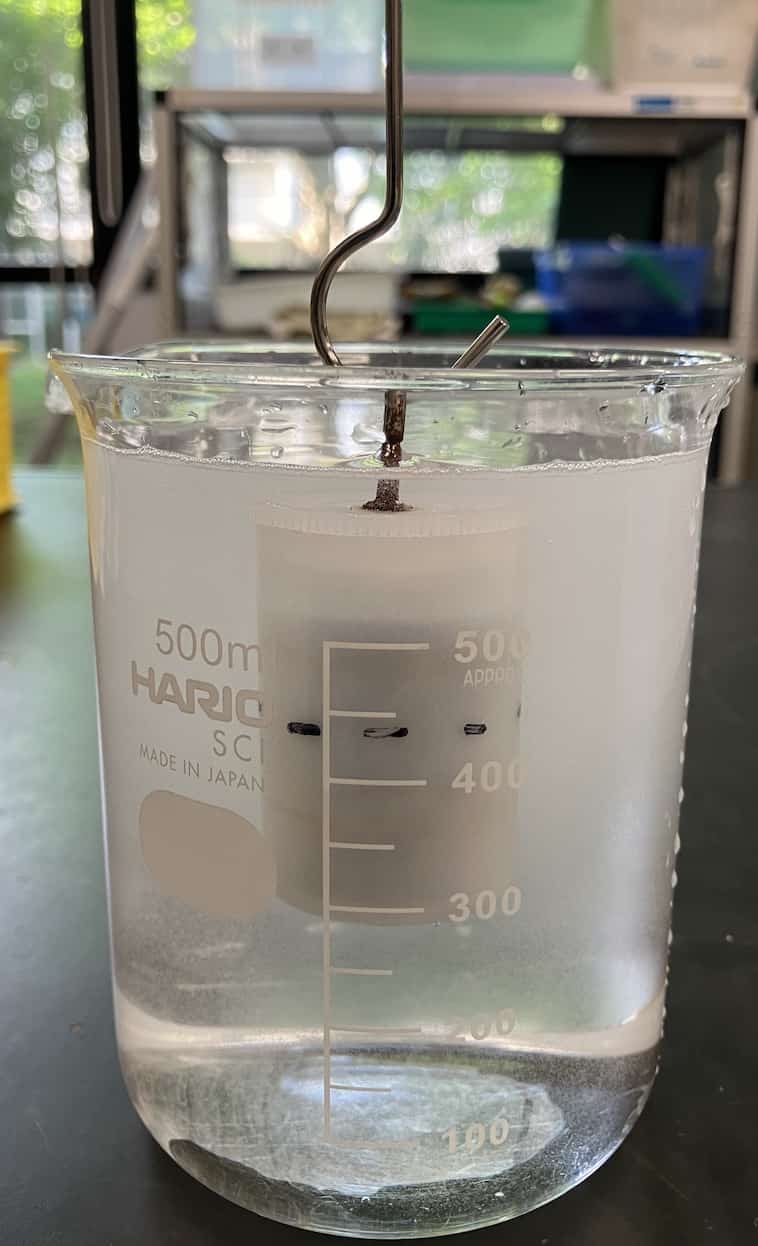
3. Lower it even deeper
Once the canister is completely underwater, lower it to a much greater depth and measure the spring scale again.
This is the key moment in the experiment. Does buoyancy become stronger as the object sinks deeper into the water, or does it stay the same?
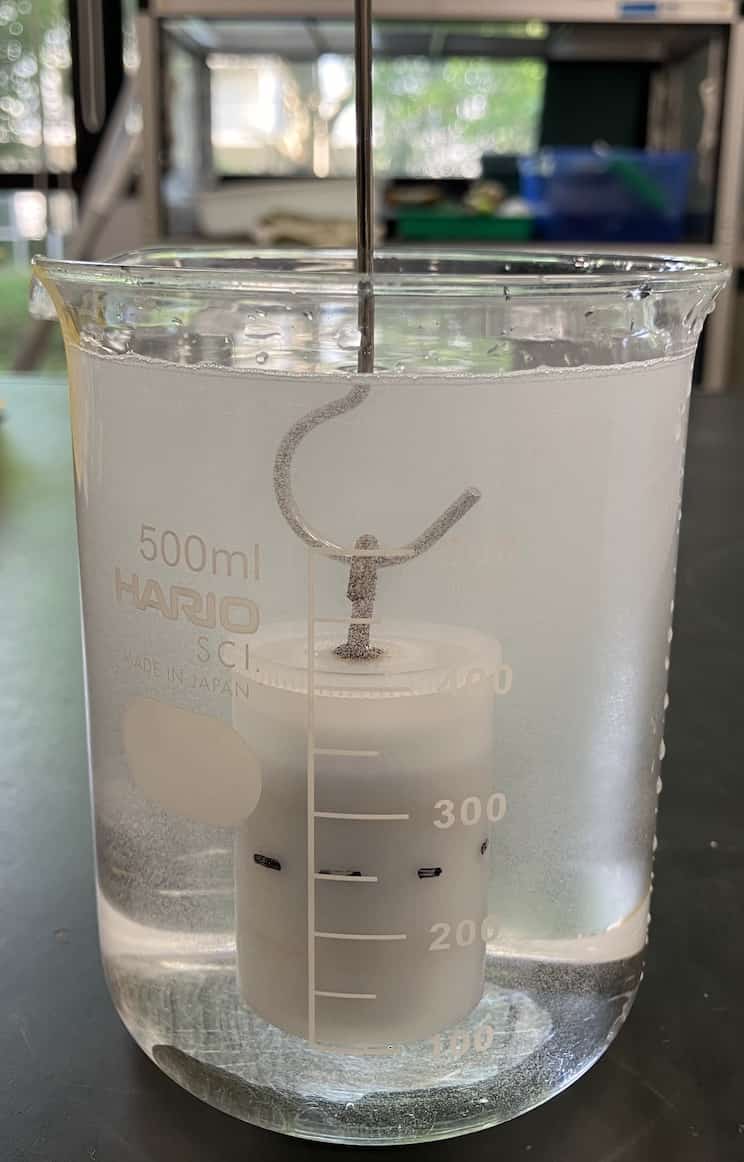
4. Repeat with a different weight
Replace the weights inside the canister and repeat steps 1 through 3. Comparing different masses helps reveal the relationship between an object’s weight and buoyancy.
Results and Discussion
Here are the results. Since the film canister itself also has weight, the measured weights in air were 1.8 N and 1.1 N.
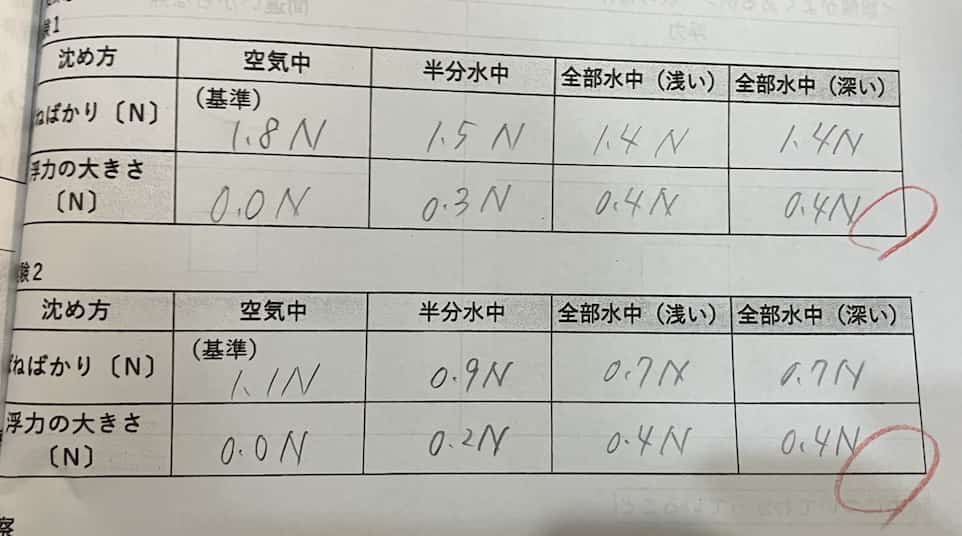
• Buoyancy does not depend on an object’s weight
As long as the film canister had the same volume, changing the amount of weight inside made almost no difference to the buoyant force.
Many people naturally assume that heavier objects should experience greater buoyancy, but that’s not actually true. It would also be interesting to perform another experiment that changes the object’s volume instead of its weight to make this distinction even clearer.
• Buoyancy does not depend on depth (once the object is fully submerged)
When only part of the canister was underwater, the buoyant force increased as more of it entered the water. However, once it was completely submerged, lowering it even deeper produced no further change in buoyancy.
The same principle applies to deep-sea fish and submarines. A submarine doesn’t sink or rise because buoyancy changes with depth. Instead, it controls its overall density by pumping water in and out of ballast tanks, adjusting its weight while its volume remains nearly constant.
This simple experiment beautifully demonstrates a fundamental rule of physics: buoyancy depends on the volume of water displaced, not on the object’s weight.
That’s the real takeaway.
Another great feature of this experiment is that an invisible force becomes something you can actually measure with a spring scale, turning an abstract concept into real numbers.
Simple enough for the classroom or a science fair project, yet powerful enough to reveal the true nature of buoyancy, this experiment is a fantastic way to explore the classic question: “Why do some things float while others sink?”
Contact & Collaboration
Science is full of fascinating mysteries, and discovering them doesn’t require a high-tech laboratory. Here you’ll find plenty of fun science experiments you can try at home, along with easy-to-follow explanations and practical tips. Feel free to explore!
• Learn more about Ken Kuwako here.
• For writing, lectures, science workshops, TV consulting, media appearances, and other collaboration requests, click here.
• Follow the latest article updates on X!
 Science Ideas Channel features experiment videos!
9月のイチオシ実験!
お弁当箱をプラバンがわりにしてキーホルダーを作ろう!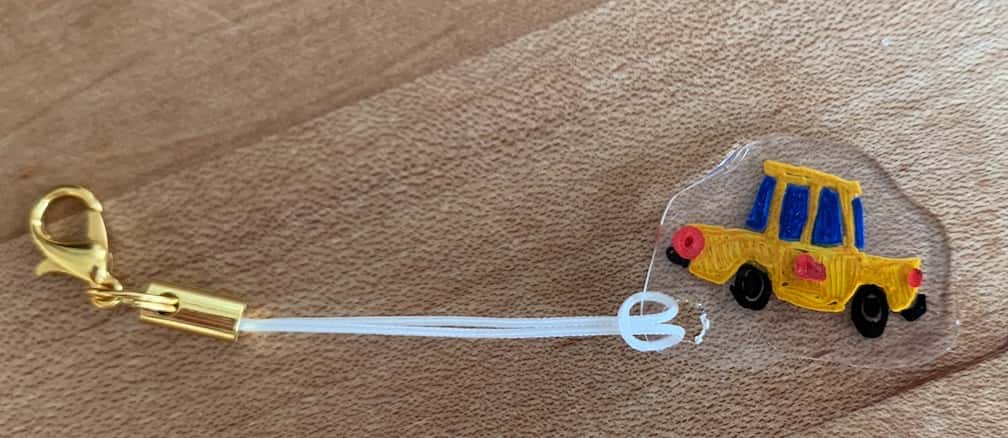
テレビ番組監修・イベント等のお知らせ
- 8月27日(木)科学監修番組放送予定
- 9月20日(日)ダビンチマスターズ出演予定
- 10月10日(土)11:15~12:00 千葉市科学フェスタ2026「桑子先生の回転科学ショー」にてサイエンスショーを行います。
- 12月26日(土) ナリカサイエンスアカデミー(教員向け実験講習会)開催
書籍のお知らせ
- 『高校入試 分解問題集 理科』(学研)…難しい問題も小さな問題に分解することで、問題を解くことができます。そんな分解の技術が身につくように深く関わりを持って作りました。
 『大人のための高校物理復習帳』(講談社)…一般向けに日常の物理について公式を元に紐解きました。特設サイトでは実験を多数紹介しています。※増刷がかかり6刷となりました(2026/02/01)
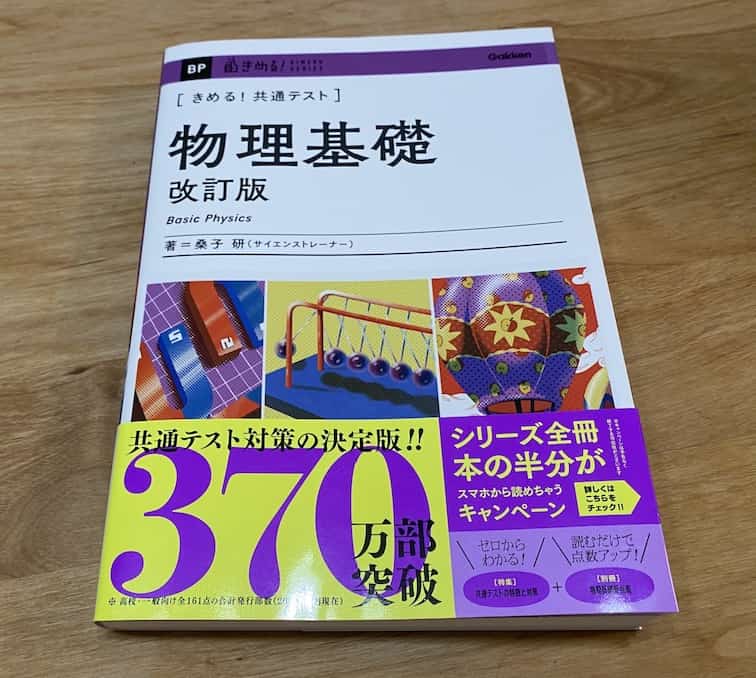
- 『きめる!共通テスト 物理基礎 改訂版』(学研)… 高校物理の参考書です。イラストを多くしてイメージが持てるように描きました。授業についていけない、物理が苦手、そんな生徒におすすめです。特設サイトはこちら。
各種SNS(更新情報をお届け!)
【日本語】X(Twitter)/instagram/Facebook 【英語】BlueSky/Threads
Explore
- 楽しい実験…お子さんと一緒に夢中になれるイチオシの科学実験を多数紹介しています。また、高校物理の理解を深めるための動画教材も用意しました。
- 理科の教材… 理科教師をバックアップ!授業の質を高め、準備を効率化するための選りすぐりの教材を紹介しています。
- Youtube…科学実験等の動画を配信しています。
- 科学ラジオ …科学トピックをほぼ毎日配信中!AI技術を駆使して作成した「耳で楽しむ科学」をお届けします。
- 講演 …全国各地で実験講習会・サイエンスショー等を行っています。
- About …「科学のネタ帳」のコンセプトや、運営者である桑子研のプロフィール・想いをまとめています。
- お問い合わせ …実験教室のご依頼、執筆・講演の相談、科学監修等はこちらのフォームからお寄せください。