Atoms in the Palm of Your Hand! Unlocking Chemistry Secrets with Water Beads
I’m Ken Kuwako, the Science Trainer. Every day is an experiment.
Have You Ever Heard of Aquabeads?
Aquabeads are colorful craft beads that stick together with nothing more than water. When you arrange the tiny beads on a special tray, spray them with water, and let them dry, their surfaces soften and fuse together to create a solid design. Originally developed as an educational craft toy for children, they’ve become popular because anyone can create colorful, pixel-style artwork simply by placing beads like they’re drawing a picture.
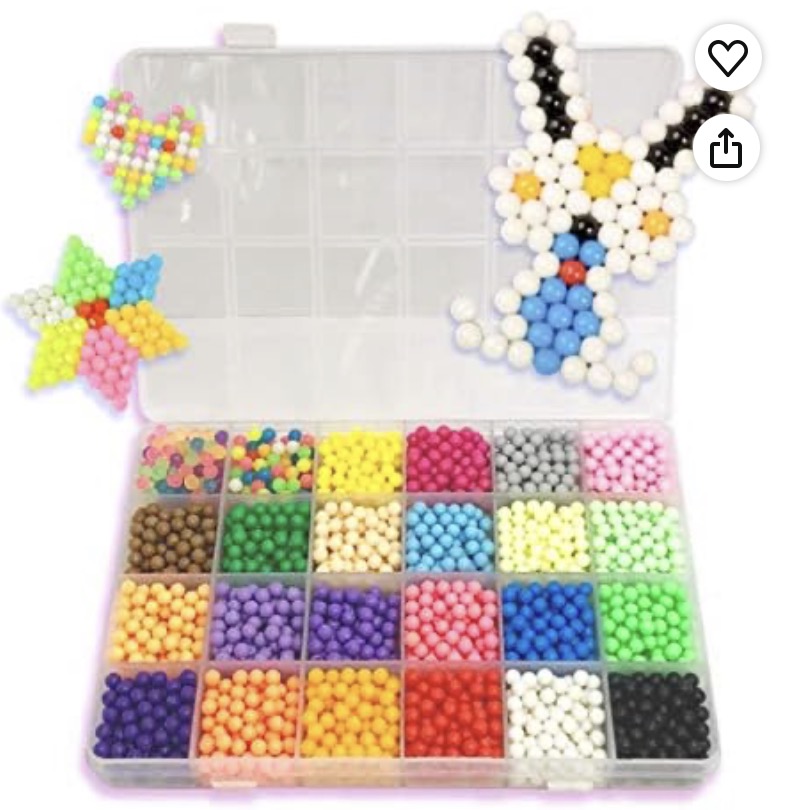
While they’re usually used to make characters, animals, or flowers, today’s idea takes advantage of their colorful, connectable nature in a completely different way: building chemical equations.
Did you know you can actually “see” water, oxygen, and carbon? Many people find chemical equations intimidating because they’re filled with symbols and numbers. But with a simple craft material, the invisible world of atoms and molecules suddenly becomes something you can see, touch, and even think is adorable. Let me introduce this creative teaching idea.
Representing Atoms and Molecules with Water Beads
The other day, I came across a wonderful teaching material that uses Aquabeads to demonstrate chemical reactions.
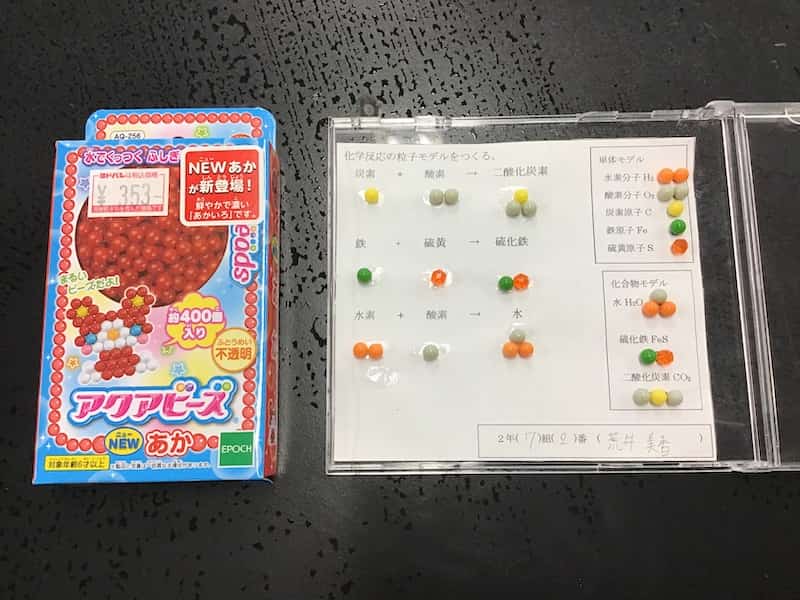
The concept is simple. Green beads represent carbon atoms, while orange beads represent oxygen atoms. Students combine these beads to build molecules. For example, water (H₂O) is represented by two orange beads and one green bead, allowing students to visualize both the types and numbers of atoms through color and quantity.
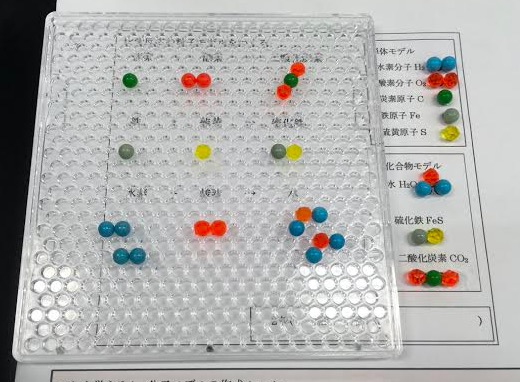
Perfect for Gases, Less Suitable for Metals
Using bead combinations to represent metals can be a little misleading because metals don’t exist as individual molecules. Instead, they consist of enormous numbers of atoms arranged in an orderly lattice held together by metallic bonds.
For gases, however, this teaching tool is outstanding. It transforms invisible molecular structures into colorful, hands-on models that students can physically build and manipulate. That makes abstract ideas much easier to grasp intuitively. And perhaps best of all, the finished models are simply charming. It’s a playful, engaging activity that many students, especially those who enjoy crafts, are likely to love.
Taking Molecules Home and Understanding Chemical Equations
In the classroom where this activity was used, each student took home the molecular models they had created.
That simple experience helps students develop an intuitive understanding of one of the most important ideas in chemistry: balancing chemical equations. For example, when hydrogen reacts with oxygen to form water, students can immediately see that if there aren’t enough hydrogen molecules, the number of atoms on each side of the equation won’t match. Instead of memorizing rules, they discover the balance by physically moving and rearranging the beads.
Chemical equations are much more than lines of symbols. They describe tiny particles breaking apart and joining together to form new substances. By assembling and separating bead molecules like puzzle pieces, students can experience the invisible world of chemistry in a way that’s fun, memorable, and surprisingly easy to understand. It’s a wonderfully creative approach to science education.
Contact & Collaboration
I love making science more approachable and enjoyable for everyone! On this site you’ll find plenty of fun science experiments you can try at home, along with clear explanations of the science behind them. Feel free to explore!
・My science blog has been published as a book. Learn more here.
・To learn more about me, Ken Kuwako, click here.
・For writing, lectures, science workshops, TV consulting, media appearances, and other collaborations, click here.
・Follow me on X for the latest article updates!
 Science Note Channel features science experiment videos—check them out!
10月のイチオシ実験!
テレビ番組監修・イベント等のお知らせ
- 10月27日(火) テレビ監修番組放送予定
- 11月27日(金) テレビ監修番組放送予定
- 12月26日(土) ナリカサイエンスアカデミー(教員向け実験講習会)開催
書籍のお知らせ
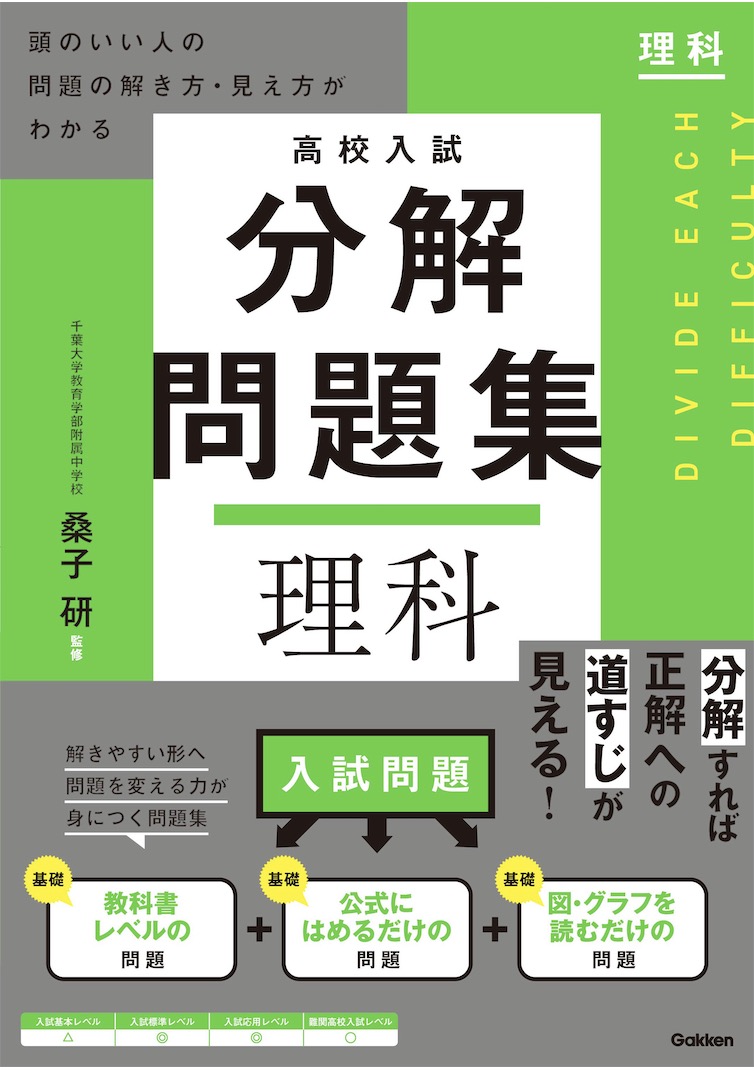
- 『高校入試 分解問題集 理科』(学研)…難しい問題も小さな問題に分解することで、問題を解くことができます。そんな分解の技術が身につくように深く関わりを持って作りました。
 『大人のための高校物理復習帳』(講談社)…一般向けに日常の物理について公式を元に紐解きました。特設サイトでは実験を多数紹介しています。※増刷がかかり6刷となりました(2026/02/01)
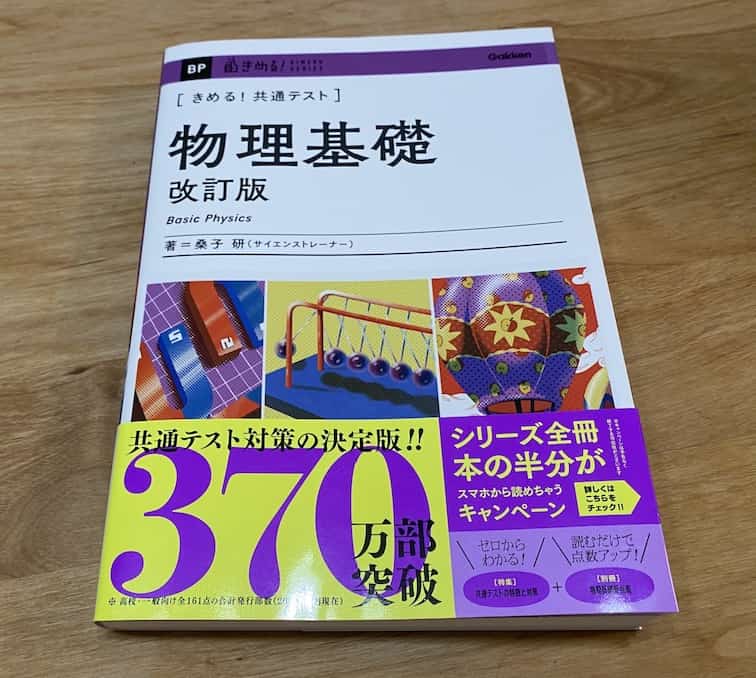
- 『きめる!共通テスト 物理基礎 改訂版』(学研)… 高校物理の参考書です。イラストを多くしてイメージが持てるように描きました。授業についていけない、物理が苦手、そんな生徒におすすめです。特設サイトはこちら。
各種SNS(更新情報をお届け!)
【日本語】X(Twitter)/instagram/Facebook 【英語】BlueSky/Threads
Explore
- 楽しい実験…お子さんと一緒に夢中になれるイチオシの科学実験を多数紹介しています。また、高校物理の理解を深めるための動画教材も用意しました。
- 理科の教材… 理科教師をバックアップ!授業の質を高め、準備を効率化するための選りすぐりの教材を紹介しています。
- Youtube…科学実験等の動画を配信しています。
- 科学ラジオ …科学トピックをほぼ毎日配信中!AI技術を駆使して作成した「耳で楽しむ科学」をお届けします。
- 講演 …全国各地で実験講習会・サイエンスショー等を行っています。
- About …「科学のネタ帳」のコンセプトや、運営者である桑子研のプロフィール・想いをまとめています。
- お問い合わせ …実験教室のご依頼、執筆・講演の相談、科学監修等はこちらのフォームからお寄せください。