The Mysterious Device That Makes Styrofoam Float in Midair — Visualizing Sound Waves with a Kundt’s Tube
I’m Ken Kuwako, a science trainer. Every day is an experiment.
Think sound is invisible? As it turns out, under the right conditions, sound waves can reveal themselves right before your eyes. On a recent visit to the Tsukuba Expo Center, I came across a device that does exactly that — tiny polystyrene beads floating up inside a tube, tracing the invisible shape of sound. No textbook needed. You just see it, feel it, and suddenly understand: sound is vibration.
What is a “standing wave,” and why does it appear inside a tube?
The device I encountered is called a Kundt’s tube — a closed tube at both ends. When sound is fed into it at just the right frequency, something remarkable happens: a standing wave forms inside.
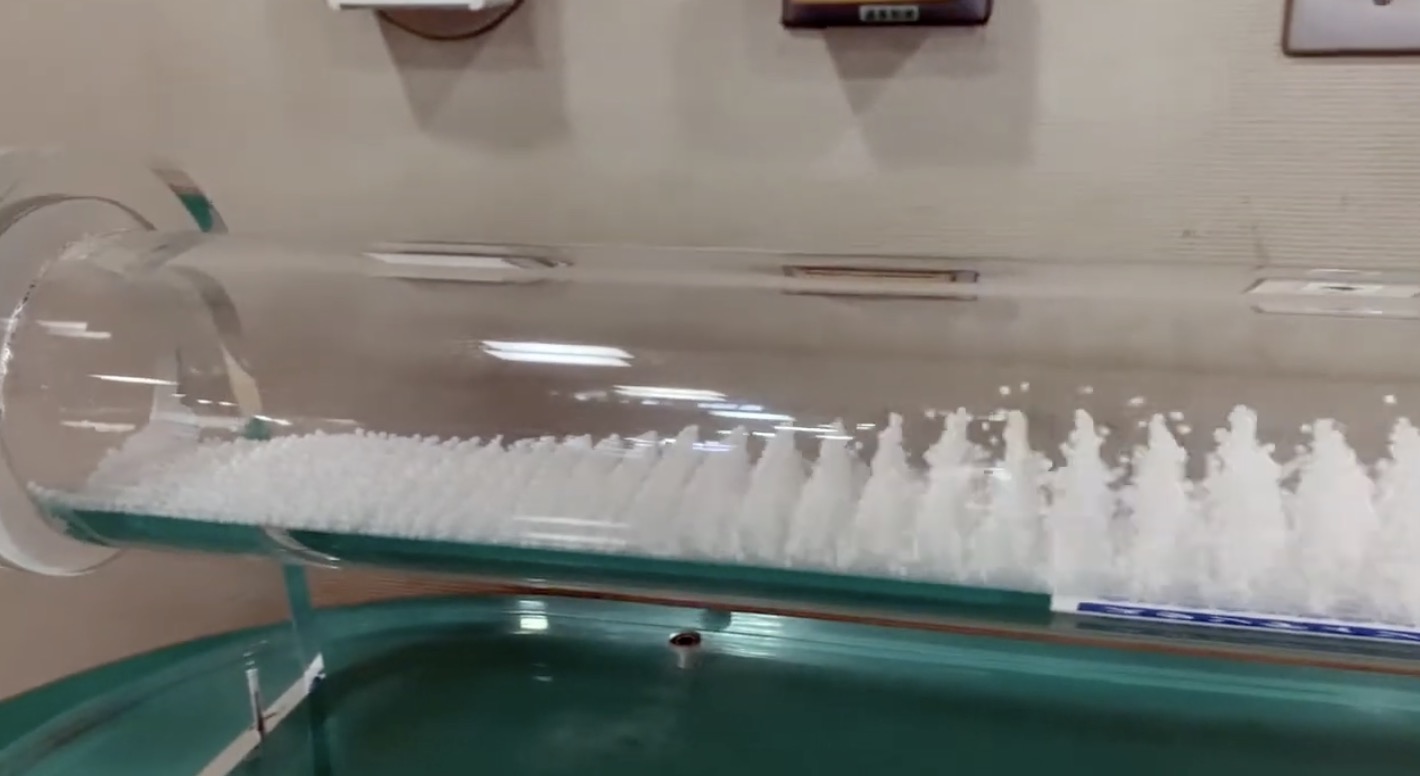
A standing wave is what you get when a wave bounces back and forth inside a confined space and interferes with itself. Certain spots vibrate intensely — these are called antinodes — while other spots stay perfectly still, called nodes. Think of a jump rope swinging in a big arc and appearing almost frozen in place. That’s the idea.
Now, if you fill the tube with fine polystyrene beads beforehand, something magical happens: at the antinodes, where the air is vibrating wildly, the beads lift up and dance. At the nodes, they sit completely still. The result? The wave’s shape becomes visible. You can watch it in action in this video:
Change the frequency, change the shape
What makes this device even more fascinating is that you can tune the frequency. Increase it, and more waves fit inside the tube — more antinodes appear, and the pattern grows more complex. Lower it, and the pattern simplifies, with fewer, wider ripples.
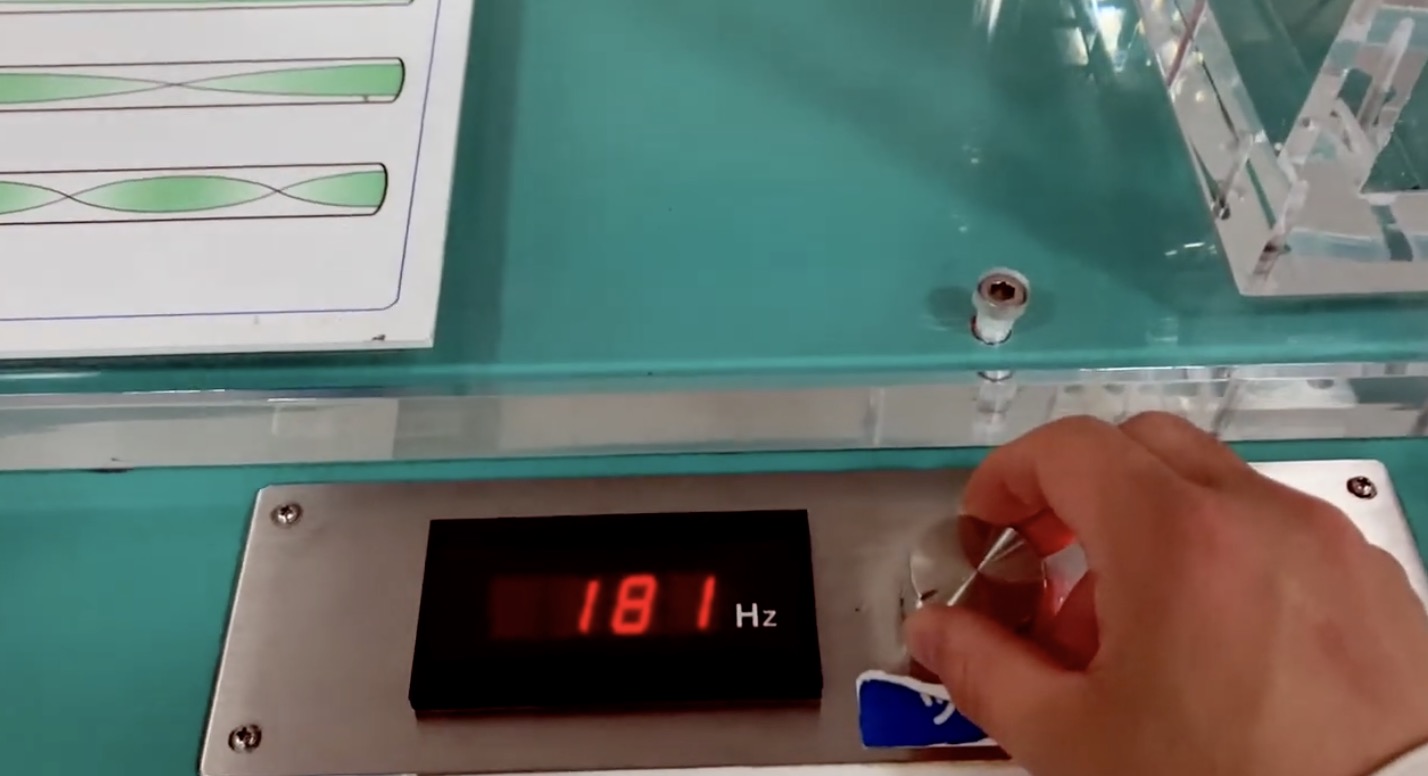
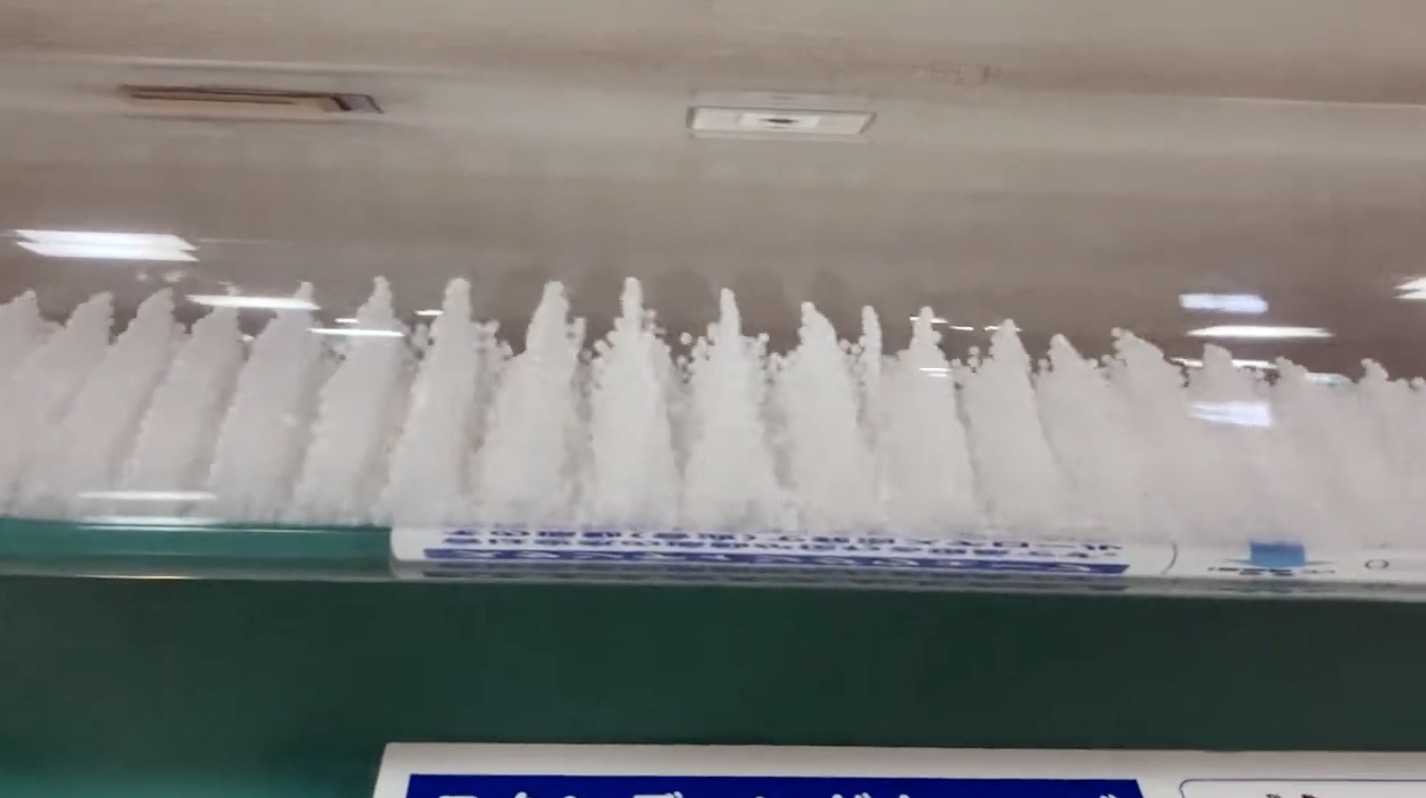
This is resonance at work. A standing wave only forms cleanly when the length of the tube and the wavelength of the sound line up just right. Wind instruments like flutes and recorders use exactly this principle. By covering or uncovering holes, you’re effectively changing the tube’s length — and therefore which frequency resonates — which is how different notes are produced.
Seeing sound with your own eyes
The sound we hear every day is a longitudinal wave — microscopic fluctuations in air pressure traveling through space. Because these fluctuations are invisible, it’s easy to nod along when someone says “sound is a wave” without it really sinking in.
Kundt’s tube translates the invisible into the visible, using polystyrene beads as a kind of physical “display.” Beads rise at the antinodes, stay still at the nodes, and suddenly the wave is right there in front of you. See it once, and “sound is vibration” stops being something you memorized and becomes something you actually know.
The Tsukuba Expo Center is full of experiences like this — science you don’t just read about but genuinely feel. If you’re ever in the area, it’s well worth a visit.
Contact & Requests
Science should be fun, surprising, and accessible to everyone! This site is full of hands-on experiments you can try at home, along with tips to make them work. Feel free to browse around!
・The content from this science resource blog has been compiled into a book. Details here
・Learn more about Ken Kuwako here
・For all inquiries (writing, speaking, experiment workshops, TV supervision, appearances, etc.) here
・Stay up to date with new posts on X!
 Science experiment videos on the Science Neta Channel!
お知らせ!10/10 サイエンスショー開催(無料イベント!)
10月10日(土)11:15~12:00 千葉市科学フェスタ2026「桑子先生の回転科学ショー」にてサイエンスショーを行います。
10月のイチオシ実験!
テレビ番組監修・イベント等のお知らせ
- 12月26日(土) ナリカサイエンスアカデミー(教員向け実験講習会)開催
書籍のお知らせ
- 『高校入試 分解問題集 理科』(学研)…難しい問題も小さな問題に分解することで、問題を解くことができます。そんな分解の技術が身につくように深く関わりを持って作りました。
 『大人のための高校物理復習帳』(講談社)…一般向けに日常の物理について公式を元に紐解きました。特設サイトでは実験を多数紹介しています。※増刷がかかり6刷となりました(2026/02/01)
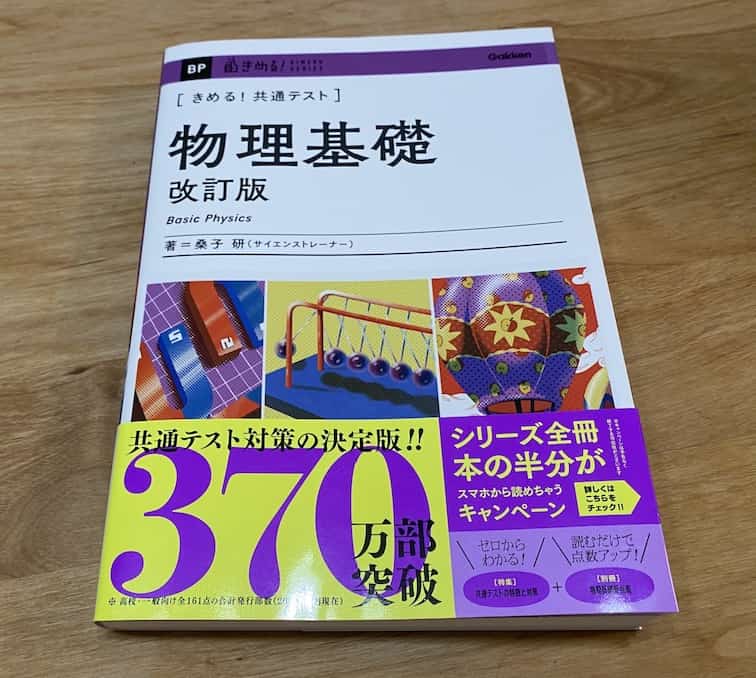
- 『きめる!共通テスト 物理基礎 改訂版』(学研)… 高校物理の参考書です。イラストを多くしてイメージが持てるように描きました。授業についていけない、物理が苦手、そんな生徒におすすめです。特設サイトはこちら。
各種SNS(更新情報をお届け!)
【日本語】X(Twitter)/instagram/Facebook 【英語】BlueSky/Threads
Explore
- 楽しい実験…お子さんと一緒に夢中になれるイチオシの科学実験を多数紹介しています。また、高校物理の理解を深めるための動画教材も用意しました。
- 理科の教材… 理科教師をバックアップ!授業の質を高め、準備を効率化するための選りすぐりの教材を紹介しています。
- Youtube…科学実験等の動画を配信しています。
- 科学ラジオ …科学トピックをほぼ毎日配信中!AI技術を駆使して作成した「耳で楽しむ科学」をお届けします。
- 講演 …全国各地で実験講習会・サイエンスショー等を行っています。
- About …「科学のネタ帳」のコンセプトや、運営者である桑子研のプロフィール・想いをまとめています。
- お問い合わせ …実験教室のご依頼、執筆・講演の相談、科学監修等はこちらのフォームからお寄せください。