Nature’s Summer Masterpiece: The Secret Stories Behind Watermelon’s Swirling Patterns and Seed Colors
I’m Kuwako Ken, the Science Trainer. Every day is an experiment.
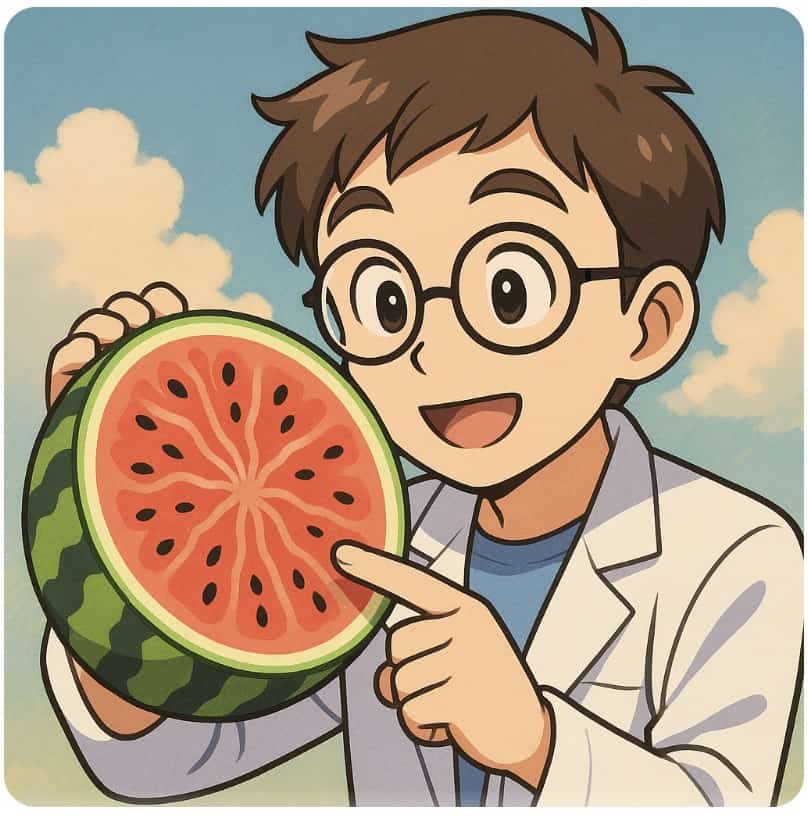
Walk into a supermarket in summer, and one thing is hard to miss: rows upon rows of watermelons. Their sweet, crisp red flesh is the perfect way to cool down on a hot day. But have you ever stopped to look a little closer? When you slice a watermelon in half, how much attention have you paid to the mysterious streak-like patterns running through the flesh, or to the mix of black and white seeds scattered inside?
As it turns out, those details reveal an astonishing amount about how plants survive and reproduce.
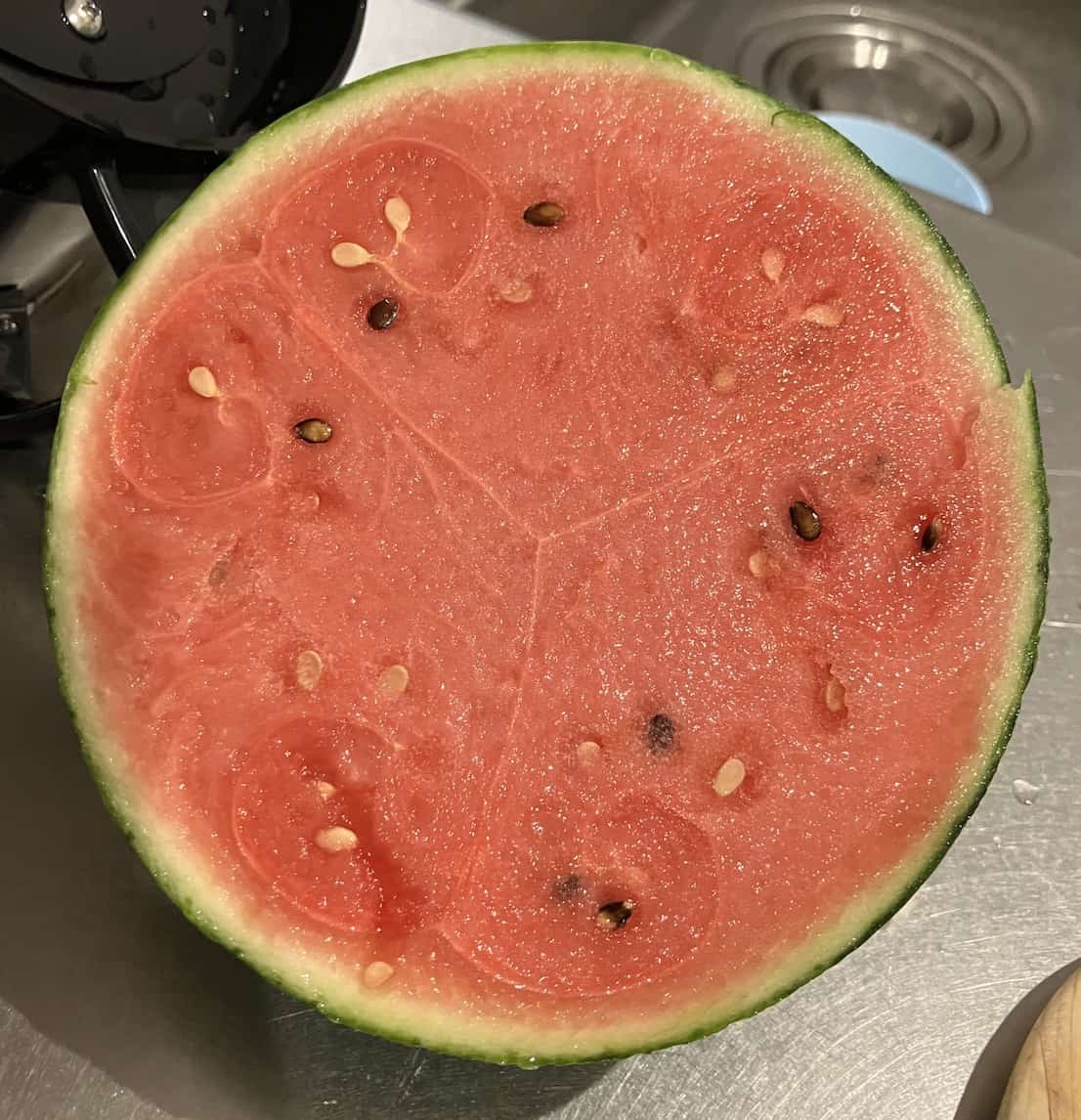
What Are Those Strange Patterns Inside a Watermelon?
Have you ever noticed the thin lines radiating toward the seeds, sometimes curling into little spirals, inside the red flesh of a watermelon? Those charming patterns are actually something called vascular bundles.
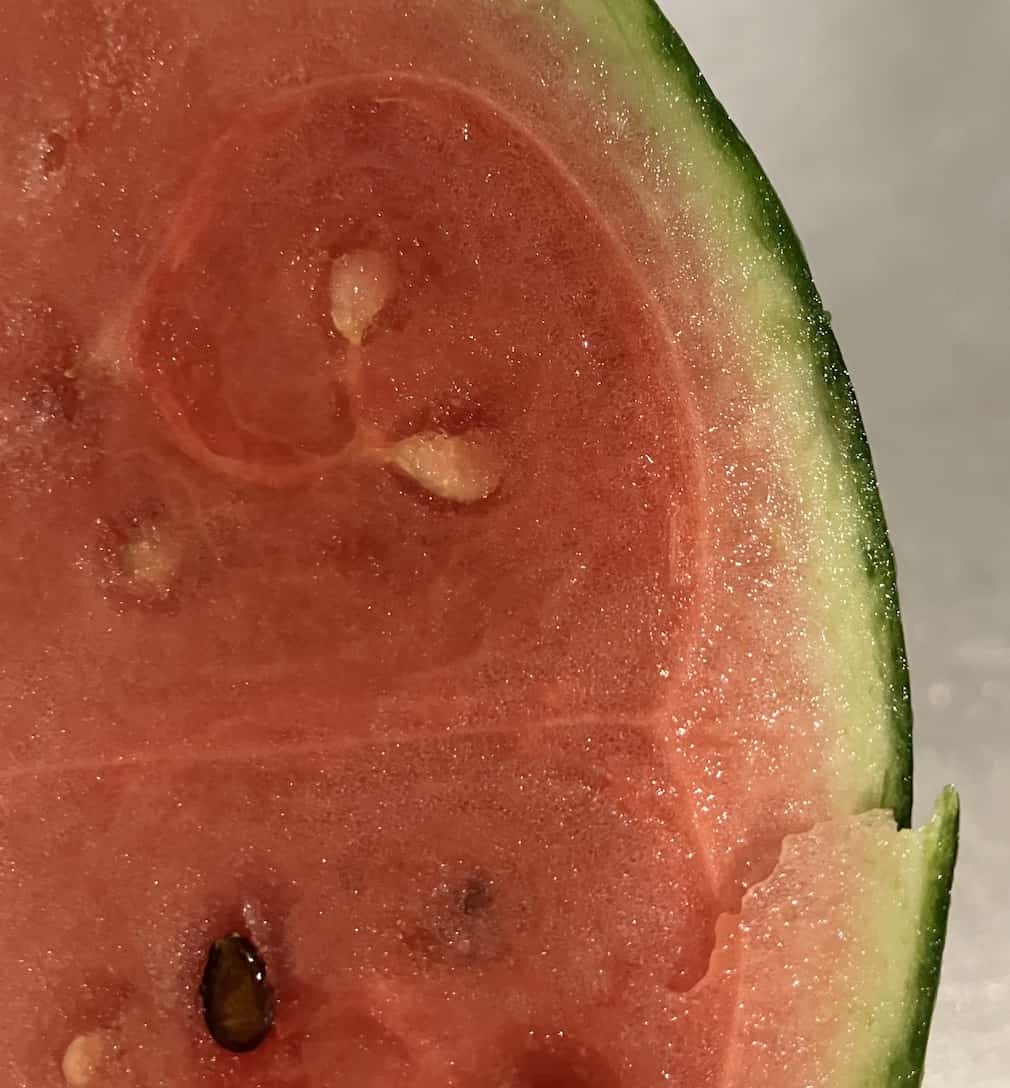
Look closely and you’ll see the seeds clustered around the curled vascular bundles.
So what exactly are vascular bundles?
Think of them as the plant’s internal transportation network. Much like our blood vessels and digestive system, they move essential materials throughout the organism. Vascular bundles consist mainly of two types of tubes:
- Xylem: Carries water and minerals absorbed by the roots to the leaves, fruits, and the rest of the plant.
- Phloem: Transports organic nutrients produced by photosynthesis, such as sugars and starches, to growing tissues and storage organs—including the watermelon’s sweet flesh and developing seeds.
Inside a watermelon, these vascular bundles are especially important for delivering nutrients to the seeds. Those little spiral patterns are evidence of the fruit’s highly efficient system for nurturing the next generation. Once you picture this delicate transportation network at work, a watermelon becomes much more than just a refreshing snack.
Here’s a fun trick. Since seeds tend to form around the vascular bundles, what happens if you intentionally cut the watermelon through a seed-rich region? Interestingly, many of the seeds end up lining up neatly on the cut surface, making them much easier to remove all at once. Depending on where you slice, you can even create sections that are nearly seed-free.
Reference:
https://hicbc.com/magazine/article/?id=kurashi-news-22081001
Black Seeds vs. White Seeds: The Difference Comes Down to Fertilization
As you eat a watermelon, you’ve probably noticed two kinds of seeds: large black ones and small white ones. The difference isn’t simply a matter of age or maturity. It is closely tied to one of the most important events in a plant’s life: fertilization.
Fertilization begins when pollen lands on the pistil. A pollen tube grows downward, carrying sperm cells that eventually fuse with an egg cell inside the ovule—the structure that will become a seed. Whether this process succeeds or fails determines the seed’s future.
- Black seeds (viable seeds): These are the result of successful fertilization and normal embryo development. If planted under suitable conditions, they have a good chance of germinating into new watermelon plants.
- White seeds (non-viable seeds): These form when fertilization fails or when embryo development stops prematurely. Such seeds cannot germinate. Some watermelon varieties can develop fruit even without successful fertilization—a phenomenon known as parthenocarpy—and environmental conditions can also interfere with normal seed development.
Reference:
Japan Society of Plant Systematics
Why Are Watermelon Seeds Both White and Black?
The Reproductive Strategies of the Gourd Family: Why Watermelons and Melons Arrange Their Seeds Differently
Now let’s take a closer look at seed placement.
Both melons and watermelons belong to the gourd family, yet their seeds are arranged very differently. Melon seeds are concentrated in the center, while watermelon seeds are scattered throughout the flesh. This isn’t an accident. It may reflect two distinct evolutionary strategies for spreading offspring and ensuring survival.
The Melon’s Strategy: Centralized and Efficient
Melon seeds are packed together in the soft central portion often called the seed cavity. This arrangement appears to offer several advantages:
- Encouraging animals to swallow the seeds: The sweet flesh attracts animals, and the clustered seeds are more likely to be consumed along with it.
- Protecting the seeds: Keeping seeds together reduces the chance of damage while the fruit is being eaten. The surrounding pulp may also help prevent the seeds from drying out.
- Efficient dispersal: After passing through an animal’s digestive tract, seeds are deposited elsewhere along with feces, allowing them to sprout far from the parent plant.
The Watermelon’s Strategy: Spread Wide and Maximize Opportunities
Watermelon seeds, by contrast, seem to be scattered almost randomly throughout the red flesh. This pattern also offers important benefits.
- Embedding seeds throughout the fruit: Since seeds are distributed across the edible portion, animals are likely to consume seeds no matter which part they eat.
- Appealing to a wide range of animals: Even an animal that eats only part of the fruit may still help transport seeds. This broadens the pool of potential seed dispersers.
- Diversifying germination opportunities: Seeds carried to many different locations have a better chance of reaching environments suitable for growth. This “scatter-and-spread” strategy can be highly effective across large landscapes.
A watermelon seed may seem like a trivial detail, but its color, shape, and placement tell a remarkable story about plant life. When you cut open a watermelon, you’re not just looking at a piece of fruit—you’re seeing a survival blueprint refined over millions of years of evolution.
The next time you enjoy a slice of watermelon, take a moment to notice the vascular bundle patterns and the different kinds of seeds. Hidden inside that summer treat is a fascinating lesson in biology.
Contact and Collaboration
Let’s make science more accessible, surprising, and fun!
This site is packed with easy-to-follow science experiments you can try at home, along with practical tips for getting the best results. Feel free to explore.
• Learn more about the site operator, Kuwako Ken, here
• For writing projects, lectures, science workshops, TV consulting, media appearances, and other collaborations, click here
• Follow article updates on X!
 Science Ideas Channel features experiment videos and science demonstrations!
お知らせ!10/10 サイエンスショー開催(無料イベント!)
10月10日(土)11:15~12:00 千葉市科学フェスタ2026「桑子先生の回転科学ショー」にてサイエンスショーを行います。
10月のイチオシ実験!
テレビ番組監修・イベント等のお知らせ
- 12月26日(土) ナリカサイエンスアカデミー(教員向け実験講習会)開催
書籍のお知らせ
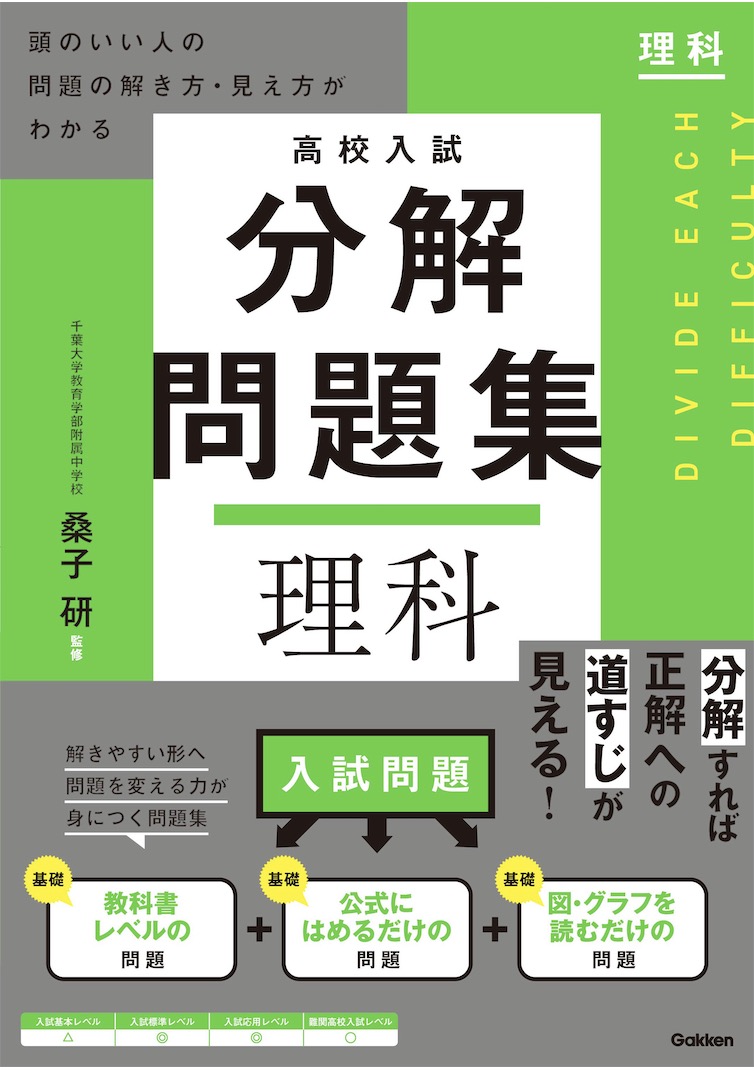
- 『高校入試 分解問題集 理科』(学研)…難しい問題も小さな問題に分解することで、問題を解くことができます。そんな分解の技術が身につくように深く関わりを持って作りました。
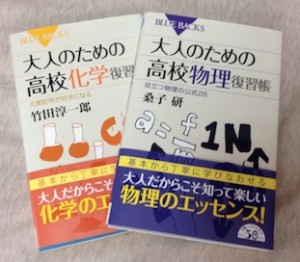
 『大人のための高校物理復習帳』(講談社)…一般向けに日常の物理について公式を元に紐解きました。特設サイトでは実験を多数紹介しています。※増刷がかかり6刷となりました(2026/02/01)
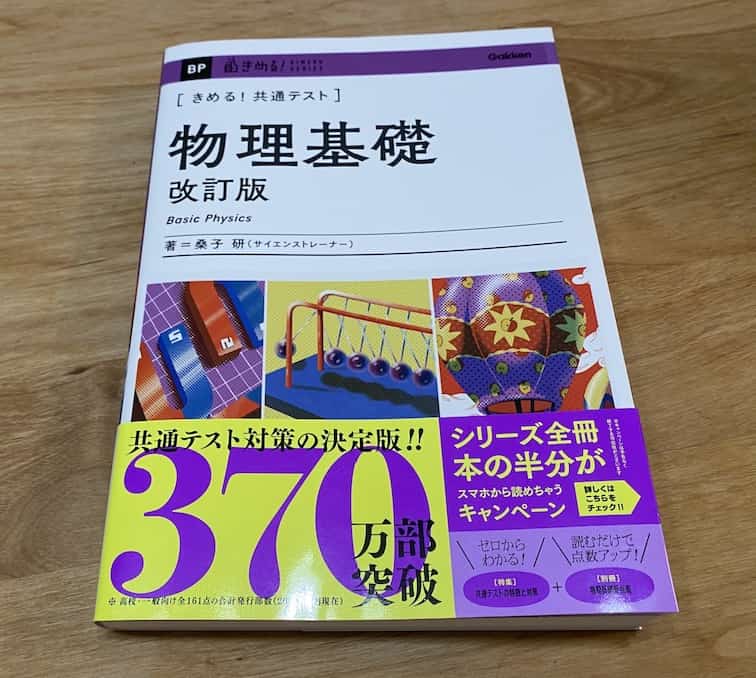
- 『きめる!共通テスト 物理基礎 改訂版』(学研)… 高校物理の参考書です。イラストを多くしてイメージが持てるように描きました。授業についていけない、物理が苦手、そんな生徒におすすめです。特設サイトはこちら。
各種SNS(更新情報をお届け!)
【日本語】X(Twitter)/instagram/Facebook 【英語】BlueSky/Threads
Explore
- 楽しい実験…お子さんと一緒に夢中になれるイチオシの科学実験を多数紹介しています。また、高校物理の理解を深めるための動画教材も用意しました。
- 理科の教材… 理科教師をバックアップ!授業の質を高め、準備を効率化するための選りすぐりの教材を紹介しています。
- Youtube…科学実験等の動画を配信しています。
- 科学ラジオ …科学トピックをほぼ毎日配信中!AI技術を駆使して作成した「耳で楽しむ科学」をお届けします。
- 講演 …全国各地で実験講習会・サイエンスショー等を行っています。
- About …「科学のネタ帳」のコンセプトや、運営者である桑子研のプロフィール・想いをまとめています。
- お問い合わせ …実験教室のご依頼、執筆・講演の相談、科学監修等はこちらのフォームからお寄せください。