The Secret Behind a Spinning Top Is Written in the Stars! Discover the Mystery of Precession with a Gyroscope Globe
I’m Ken Kuwako, the Science Trainer. Every day is an experiment.
Experience Precession with an Earth Gyroscope!
Have you ever wondered why a spinning top doesn’t simply fall over? It’s just spinning, yet somehow it stays upright. Once you discover the reason, you might find yourself thinking, “Physics is actually amazing!”
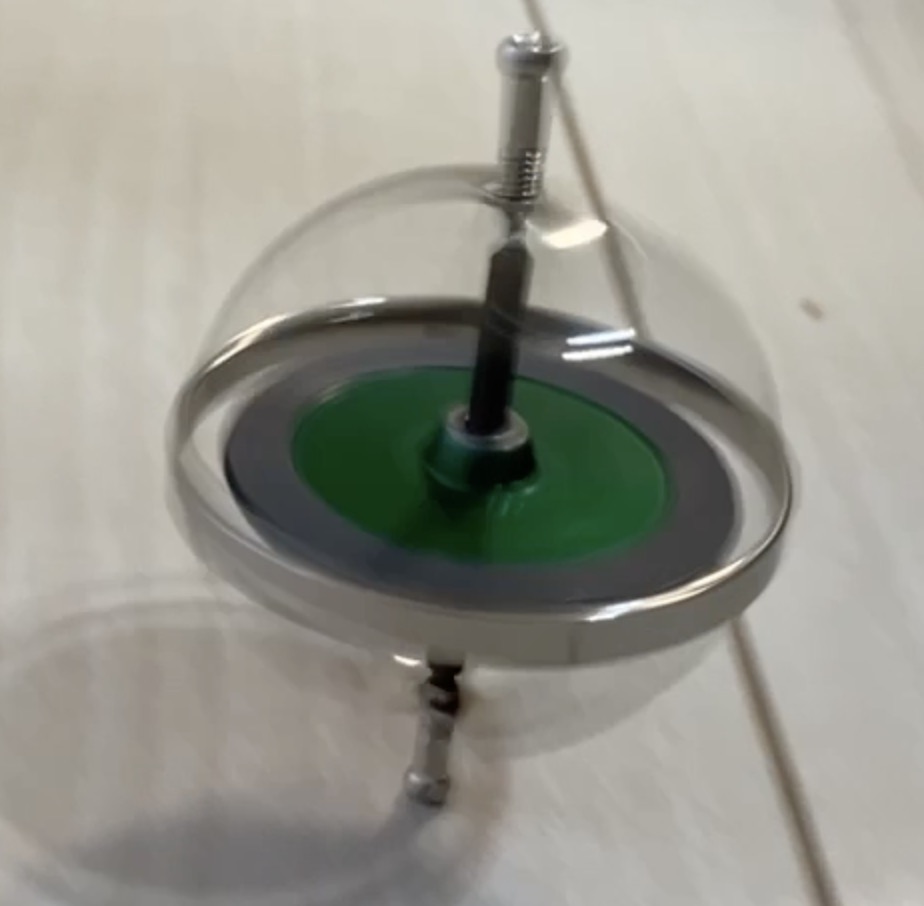
Today, I used an Earth gyroscope to observe a fascinating phenomenon called precession. Inside the gyroscope is a spinning disk, and as long as it keeps rotating, the axis remains stable and upright. This effect is known as the gyroscopic effect.
Any rotating object naturally tries to maintain the direction of its axis of rotation. It’s one reason riding a bicycle feels stable—the spinning wheels act like gyroscopes. The Earth gyroscope works the same way. While the internal disk spins at high speed, the axis remains remarkably steady.
Tilt the Top and Something Strange Happens
If you tilt the gyroscope while the internal disk is still spinning, the entire top begins a curious wobbling motion. Take a look at the video below.
When it is placed with a slight tilt to the left like this:
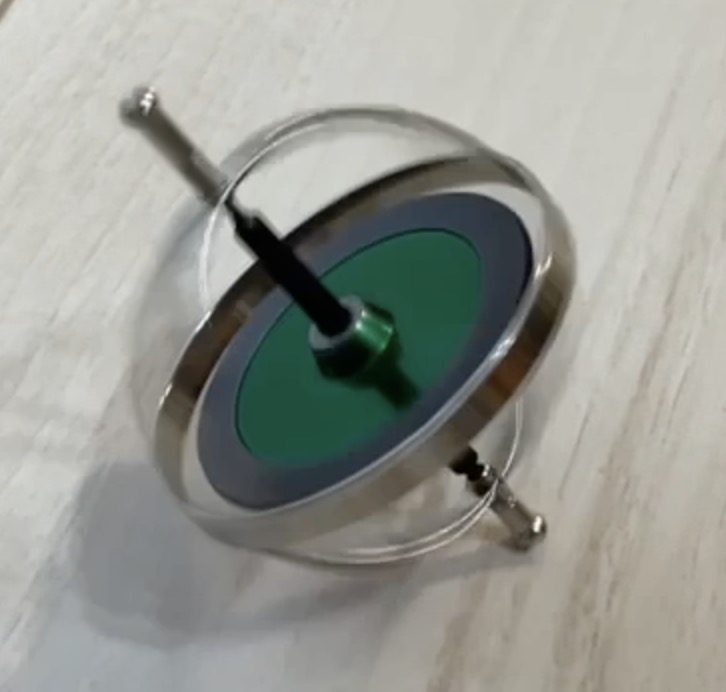
Instead of simply falling over, it begins a graceful circular wobble, almost as if it’s trying to resist gravity.
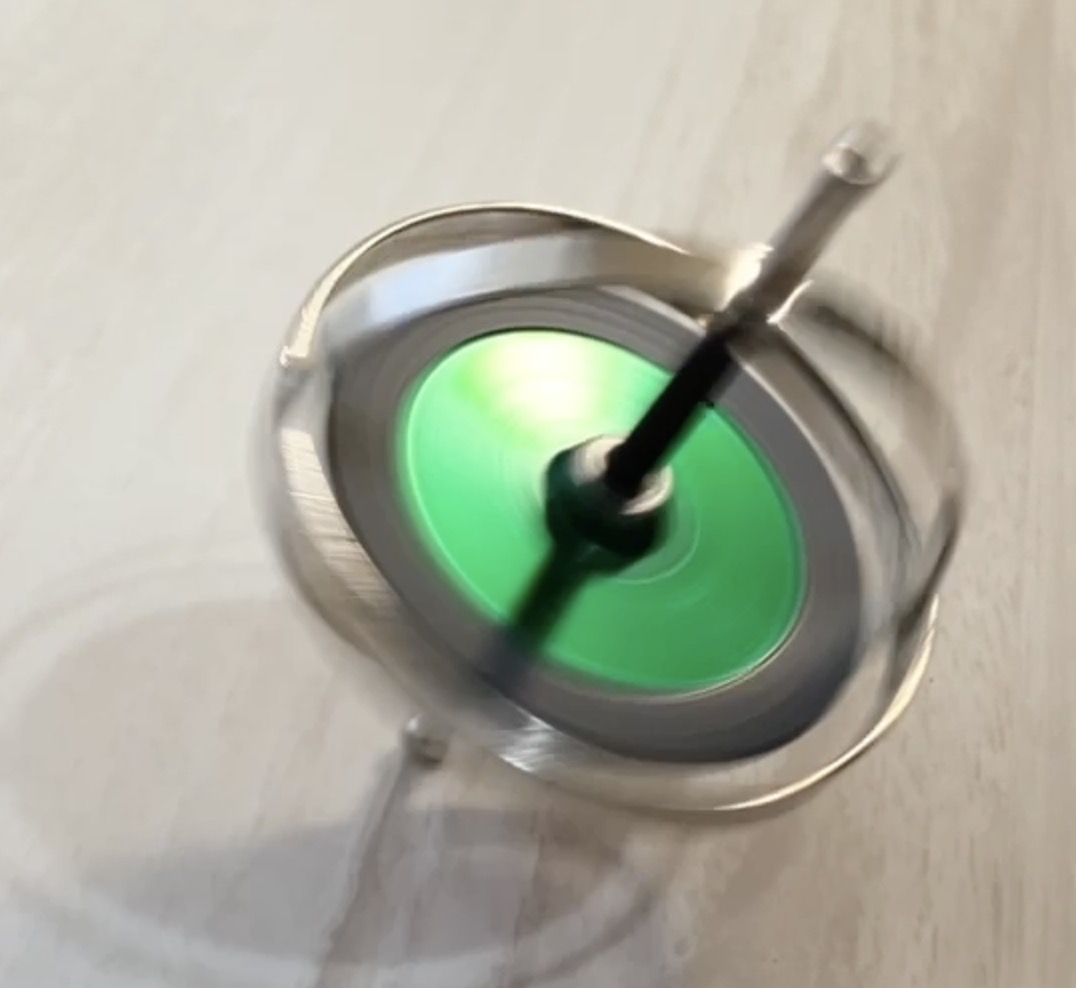
What Exactly Is Precession?
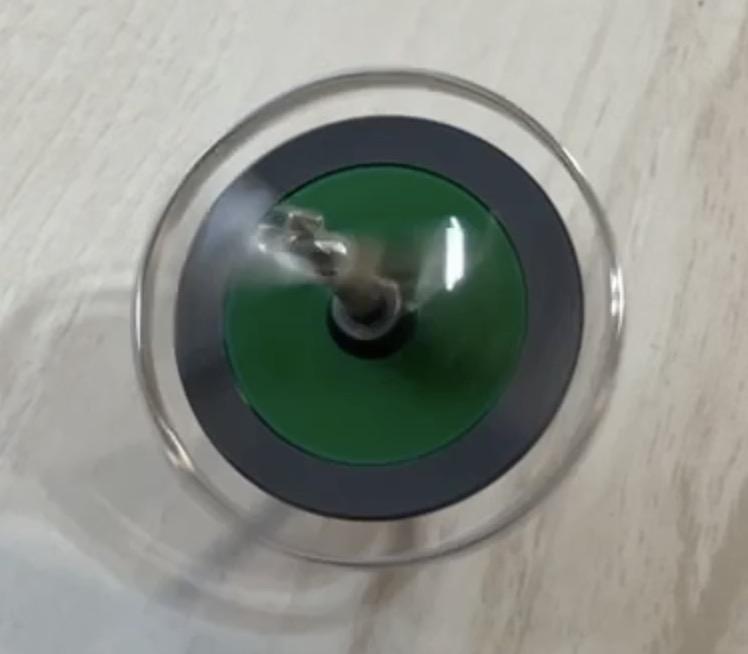
This wobbling motion is called precession.
Let’s picture what’s happening. When a spinning top tilts, gravity tries to pull it over. But instead of responding directly by falling, a rapidly spinning object reacts in a surprisingly counterintuitive way—it moves sideways.
As a result, the axis doesn’t simply tip over. Instead, it slowly sweeps around in a circle, creating the characteristic wobbling motion of precession.
Imagine someone pushing you forward at the shoulder. Instead of stumbling backward, you somehow spin sideways. Strange as it sounds, that’s similar to what a spinning top does.
Physicists explain this behavior using a concept called angular momentum. A spinning object stores angular momentum, and when an external force acts on it, the interaction causes the object to move in a direction that often seems completely unexpected.
The Earth Itself Is Precessing
This phenomenon isn’t limited to toys. The Earth is doing it too.
Our planet spins on an axis tilted about 23.4 degrees. Because of the gravitational pull of the Moon and the Sun, that axis slowly wobbles, much like a spinning top.
One complete cycle takes roughly 26,000 years.
That means Earth has been slowly tracing out a gigantic cosmic wobble throughout human history.
Because of this precession, the identity of the North Star changes over time. When the ancient Egyptians built the pyramids, the star closest to the north celestial pole was not today’s Polaris. Instead, it was a star called Thuban.
Precession connects a simple physics demonstration to astronomy, history, and even the rise of ancient civilizations.
The Secret Behind a Returning Boomerang
Precession can be difficult to grasp intuitively, but it also helps explain something many people find magical: why a boomerang comes back.
As a boomerang flies, it spins rapidly. The upper and lower wings experience different amounts of lift, creating a torque that tries to tilt the boomerang.
But thanks to precession, the boomerang doesn’t simply tip in the direction of that force. Instead, it begins turning sideways. This continuous turning causes it to follow a large curved path that can bring it right back to the thrower.
It’s remarkable to think that the same physics demonstrated by a small gyroscope was quietly at work in one of humanity’s oldest hunting tools.
Inside a single Earth gyroscope lies a gateway to an enormous world of physics—from spinning tops and bicycles to boomerangs, planets, and the history of the cosmos itself. If you ever get the chance, try one for yourself and experience this fascinating motion firsthand.
Contact and Inquiries
Bringing the wonder of science closer to everyday life! Here you’ll find easy-to-understand explanations of fun science experiments you can try at home, along with tips for getting the best results. Feel free to explore and discover something new!
・The Science Notebook has been published as a book. Learn more here.
・For more about Ken Kuwako, click here.
・For writing projects, lectures, science workshops, TV consulting, appearances, and other collaborations, click here.
・Get updates on new articles by following me on X!
 Science Notes Channel features videos of exciting science experiments!
9月のイチオシ実験!
お弁当箱をプラバンがわりにしてキーホルダーを作ろう!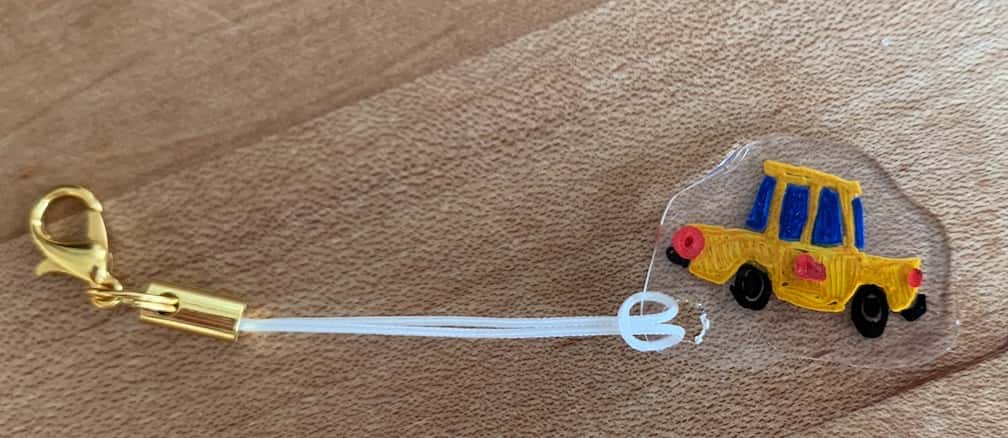
テレビ番組監修・イベント等のお知らせ
- 8月27日(木)科学監修番組放送予定
- 9月20日(日)ダビンチマスターズ出演予定
- 10月10日(土)11:15~12:00 千葉市科学フェスタ2026「桑子先生の回転科学ショー」にてサイエンスショーを行います。
- 12月26日(土) ナリカサイエンスアカデミー(教員向け実験講習会)開催
書籍のお知らせ
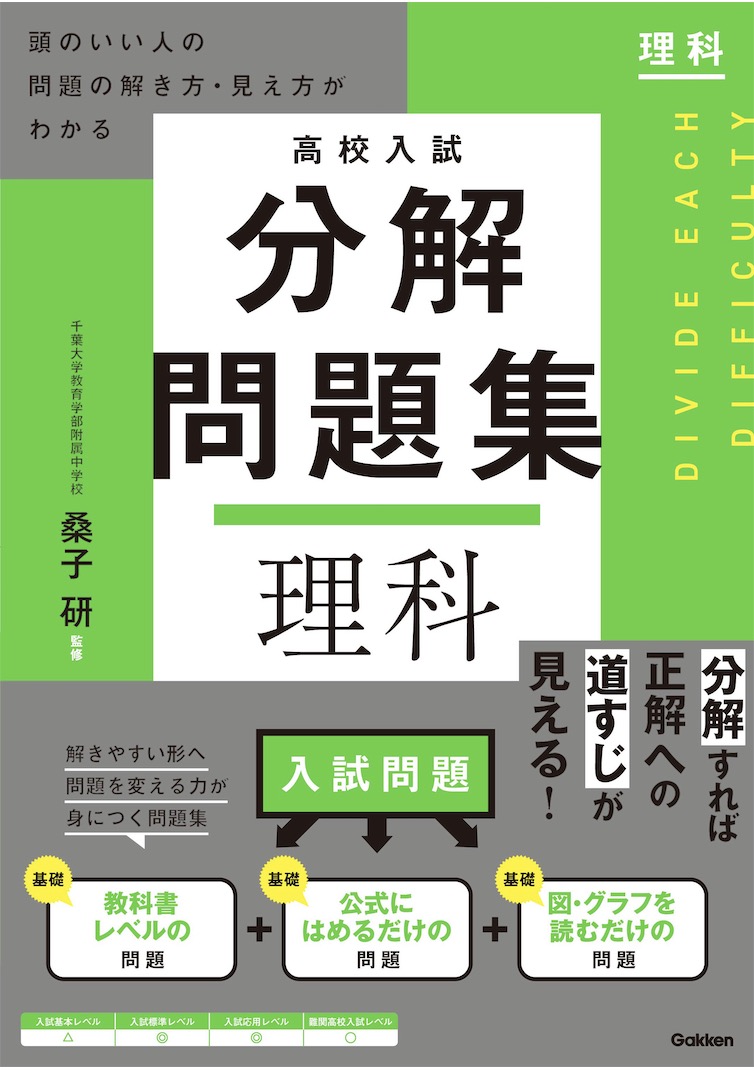
- 『高校入試 分解問題集 理科』(学研)…難しい問題も小さな問題に分解することで、問題を解くことができます。そんな分解の技術が身につくように深く関わりを持って作りました。
 『大人のための高校物理復習帳』(講談社)…一般向けに日常の物理について公式を元に紐解きました。特設サイトでは実験を多数紹介しています。※増刷がかかり6刷となりました(2026/02/01)

- 『きめる!共通テスト 物理基礎 改訂版』(学研)… 高校物理の参考書です。イラストを多くしてイメージが持てるように描きました。授業についていけない、物理が苦手、そんな生徒におすすめです。特設サイトはこちら。

各種SNS(更新情報をお届け!)
【日本語】X(Twitter)/instagram/Facebook 【英語】BlueSky/Threads
Explore
- 楽しい実験…お子さんと一緒に夢中になれるイチオシの科学実験を多数紹介しています。また、高校物理の理解を深めるための動画教材も用意しました。
- 理科の教材… 理科教師をバックアップ!授業の質を高め、準備を効率化するための選りすぐりの教材を紹介しています。
- Youtube…科学実験等の動画を配信しています。
- 科学ラジオ …科学トピックをほぼ毎日配信中!AI技術を駆使して作成した「耳で楽しむ科学」をお届けします。
- 講演 …全国各地で実験講習会・サイエンスショー等を行っています。
- About …「科学のネタ帳」のコンセプトや、運営者である桑子研のプロフィール・想いをまとめています。
- お問い合わせ …実験教室のご依頼、執筆・講演の相談、科学監修等はこちらのフォームからお寄せください。