Do Parasites Control Minds and Bare Fangs? The Astonishing Survival Strategies of Hidden Creatures Around Us (Meguro Parasitological Museum)
I’m Ken Kuwako, your Science Trainer. Every day is an experiment.
Did you know that tucked away in a quiet residential neighborhood in Meguro, there lies a “mysterious holy ground” unlike any other in the world? Recently, I took my science club students to visit the Meguro Parasitological Museum in Tokyo. It is the world’s only museum dedicated entirely to parasites. Despite being a weekday afternoon, the hall was buzzing with visitors, reminding me once again of the “terrifying yet irresistible charm” these creatures possess.

Today, I want to talk about the surprisingly deep and complex survival strategies of parasites—the more you learn, the more fascinating they become.
Cunning Adventurers Searching for a Home
Upon entering, we were greeted by a surprisingly cheerful slogan: “Let’s find a home for the parasites!” In this context, “home” refers to the host—the creature being parasitized.
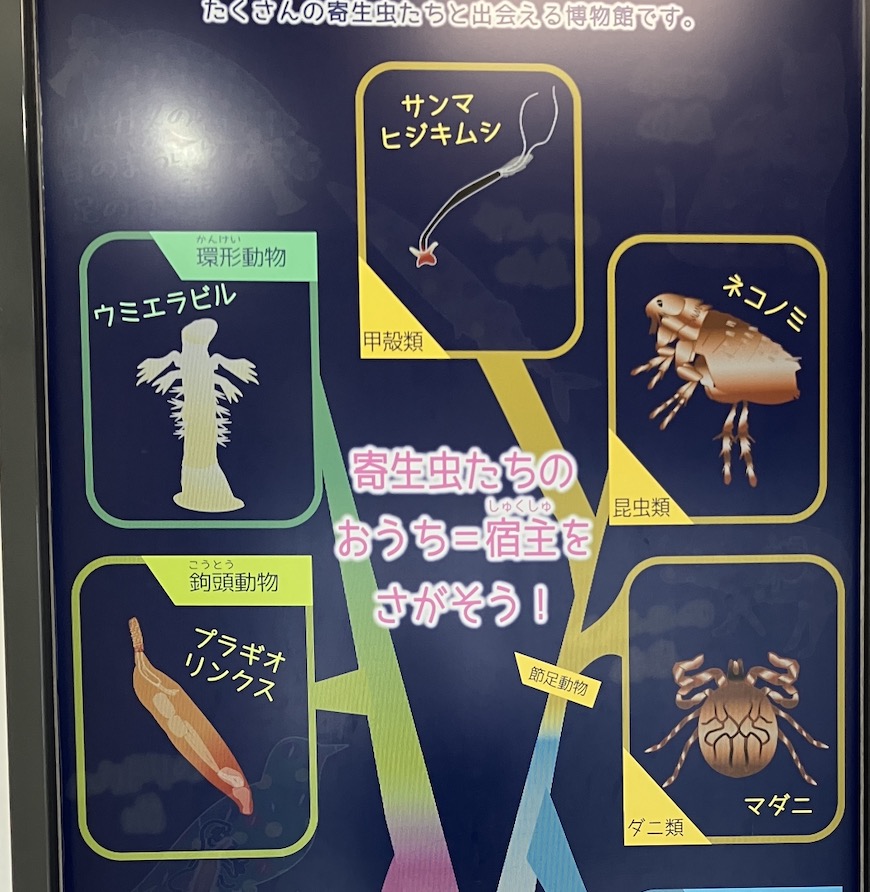
The gap between this pop-culture vibe and the raw intensity of the specimens on display left my students a bit chilled, with one muttering, “The energy in here is… unique.” However, that single sentence captures the essence of a parasite’s life. For them, finding a host isn’t just a move; it’s a high-stakes mission for survival.
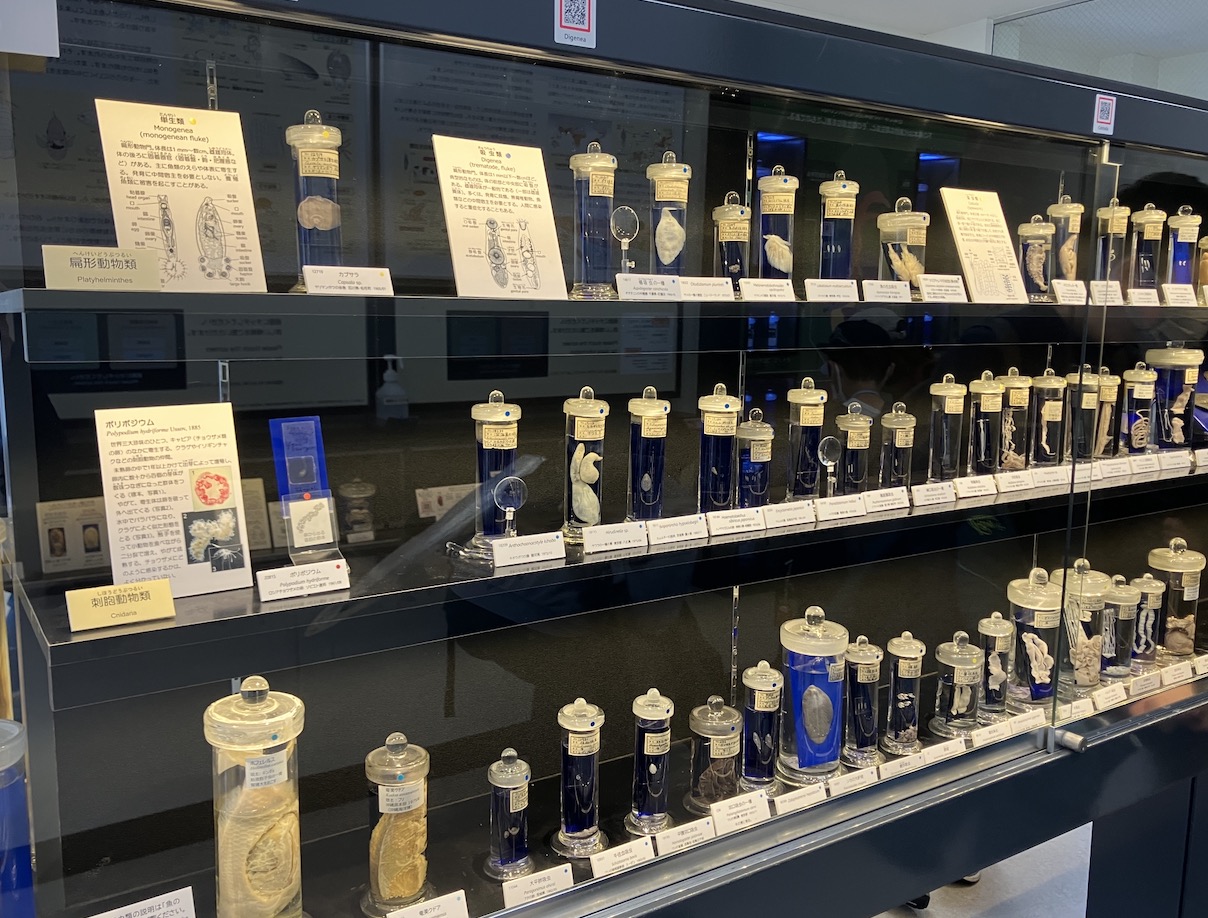
The museum is a compact two-story building, but the density of the exhibits is overwhelming. The first floor is packed with countless specimens, while the second floor dives into detailed explanations via panel displays. Because parasites are generally tiny, there is truly no other place where you can observe so many different species up close.
The Blood-Sucking Professionals: The Wonder of Ticks
One exhibit that really caught our eye was the specimen of the Amblyomma testudinarium (a species of hard tick).
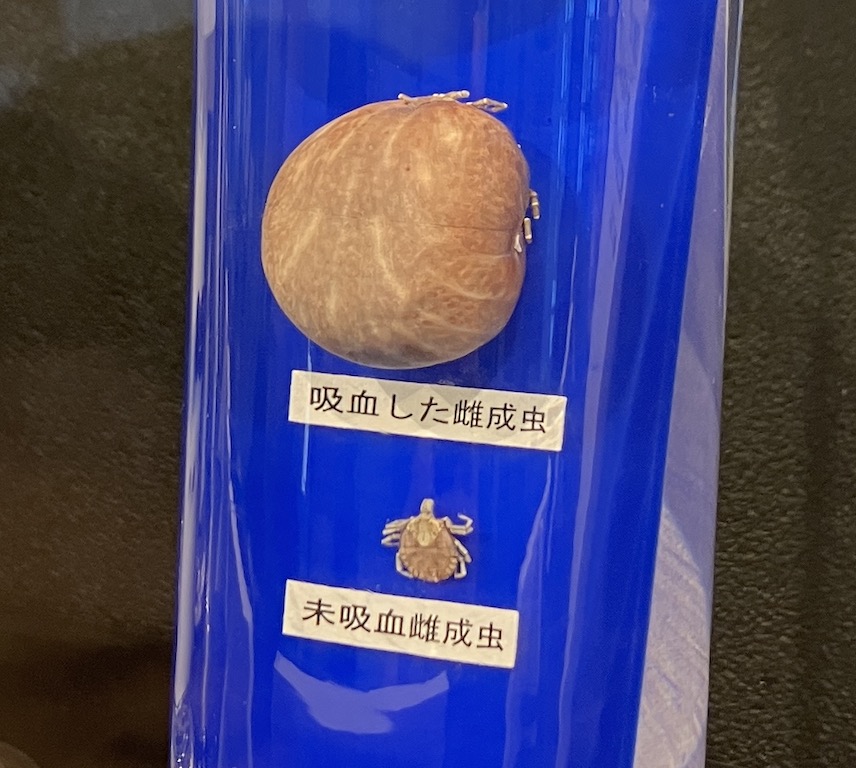
This actually hit home for me. My mother was once bitten by a tick while mountain climbing. She felt something on her neck, and when she checked, it had swollen up like a bean. She was absolutely shocked.
When a tick feeds, it can expand to dozens of times its original size. In my mother’s case, she tried to pull it off forcibly, which caused the tick’s “fangs” to break off and remain inside her skin. She eventually had to have them surgically removed at a dermatology clinic.
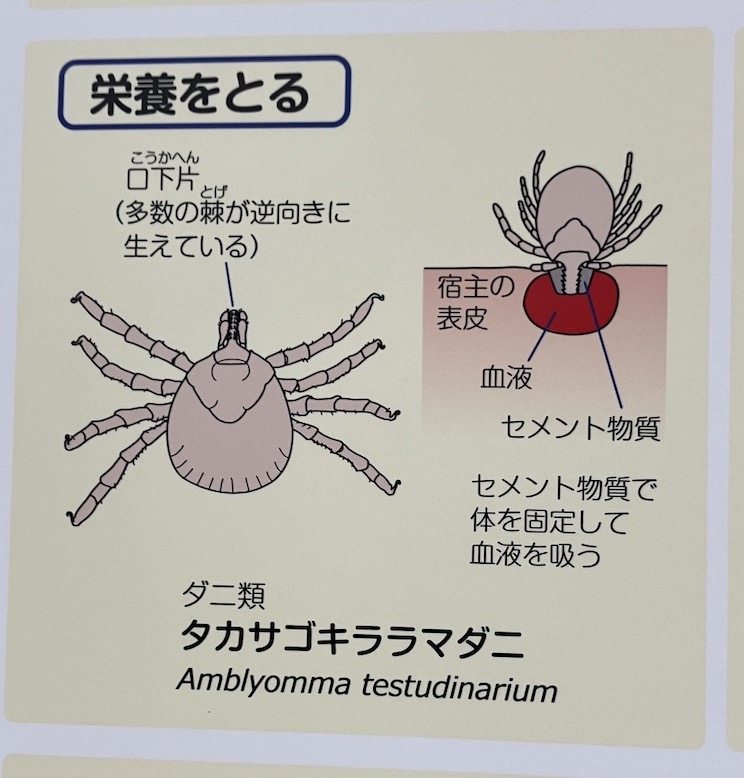
Why do they dig in so firmly? The explanation cleared it right up. Ticks secrete a cement-like substance from their mouths to glue themselves to the host, and then they lock in using backward-facing barbs on their mouthparts. Once they bite, they don’t let go easily. It’s essentially a “living anchor”—a testament to the terrifyingly efficient design of the natural world.
The Horror String that Controls the Brain: The Horsehair Worm
Next, we encountered the Horsehair Worm, which parasitizes praying mantises.
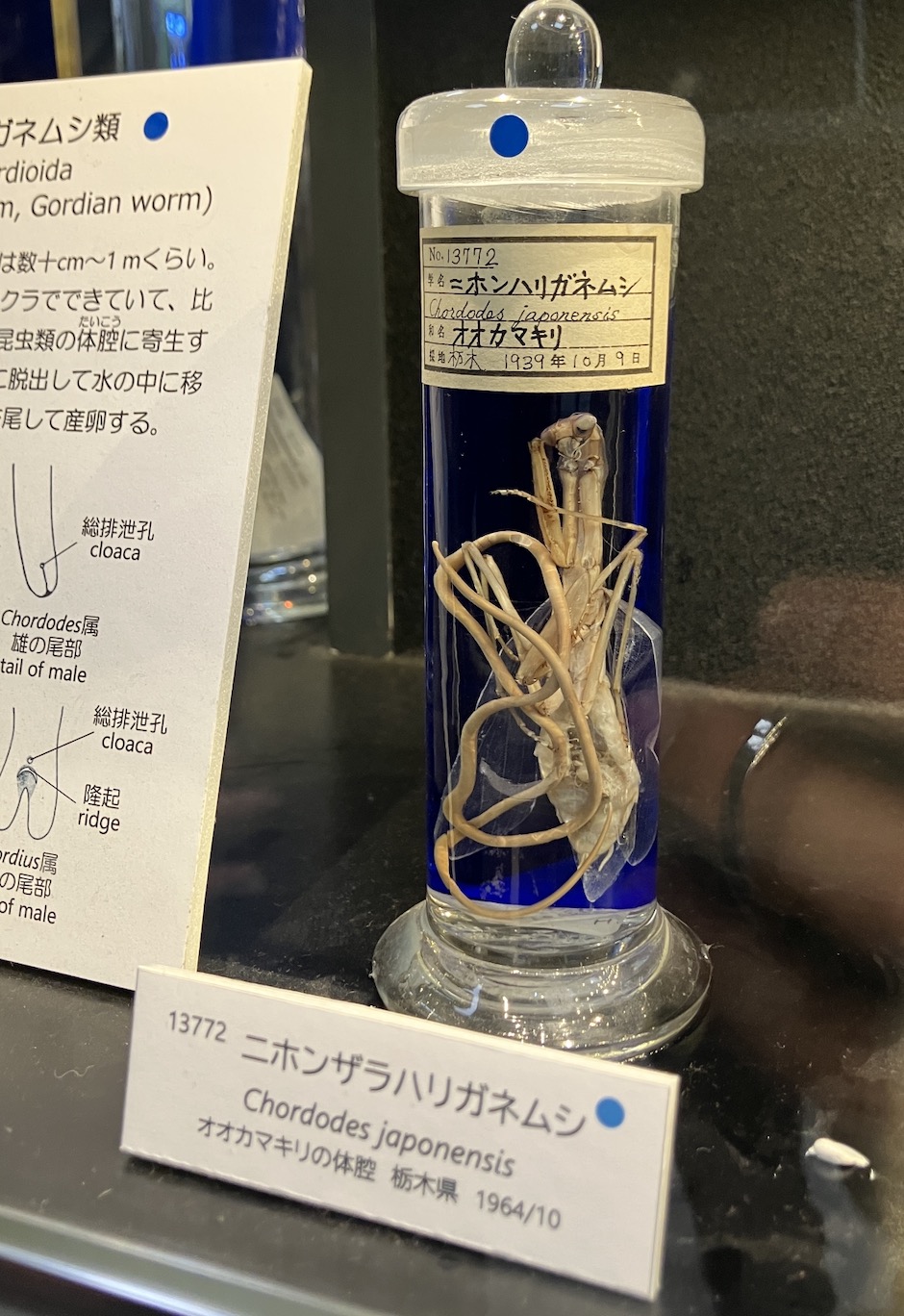
I remember catching a mantis as a kid to use as fish bait, only to have a long, slimy, worm-like thing slide out of its rear end. It scared the life out of me! That, as it turns out, was a horsehair worm.
Their lifestyle is like something straight out of a sci-fi horror movie. Once they grow large enough inside the mantis, they actually manipulate the host’s brain, compelling it to head toward water. When the mantis jumps in (or even touches the water), the worm makes its exit to breed in the aquatic environment. Hijacking a brain to hitch a ride to the perfect breeding ground… it’s a brilliant, if unsettling, survival tactic.
Selective Evolution: Ceratothoa vs. Giant Isopod
A particularly interesting comparison was the display between the parasitic Ceratothoa (Tai-no-e) and the non-parasitic Giant Isopod.
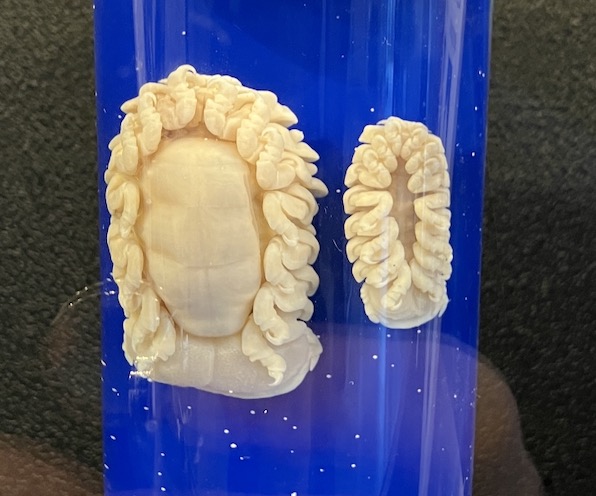
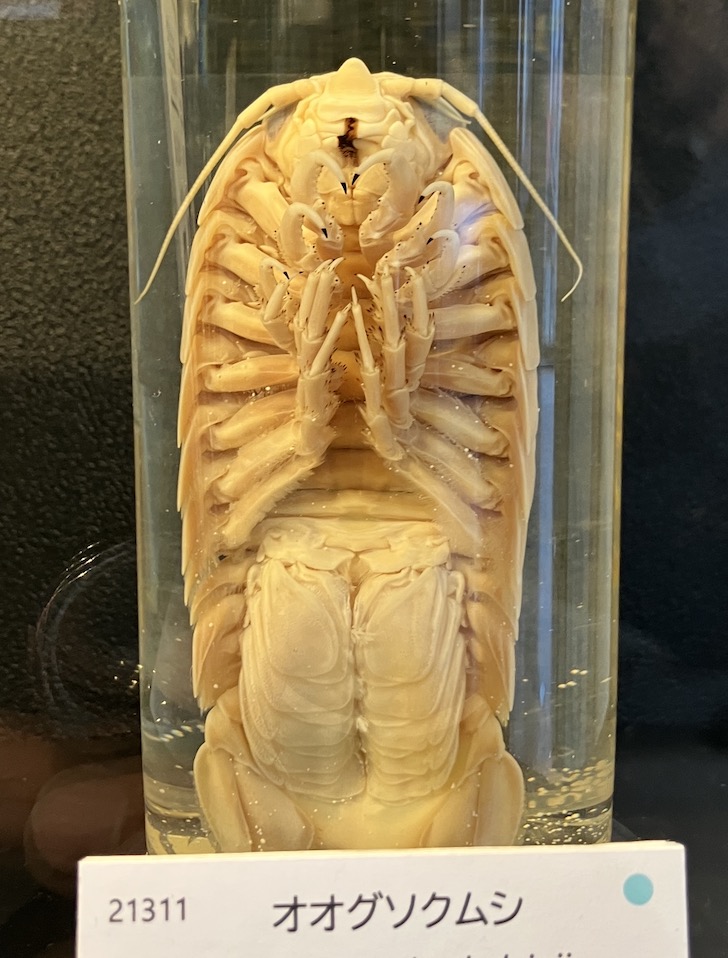
Both are isopods (relatives of the pill bug), but they look completely different. Since the Ceratothoa lives inside a fish’s mouth, it doesn’t need to swim. As a result, its swimming fins have withered away, while its legs have evolved into sharp, hook-like claws designed specifically for gripping the host.
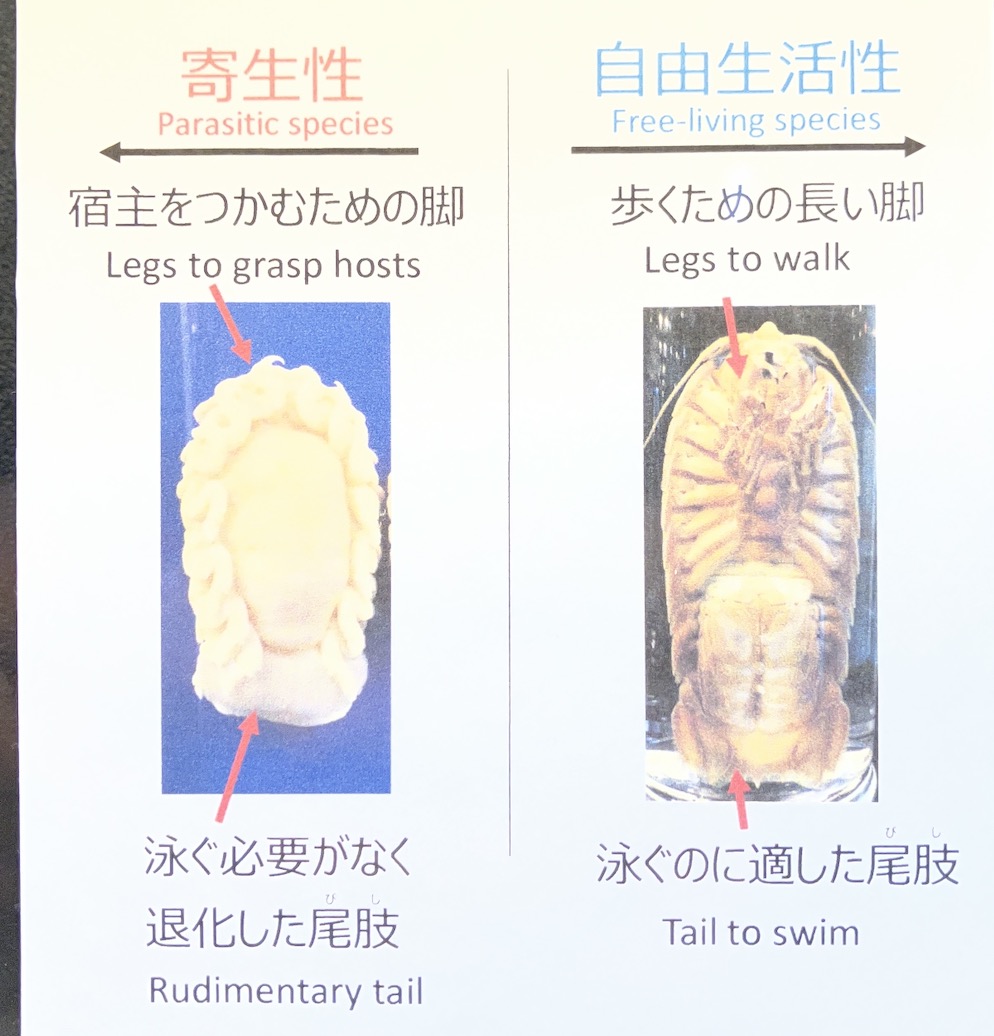
“Discard what you don’t use, and sharpen what you need.” The parasitic lifestyle might just be the ultimate form of evolutionary efficiency.
An Epic Relay Race for Life
Even more mind-blowing are the parasites that migrate through multiple hosts. For example, one parasite follows this incredible cycle:
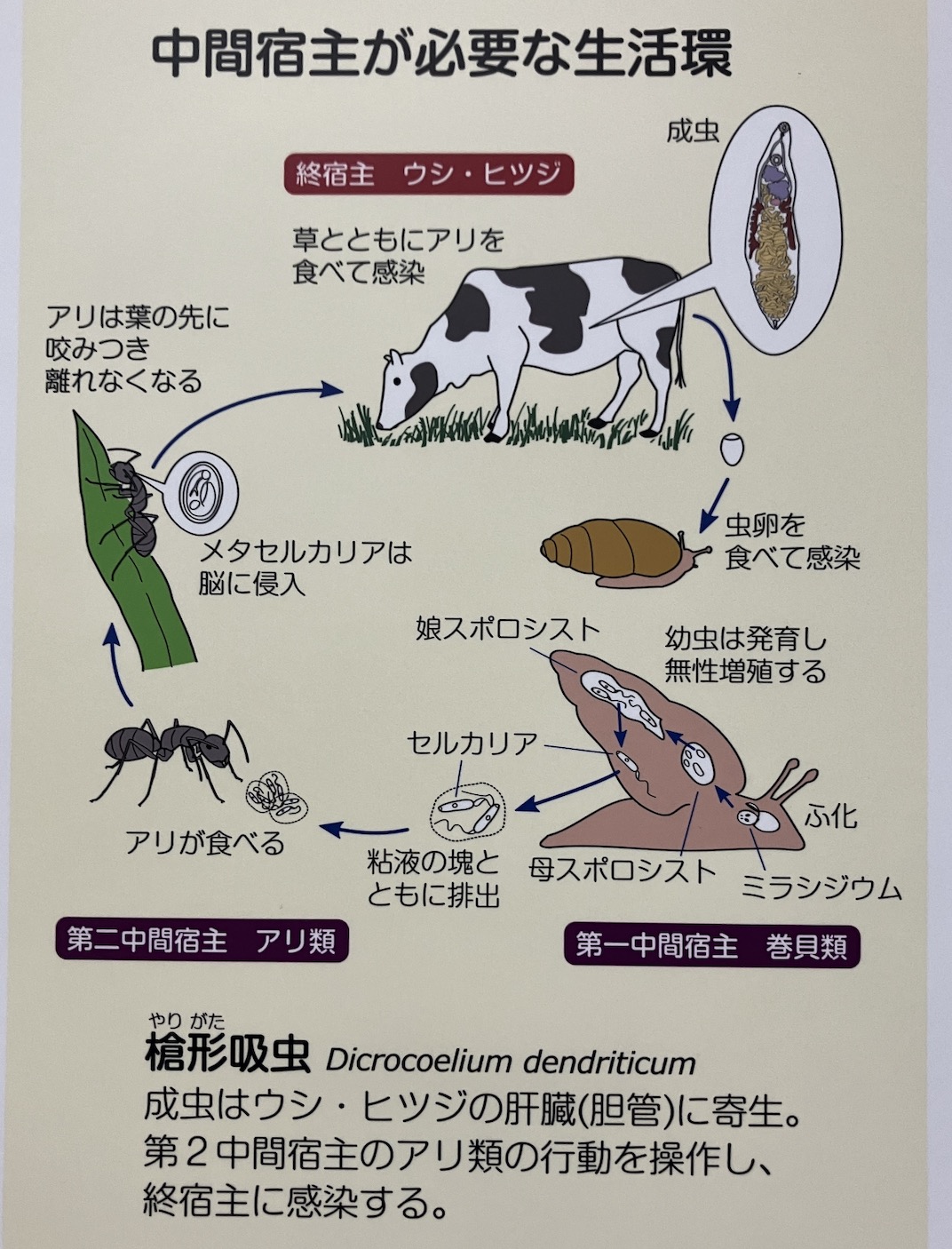
It starts by parasitizing a snail.
It gets eaten by an ant, then hijacks the ant’s brain to make it climb to the tip of a blade of grass.
A cow eats the grass (along with the ant), and the parasite matures inside the cow.
Eggs are expelled with the cow’s dung, which are then eaten by a snail…
It’s like a relay race for life, using different animals as batons to complete the circuit. Even though a single break in the chain means total extinction, they have maintained this cycle for tens of thousands of years. That level of persistence inspires a sense of awe that goes beyond mere fear.
8 Meters Long! The Giant Roommate Inside Humans
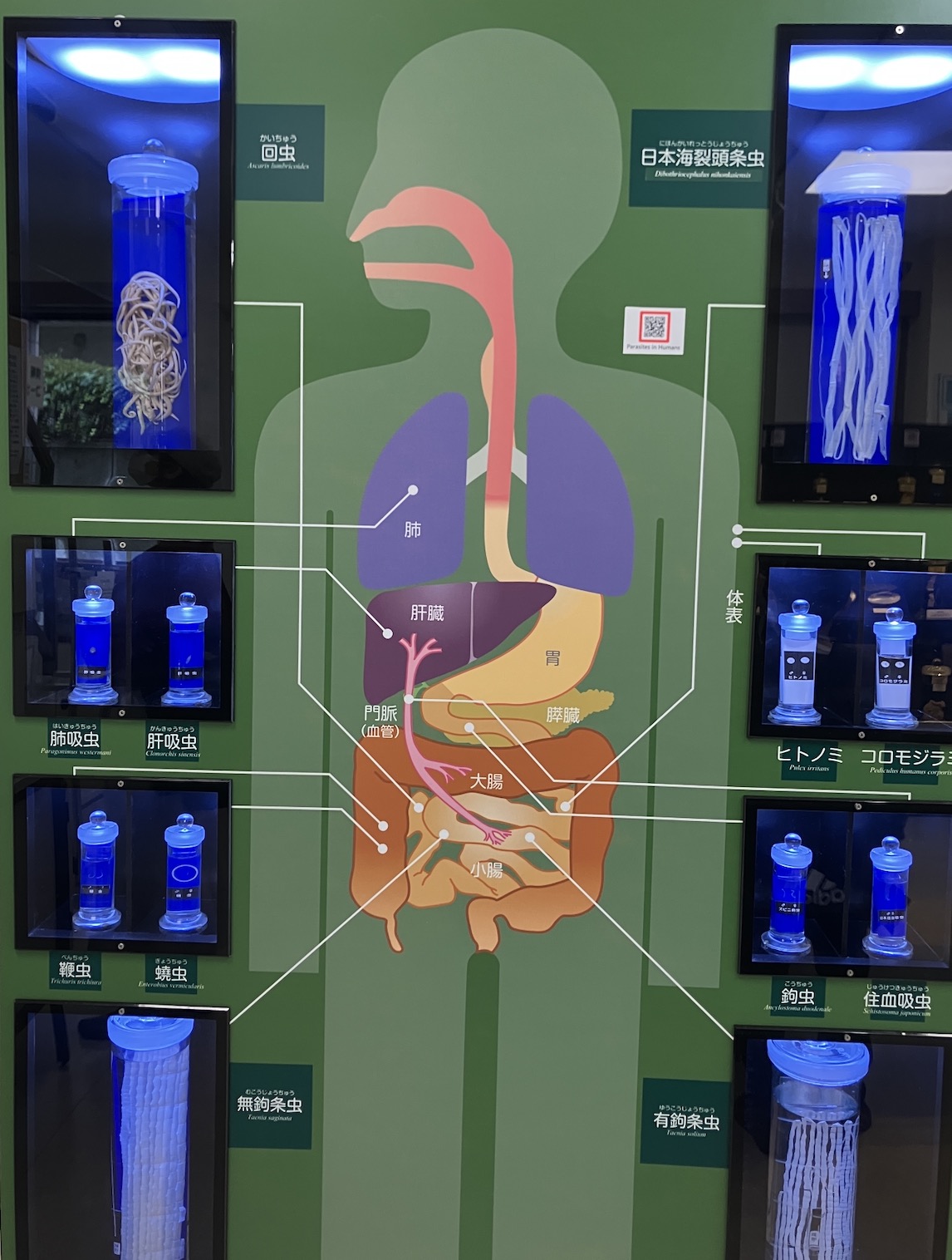
We can’t forget the parasites that call humans home. In the famous exhibit for the Broad Tapeworm (Diphyllobothrium nihonkaiense), there is a specimen that stretches a staggering 8.8 meters. Just imagining something that massive living inside your own stomach is enough to make anyone feel a bit queasy.
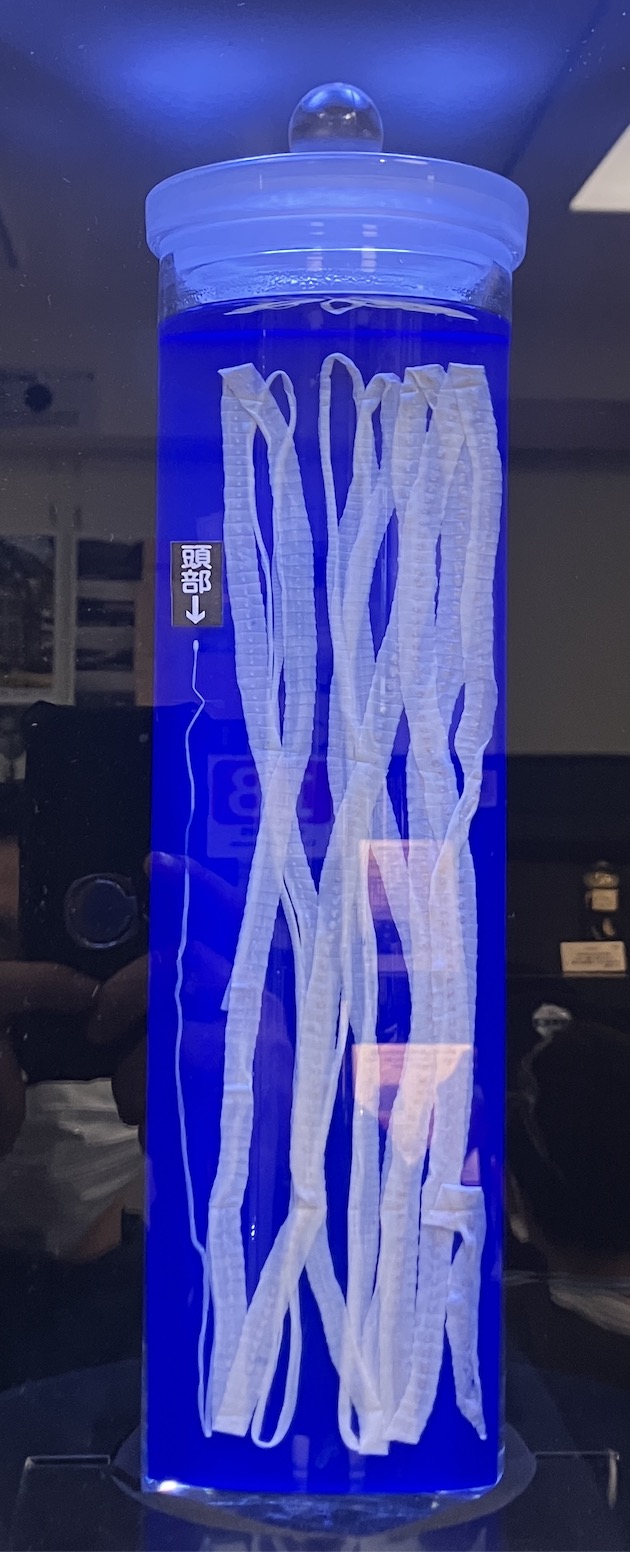
Yet, despite its massive body, the head is surprisingly tiny. It doesn’t even have a digestive tract; it simply absorbs nutrients directly through its skin after the host has digested them. It is the ultimate “freeloader.”
No Living Creature Lacks Value
At the end of the exhibit, there was a quote that deeply resonated with me:
“So, would the world be better off if parasites disappeared? In an environment where diverse organisms live in balance, parasites play a vital role. If they were to vanish, the ecosystem would become unstable. There is no such thing as a creature without value—and that includes parasites.”
It’s easy to push them away because they seem “gross” or “scary,” but they are an essential piece of the giant jigsaw puzzle we call Earth. If certain parasites disappeared, other species might overpopulate, leading to the collapse of forests or oceans.
Beyond the “creepy” exterior lies the beauty of biodiversity and balance. The Meguro Parasitological Museum is a place that teaches us this important lesson. Why not take a peek into this strange and profound world yourself?
Inquiries and Requests
Bringing the wonder and fun of science closer to you! I share easy science experiments you can do at home and tips to make them successful. Feel free to explore!
The “Science Notebook” content is now a book! Details here
Learn more about the operator, Ken Kuwako, here
For various requests (writing, speaking, science workshops, TV supervision, appearances, etc.), click here
* Get the latest updates on X!
 Check out experiment videos on the Science Material Channel!
9月のイチオシ実験!
テレビ番組監修・イベント等のお知らせ
- 9月25日(金)21:00〜 かまいたちの瞬間回答!にて、科学監修を行いました。
- 10月10日(土)11:15~12:00 千葉市科学フェスタ2026「桑子先生の回転科学ショー」にてサイエンスショーを行います。

- 12月26日(土) ナリカサイエンスアカデミー(教員向け実験講習会)開催
書籍のお知らせ
- 『高校入試 分解問題集 理科』(学研)…難しい問題も小さな問題に分解することで、問題を解くことができます。そんな分解の技術が身につくように深く関わりを持って作りました。
 『大人のための高校物理復習帳』(講談社)…一般向けに日常の物理について公式を元に紐解きました。特設サイトでは実験を多数紹介しています。※増刷がかかり6刷となりました(2026/02/01)

- 『きめる!共通テスト 物理基礎 改訂版』(学研)… 高校物理の参考書です。イラストを多くしてイメージが持てるように描きました。授業についていけない、物理が苦手、そんな生徒におすすめです。特設サイトはこちら。

各種SNS(更新情報をお届け!)
【日本語】X(Twitter)/instagram/Facebook 【英語】BlueSky/Threads
Explore
- 楽しい実験…お子さんと一緒に夢中になれるイチオシの科学実験を多数紹介しています。また、高校物理の理解を深めるための動画教材も用意しました。
- 理科の教材… 理科教師をバックアップ!授業の質を高め、準備を効率化するための選りすぐりの教材を紹介しています。
- Youtube…科学実験等の動画を配信しています。
- 科学ラジオ …科学トピックをほぼ毎日配信中!AI技術を駆使して作成した「耳で楽しむ科学」をお届けします。
- 講演 …全国各地で実験講習会・サイエンスショー等を行っています。
- About …「科学のネタ帳」のコンセプトや、運営者である桑子研のプロフィール・想いをまとめています。
- お問い合わせ …実験教室のご依頼、執筆・講演の相談、科学監修等はこちらのフォームからお寄せください。