One Point on Your Back, Two on Your Fingertip? The Mystery of Your Skin Sensors, Revealed with Toothpicks
Hi, I’m Ken Kuwako, your Science Trainer. Every day is an experiment!
Close your eyes and gently press two toothpicks against your back. Even though there are two of them, it feels like just one. Now press those same two toothpicks against your fingertip, and you can clearly feel two separate points. Same body, so why the big difference? In this article, I’ll show you an experiment that uses your own body to explore the mystery of how your skin senses touch.
Goal
Find out how touch sensitivity differs from one part of the body to another.
What You’ll Need
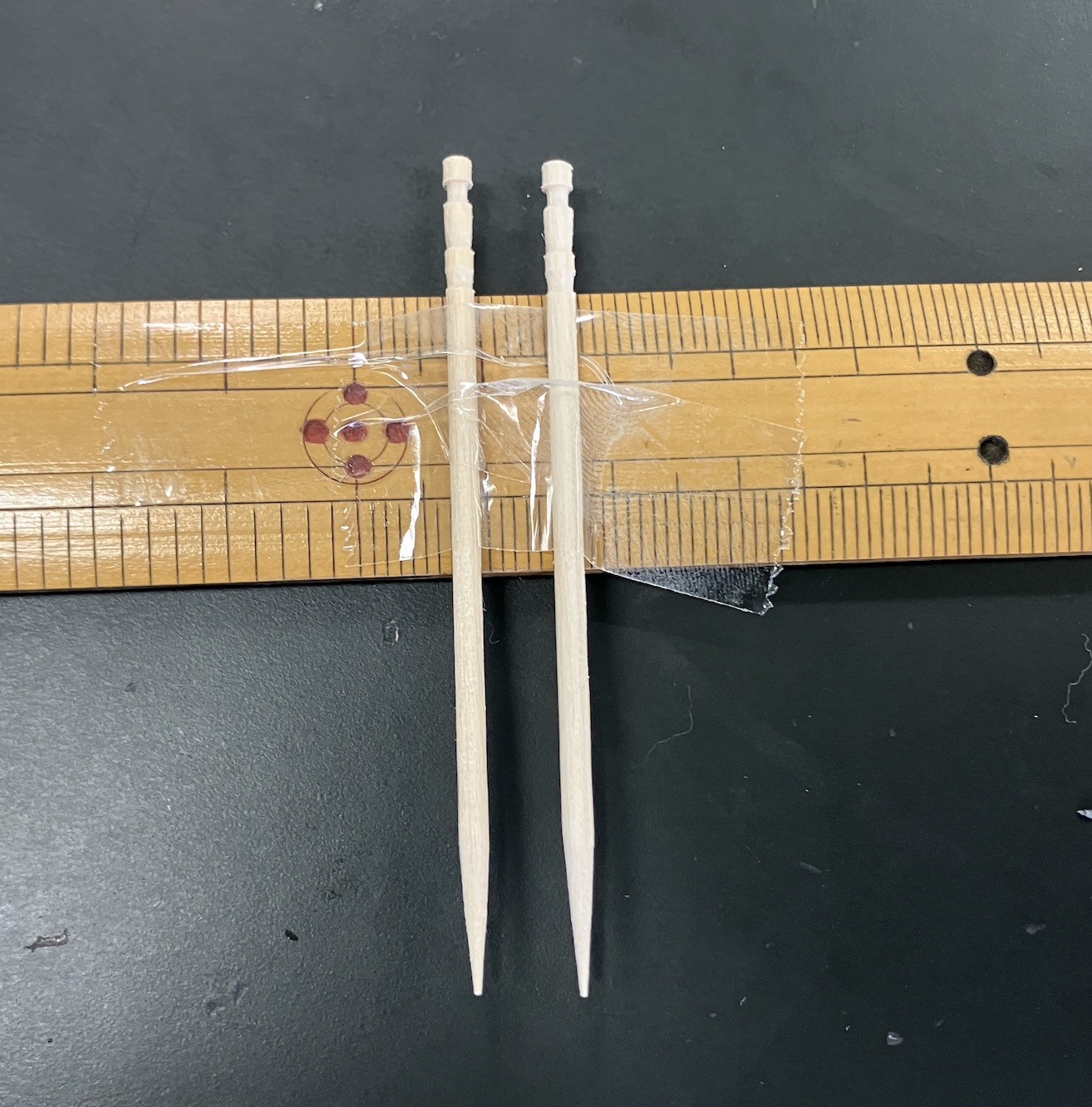
Toothpicks (2 per person), a ruler, and cellophane tape
Steps
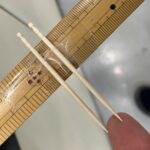
1. Tape two toothpicks to a ruler, spaced 5 mm apart.
2. With your eyes closed (or without looking), lightly touch both toothpicks to your skin at the same time.
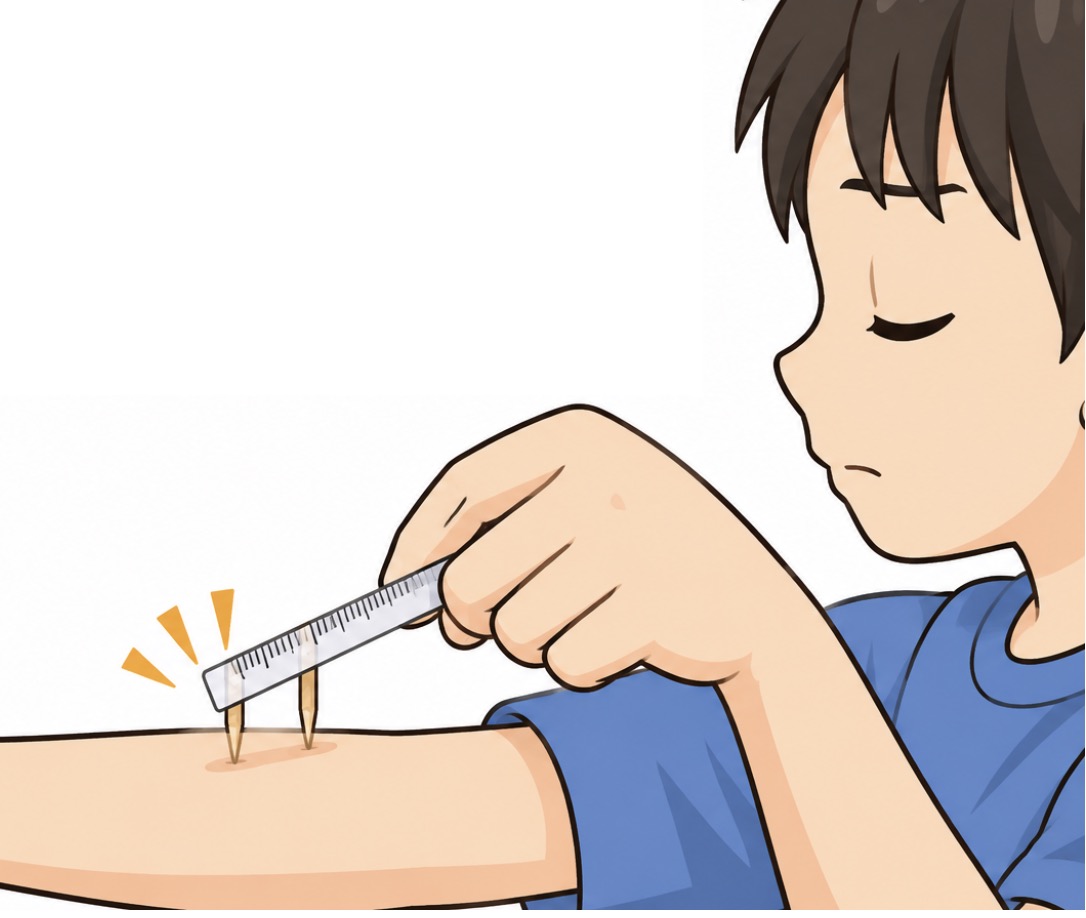
Image generated with ChatGPT
3. Note whether it felt like one point or two.
4. Try it on several body parts: your tongue, lips, fingertip, palm, arm, foot, and so on.
A few safety notes:
・Toothpicks have sharp tips, so be careful. No horsing around, and never touch them to another person.
・Use only the lightest touch, so the toothpicks never break the skin.
・Test only on your own body, and stay safe!
Results
The spots where most students felt two points were the tongue, lips, and fingertips.
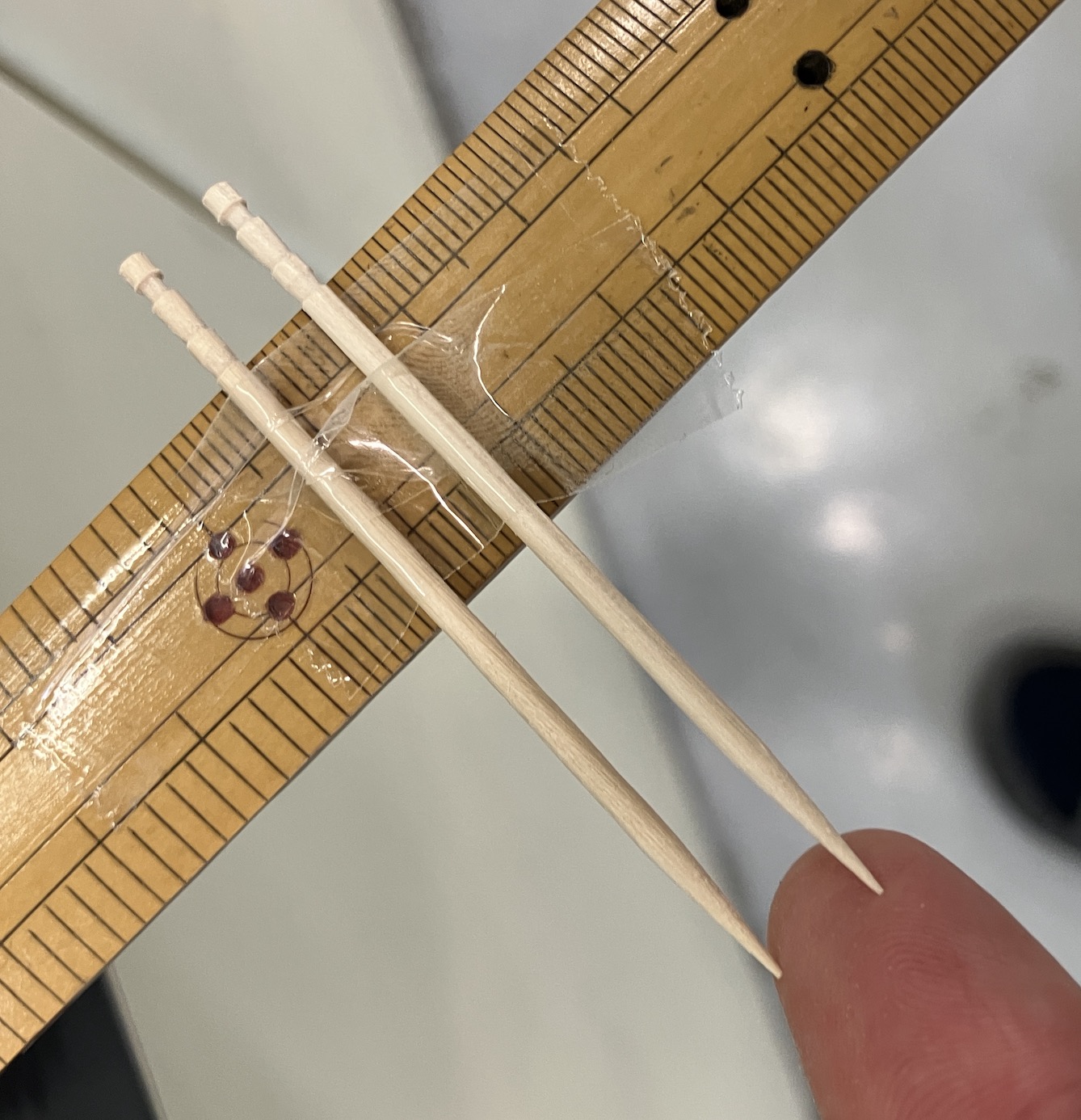
The spots where they felt just one point were the palm, the back of the hand, the arm, and the foot.
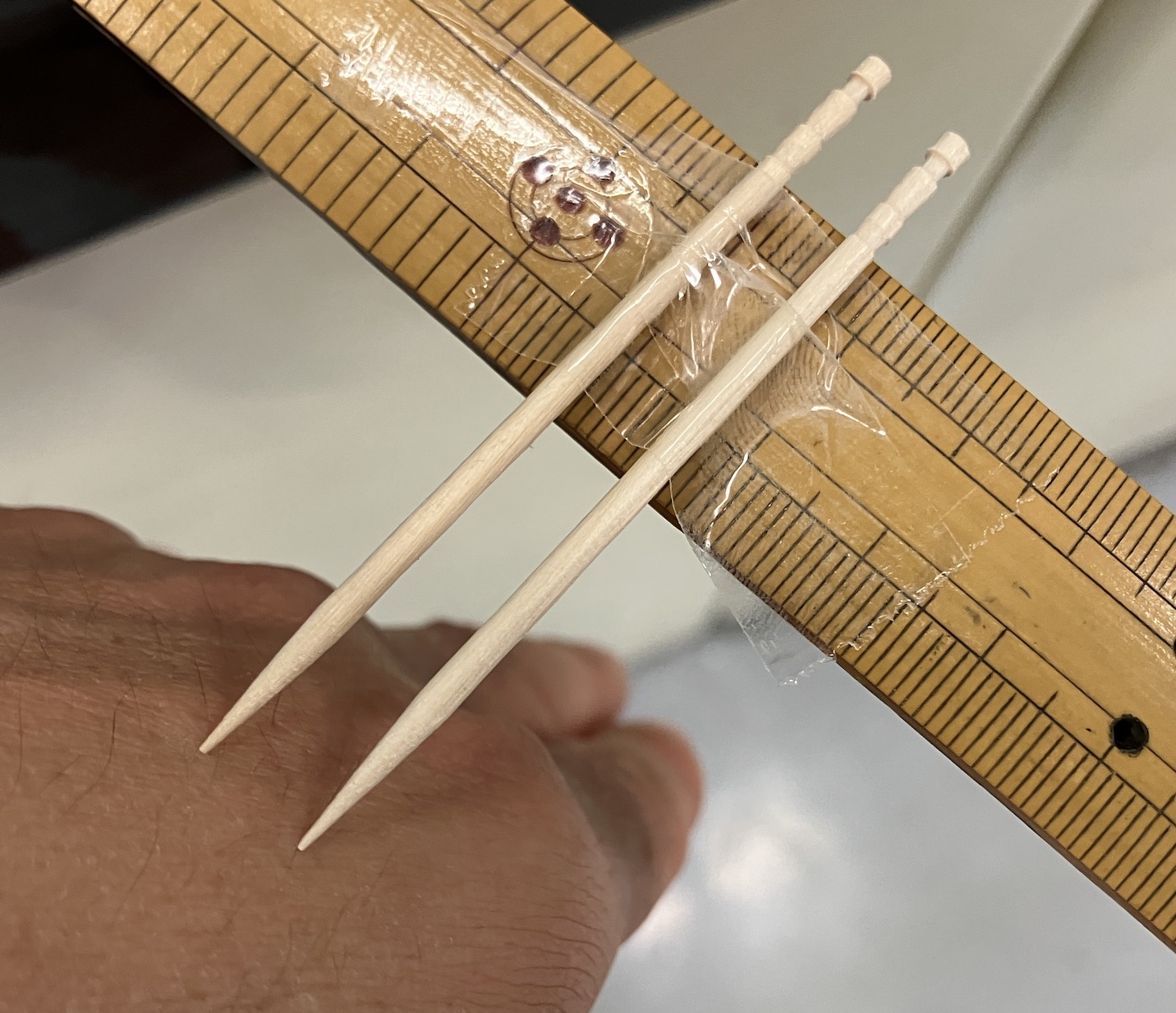
On the tongue and fingertips, the two points were clearly distinct even though they were only 5 mm apart. The lips were also quite good at picking out two points. On the arm and foot, though, the two toothpicks blended into one. The palm was much harder to read than the fingertip, and most people felt just one point there.
By the way, the smallest distance at which you can still tell two points apart is called the “two-point discrimination threshold.” Here are some typical values: about 1 to 2 mm for the tip of the tongue, 2 to 3 mm for the fingertip, 4 to 5 mm for the lips, around 10 mm for the palm, 30 to 40 mm for the arm and foot, and 40 to 70 mm for the back. That’s why, with toothpicks 5 mm apart, the tongue, fingertips, and lips usually feel like two points, while everything beyond the palm tends to feel like one.
Discussion: Why Does It Differ by Body Part?
Your skin is packed with receptors (sensory points) that detect pressure and touch. Areas where you feel two points are thought to have a dense crowd of these receptors. When receptors are packed closely together, two stimuli that are a little apart get picked up separately, so you feel two points. Where receptors are sparse, both toothpicks land within the territory of the same receptor, and you feel just one.
So why does receptor density vary across the body? The likely answer is that each body part has a different job.
Your tongue and lips act as security checkpoints, closely inspecting the size, temperature, texture, and any foreign objects in your food before deciding whether it’s safe to let in. Your fingertips are like the body’s high-performance sensors, grabbing things and reading the roughness of surfaces. Parts like these probably pack in lots of sensory points so they never miss even the tiniest differences.
Your arms, legs, and back, on the other hand, are mostly there to support and move your body rather than to examine things in fine detail. They can get by just fine with fewer sensory points.
This Mechanism Is at Work All Around Us
Take Braille, for example. People who are blind read it by running their fingertips over the dots. The dots are spaced a little over 2 mm apart, which matches the distance a fingertip can tell apart as two separate points. If you tried to read Braille with your back, all the dots would blur together into one continuous surface.
The brain plays a part, too. It has dedicated regions that receive signals from each part of the body, and the more sensitive the body part, the more brain real estate it gets. A figure that draws the body according to this map is called a “homunculus,” and it looks wonderfully strange, with giant hands, lips, and tongue. So it’s not just the number of sensory points, but also the amount of processing power your brain devotes to them, that shapes how sensitive each area is.
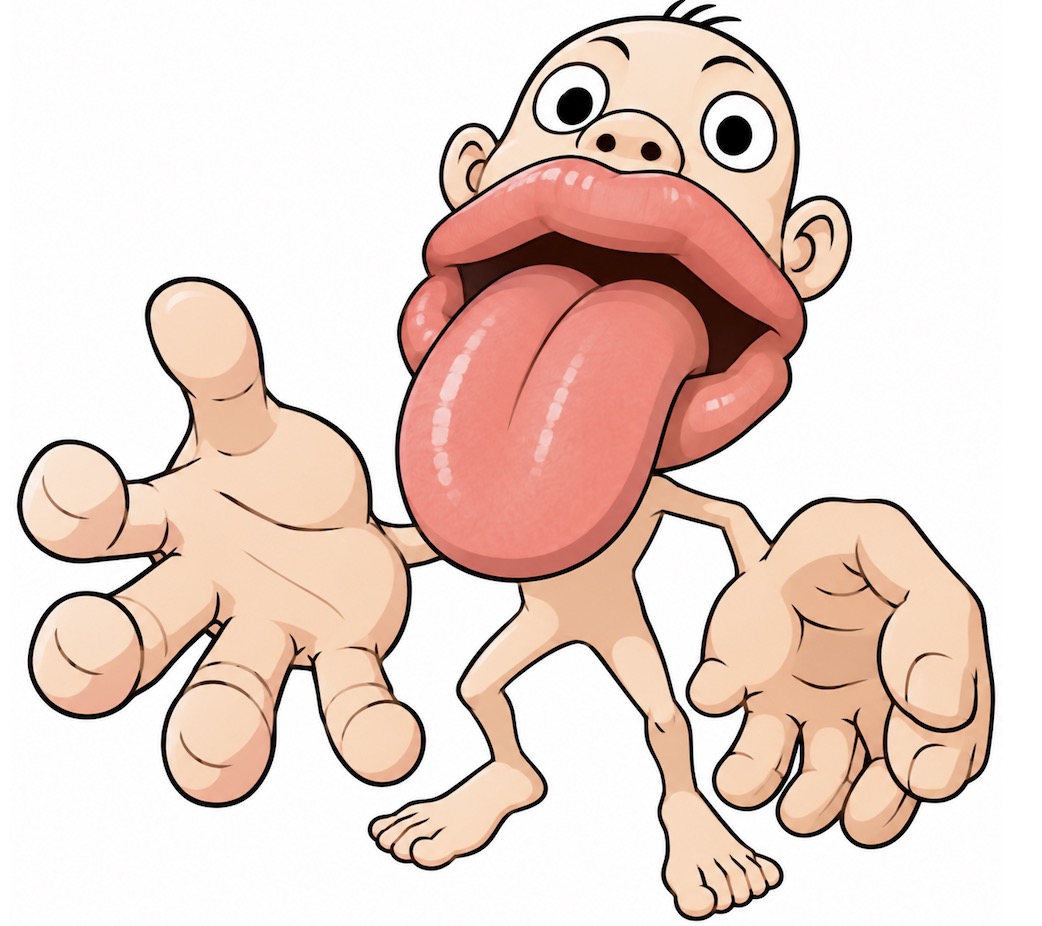
Image generated with ChatGPT
Touch sensitivity isn’t the same all over your body. The places that need the finest detail are the most sensitive, and your body allocates its sensors accordingly. Investigating your own body like this is a great reminder of how cleverly it’s built to suit each part’s job.
お問い合わせ・ご依頼について
Bringing the wonder and fun of science closer to home! This site collects fun science experiments you can do at home, along with tips to help you succeed. Try searching around and see what you find!
・The content of Kagaku no Netachō (Science Idea Notebook) is now a book! Details here
・Learn more about Ken Kuwako, the site’s author, here
・For requests of all kinds (writing, lectures, science workshops, TV consulting and appearances, etc.), click here
・Get article updates on X!
 The Science Neta Channel features experiment videos!
テレビ番組監修・イベント等のお知らせ
- 11/4(水)ZIP(日本テレビ)のコーナー(7:20分ころ放送予定)にて科学監修を担当しました。ゴンチャのストローの差し方に関するウラザワと科学解説についてです。
- 11月27日(金) テレビ監修番組放送予定
- 12月26日(土) ナリカサイエンスアカデミー(教員向け実験講習会)開催
11月のイチオシ実験!
どうして結露は起こるのか?結露を防ぐためには?実験で確かめよう!
書籍のお知らせ
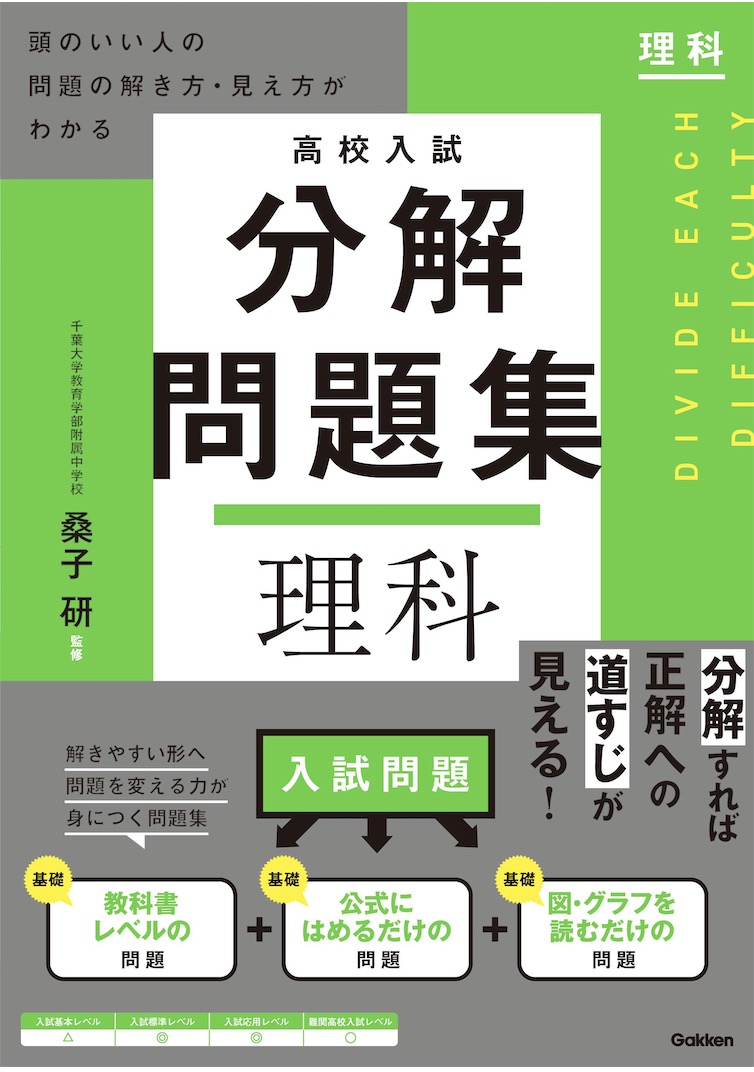
- 『高校入試 分解問題集 理科』(学研)…難しい問題も小さな問題に分解することで、問題を解くことができます。そんな分解の技術が身につくように深く関わりを持って作りました。
 『大人のための高校物理復習帳』(講談社)…一般向けに日常の物理について公式を元に紐解きました。特設サイトでは実験を多数紹介しています。※増刷がかかり6刷となりました(2026/02/01)
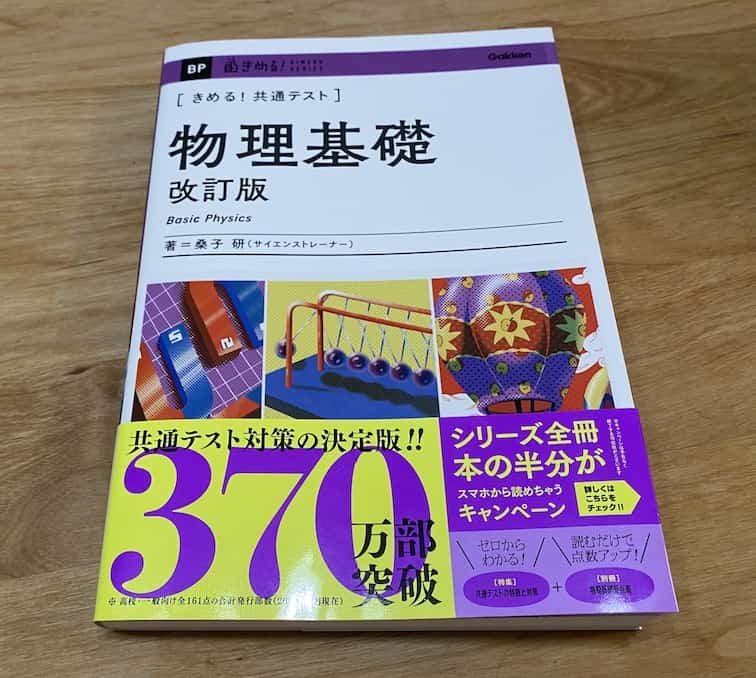
- 『きめる!共通テスト 物理基礎 改訂版』(学研)… 高校物理の参考書です。イラストを多くしてイメージが持てるように描きました。授業についていけない、物理が苦手、そんな生徒におすすめです。特設サイトはこちら。
各種SNS(更新情報をお届け!)
【日本語】X(Twitter)/instagram/Facebook 【英語】BlueSky/Threads
Explore
- 楽しい実験…お子さんと一緒に夢中になれるイチオシの科学実験を多数紹介しています。また、高校物理の理解を深めるための動画教材も用意しました。
- 理科の教材… 理科教師をバックアップ!授業の質を高め、準備を効率化するための選りすぐりの教材を紹介しています。
- Youtube…科学実験等の動画を配信しています。
- 科学ラジオ …科学トピックをほぼ毎日配信中!AI技術を駆使して作成した「耳で楽しむ科学」をお届けします。
- 講演 …全国各地で実験講習会・サイエンスショー等を行っています。
- About …「科学のネタ帳」のコンセプトや、運営者である桑子研のプロフィール・想いをまとめています。
- お問い合わせ …実験教室のご依頼、執筆・講演の相談、科学監修等はこちらのフォームからお寄せください。
 How Tall Can 20 Strands of Pasta Go? The 18-Minute Challenge and the 99 cm Record
 What Happens When You Put Vaseline on the Underside of a Leaf? A Hydrangea Transpiration Experiment
 Look Up from Beneath a Tree! The Secret of the “Hands” That Gather Light
 Human Relay Race Reveals Your Nerve Speed! The Hidden Drama Inside Your Body in Just 0.187 Seconds (Sense of Touch)
 One Point on Your Back, Two on Your Fingertip? The Mystery of Your Skin Sensors, Revealed with Toothpicks
 [Science Supervision] Why Does It Spray Everywhere? The Science Behind Spill-Free Gong Cha Drinks | ZIP (Nippon TV)
 The Flame Turned Green! Is It Really Copper? A Test After Electrolysis of Copper Chloride
 No Wires, Still Glowing! The Magic of Mutual Induction That Flashes an LED for a Split Second
 Just Wipe on Dish Soap and Window Condensation “Disappears”?! The Science of Spreading Water Droplets