Why Does Your Body Spin the Opposite Way? Unlocking the Physics Mystery with a Spinning Chair Experiment (Conservation of Angular Momentum)
I’m Ken Kuwako, a Science Trainer. Every day is an experiment.
A Fascinating Physics Phenomenon You Can Experience Just by Sitting on a Swivel Chair
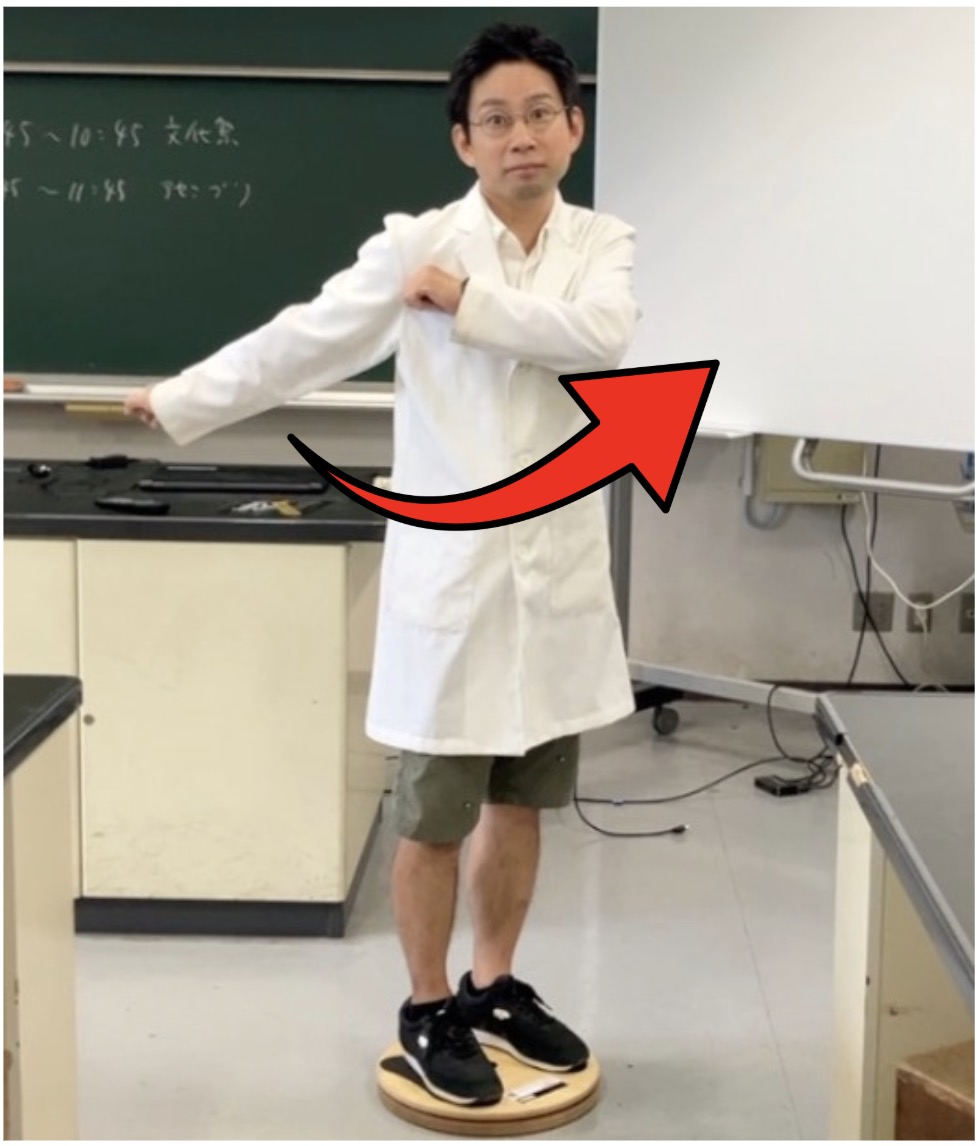
If you have a swivel chair at home, there’s a fun experiment I’d like you to try. Stand on the chair and swing both arms around in the direction of the red arrow in the photo, making a big counterclockwise rotation. What do you think will happen to your body? Most people would probably answer, “My body will rotate too.”
Here’s the real question: will your body rotate counterclockwise, or will it rotate clockwise?
Your Body Moves in the Opposite Direction
Try it for yourself, and you’ll find something surprising: your body rotates in the opposite direction from your hands, namely clockwise.
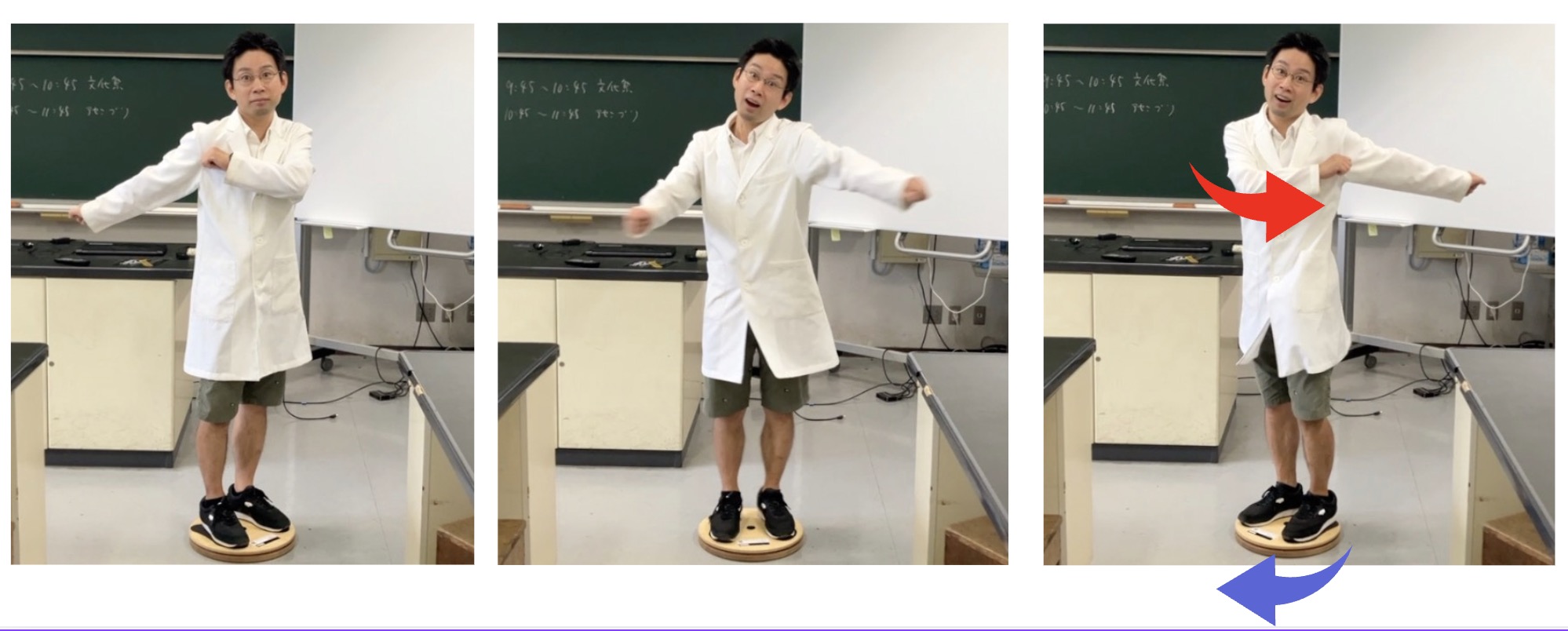
Your hands move clockwise, but your body rotates the other way. The result is so unexpected that you may find yourself saying, “Wait, what?!”
You get the same result when you try it on a swivel chair!
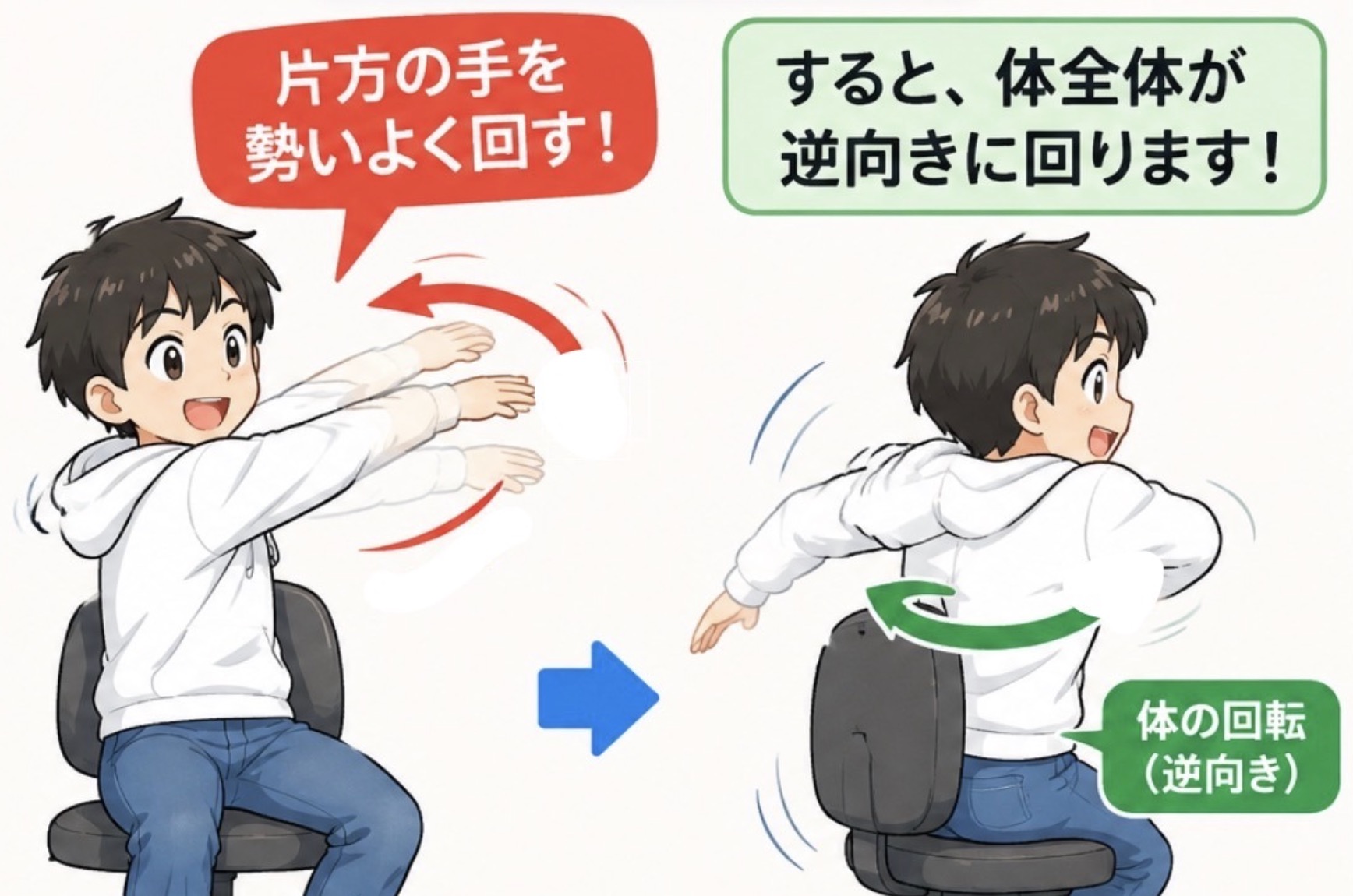
This phenomenon is actually very similar to what happens when you throw a ball from a boat: the boat moves in the opposite direction from the ball. In other words, it is closely related to Newton’s law of action and reaction.
Now for a little quiz. Suppose you are standing on a rotating platform and tilt a gyroscope wheel from vertical to horizontal, as shown in the photo. Which way will your body rotate? Try thinking about it in terms of angular momentum.
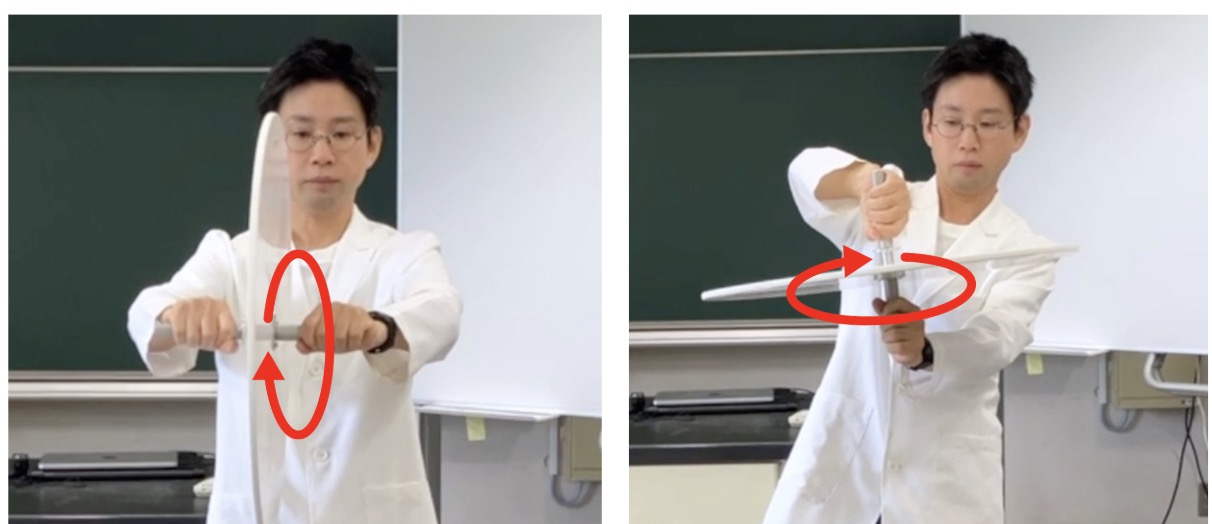
Here’s the answer.
When you actually try it, you’ll find that as you tilt the gyroscope, your body rotates in the opposite direction.
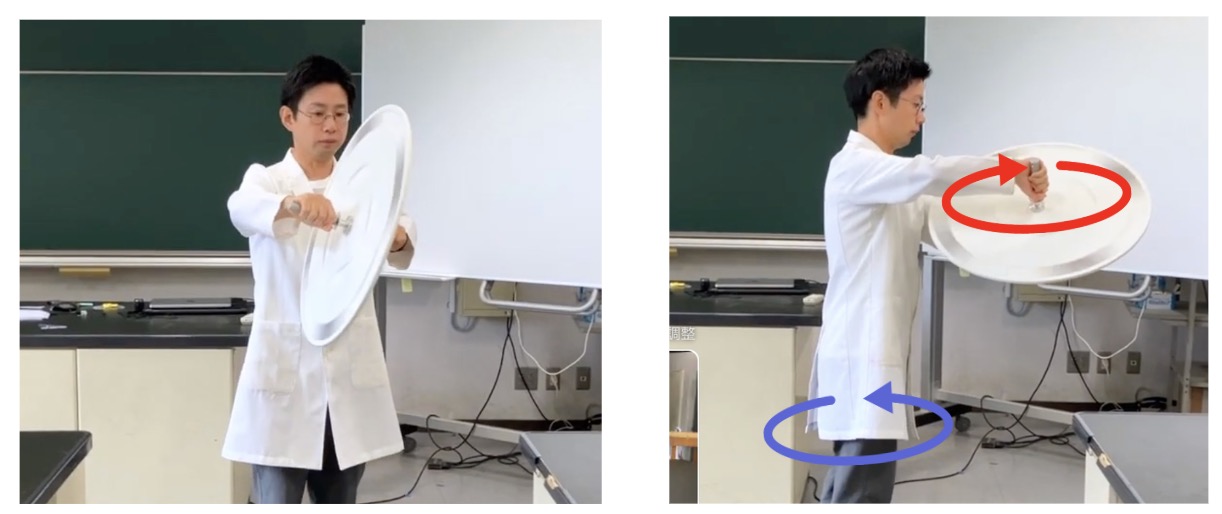
This can also be explained by the law of conservation of angular momentum. At first, there is no rotation in the horizontal direction. But as you tilt the gyroscope, a rotational component in the direction shown in red appears. Your body rotates in the opposite direction to cancel it out.
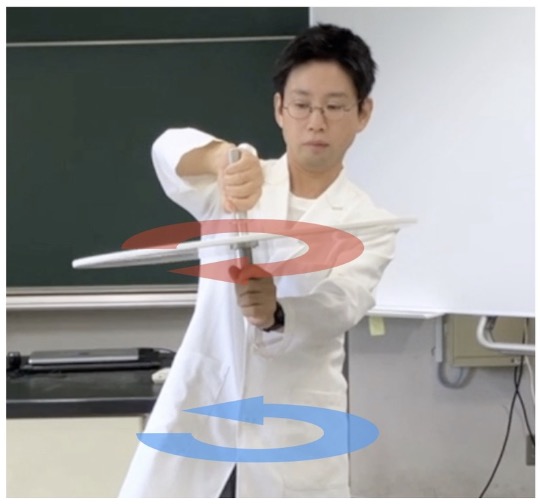
The Key Is the Conservation of Angular Momentum
The principle that explains this fascinating phenomenon is the law of conservation of angular momentum. The moment you stand on the swivel chair, the total angular momentum of your body is zero. In other words, nothing is rotating.
But when you swing your hands clockwise, that movement creates angular momentum in the clockwise direction. However, as long as no external torque is acting on your body, the total angular momentum must remain zero. This is the law of conservation of angular momentum.
So what does your body do? It creates angular momentum in the counterclockwise direction to exactly balance the clockwise angular momentum generated by your hands. As a result, your torso rotates counterclockwise.
It’s almost as if your body automatically says, “I need to keep things balanced!” That’s what makes this mechanism so fascinating.
Give it a try on a swivel chair or rotating platform at home. Change the way you move your hands or how quickly you move them, and you’ll see that the way your body rotates changes too. It turns out to be a surprisingly rich little experiment!
Take This Phenomenon into Three Dimensions, and You Get the Gyroscopic Effect
The phenomenon introduced here is, in a sense, a two-dimensional demonstration of the conservation of angular momentum. Take the same idea into three dimensions, and you arrive at the famous gyroscopic effect and precession.
Precession is the distinctive motion you see when a spinning top appears to be about to fall, while its axis slowly sweeps around in a circle.
This phenomenon occurs because the angular momentum of a rotating object interacts with an external force, often gravity. The slow change in the direction of Earth’s rotational axis is actually based on the same principle.
Try holding a gyroscope wheel while standing on a rotating platform and moving it around. You can get a much more intuitive feel for how precession works through the strange forces you can actually feel in your hands and body.
Here’s what happens when the gyroscope wheel is suspended from a string. As gravity tries to make it fall, precession causes the wheel to begin rotating in another direction. That unexpected change is what makes the demonstration so fascinating.
From a simple experiment with a swivel chair to the laws of motion that govern objects on a cosmic scale, all of these phenomena are connected by the same underlying principles. I hope you’ll enjoy discovering just how fascinating physics can be!
Contact & Requests
Want to bring the wonders and excitement of science a little closer to home? I share fun science experiments you can do at home, along with easy-to-understand tips and explanations. Feel free to search around and explore!
・The content from Science Notebook is now available as a book. For more information, click here
・For more information about Ken Kuwako, the site operator, click here
・For inquiries and requests, including writing, lectures, science workshops, and TV science supervision or appearances, click here
・For updates on new articles, follow me on X!
 Science Notebook Channel features videos of science experiments!
9月のイチオシ実験!
テレビ番組監修・イベント等のお知らせ
- 9月25日(金)21:00〜 かまいたちの瞬間回答!にて、科学監修を行いました。
- 10月10日(土)11:15~12:00 千葉市科学フェスタ2026「桑子先生の回転科学ショー」にてサイエンスショーを行います。

- 12月26日(土) ナリカサイエンスアカデミー(教員向け実験講習会)開催
書籍のお知らせ
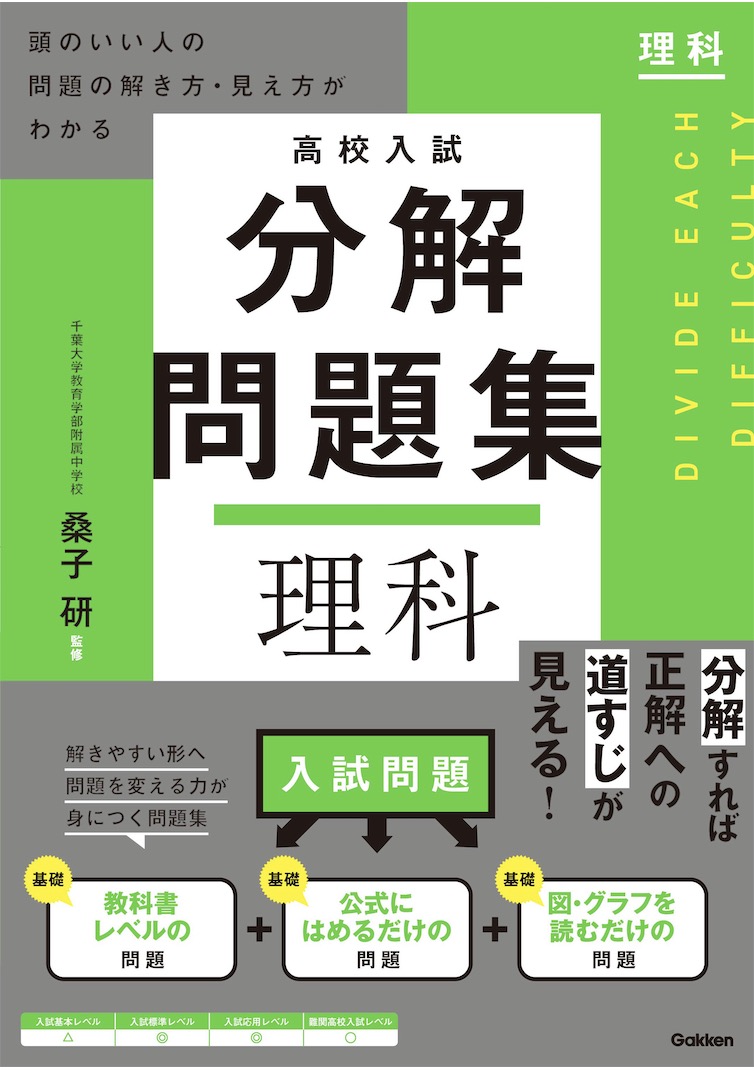
- 『高校入試 分解問題集 理科』(学研)…難しい問題も小さな問題に分解することで、問題を解くことができます。そんな分解の技術が身につくように深く関わりを持って作りました。
 『大人のための高校物理復習帳』(講談社)…一般向けに日常の物理について公式を元に紐解きました。特設サイトでは実験を多数紹介しています。※増刷がかかり6刷となりました(2026/02/01)

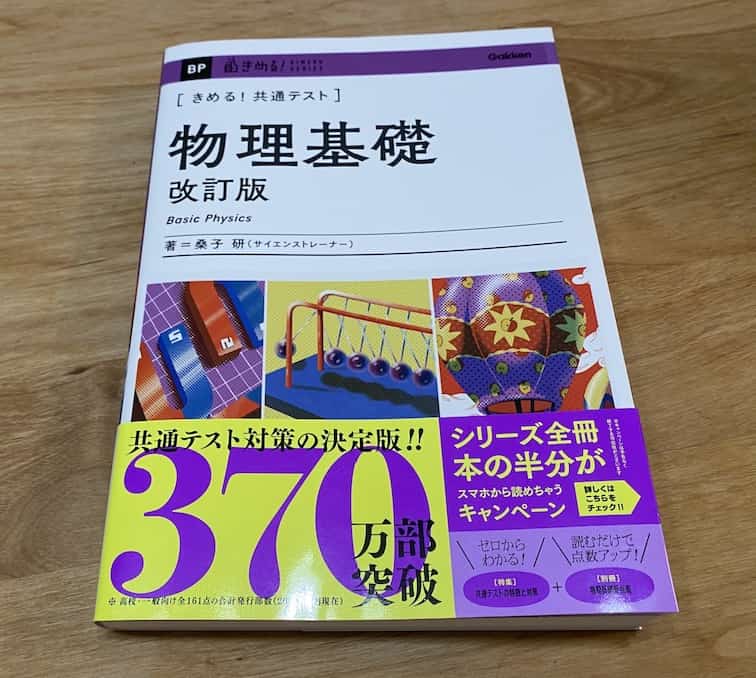
- 『きめる!共通テスト 物理基礎 改訂版』(学研)… 高校物理の参考書です。イラストを多くしてイメージが持てるように描きました。授業についていけない、物理が苦手、そんな生徒におすすめです。特設サイトはこちら。
各種SNS(更新情報をお届け!)
【日本語】X(Twitter)/instagram/Facebook 【英語】BlueSky/Threads
Explore
- 楽しい実験…お子さんと一緒に夢中になれるイチオシの科学実験を多数紹介しています。また、高校物理の理解を深めるための動画教材も用意しました。
- 理科の教材… 理科教師をバックアップ!授業の質を高め、準備を効率化するための選りすぐりの教材を紹介しています。
- Youtube…科学実験等の動画を配信しています。
- 科学ラジオ …科学トピックをほぼ毎日配信中!AI技術を駆使して作成した「耳で楽しむ科学」をお届けします。
- 講演 …全国各地で実験講習会・サイエンスショー等を行っています。
- About …「科学のネタ帳」のコンセプトや、運営者である桑子研のプロフィール・想いをまとめています。
- お問い合わせ …実験教室のご依頼、執筆・講演の相談、科学監修等はこちらのフォームからお寄せください。