Why Do Morning Glory Vines Twist? The Plant Mystery Hidden in Wreath-Making (A Classic Summer Science Project!)
I’m Ken Kuwako, your Science Trainer. Every day is an experiment.
When we think of summer vacation homework, many of us probably picture illustrated diaries or independent research projects. This year, however, the school assigned something a little different. The task wasn’t simply to keep an illustrated diary about a morning glory. Students were also asked to use the morning glories they had grown to make a wreath. I have to admit, I was pleasantly surprised by the idea of taking a plant they had carefully grown and then turning it into something they could actually make with their own hands.
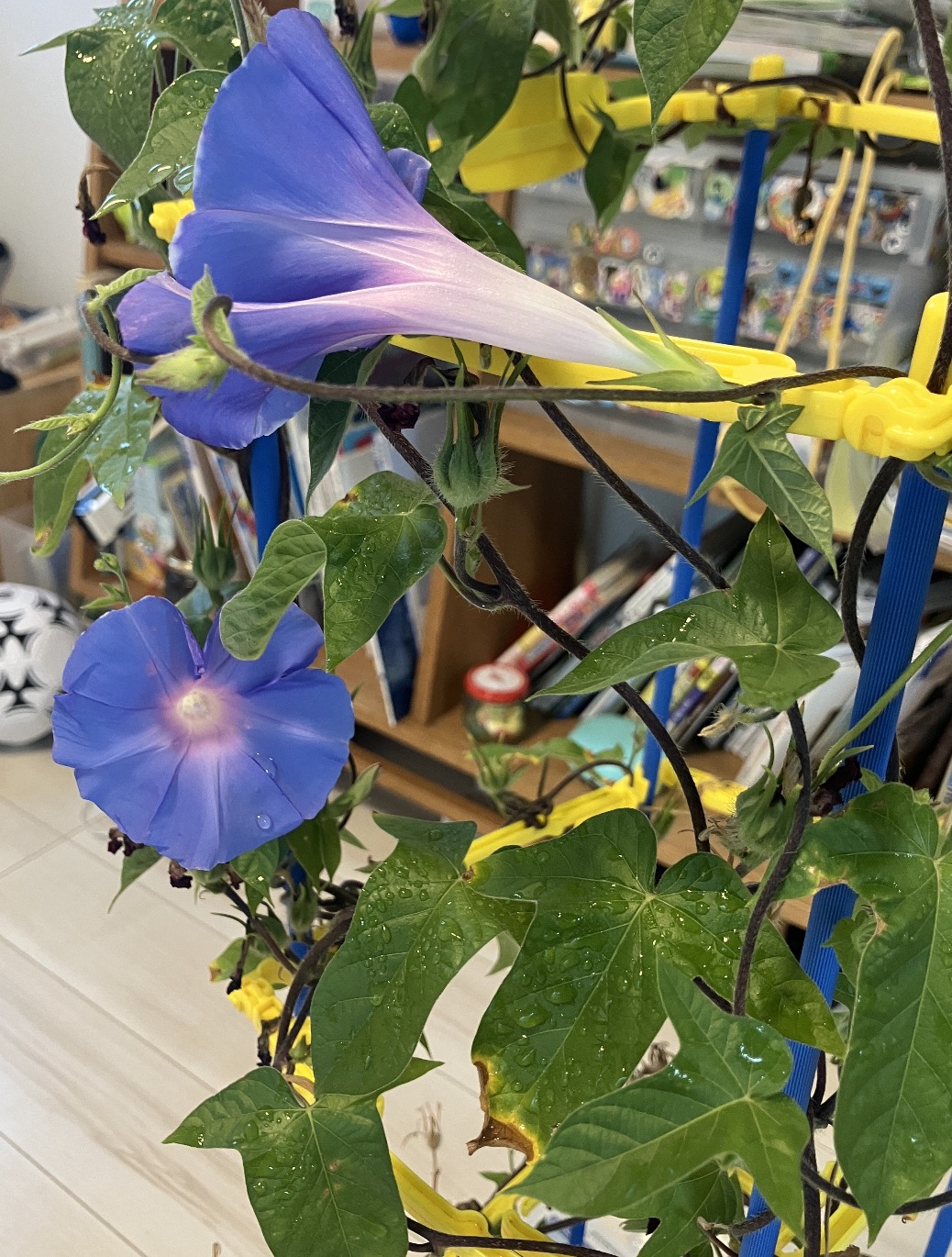 The process is surprisingly simple. Once the morning glory has grown to a reasonable size, cut the stem near the base and carefully unwind the vines, one by one, from the support. Once they have all been removed, arrange them into a circular shape. Use one of the thicker vines as the main stem, then wrap the remaining vines around it to build up the wreath. Finally, secure everything firmly with craft wire or pipe cleaners, let it dry, and you have your very own dried wreath.
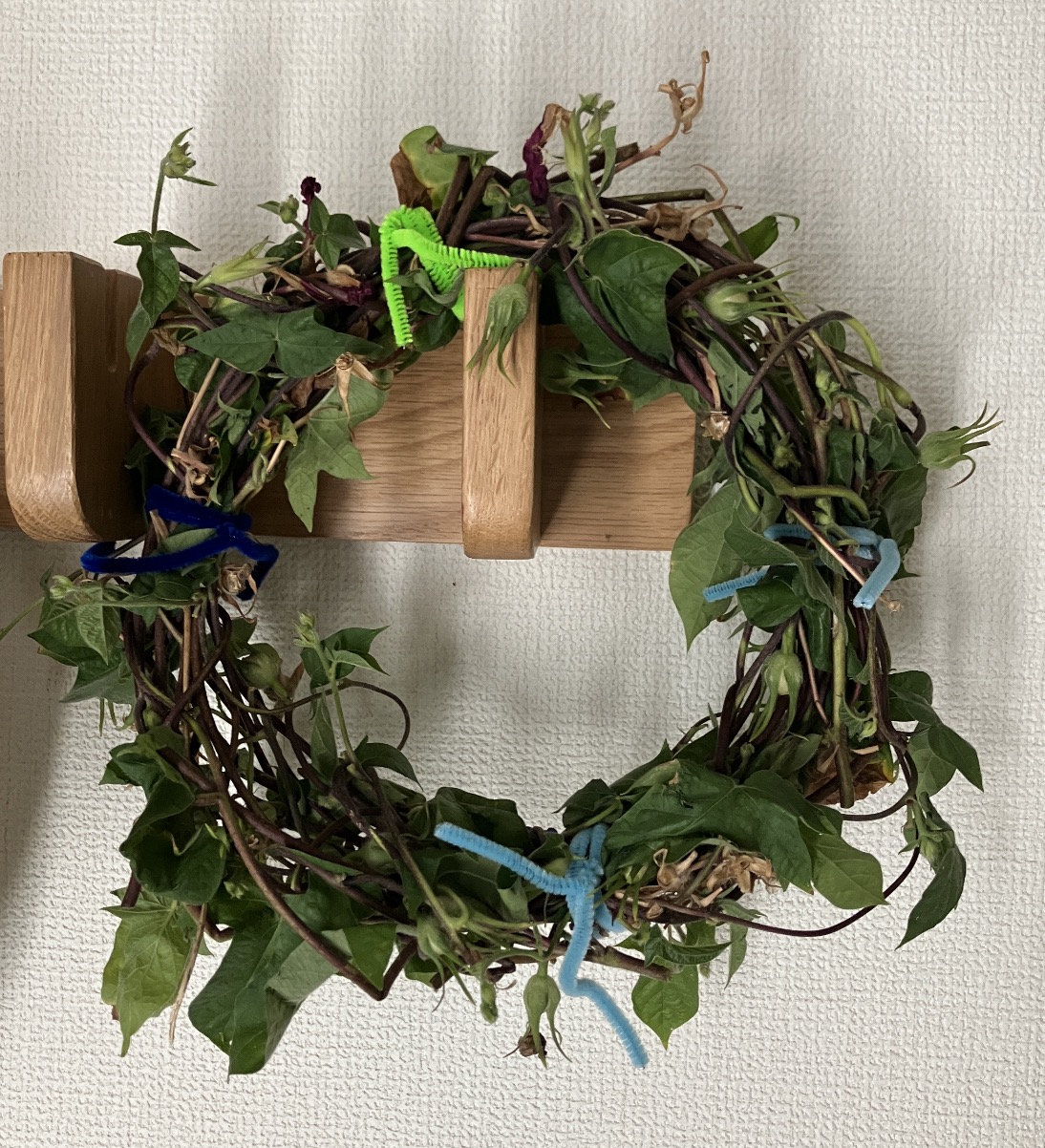
Apparently, the students will also have a class where they decorate their wreaths. I thought it was a wonderfully creative homework assignment—one where a summer memory can literally become part of the home decor.
Why Do Morning Glory Vines Wrap Around Things?
Let’s take a quick look from a science perspective. The way a morning glory vine neatly wraps itself around a support is not just a coincidence. Plants have a fascinating property called thigmotropism. When the tip of a vine comes into contact with something, that stimulus causes growth on the side that touched the object to slow down, while the opposite side continues to grow faster. As a result, the vine naturally bends toward and wraps around the object it has touched.
But there’s more. Even when the vine isn’t touching anything, its growing tip continues a slow circular motion, tracing a wide arc through the air. This movement is called circumnutation. In other words, the vine is constantly sweeping through the surrounding space as if it were searching for something to grab onto. Once it finds a support, it starts wrapping around it.
Even more fascinating is that the direction in which a vine wraps is often predetermined. Morning glory vines typically climb around their supports counterclockwise when viewed from above. Other climbing plants, such as wisteria, twine in the opposite direction. This wrapping direction is largely determined by the species. So when the vines used for the wreath naturally coil in the same direction, they are simply following one of their built-in botanical habits.
The Mystery of Flowers That Bloom in the Morning and Close by Noon
Morning glories are, of course, famous for blooming in the morning—just as their name suggests. Interestingly, the timing of flowering is thought to be controlled not simply by the time of sunrise, but by an internal biological clock that senses the passage of a certain amount of time since the previous sunset. Experiments have shown that even when morning glories are grown in a completely dark room with no changes in brightness, they still tend to open their flowers at roughly the same time. This is a wonderful reminder that plants, too, have an internal system for keeping track of the daily rhythm.
Another fascinating feature is the way the color of the flowers changes. Morning glory petals contain pigments called anthocyanins, and the color of these pigments changes depending on the chemical conditions of the fluid inside the flower’s cells. Hydrangeas are another famous example!
While the flower is still a bud, the cell fluid tends to be more acidic, giving it a reddish-purple appearance. As the flower prepares to bloom, the conditions shift toward neutral or slightly alkaline, producing those beautiful clear blue and purple colors. If you ever noticed in your summer observation diary that “the color looks a little different from yesterday,” you may actually have been watching a chemical change in action.
Even After Becoming a Dried Wreath, the Plant’s Structure Lives On
The final step in making the wreath—drying it—also gives us an opportunity to look at some interesting science. Living vines contain plenty of water, which keeps them soft, flexible, and easy to bend and wrap. This is partly because the fluid inside the cells fills them and keeps the cells firm and flexible. As the vine dries, this water gradually escapes. However, the tough framework of the plant cell walls, made largely of a strong fiber called cellulose, remains. As a result, the once-soft vines become lighter and firmer while retaining the shape into which they were wound, eventually developing the distinctive texture of a dried wreath. In a sense, the very structure the plant built up while it was growing is what gives the finished wreath its strength.
Grow a plant, transform its shape into a piece of art, and then let a natural process—drying—finish the job. I think this homework assignment is a wonderfully thoughtful combination of gardening, science, and hands-on crafting. I’m already looking forward to seeing how the students’ decorated wreaths turn out at school.
Contact & Inquiries
Want to bring the wonders and fun of science a little closer to everyday life? I share fun science experiments you can try at home, along with simple explanations and useful tips. Take a look around and see what you can discover!
・The content from “Science Tricks” is now available as a book. For details, click here
・For more information about Ken Kuwako, the creator of this site, click here
・For inquiries and requests (writing, lectures, science workshops, TV supervision, appearances, etc.), click here
・Follow X for the latest article updates!
 Science Tricks Channel features videos of science experiments!
9月のイチオシ実験!
テレビ番組監修・イベント等のお知らせ
- 9月25日(金)21:00〜 かまいたちの瞬間回答!にて、科学監修を行いました。
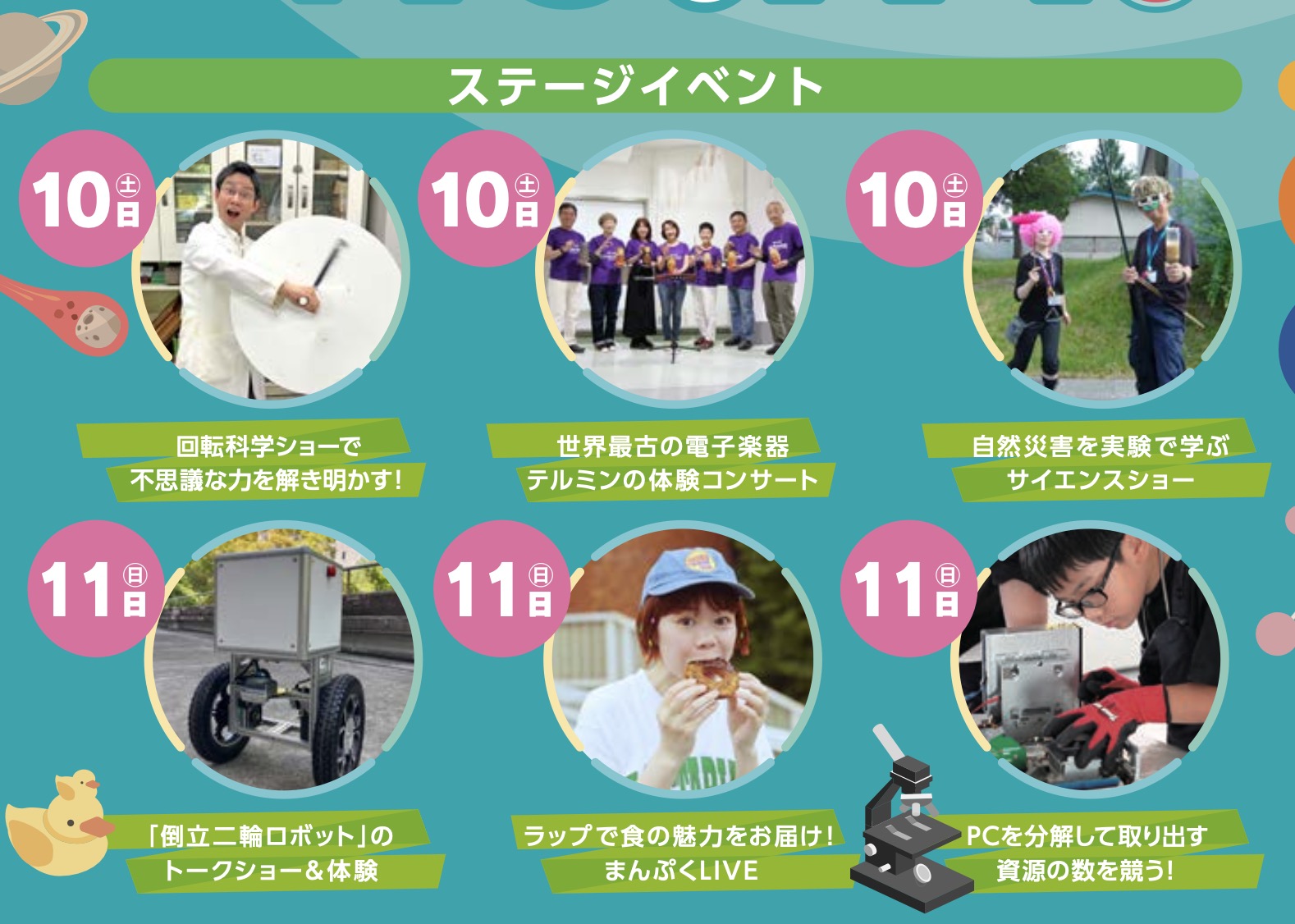
- 10月10日(土)11:15~12:00 千葉市科学フェスタ2026「桑子先生の回転科学ショー」にてサイエンスショーを行います。
- 12月26日(土) ナリカサイエンスアカデミー(教員向け実験講習会)開催
書籍のお知らせ
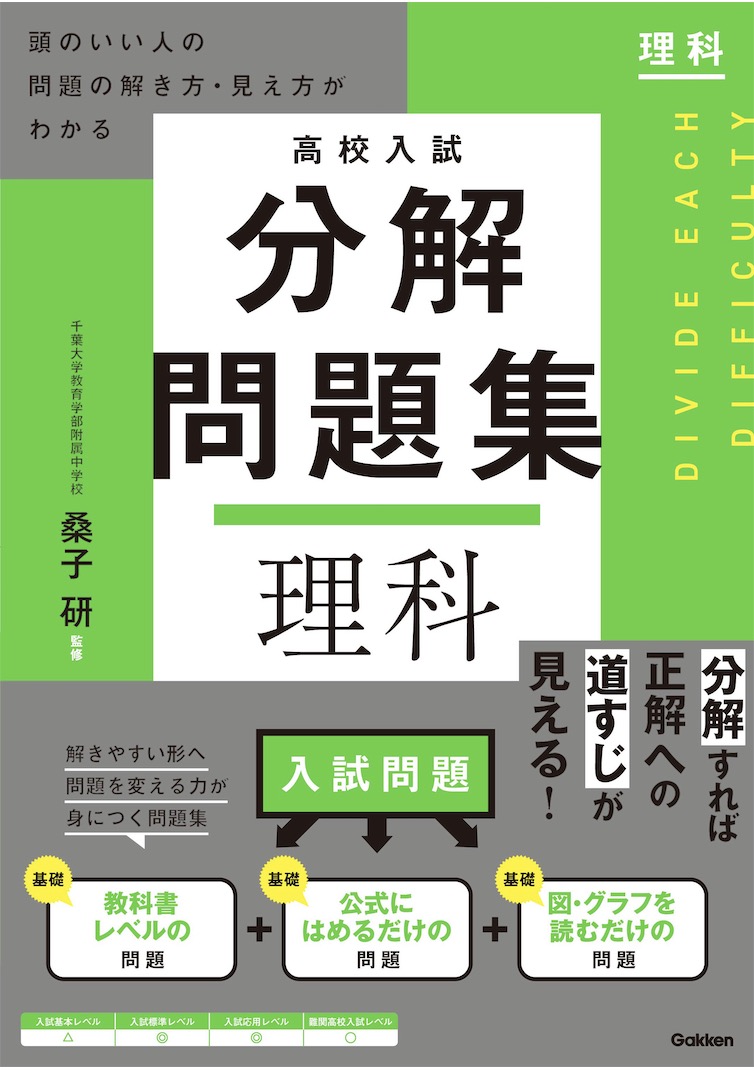
- 『高校入試 分解問題集 理科』(学研)…難しい問題も小さな問題に分解することで、問題を解くことができます。そんな分解の技術が身につくように深く関わりを持って作りました。
 『大人のための高校物理復習帳』(講談社)…一般向けに日常の物理について公式を元に紐解きました。特設サイトでは実験を多数紹介しています。※増刷がかかり6刷となりました(2026/02/01)

- 『きめる!共通テスト 物理基礎 改訂版』(学研)… 高校物理の参考書です。イラストを多くしてイメージが持てるように描きました。授業についていけない、物理が苦手、そんな生徒におすすめです。特設サイトはこちら。

各種SNS(更新情報をお届け!)
【日本語】X(Twitter)/instagram/Facebook 【英語】BlueSky/Threads
Explore
- 楽しい実験…お子さんと一緒に夢中になれるイチオシの科学実験を多数紹介しています。また、高校物理の理解を深めるための動画教材も用意しました。
- 理科の教材… 理科教師をバックアップ!授業の質を高め、準備を効率化するための選りすぐりの教材を紹介しています。
- Youtube…科学実験等の動画を配信しています。
- 科学ラジオ …科学トピックをほぼ毎日配信中!AI技術を駆使して作成した「耳で楽しむ科学」をお届けします。
- 講演 …全国各地で実験講習会・サイエンスショー等を行っています。
- About …「科学のネタ帳」のコンセプトや、運営者である桑子研のプロフィール・想いをまとめています。
- お問い合わせ …実験教室のご依頼、執筆・講演の相談、科学監修等はこちらのフォームからお寄せください。