From Circles to Waves? Exploring the Mysterious Beauty of Sine Waves with Scratch (Physics & Math Learning Tool)
I am Ken Kuwako, a Science Trainer. Every day is an experiment.
Circles and Waves. When you hear these two words, what shapes do you imagine?
One might be the looping silhouette of a Ferris wheel, while the other is a rhythmic wall of water rolling across the ocean. At first glance, they seem like entirely different creatures. However, in the worlds of science and mathematics, they are actually inseparable twins.
In this post, I will introduce a self-made digital teaching tool that lets you intuitively understand the mysterious connection of how a swirl turns into a ripple. Even if you feel a bit intimidated by physics or math, just watching the visuals will make you say, “Aha! I get it!”
Visualizing the Moment a Swirl Becomes a Wave
In a physics class, explaining circular motion or sine waves using only words and formulas is, quite frankly, an exhausting task. Abstract concepts are notoriously difficult to build solely inside the mind. To solve this, I used Pyonkee—the iPad version of the Scratch app—to create a simulation where anyone can understand the mechanism at a glance.
The tool is designed to be projected onto a chalkboard so the whole class can discuss questions like, “How is this ball moving right now?” It is flexible enough for a teacher to slow down the motion or reset mid-way to match the flow of the lesson.
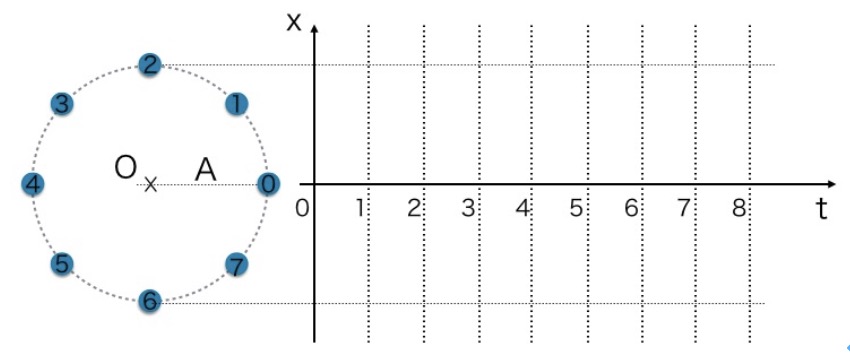
When you view circular motion from the side as a shadow, it reveals a pattern of regular up-and-down movement known as Simple Harmonic Motion. First, take a look at this video capturing that phenomenon.
At first, it looks like a simple ball spinning in a circle…
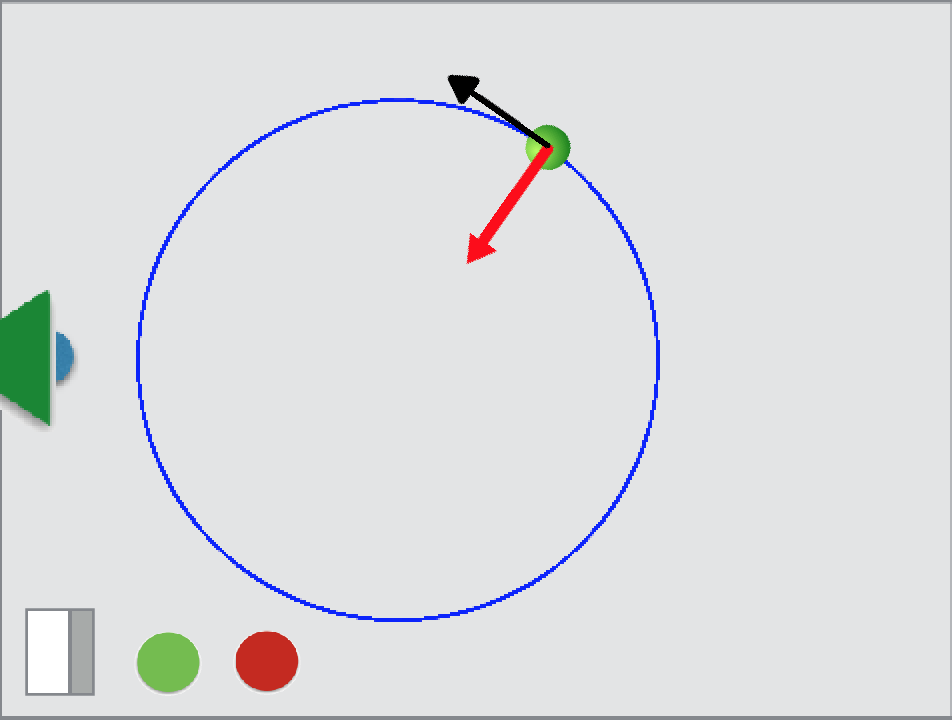
But when you flip the light switch in the simulation, a shadow is cast on the wall. Suddenly, the circular motion transforms into an oscillating vertical wobble.
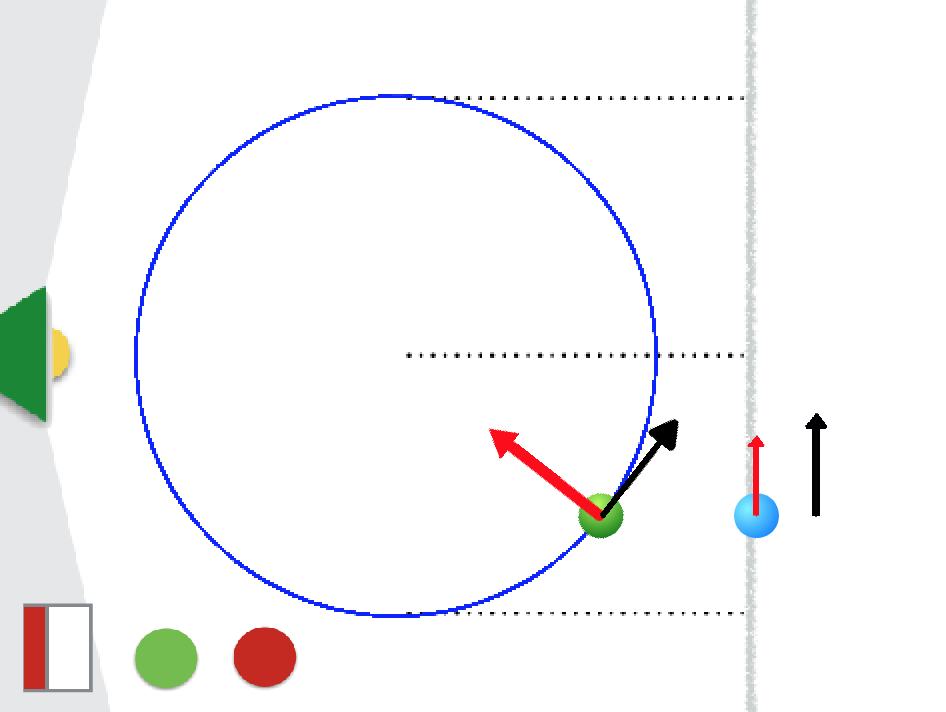
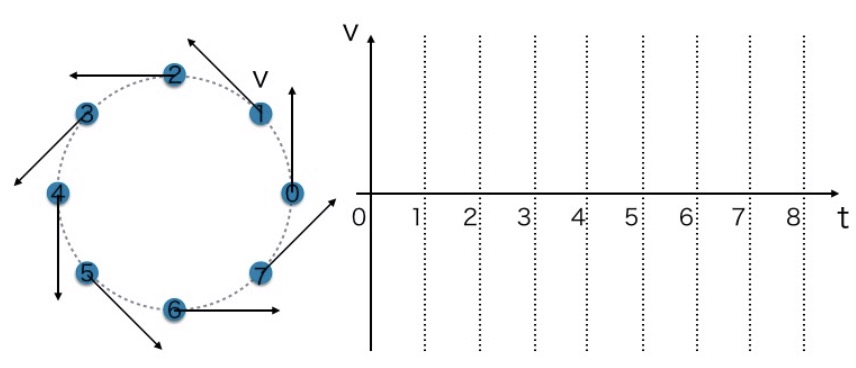
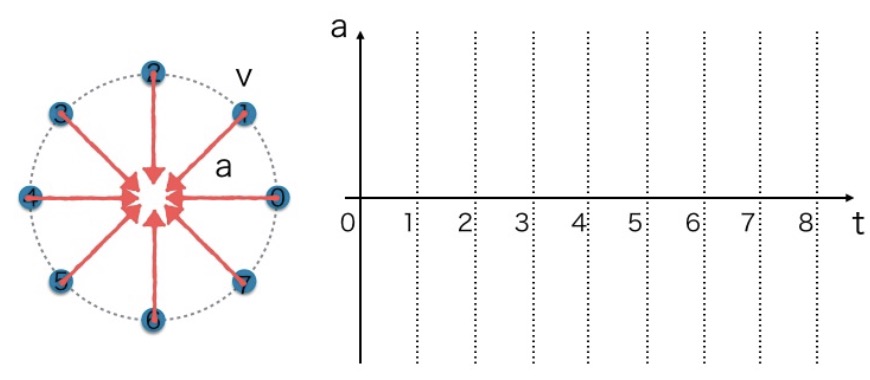
On the screen, the black arrow indicates velocity, while the red arrow shows acceleration. Since the speed can be adjusted with a single button, you can observe closely while asking, “Where is the ball moving the fastest?” or “Is there a moment where the movement stops?” By using an electronic blackboard, you can draw values like period or angular velocity directly over the motion, helping your mental image grow even clearer.
Feel free to try it out for yourself here: https://scratch.mit.edu/projects/235282757
Here are the accompanying materials:
Displacement (Change in Position)
Velocity
Acceleration
Next, I’ll show you a tool that demonstrates how circular motion draws a beautiful wave pattern—a sine wave.
The Three Colored Balls: Unmasking the Identity of Motion
In this simulation, three balls with distinct personalities work together to reveal the true nature of the movement.
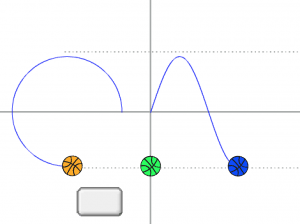
The Orange Ball: It’s in charge of Uniform Circular Motion, spinning at a constant speed on the left. It is the source of all the action.
The Green Ball: It faithfully follows only the height of the orange ball, demonstrating Simple Harmonic Motion. It is essentially the shadow of the circular motion.
The Blue Ball: By adding the passage of time (horizontal movement) to this vertical oscillation, it draws a beautiful Sine Wave (y-t graph).
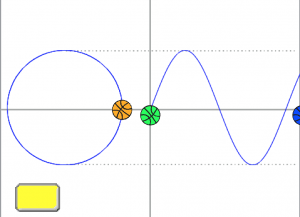
By watching this step-by-step, it becomes easy to understand that circular motion and waves are actually the same phenomenon viewed from different angles. It’s not just a key to unlocking deep physics; it also helps you visualize what trigonometric functions (sine and cosine) actually represent in math.
Creating this tool required a lot of trial and error. Thinking about how to issue the right commands to get that perfect, natural movement felt a bit like kneading clay into a shape.
My ultimate goal is not just for me to create these, but for students themselves to express physical phenomena through programming.
Beyond just memorizing facts from a textbook, building the motion yourself, adjusting the values, and recreating the phenomenon—that is the kind of hands-on knowledge you will never forget. I will continue to master Scratch and explore new forms of learning with all of you.
Inquiries and Requests
Let’s make the wonders of science more accessible! I have compiled many fun experiments you can do at home, along with tips to make them successful. Feel free to search around! ・My book “Science Material Notebook” is now available. Details here. ・Learn more about the administrator, Ken Kuwako, here. ・For requests (writing, lectures, workshops, TV supervision, etc.), click here. ・Updates are posted on X (Twitter)!
 The Science Material Channel features ongoing experiment videos!
9月のイチオシ実験!
テレビ番組監修・イベント等のお知らせ
- 9月25日(金)21:00〜 かまいたちの瞬間回答!にて、科学監修を行いました。
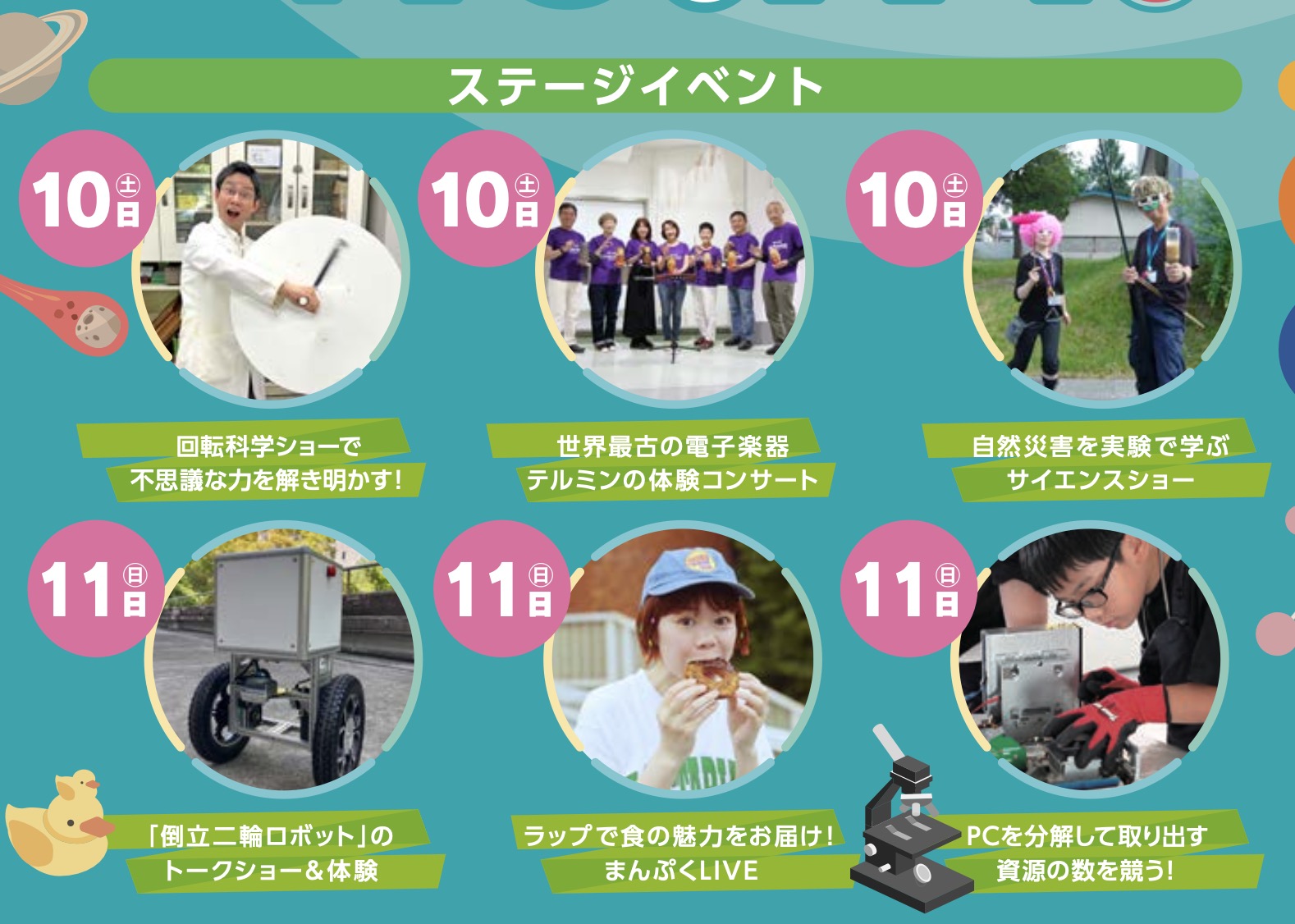
- 10月10日(土)11:15~12:00 千葉市科学フェスタ2026「桑子先生の回転科学ショー」にてサイエンスショーを行います。
- 12月26日(土) ナリカサイエンスアカデミー(教員向け実験講習会)開催
書籍のお知らせ
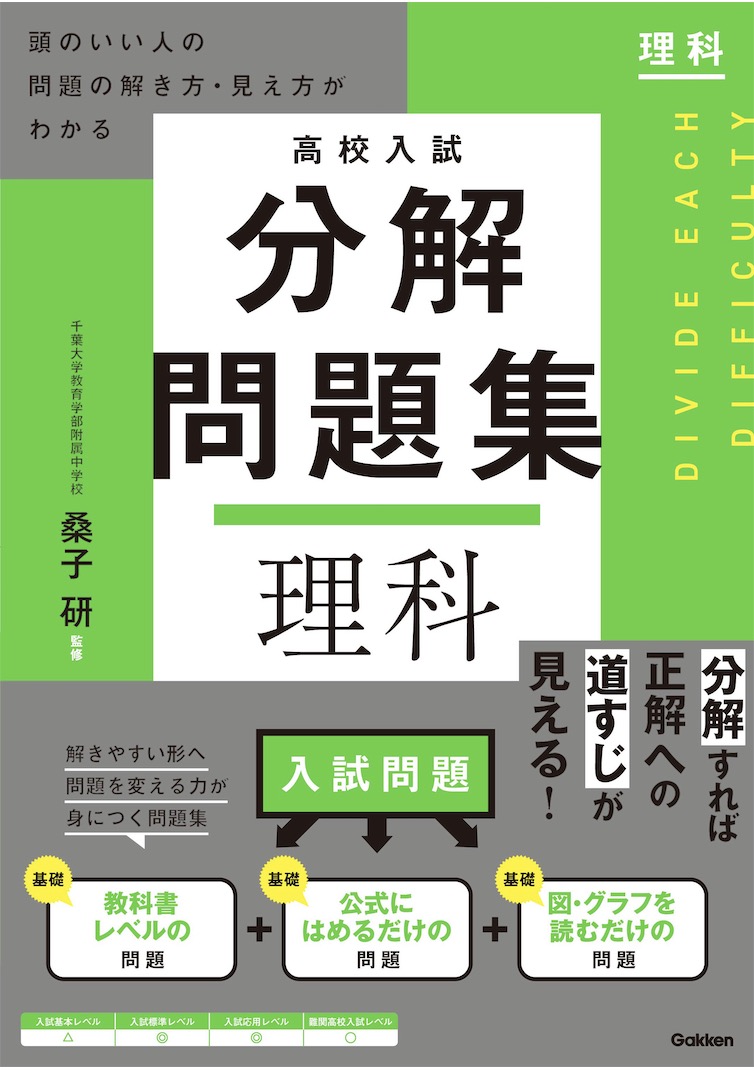
- 『高校入試 分解問題集 理科』(学研)…難しい問題も小さな問題に分解することで、問題を解くことができます。そんな分解の技術が身につくように深く関わりを持って作りました。
 『大人のための高校物理復習帳』(講談社)…一般向けに日常の物理について公式を元に紐解きました。特設サイトでは実験を多数紹介しています。※増刷がかかり6刷となりました(2026/02/01)

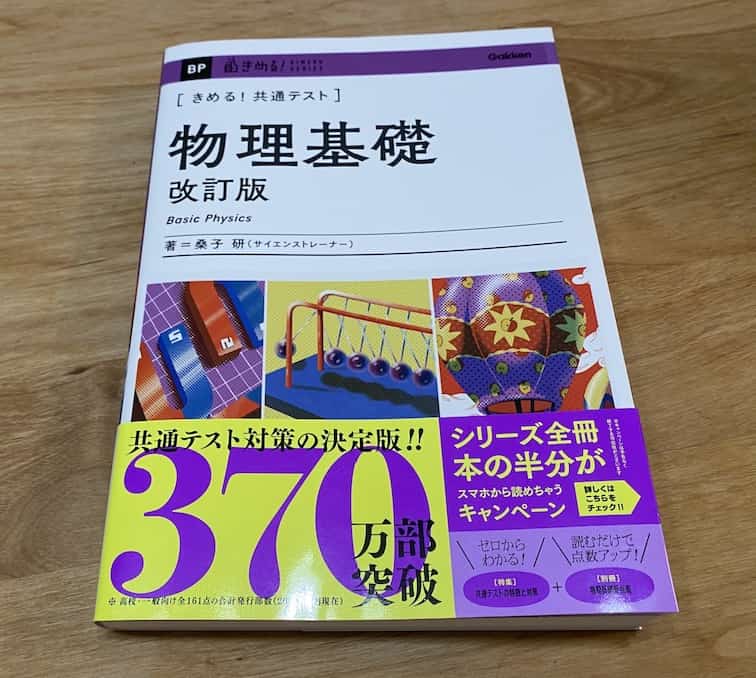
- 『きめる!共通テスト 物理基礎 改訂版』(学研)… 高校物理の参考書です。イラストを多くしてイメージが持てるように描きました。授業についていけない、物理が苦手、そんな生徒におすすめです。特設サイトはこちら。
各種SNS(更新情報をお届け!)
【日本語】X(Twitter)/instagram/Facebook 【英語】BlueSky/Threads
Explore
- 楽しい実験…お子さんと一緒に夢中になれるイチオシの科学実験を多数紹介しています。また、高校物理の理解を深めるための動画教材も用意しました。
- 理科の教材… 理科教師をバックアップ!授業の質を高め、準備を効率化するための選りすぐりの教材を紹介しています。
- Youtube…科学実験等の動画を配信しています。
- 科学ラジオ …科学トピックをほぼ毎日配信中!AI技術を駆使して作成した「耳で楽しむ科学」をお届けします。
- 講演 …全国各地で実験講習会・サイエンスショー等を行っています。
- About …「科学のネタ帳」のコンセプトや、運営者である桑子研のプロフィール・想いをまとめています。
- お問い合わせ …実験教室のご依頼、執筆・講演の相談、科学監修等はこちらのフォームからお寄せください。