Did the Chopstick Snap? Did It Move Backward? The Strange Images in a Glass of Water
Ken Kuwako, Science Trainer here. Every day is an experiment!
Have you ever been surprised by a chopstick in a glass of water that looks snapped in two, or even seems to have a backwards twin? This time, I used a glass and a pair of disposable chopsticks to explore some strange tricks of light and the “images” they create.
Put it in the middle of the glass, and it looks perfectly straight
First, I dropped a chopstick into a glass and watched what kind of image it made. When I held the chopstick upright near the center of the water and looked at it from the side, it looked perfectly straight.
That’s because the light from the chopstick at the center leaves the glass almost head-on, so it barely bends. Light bends when it passes at an angle through the boundary between two different materials, like water and air. This is called “refraction.” Light that goes straight in doesn’t bend at all, so the chopstick looks just the way you’d expect.
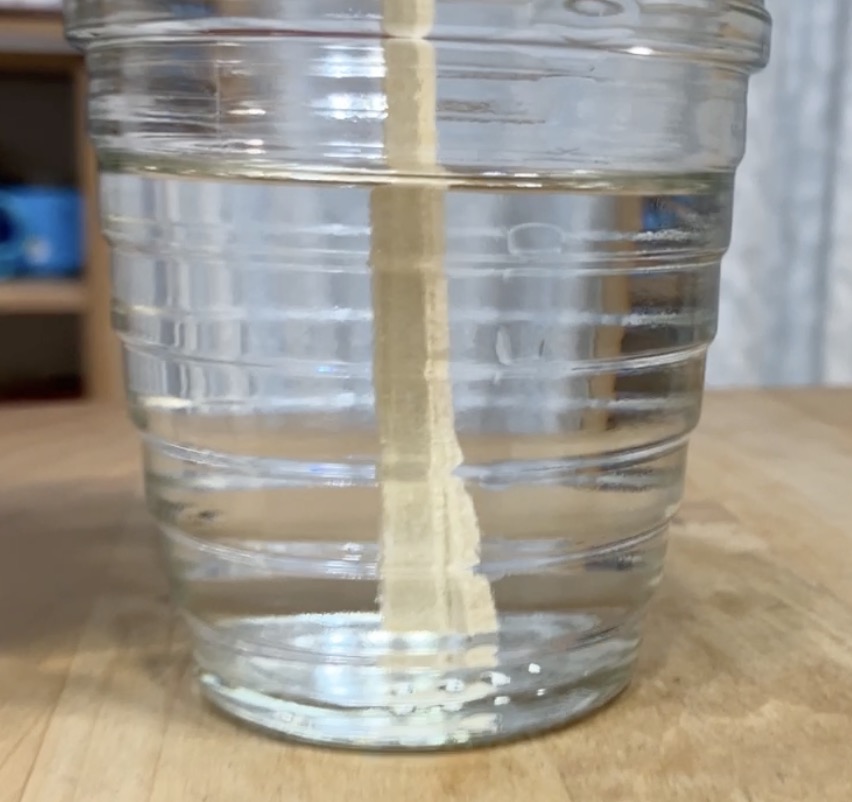
Move it to the edge, and it looks broken
Now let’s move the chopstick toward the edge of the glass. Suddenly, it looks like it’s been cut right at the water’s surface! 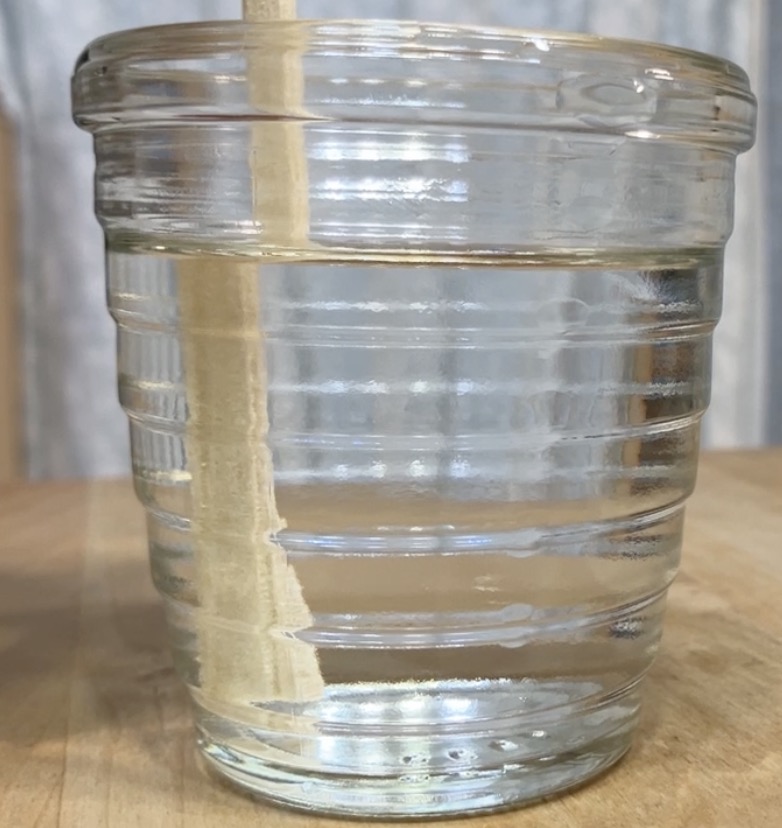
Near the edge, the light from the chopstick hits the glass at a slant and bends a lot. As a result, the part underwater and the part above the water appear to be in different places, so the chopstick looks bent or broken. The same refraction is why your legs look short in the bath, and why the bottom of a pool looks shallower than it really is.
Hold the chopstick sideways and slide it behind the glass…
Next, I held the chopstick horizontally and slowly passed it behind the glass. Partway through, a mysterious image appeared, moving in the opposite direction from the real chopstick! It then merged with the real chopstick, and as I kept going, it looked like the chopstick was coming out from the edge of the glass. 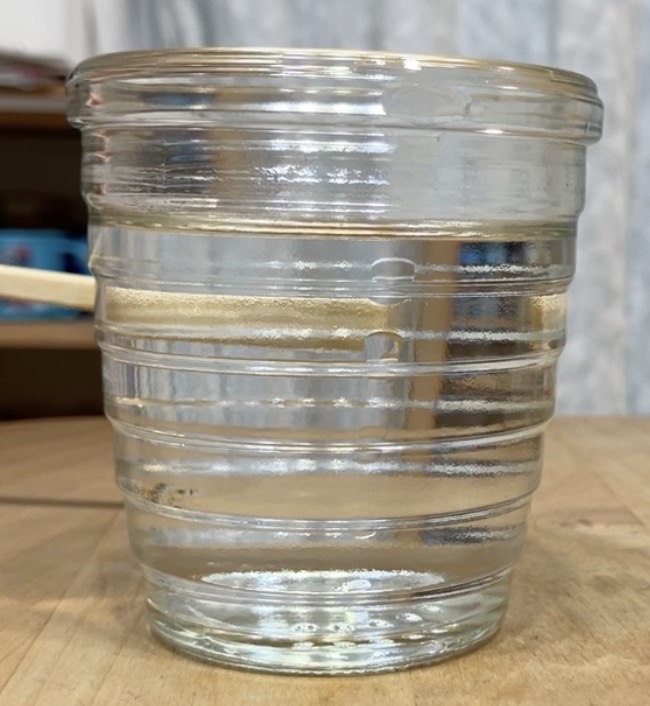
Something’s popping out from the right!
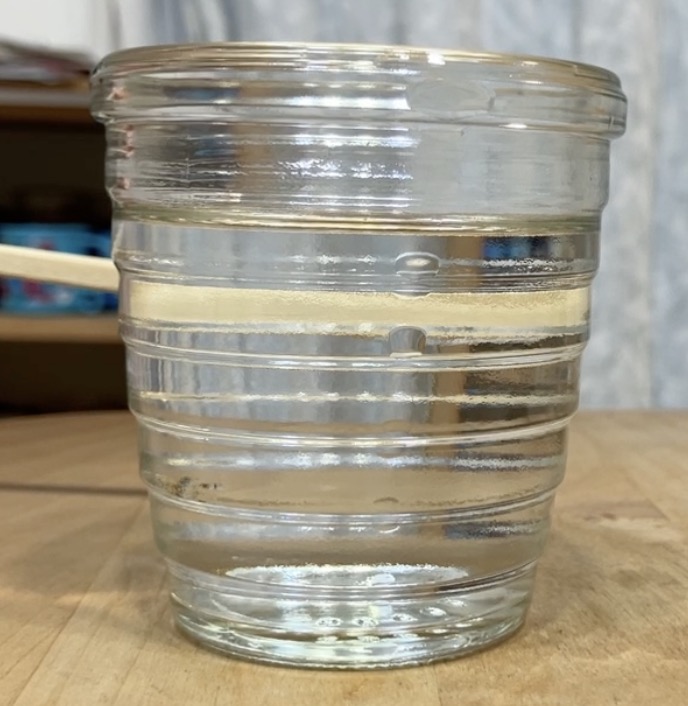
They merge!
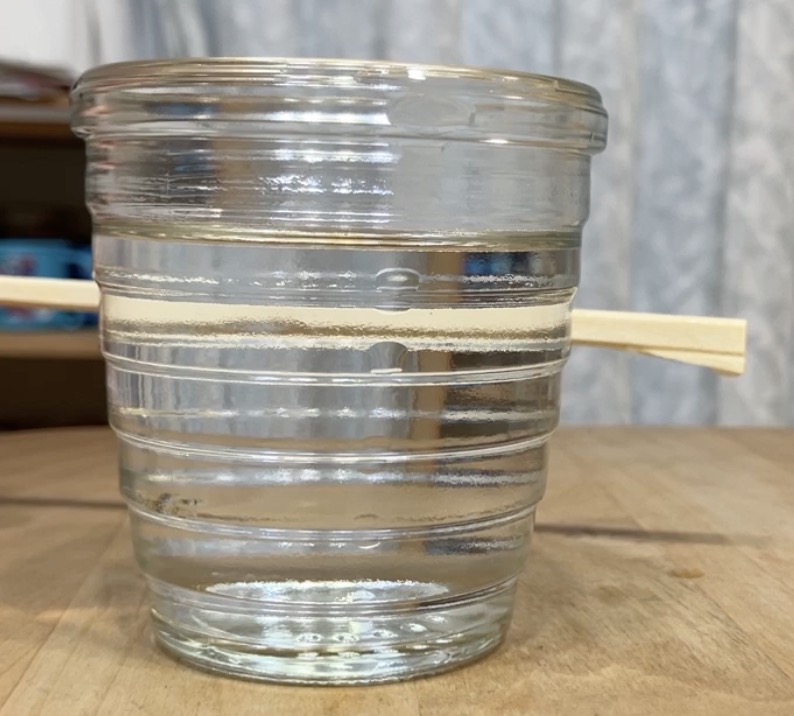
A glass of water is actually a “lens”
So why does this happen? Seen from the side, a round glass of water works just like a magnifying glass, which is a “convex lens” that gathers light. The light from the chopstick behind the glass gets bent as it passes through the water, comes together at one point, and then spreads out again.
With a convex lens, an object far from the lens appears flipped upside down and left to right. With a glass of water, the image is flipped left to right. That’s why the chopstick’s image seemed to move in the opposite direction inside the glass. The glass itself is thin, so you can think of the water inside as doing most of the work.
As you move the chopstick, the real one and its image in the glass move in opposite directions. After the two meet, the chopstick seems to emerge from the edge of the glass. That’s because the path of the light keeps switching as the chopstick changes position.
“Water lenses” are all around us
There are plenty of other examples of water acting like a lens. If you look closely at a water droplet on a leaf, the veins of the leaf can look bigger. And if you look at a view through a clear plastic bottle filled with water, it can look warped or even upside down.
All you need is a clear glass, some water, and a chopstick (or a pencil). Fill the glass with water, hold the chopstick behind it, and slowly move it around to see what kind of image appears. What happens if you change the width of the glass, the amount of water, or the distance to the chopstick? It’s also fun to make guesses with friends and family about why things look the way they do!
Contact and Requests
Science is full of wonder and fun, and it’s closer than you think! This blog collects fun science experiments you can do at home, along with tips to help them go well. Try searching around! ・The content of “Kagaku no Netacho” (Science Idea Notebook) is now a book! Details here. ・Learn more about the author, Ken Kuwako, here. ・For requests (writing, lectures, science classes, TV supervision, appearances, and more), click here. ・Get article updates on X!
 Kagaku no Neta Channel (Science Idea Channel) features experiment videos!
10月のイチオシ実験!
https://youtube.com/shorts/jLVKYRVI1uY?feature=share
テレビ番組監修・イベント等のお知らせ
- 12月26日(土) ナリカサイエンスアカデミー(教員向け実験講習会)開催
書籍のお知らせ
- 『高校入試 分解問題集 理科』(学研)…難しい問題も小さな問題に分解することで、問題を解くことができます。そんな分解の技術が身につくように深く関わりを持って作りました。
 『大人のための高校物理復習帳』(講談社)…一般向けに日常の物理について公式を元に紐解きました。特設サイトでは実験を多数紹介しています。※増刷がかかり6刷となりました(2026/02/01)
- 『きめる!共通テスト 物理基礎 改訂版』(学研)… 高校物理の参考書です。イラストを多くしてイメージが持てるように描きました。授業についていけない、物理が苦手、そんな生徒におすすめです。特設サイトはこちら。
各種SNS(更新情報をお届け!)
【日本語】X(Twitter)/instagram/Facebook 【英語】BlueSky/Threads
Explore
- 楽しい実験…お子さんと一緒に夢中になれるイチオシの科学実験を多数紹介しています。また、高校物理の理解を深めるための動画教材も用意しました。
- 理科の教材… 理科教師をバックアップ!授業の質を高め、準備を効率化するための選りすぐりの教材を紹介しています。
- Youtube…科学実験等の動画を配信しています。
- 科学ラジオ …科学トピックをほぼ毎日配信中!AI技術を駆使して作成した「耳で楽しむ科学」をお届けします。
- 講演 …全国各地で実験講習会・サイエンスショー等を行っています。
- About …「科学のネタ帳」のコンセプトや、運営者である桑子研のプロフィール・想いをまとめています。
- お問い合わせ …実験教室のご依頼、執筆・講演の相談、科学監修等はこちらのフォームからお寄せください。
- Seeing the World Through an Insect’s Eyes? The Hidden Secrets of Dandelions and Azaleas

- Did the Chopstick Snap? Did It Move Backward? The Strange Images in a Glass of Water
- Making the Invisible Visible: A Laser and Fog Machine Light Show!

- The 1,300-View Wall! What Middle Schoolers Learned About “Reaching People” Through Short Videos (Science Communication Course)

- Is the Image on Your Retina Upside Down? Discover the Magic of Light with a Squid Eye Experiment

- We Built a Volcano—and It Was Explosively Fun! The Ultimate Experiment Recipe Using Plaster and Baking Soda!
- Data So Clean It’ll Wow You! Cracking the Link Between Potential Energy and Work with Just a Rail and a Marble

- Why Are the Top and Bottom of a Leaf Different Colors? The Surprising Link Between Light and Cell Density

- 4x Faster Than Sunlight?! The Secret of Plant Factories Growing Lettuce Under Red Light (Plot Twist: It Was Purple Light!)