Why Doesn’t a Spinning Top Fall Over? Feeling the Mystery of Rotation with a Gyro Wheel (Gyroscopic Effect & Precession)
I’m Science Trainer Ken Kuwako. Every day is an experiment!
When you were a child, didn’t you ever wonder about this? This time, I’d like to unravel that mystery using a “gyro wheel” and explore the hidden power of rotation that we can’t see with our eyes. Once you actually experience it with your own body, you’ll be amazed in a way that’s completely different from simply understanding it in your head.
From a Homemade Experiment to the Real Thing
Until now, I had been taking apart the wheel of a children’s bicycle and making my own experimental apparatus. This time, however, I bought Narika’s gyro wheel. And sure enough, the commercial product spins on a completely different level. With very little friction and almost no wobble in the axle, the phenomena I’m about to introduce can be observed much more clearly.
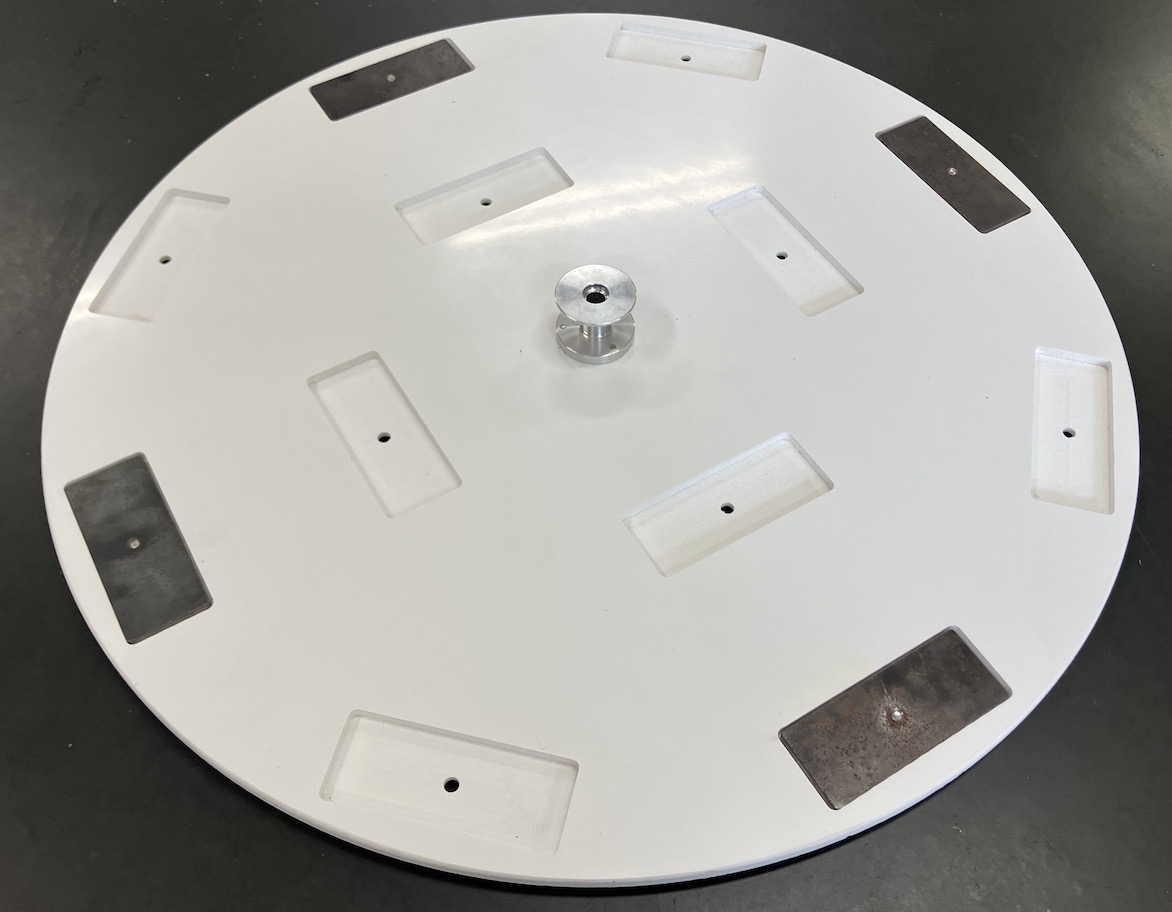
C15-2634 回転台(ジャイロホイール)C15-2634 回転台(ジャイロホイール)
A Rotating Object Tries to Keep Its “Orientation” (The Gyroscopic Effect)
What I wanted to investigate with this wheel was a phenomenon known as the gyroscopic effect. It is the tendency of a rotating object to maintain the direction of its axis of rotation as much as possible. Take a look at this video.
First, wrap the string around the wheel and give it a good spin. Then tie the string to just one end of the axle and let the wheel hang. If you think about it normally, you’d expect a wheel supported at only one end to lose its balance under gravity, tilt downward, and quickly fall. But that’s not what happens. The wheel keeps spinning while remaining almost perfectly horizontal.
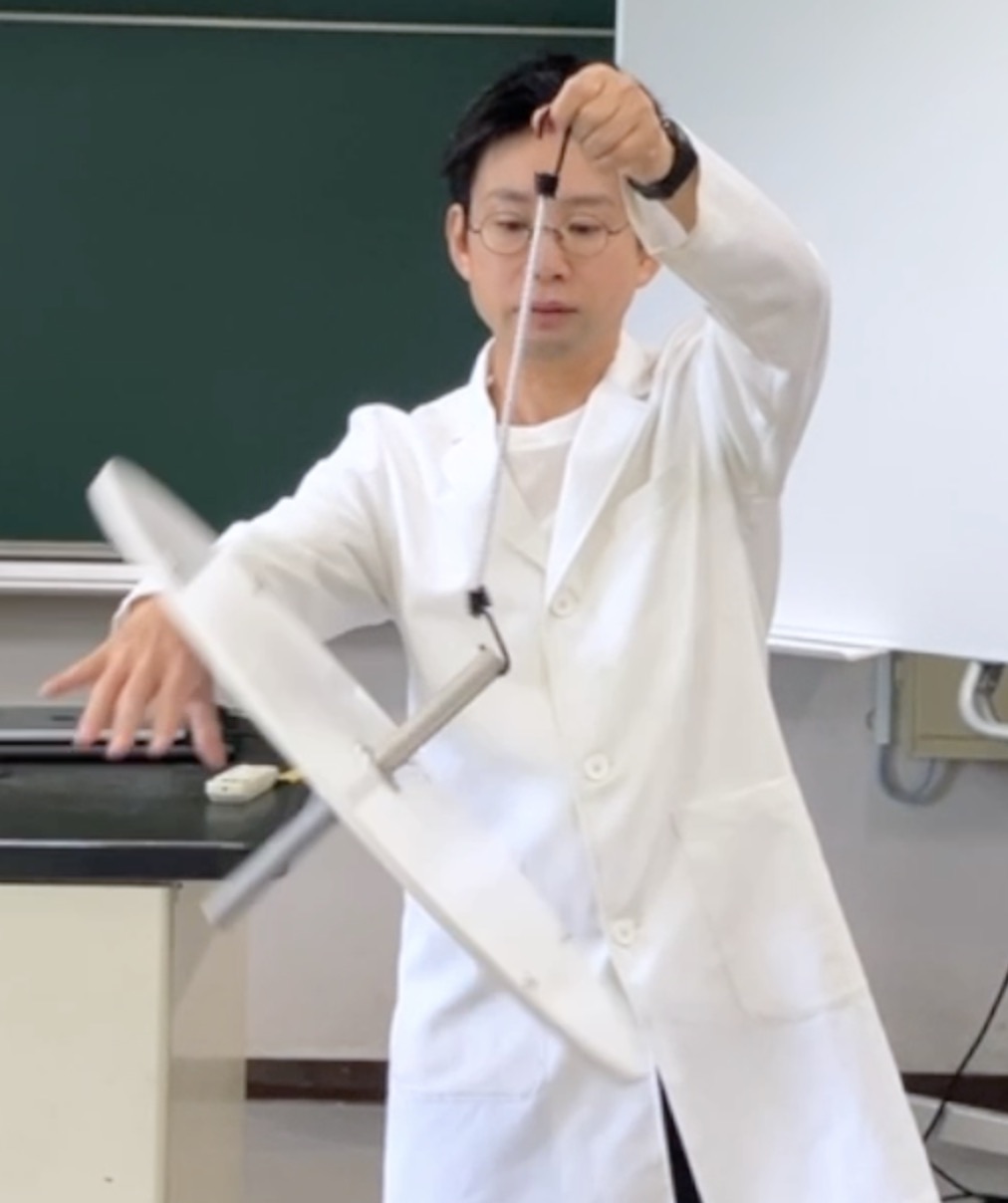
When it isn’t spinning, it falls over…
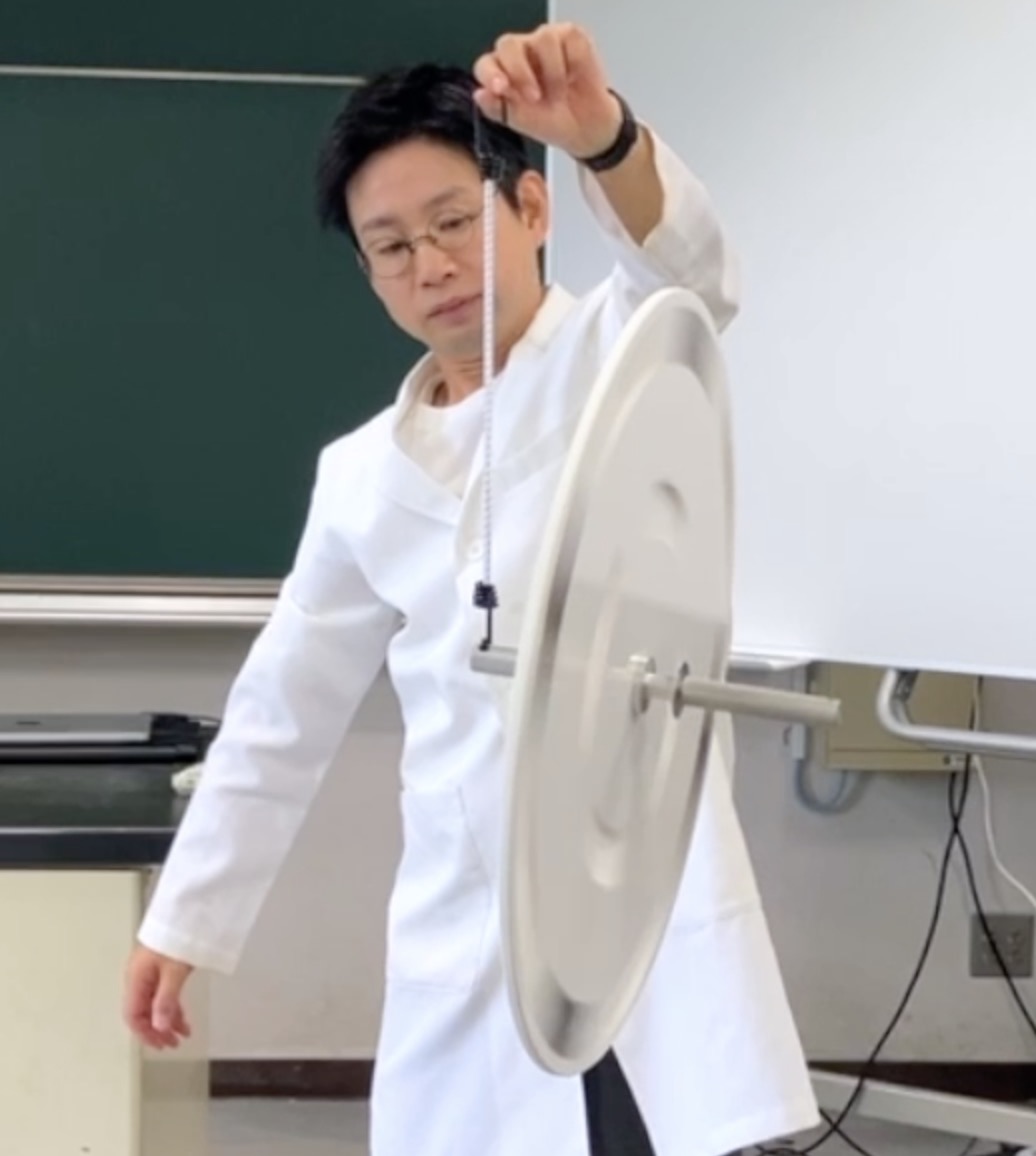
But once you spin it, it stays up even after you let go.
This is based on the same principle that makes a moving bicycle much harder to tip over. Because the rotating wheels tend to maintain the direction of their axes, we can keep our balance while riding a bicycle.
It Doesn’t Just Stay Upright—It Slowly Spins Around: Precession
Here’s where things get even more interesting. The wheel doesn’t simply remain suspended without falling. Instead, it slowly rotates around the string. This motion is called precession.
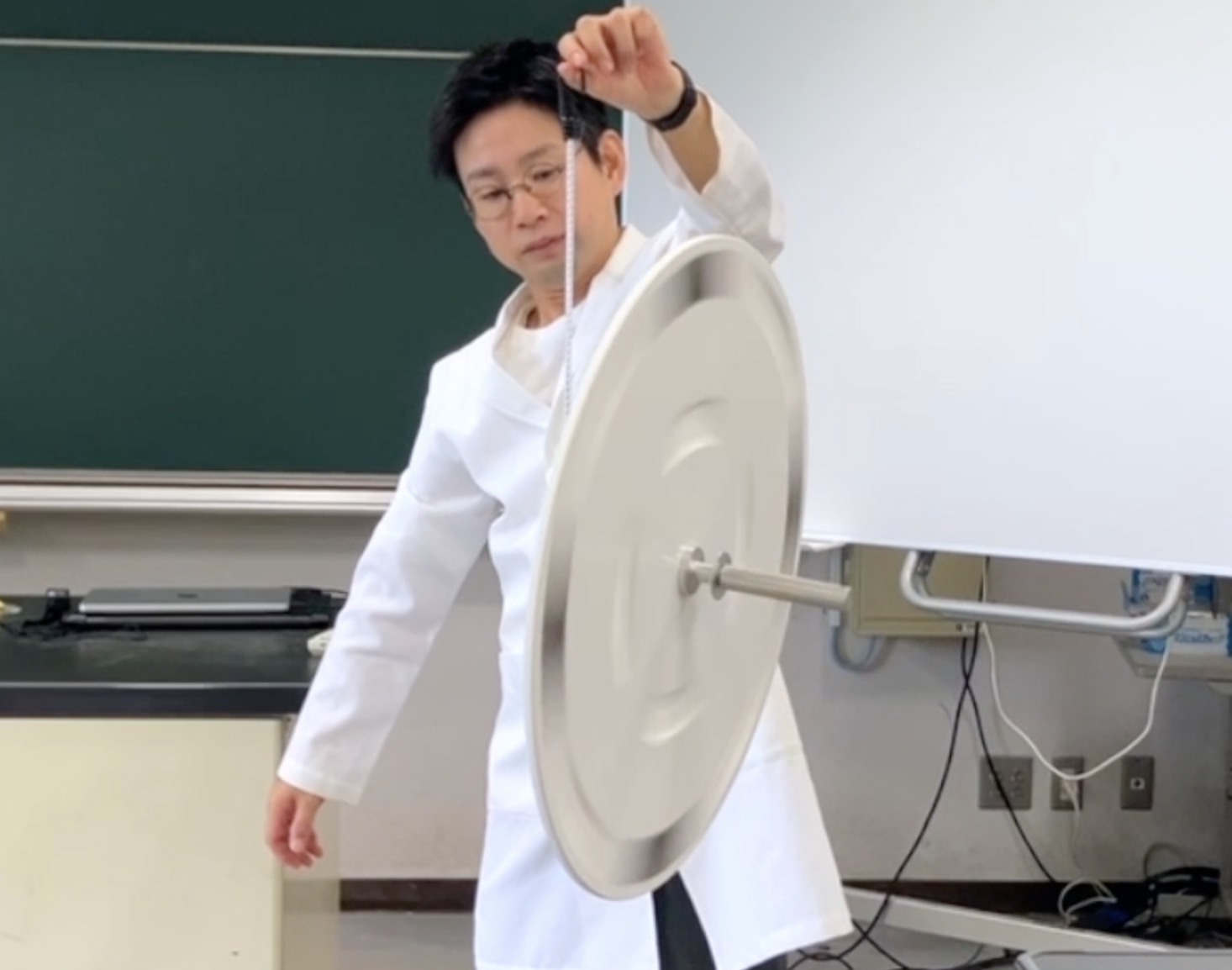
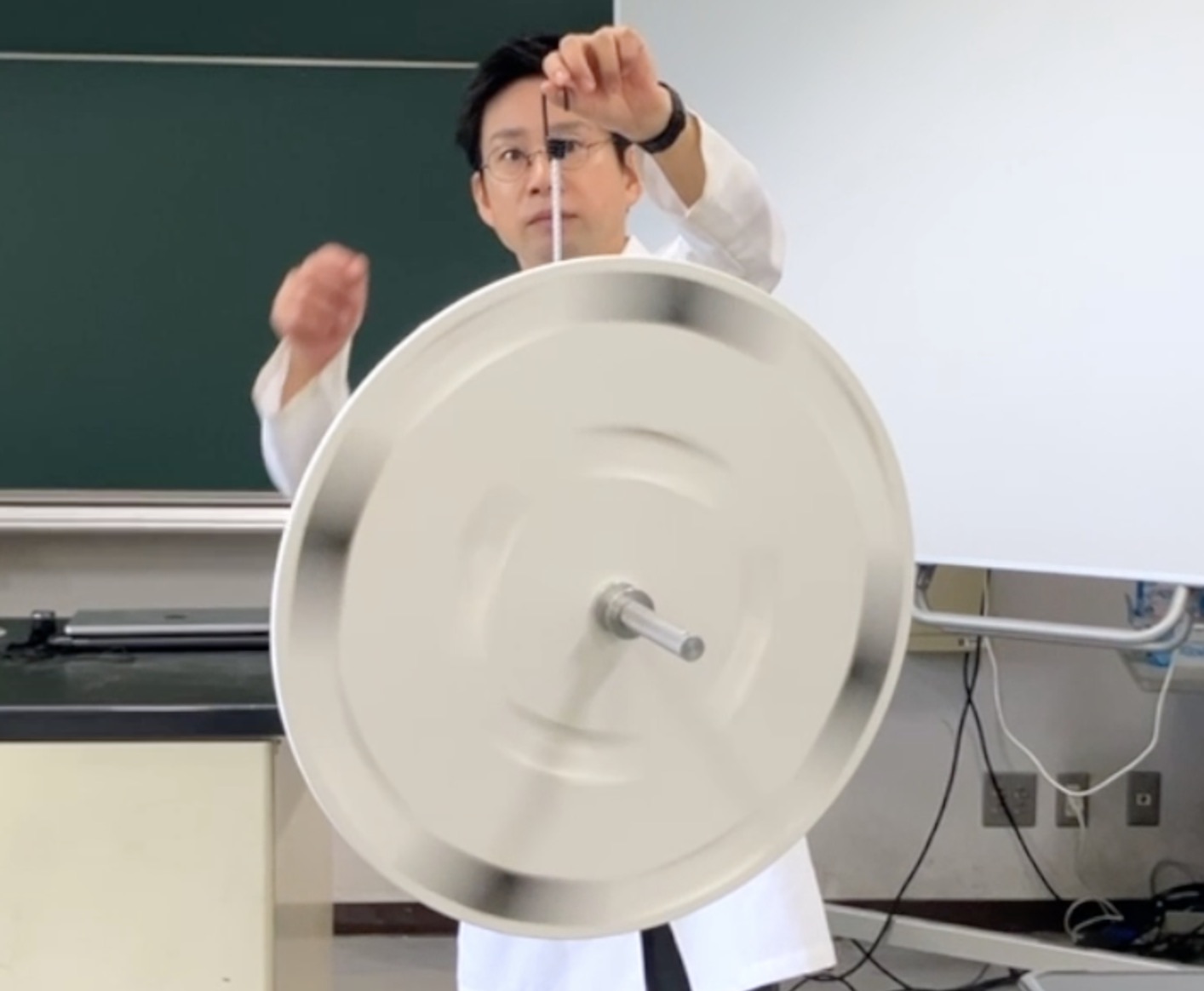
The word “precession” may sound intimidating, but you’ve probably seen the phenomenon before. It’s the same thing that happens with a spinning top. As the top spins, its axis slowly tilts while tracing a circle. That motion is precession.
The Earth also undergoes precession. Its rotational axis slowly wobbles, completing one cycle over an astonishingly long period of about 26,000 years. The star in Ursa Minor that we know today as the North Star will eventually hand over its position as the North Star to another star about 10,000 years from now.
Feeling Precession with Your Own Body
Finally, I tried an experiment while standing on a rotating platform and manipulating the wheel. After giving the wheel another powerful spin, I stepped onto the rotating platform and tilted the wheel while standing on it.
Take a look at this video.
And this time, something amazing happens: my own body begins to spin around on the rotating platform.
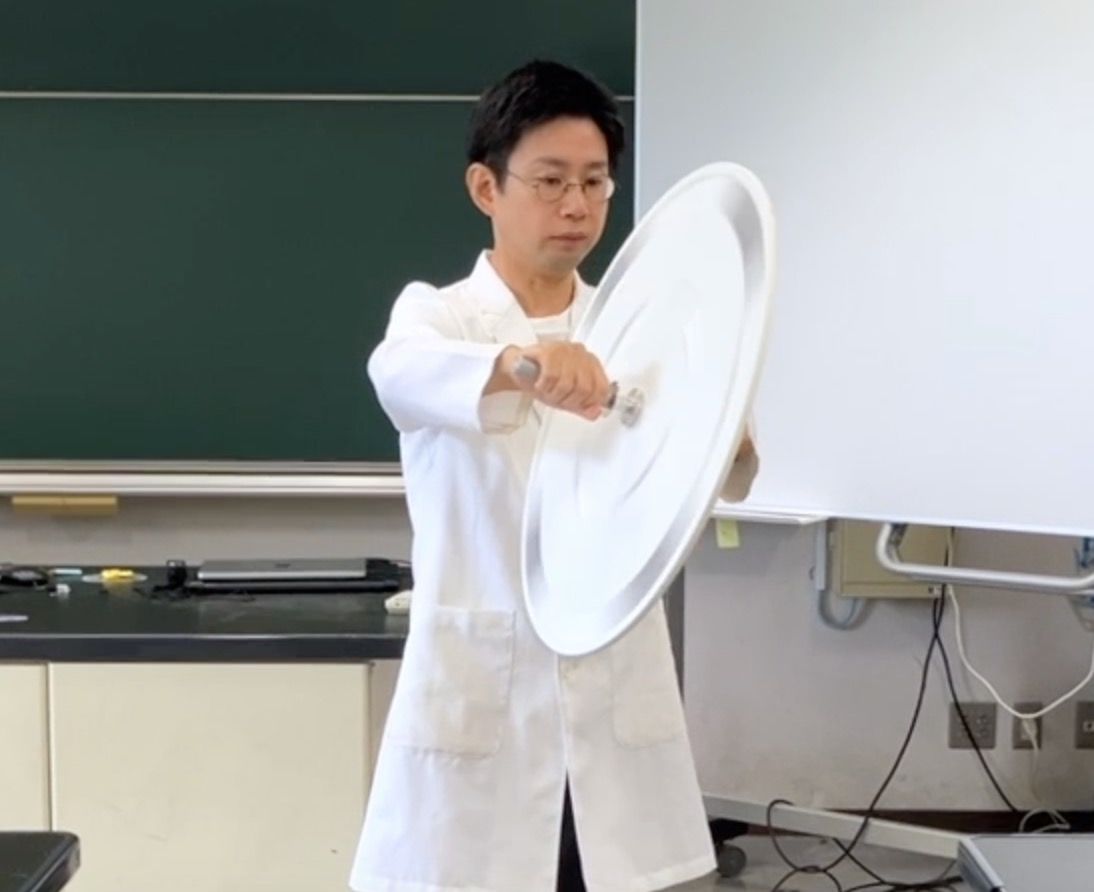
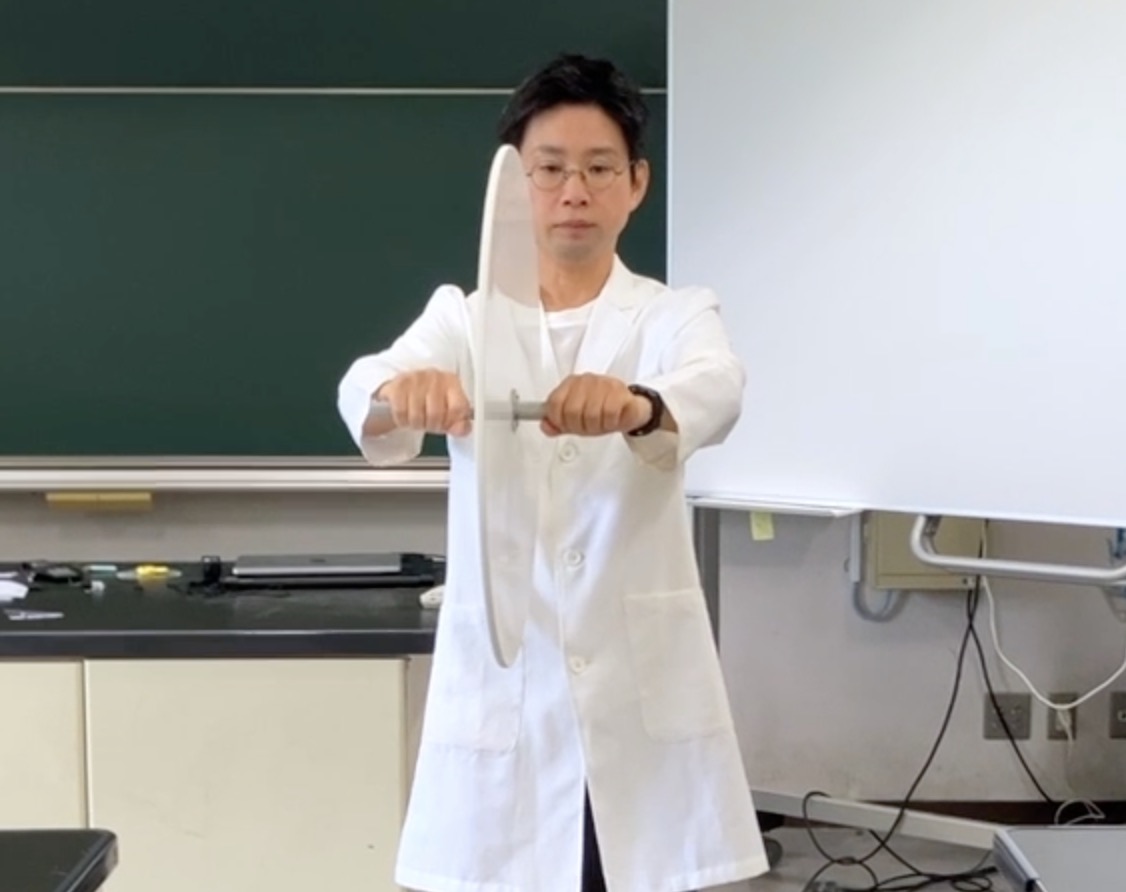
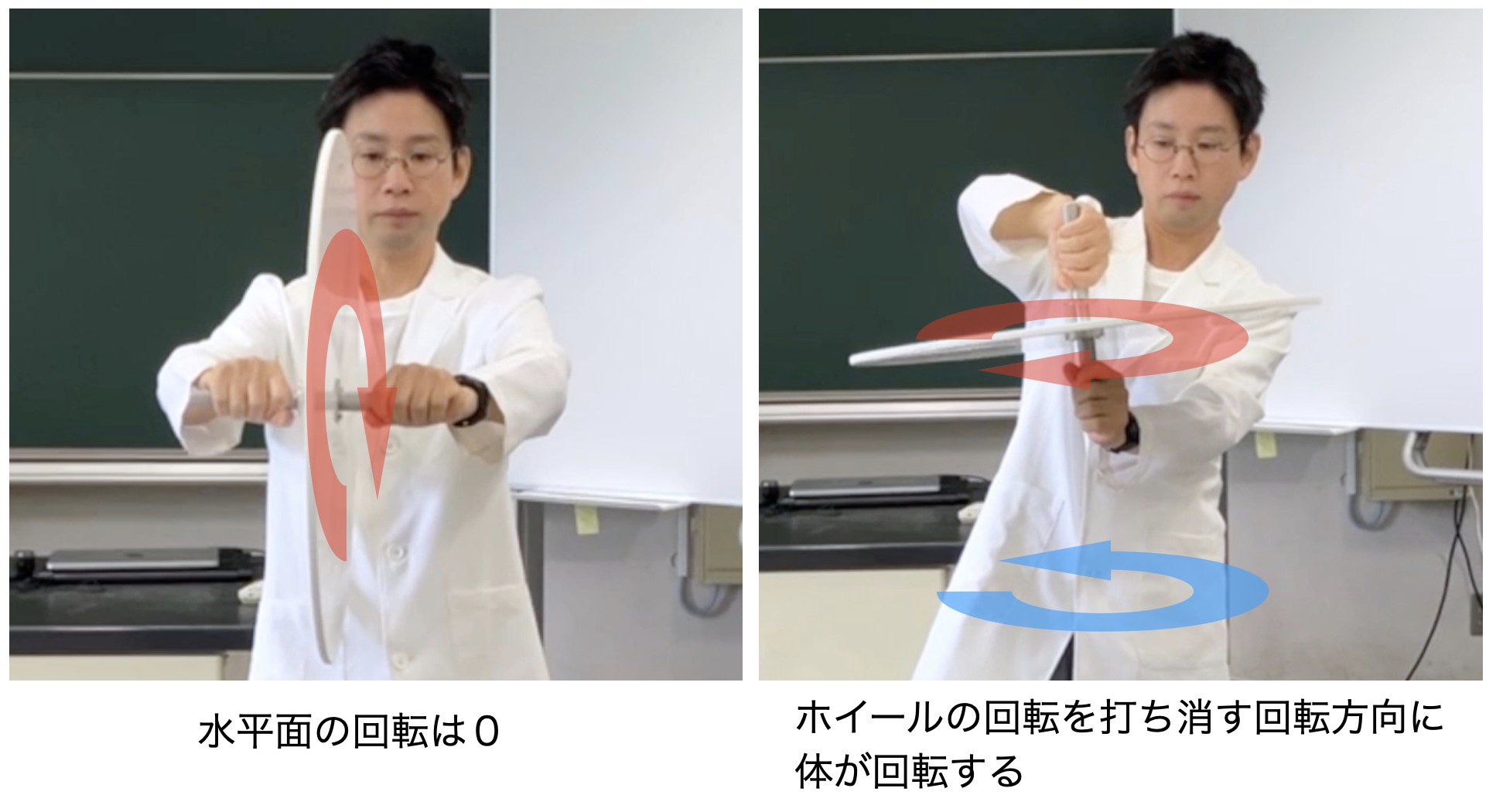
As I tilt the wheel, my entire body starts rotating along with it, almost as if an invisible force were pushing me around. This is a demonstration of one of the fundamental laws of physics: the law of conservation of angular momentum. When you tilt the wheel’s axis of rotation, you create a change in its rotational motion. To compensate for that change and conserve the total angular momentum, the entire system—in this case, the rotating platform together with my body—rotates in the opposite direction.
If we simplify the situation and think about it in two dimensions, the basic idea is that my body rotates in order to conserve the angular momentum in the horizontal plane.
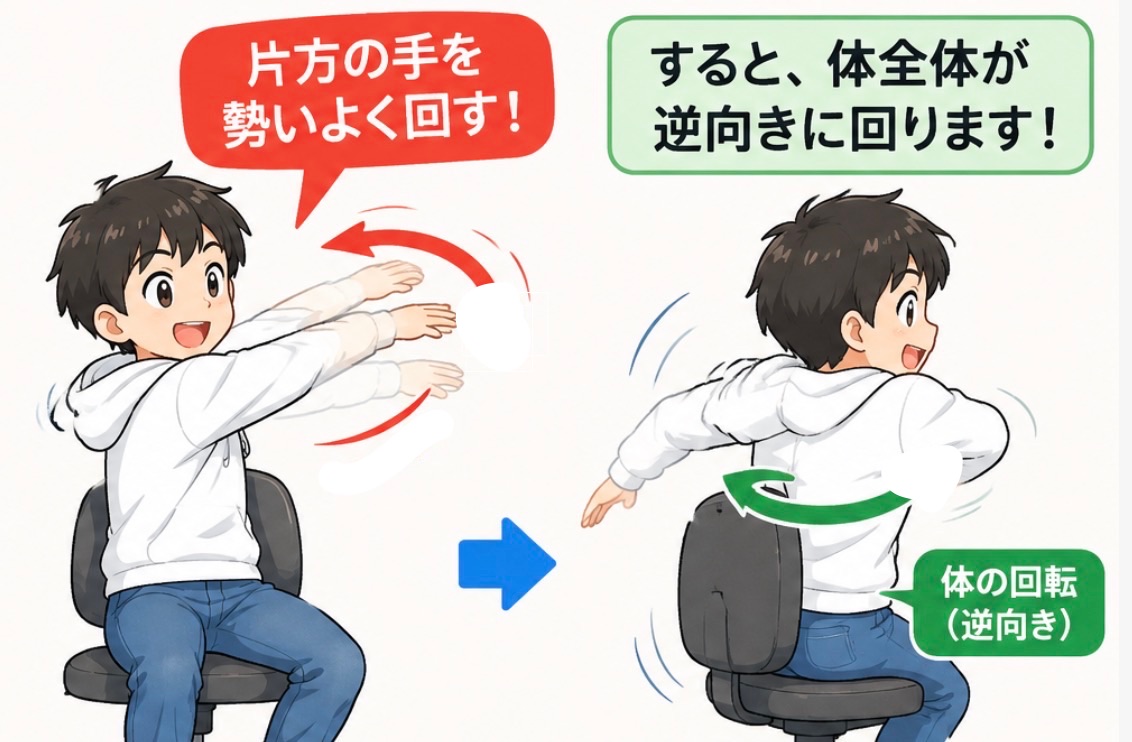
In fact, this same principle is behind many familiar and cutting-edge technologies. It explains why a figure skater spins faster when they pull their arms in during a spin, and it is also used to control the orientation of satellites and rockets in space. When astronauts twist their bodies in a weightless environment and naturally begin to rotate, the same law of conservation of angular momentum is at work.
When you realize that the motion of a small wheel right in front of you is connected all the way to space engineering, doesn’t it completely change the way you see this experiment?
お問い合わせ・ご依頼について
Bring the wonders and excitement of science closer to everyday life! I share fun science experiments that you can do at home, along with simple tips to make them work. Have fun exploring and searching through the site!
・The contents of 科学のネタ帳 are now available as a book. For more information, click here.
・For more information about Ken Kuwako, the site operator, click here.
・For inquiries and requests, including writing, lectures, science workshops, TV scientific supervision, and TV appearances, click here.
・Get updates about new articles on X!
 Watch experiment videos on the Science Neta Channel!
9月のイチオシ実験!
お弁当箱をプラバンがわりにしてキーホルダーを作ろう!
テレビ番組監修・イベント等のお知らせ
- 8月27日(木)科学監修番組放送予定
- 9月20日(日)ダビンチマスターズ出演予定
- 10月10日(土)11:15~12:00 千葉市科学フェスタ2026「桑子先生の回転科学ショー」にてサイエンスショーを行います。
- 12月26日(土) ナリカサイエンスアカデミー(教員向け実験講習会)開催
書籍のお知らせ
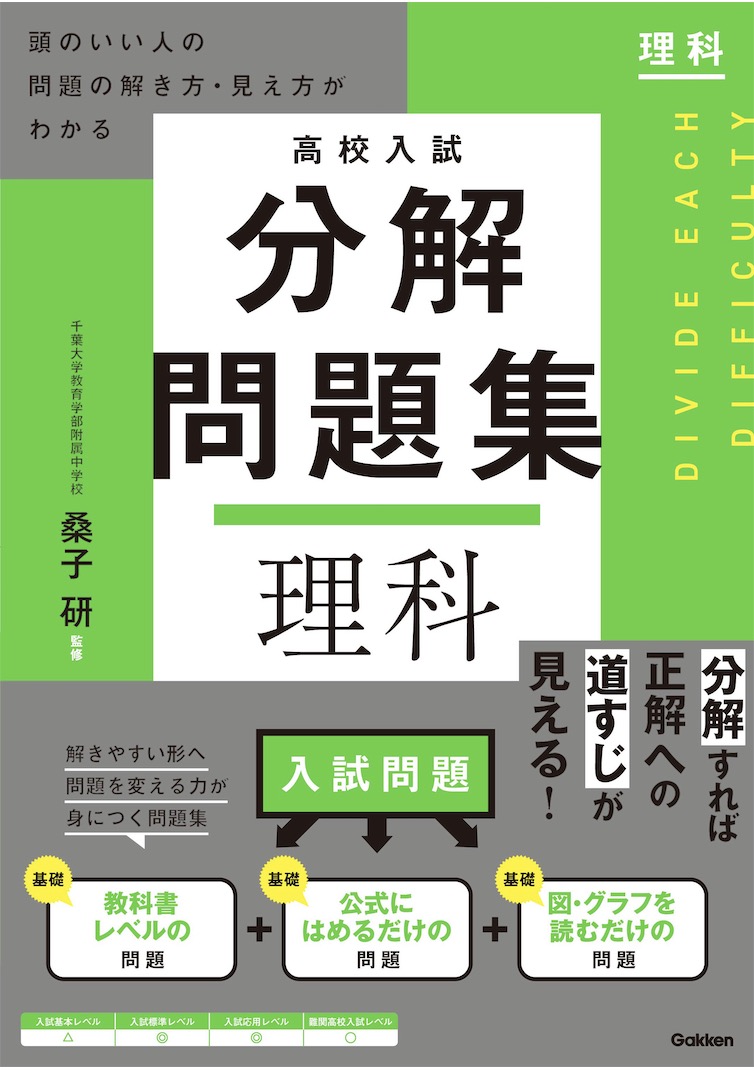
- 『高校入試 分解問題集 理科』(学研)…難しい問題も小さな問題に分解することで、問題を解くことができます。そんな分解の技術が身につくように深く関わりを持って作りました。
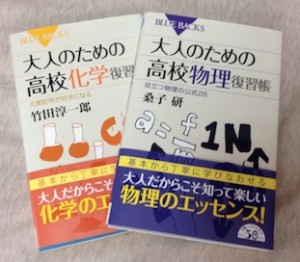
 『大人のための高校物理復習帳』(講談社)…一般向けに日常の物理について公式を元に紐解きました。特設サイトでは実験を多数紹介しています。※増刷がかかり6刷となりました(2026/02/01)
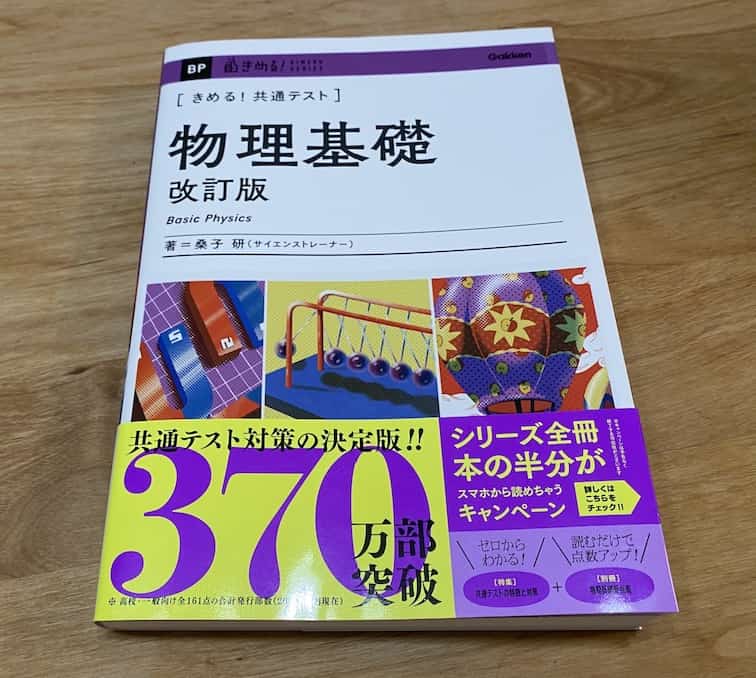
- 『きめる!共通テスト 物理基礎 改訂版』(学研)… 高校物理の参考書です。イラストを多くしてイメージが持てるように描きました。授業についていけない、物理が苦手、そんな生徒におすすめです。特設サイトはこちら。
各種SNS(更新情報をお届け!)
【日本語】X(Twitter)/instagram/Facebook 【英語】BlueSky/Threads
Explore
- 楽しい実験…お子さんと一緒に夢中になれるイチオシの科学実験を多数紹介しています。また、高校物理の理解を深めるための動画教材も用意しました。
- 理科の教材… 理科教師をバックアップ!授業の質を高め、準備を効率化するための選りすぐりの教材を紹介しています。
- Youtube…科学実験等の動画を配信しています。
- 科学ラジオ …科学トピックをほぼ毎日配信中!AI技術を駆使して作成した「耳で楽しむ科学」をお届けします。
- 講演 …全国各地で実験講習会・サイエンスショー等を行っています。
- About …「科学のネタ帳」のコンセプトや、運営者である桑子研のプロフィール・想いをまとめています。
- お問い合わせ …実験教室のご依頼、執筆・講演の相談、科学監修等はこちらのフォームからお寄せください。