The Insect That Trains for Years Inside a Tree: The Untold Truth About the White-Spotted Longicorn Beetle
I’m Ken Kuwako, the Science Trainer. Every day is an experiment!
While hiking Mount Mihara on Izu Oshima Island, I came across a remarkably large longhorn beetle. At first, I simply thought, “That’s a big beetle!” But after looking into it, I discovered that this insect leads an extraordinary life.
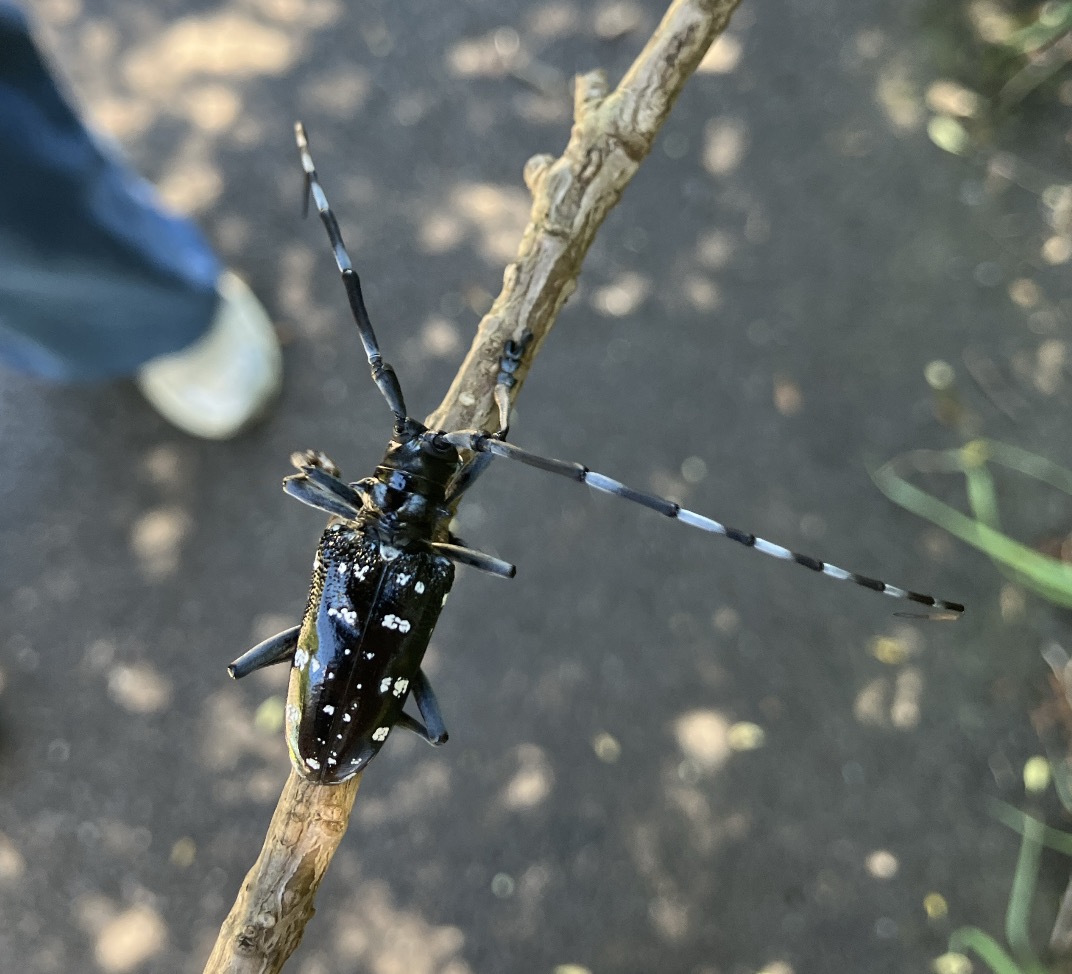
Its name is the White-Spotted Longhorn Beetle (Anoplophora malasiaca). The adult beetle we see crawling on trees or flying through the forest is actually the final stage of a journey that began after spending years hidden inside a tree. In this article, let’s uncover some of the fascinating secrets behind this amazing insect.
The Meaning Behind Its Name
The name “White-Spotted Longhorn Beetle” perfectly describes its appearance. In Japanese, “goma” refers to the white sesame-like spots covering its body, while “madara” means a mottled or speckled pattern. In other words, it’s simply a longhorn beetle with sesame-like white spots.
Once you know the origin of the name, those beautiful markings suddenly make perfect sense.
Years of Hidden Life Before Becoming an Adult
Most people only ever notice the adult beetles, but that’s actually the shortest chapter of their lives.
The female lays her eggs in the bark of a tree. After hatching, the larvae spend their lives tunneling through the wood, slowly feeding and growing. This hidden stage can last for several years before they finally emerge as adults.
That means every adult beetle you spot in a forest or along a trail is essentially a seasoned veteran that has spent years training inside a tree. It’s amazing to think that so much time and growth are hidden behind a single insect.
Those Giant Antennae Work Like a Nose
One of the first things you’ll notice is its incredibly long antennae—often longer than its entire body.
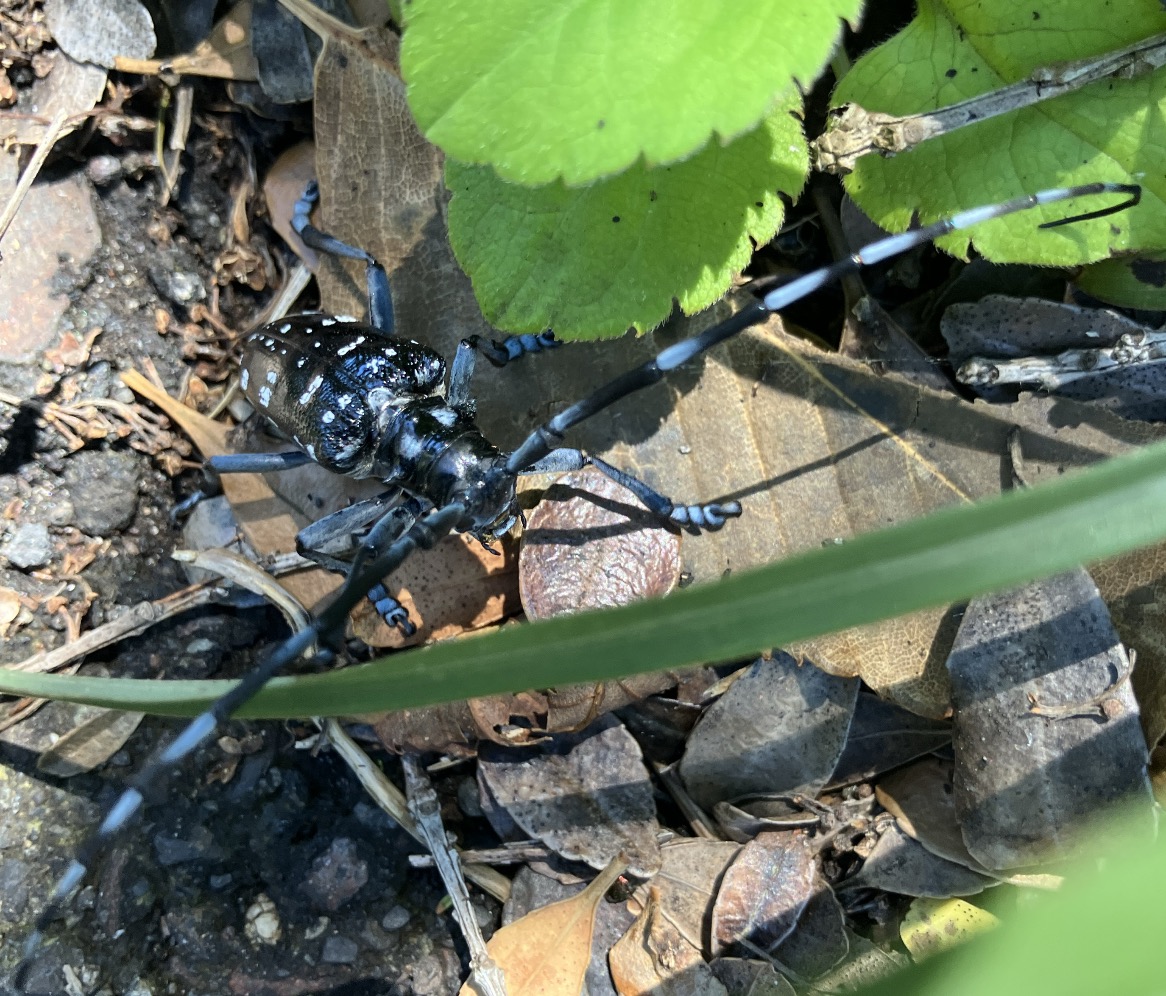
They’re much more than decorations. These antennae serve as highly sensitive detectors, allowing the beetle to smell, locate mates, and even assess the condition of trees.
Some researchers suggest that, for these beetles, the antennae function more like a powerful “nose” than an extension of their sense of sight. While humans experience the world mainly through vision, these insects rely heavily on scents to navigate their surroundings. It’s a completely different way of experiencing the world.
Powerful Jaws That Can Chew Through Wood
Have you ever wondered how something as hard as wood can become food?
The larvae are equipped with incredibly strong jaws that slowly grind their way through the wood as they feed. If you ever notice piles of sawdust-like material at the base of a tree, there’s a good chance a larva is hard at work inside.
Because they also attack citrus trees, fig trees, and other fruit trees, these beetles are considered serious agricultural pests by many orchard growers.
People often imagine that adult beetles continue eating wood to grow even larger, but that’s not actually the case. Adult White-Spotted Longhorn Beetles mainly feed on tree sap and bark. The stage when they consume large amounts of wood—and do most of their growing—is during their larval years.
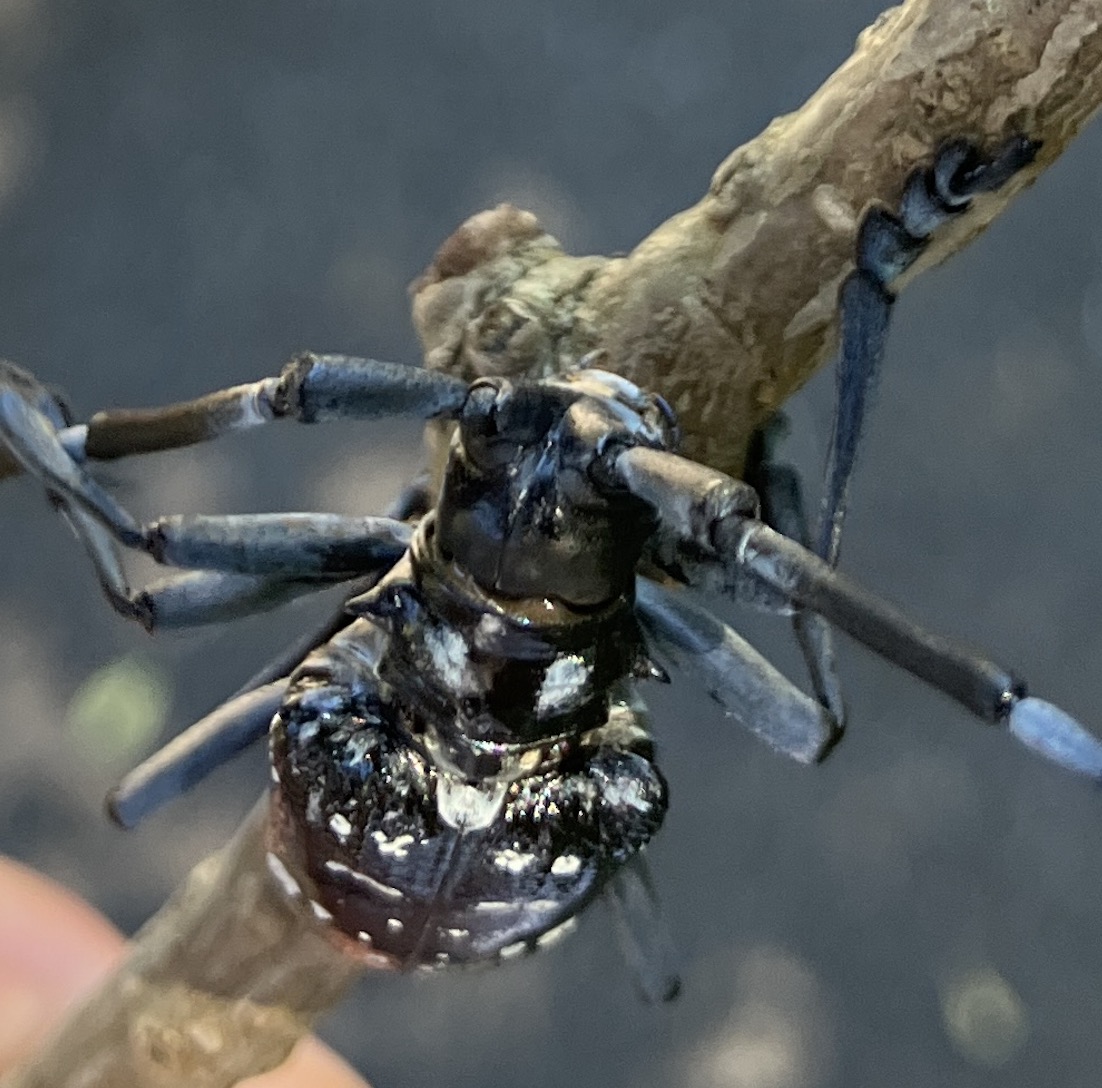
In a sense, all the hard work of “eating to grow” is completed while they’re larvae. By the time they emerge as adults, their main mission has changed: finding a mate and producing the next generation.
When you look at a single longhorn beetle in the mountains with that perspective, you realize you’re not just seeing an insect—you’re seeing the final act of a life story that has been unfolding for years.
Contact & More Science Fun
Science is full of surprises, and it’s even more exciting when you can experience it yourself! Here you’ll find easy and enjoyable science experiments that you can try at home, along with clear explanations of the science behind them. Feel free to explore!
• The Science Notebook is now available as a book. Learn more here.
• Learn more about Ken Kuwako here.
• For writing, lectures, science workshops, TV consulting, media appearances, and other collaborations, click here.
• Follow me on X for updates whenever new articles are published!
 Science Notebook Channel features fun science experiment videos!
9月のイチオシ実験!
お弁当箱をプラバンがわりにしてキーホルダーを作ろう!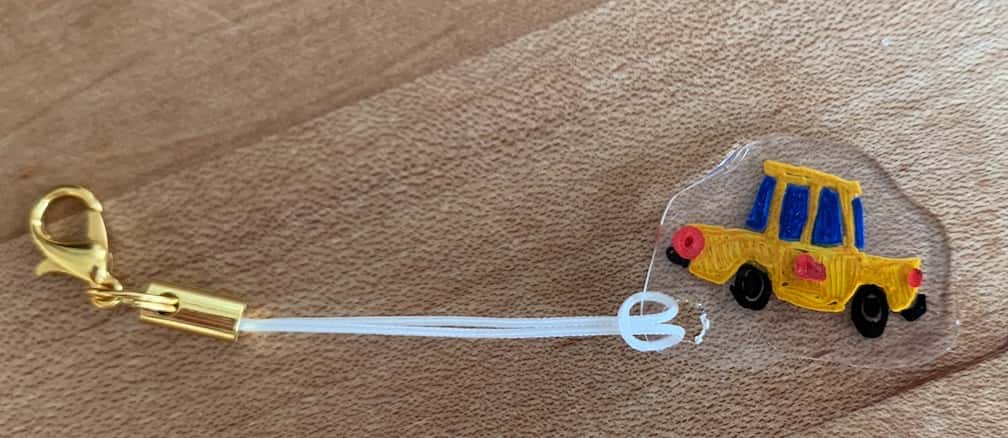
テレビ番組監修・イベント等のお知らせ
- 8月27日(木)科学監修番組放送予定
- 9月20日(日)ダビンチマスターズ出演予定
- 10月10日(土)11:15~12:00 千葉市科学フェスタ2026「桑子先生の回転科学ショー」にてサイエンスショーを行います。
- 12月26日(土) ナリカサイエンスアカデミー(教員向け実験講習会)開催
書籍のお知らせ
- 『高校入試 分解問題集 理科』(学研)…難しい問題も小さな問題に分解することで、問題を解くことができます。そんな分解の技術が身につくように深く関わりを持って作りました。
 『大人のための高校物理復習帳』(講談社)…一般向けに日常の物理について公式を元に紐解きました。特設サイトでは実験を多数紹介しています。※増刷がかかり6刷となりました(2026/02/01)

- 『きめる!共通テスト 物理基礎 改訂版』(学研)… 高校物理の参考書です。イラストを多くしてイメージが持てるように描きました。授業についていけない、物理が苦手、そんな生徒におすすめです。特設サイトはこちら。

各種SNS(更新情報をお届け!)
【日本語】X(Twitter)/instagram/Facebook 【英語】BlueSky/Threads
Explore
- 楽しい実験…お子さんと一緒に夢中になれるイチオシの科学実験を多数紹介しています。また、高校物理の理解を深めるための動画教材も用意しました。
- 理科の教材… 理科教師をバックアップ!授業の質を高め、準備を効率化するための選りすぐりの教材を紹介しています。
- Youtube…科学実験等の動画を配信しています。
- 科学ラジオ …科学トピックをほぼ毎日配信中!AI技術を駆使して作成した「耳で楽しむ科学」をお届けします。
- 講演 …全国各地で実験講習会・サイエンスショー等を行っています。
- About …「科学のネタ帳」のコンセプトや、運営者である桑子研のプロフィール・想いをまとめています。
- お問い合わせ …実験教室のご依頼、執筆・講演の相談、科学監修等はこちらのフォームからお寄せください。