What on Earth Is It Called “Dog’s Balls”!? The Tiny Blue Flower Veronica persica and Its Shocking Survival Strategy [Viewer Discretion Advised!?]
I’m Ken Kuwako, your Science Trainer. Every day is an experiment!
【This article is also available on Radio!】
Tiny blue flowers scattered at your feet, looking just like a handful of sapphires. Have you ever noticed these charming little blossoms while taking a spring stroll? Today, I’d like to introduce you to the Persian Speedwell (Ooinunofuguri), the very first messenger of spring. While it’s often dismissed as just another common weed, this tiny plant actually packs some incredible “high-tech strategies” to survive the harsh realities of nature.
The Name Gap and Heart-Shaped Fruits
First, let’s talk about its name, which has a bit of a shocking origin—one you’d never guess from its delicate appearance.
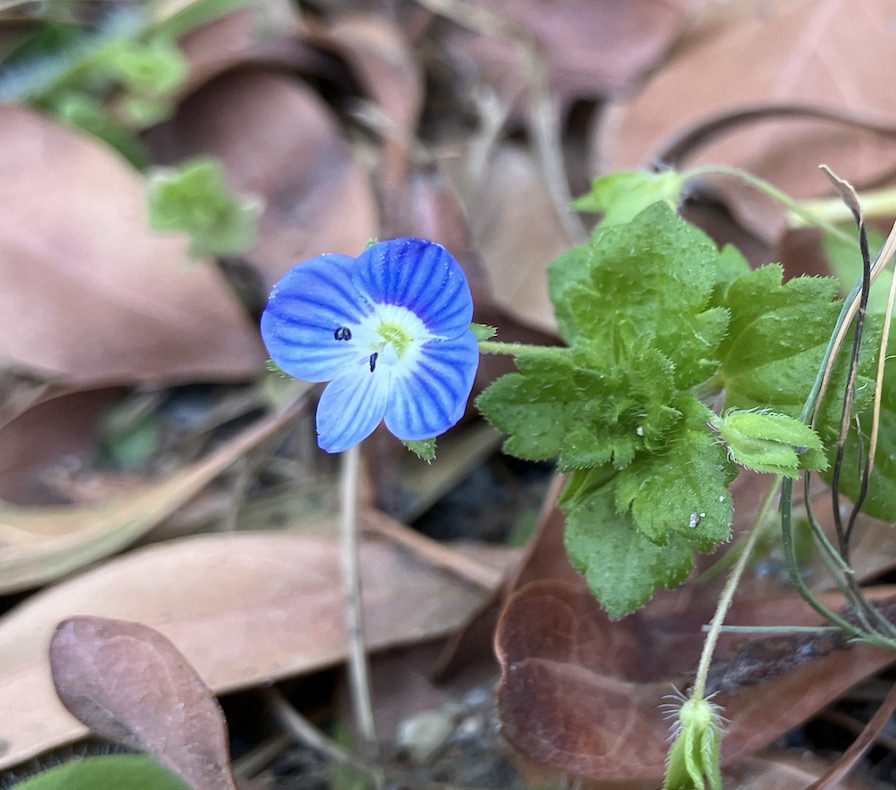
In Japanese, the name Ooinunofuguri translates literally to… “Great Dog’s Scrotum.” Yes, you read that right! It was named by Dr. Tomitaro Makino, the “Father of Japanese Botany” (and the inspiration for a popular Japanese TV drama).
He named it after a native Japanese species called Inunofuguri because their fruit shapes are similar, but this one has larger flowers.
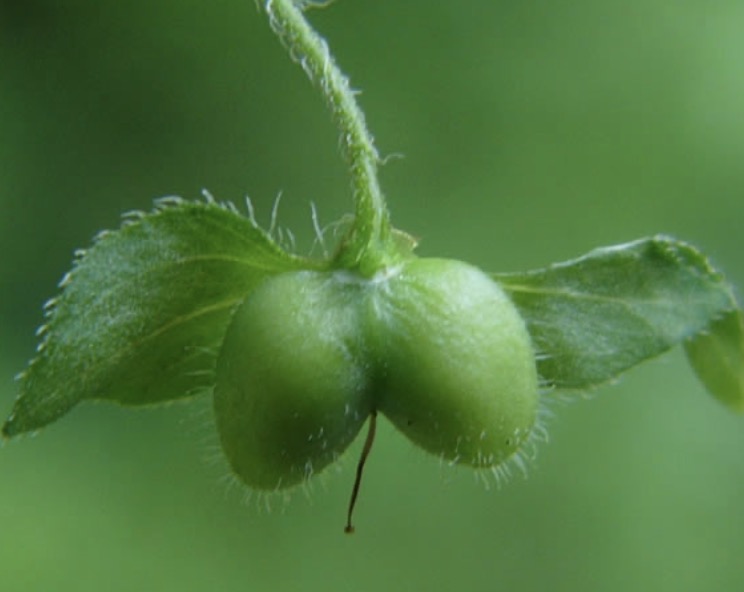
Image via Kujo-yama Kyoto Nature Observation Diary: https://net1010.net/2008/03/id_1630/
If you look at the photo, you can certainly see two plump, heart-shaped fruits sitting side-by-side. On a more romantic note, its beautiful blue color has earned it the nickname “Star’s Eyes.” This huge gap between its names is part of its charm! By the way, this plant is actually an introduced species in Japan.
Winter Survival: Natural Insulation
The Persian Speedwell is a “winter annual,” meaning it grows close to the ground during the winter while other plants are withered away. It stays perfectly unfazed by the freezing cold thanks to two clever secrets.
The first is its “Natural Antifreeze.” By intentionally increasing the concentration of sugar within its cells, the plant prevents itself from freezing even when temperatures drop below zero. It’s the same principle as why thick sugar water is harder to freeze in a science experiment.
The second is the “Down Jacket Effect.” If you look closely at the stems and leaves, they are covered in tiny hairs. These create a layer of trapped air, acting as insulation that prevents frost and snow from making direct contact with the plant’s surface.
A Two-Step Pollination Strategy: Failure is Not an Option
For flowers blooming in early spring, the biggest challenge is the lack of insects. No matter how pretty the flower is, it can’t produce seeds if there are no bees or butterflies to carry the pollen. To solve this, the Persian Speedwell has a perfect backup plan.
First, it uses nectar in its center to lure insects, aiming for cross-pollination (breeding with other flowers). However, if no insects show up, the two stamens curl inward as the flower wilts, touching their own pistil.
This is called “Automatic Self-Pollination.” Its risk management is top-tier: “Ideally, I’d like some genetic diversity through cross-pollination, but at the very least, I’m making seeds by myself!” As a result, a single plant can produce an amazing average of 545 seeds. (Reference: Wikipedia)
The “Contrarian Strategy”: Winning by Starting Early
Why do they bother blooming while it’s still so cold? It’s all about “Avoiding Competition.”
Once summer hits and tall grasses take over, the sun can no longer reach the Persian Speedwell, which lives low to the ground. That’s why it grows rapidly in early spring when its rivals are still asleep, allowing it to monopolize the sunlight.
Its “One-Day Flower” cycle—opening in the morning sun and dropping off by evening—is another piece of wisdom to avoid wasting limited energy. The next time you spot these blue flowers by the roadside, try kneeling down for a closer look. You’ll find a story of resilient life, hiding a universe of strategies within a tiny body.
Contact & Inquiries
Making the wonders of science more accessible! I share fun experiments you can do at home and easy-to-understand tips. Feel free to explore more!
My “Science Notebook” content is now a book! Details here
Learn more about the author, Ken Kuwako, here
For work inquiries (writing, speaking, workshops, TV supervision, etc.), click here
– Follow me on X (Twitter) for updates!
 Check out experiment videos on my Science Material Channel!
9月のイチオシ実験!
テレビ番組監修・イベント等のお知らせ
- 9月25日(金)21:00〜 かまいたちの瞬間回答!にて、科学監修を行いました。
- 10月10日(土)11:15~12:00 千葉市科学フェスタ2026「桑子先生の回転科学ショー」にてサイエンスショーを行います。
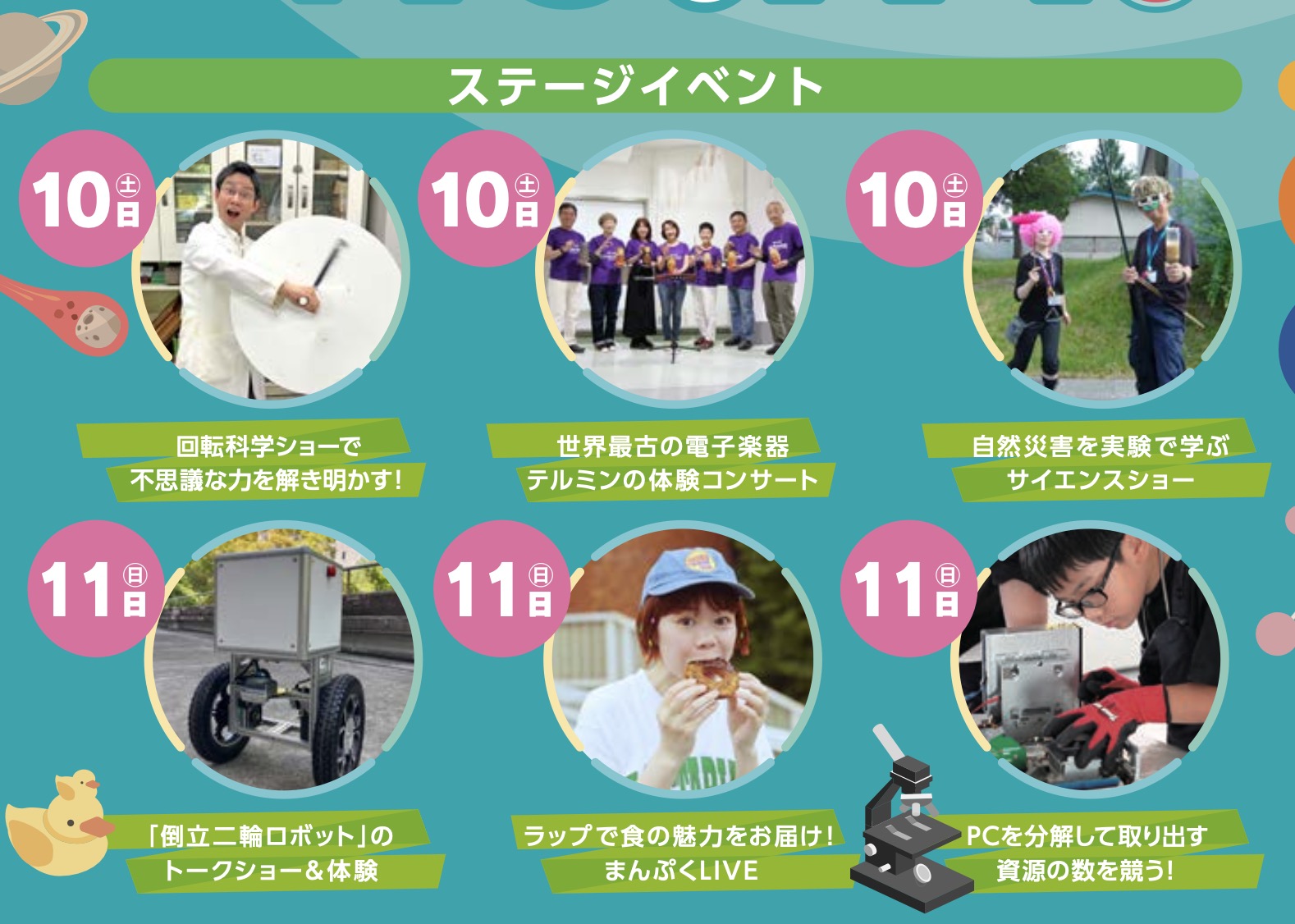
- 12月26日(土) ナリカサイエンスアカデミー(教員向け実験講習会)開催
書籍のお知らせ
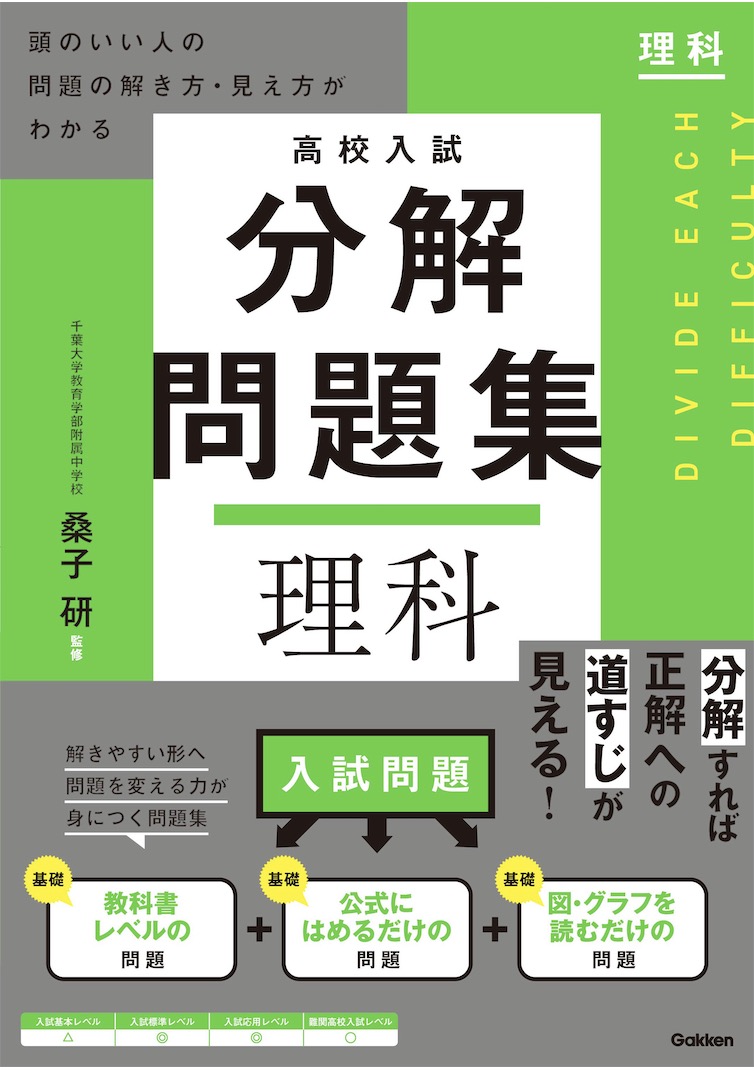
- 『高校入試 分解問題集 理科』(学研)…難しい問題も小さな問題に分解することで、問題を解くことができます。そんな分解の技術が身につくように深く関わりを持って作りました。
 『大人のための高校物理復習帳』(講談社)…一般向けに日常の物理について公式を元に紐解きました。特設サイトでは実験を多数紹介しています。※増刷がかかり6刷となりました(2026/02/01)

- 『きめる!共通テスト 物理基礎 改訂版』(学研)… 高校物理の参考書です。イラストを多くしてイメージが持てるように描きました。授業についていけない、物理が苦手、そんな生徒におすすめです。特設サイトはこちら。

各種SNS(更新情報をお届け!)
【日本語】X(Twitter)/instagram/Facebook 【英語】BlueSky/Threads
Explore
- 楽しい実験…お子さんと一緒に夢中になれるイチオシの科学実験を多数紹介しています。また、高校物理の理解を深めるための動画教材も用意しました。
- 理科の教材… 理科教師をバックアップ!授業の質を高め、準備を効率化するための選りすぐりの教材を紹介しています。
- Youtube…科学実験等の動画を配信しています。
- 科学ラジオ …科学トピックをほぼ毎日配信中!AI技術を駆使して作成した「耳で楽しむ科学」をお届けします。
- 講演 …全国各地で実験講習会・サイエンスショー等を行っています。
- About …「科学のネタ帳」のコンセプトや、運営者である桑子研のプロフィール・想いをまとめています。
- お問い合わせ …実験教室のご依頼、執筆・講演の相談、科学監修等はこちらのフォームからお寄せください。