Give Physics a Big Hand: Mastering Electromagnetism with Mickey’s Giant Gloves
I am Ken Kuwako, your Science Trainer. Life is one big experiment!
The invisible world of electricity and magnetism is a tricky one. Trying to take these concepts off the flat pages of a textbook and visualize them in 3D is a challenge even for adults. For 8th-grade science students, things get serious when we introduce powerful tools like the Right-Hand Rule and Fleming’s Left-Hand Rule. While middle school physics avoids the complex calculations seen in high school, students often hit a major wall: 3D spatial awareness.
From 2D to 3D: The Struggle of Visualizing Physics
Blackboards and textbooks are 2D, but the actual interaction between electricity and magnetism happens in a 3D world. Even with an enthusiastic explanation, asking students to mentally move arrows in 3D space or visualize cross-sections is a high-level cognitive task.
“Teacher, I have no idea which way it’s pointing!”
It is perfectly natural for students to feel this way. In fact, even the legendary scientists who laid the foundation for electromagnetism struggled with how to visualize these invisible forces. This is why visual impact is so crucial in the classroom.
In yesterday’s class, we did a group experiment observing how a compass needle moves when a current is applied. The students saw the phenomenon with their own eyes and confirmed that magnetic fields are generated around a current. Today, we reached the stage of organizing those observations into theoretical rules. This is where my special props come in.
The Mystery of the Giant Hands in the Classroom
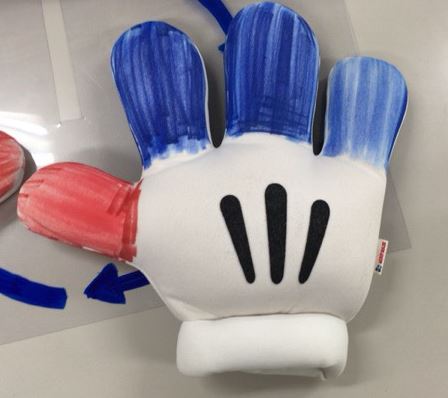
To make sure these rules are burned into my students’ memories, I came up with a little trick. I brought out a pair of Mickey Mouse hands! I used them to create a Right-Hand Rule glove and a Fleming’s Left-Hand Rule glove.
First, here is the Right-Hand Rule glove.
I colored the thumb red and the other fingers blue.
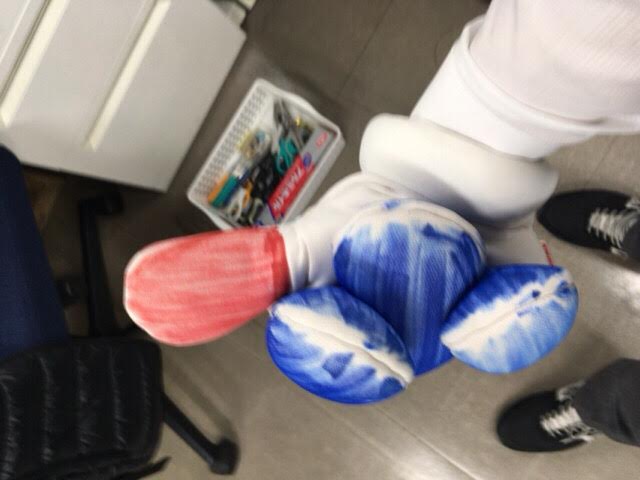
This makes it easy to demonstrate the concept clearly, even for a large group of students.
And here is the Fleming’s Left-Hand Rule glove.

The thumb is red, the index finger is blue, and the middle finger is green.

The great thing is that you only need to buy one set to make both the right and left versions. The biggest benefit, however, is that the teacher’s hands become massive. When standing at the front of the room, normal-sized fingers can be hard for students in the back to see. But these comical, giant hands grab everyone’s attention instantly. Getting them to think, “Whoa, the teacher’s hands look weird!” is the first step toward engagement.
Color-Coding is the Key to Clarity
Another advantage is that these gloves are already color-coded. I can explain things by linking colors to concepts: “The green finger represents the current,” or “The red finger shows the magnetic field.”
The Right-Hand Rule is particularly versatile—it’s used for the magnetic field around a straight wire and also for the field inside a coil. Because the role of the thumb might change from current to magnetic field depending on the situation, I find it better to use colors for distinction rather than writing labels with a marker. This encourages students to stay flexible in their thinking.
Improving on the Wisdom of Others
This unique teaching method was inspired by Eiji Komori’s practice of using standard work gloves. While work gloves are handy, I wanted to solve the scientific challenge of visibility in a large classroom. Just as science progresses by improving existing technology, I find it exciting to constantly update my teaching tools. These gloves are easy to find, so I highly recommend other teachers give them a try!
For example, while they aren’t exactly the same as the ones I used, these might work:
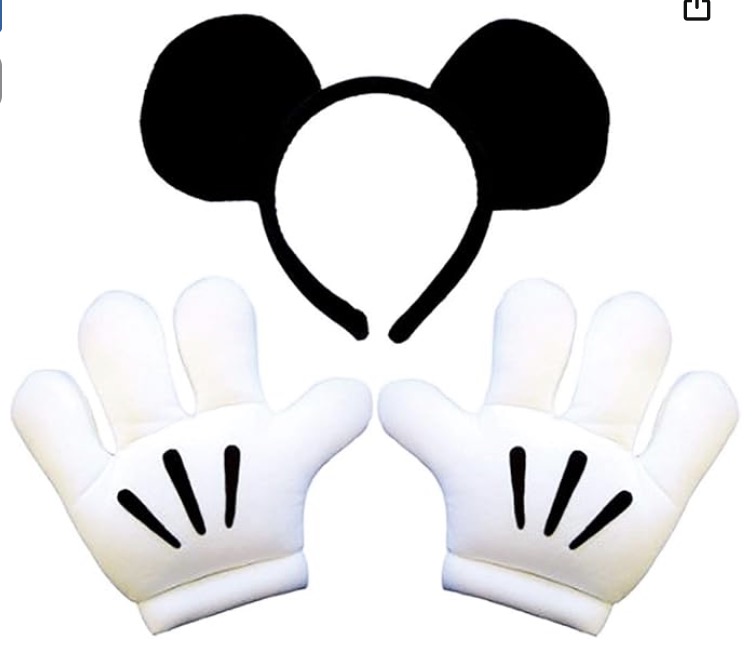
Disney Mickey Mouse Headband and Glove Set – Costume Accessories
By the way, some sharp-eyed students might point out, “Teacher, Mickey only has four fingers!” (Just like Piccolo from Dragon Ball). From a biological standpoint, the number of fingers matters, but for understanding the laws of physics, the relationship between the thumb and the other fingers is all we need. In fact, if that “weirdness” helps the lesson stick in their memory, then I consider the class a total success.
Inquiries and Requests
Let’s make the wonders of science more accessible! I have compiled various fun science experiments you can do at home, along with tips on how to pull them off. Feel free to explore!
The Science Notebook is now a book! Details here
Learn more about the author, Ken Kuwako, here
For work requests (writing, lectures, workshops, TV supervision, etc.), click here – Get updates on X (formerly Twitter)!
 Watch experiment videos on the Science Material Channel!
9月のイチオシ実験!
テレビ番組監修・イベント等のお知らせ
- 9月25日(金)21:00〜 かまいたちの瞬間回答!にて、科学監修を行いました。
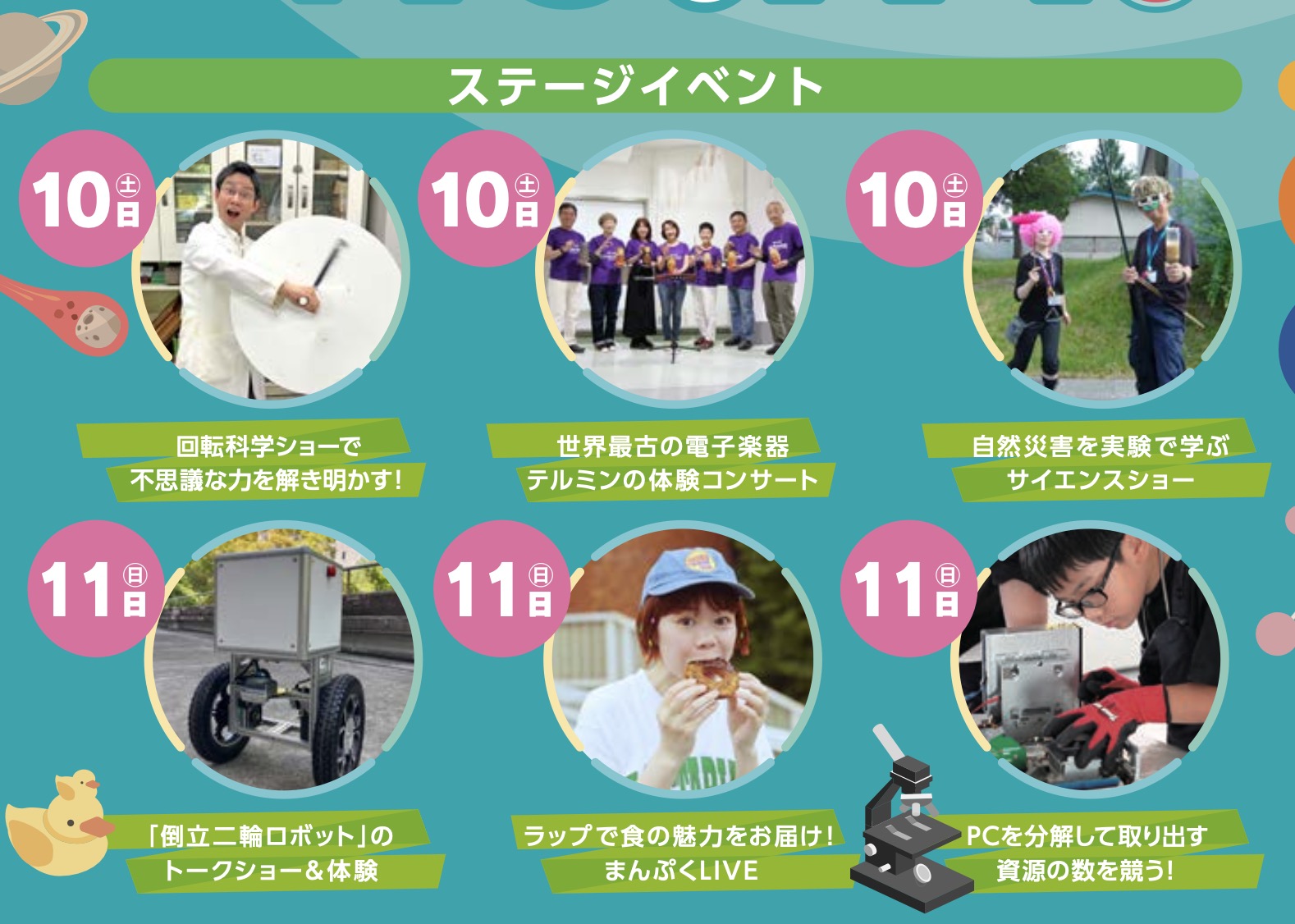
- 10月10日(土)11:15~12:00 千葉市科学フェスタ2026「桑子先生の回転科学ショー」にてサイエンスショーを行います。
- 12月26日(土) ナリカサイエンスアカデミー(教員向け実験講習会)開催
書籍のお知らせ
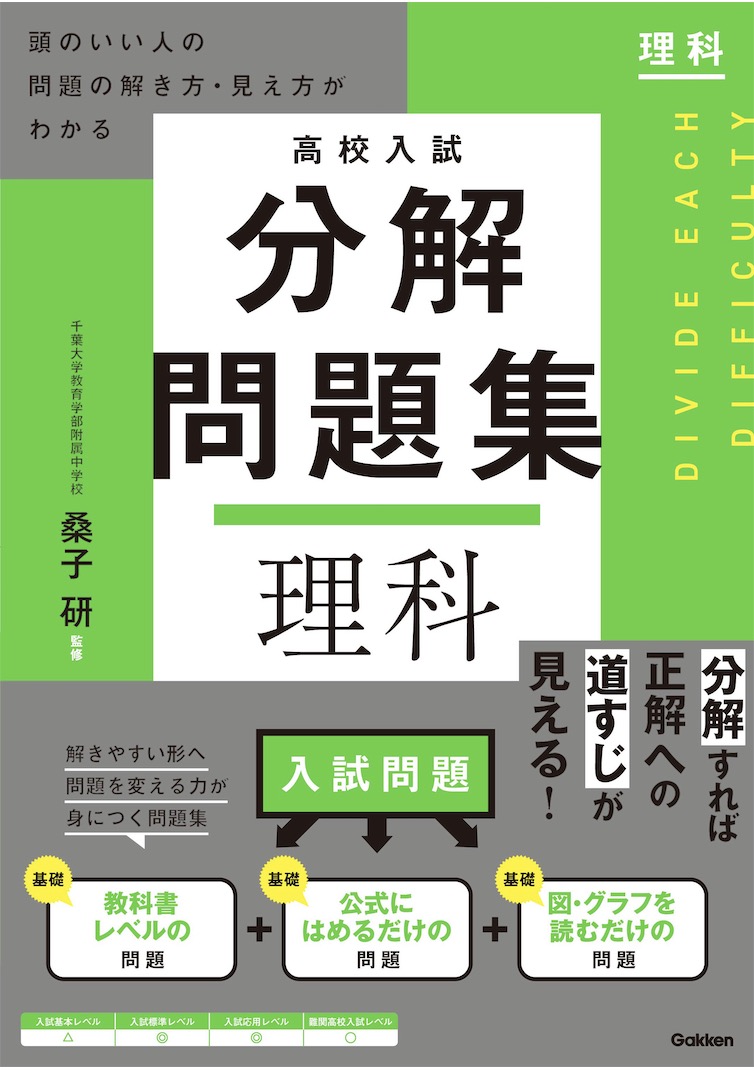
- 『高校入試 分解問題集 理科』(学研)…難しい問題も小さな問題に分解することで、問題を解くことができます。そんな分解の技術が身につくように深く関わりを持って作りました。
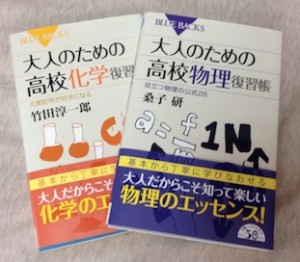
 『大人のための高校物理復習帳』(講談社)…一般向けに日常の物理について公式を元に紐解きました。特設サイトでは実験を多数紹介しています。※増刷がかかり6刷となりました(2026/02/01)
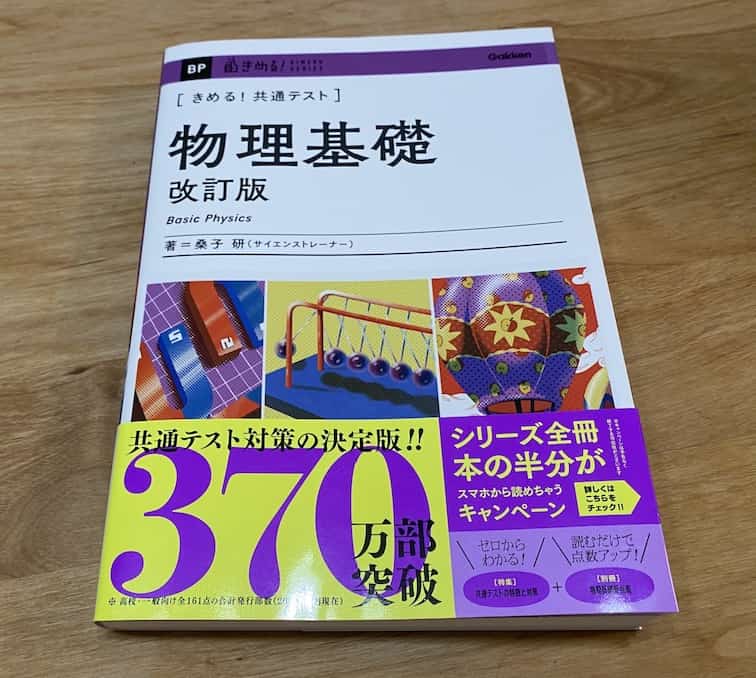
- 『きめる!共通テスト 物理基礎 改訂版』(学研)… 高校物理の参考書です。イラストを多くしてイメージが持てるように描きました。授業についていけない、物理が苦手、そんな生徒におすすめです。特設サイトはこちら。
各種SNS(更新情報をお届け!)
【日本語】X(Twitter)/instagram/Facebook 【英語】BlueSky/Threads
Explore
- 楽しい実験…お子さんと一緒に夢中になれるイチオシの科学実験を多数紹介しています。また、高校物理の理解を深めるための動画教材も用意しました。
- 理科の教材… 理科教師をバックアップ!授業の質を高め、準備を効率化するための選りすぐりの教材を紹介しています。
- Youtube…科学実験等の動画を配信しています。
- 科学ラジオ …科学トピックをほぼ毎日配信中!AI技術を駆使して作成した「耳で楽しむ科学」をお届けします。
- 講演 …全国各地で実験講習会・サイエンスショー等を行っています。
- About …「科学のネタ帳」のコンセプトや、運営者である桑子研のプロフィール・想いをまとめています。
- お問い合わせ …実験教室のご依頼、執筆・講演の相談、科学監修等はこちらのフォームからお寄せください。