One Beam Becomes Ten!? Exploring Laser Interference with a Recycled CD
I’m Ken Kuwako, your Science Trainer. Every day is an experiment.
Wouldn’t you be surprised if the CD you use to listen to music was actually a sophisticated “light experiment device”? Now that streaming is the norm, the CD collecting dust on your shelf is a treasure trove that lets you easily experience the wonders of physics. Today, I’ll introduce a magical experiment where you use a CD to turn a single laser beam into multiple bundles of light.
If you tilt a CD, it sparkles in rainbow colors, but if you look closely, the CD itself isn’t colored. In fact, the surface of the CD has tiny, invisible “grooves (tracks)” lined up. The light reflected there undergoes a phenomenon called “interference,” which is what reaches our eyes as a rainbow.
Today, we’re going to try an experiment to observe light interference by extracting a component called a “diffraction grating” from that CD. I was honestly surprised by the profound nature of the physics when I tried this myself after being taught by Mr. I here at school. I’ll also share a hint on how to build a “spectroscope” for splitting light.
Science Recipe: How to Extract a Light-Splitting Diffraction Grating
What You’ll Need
CD-R (blank or an unwanted/used one), Scissors
Experiment Method
The experiment is very simple, but it requires a little force.
First, cut the CD with sturdy scissors. CDs are surprisingly tough, so we strongly recommend using “tin snips” or similar tools to prevent the scissor blades from chipping.
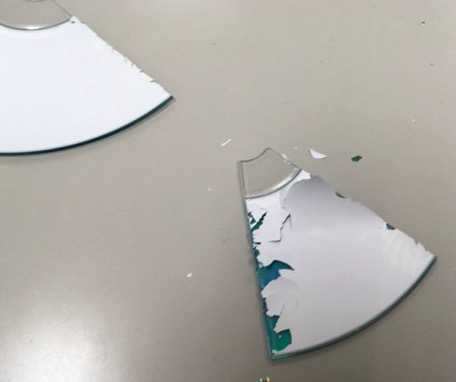
Cut it out in a fan shape, like this. Be careful not to cut your hands, and protect your eyes, as plastic shards may fly off.
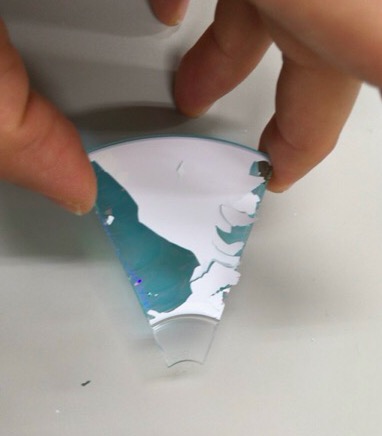
Once cut, remove the silver coating (reflective layer) from the surface. If you stick clear tape (like cellophane tape) to it and peel it off, only the transparent plastic part will remain. This transparent plate is where the CD’s essence—the “invisible grooves”—is left behind.
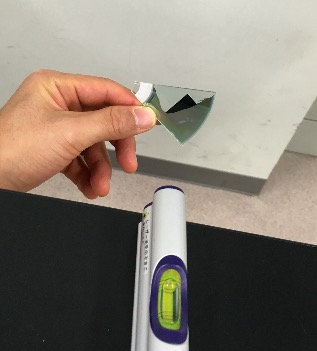
Shine a laser beam onto this transparent fragment. For safety, please use a commercially available laser pointer.
Experiment Results: Why One Light Beam “Multiplies”
Shine the laser on it, and voilà! The single beam of light that was traveling straight is now projected as multiple beams to the left and right.

We also tried it with a green laser.
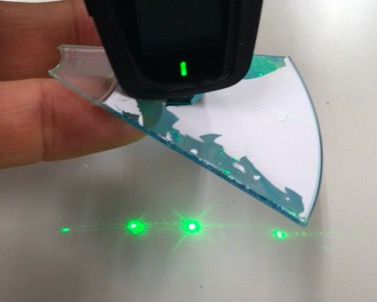
Why does the light multiply? It’s because the countless tiny grooves on the CD scatter or transmit the light waves. The separated light waves “reinforce” each other in some places and “cancel out” each other in others, causing strong light to shoot out only in specific directions. This phenomenon is called light interference.
By applying this mechanism, you can create a tool called a “spectroscope,” which is used to analyze the colors mixed within light. If you look through this CD fragment at sunlight or fluorescent light, you should see a beautiful rainbow staircase.
While observing is fun enough, you’ll uncover a deeper world of science if you approach it with questions like, “Why does the light split?” or “What happens if the groove spacing changes?” Use a common CD to enjoy the artistry of light!
Contact and Requests
Explore the wonders and fun of science! We’ve compiled easy-to-understand tips and fun science experiments you can do at home. Feel free to search around! ・Our science blog content has been published as a book. Click here for details. ・For information about the administrator, Ken Kuwako, click here. ・For various requests (writing, lectures, experiment classes, TV supervision, appearances, etc.), click here. ・Article updates are posted on X!
 The Kagaku no Netachannel streams experiment videos!
テレビ番組監修・イベント等のお知らせ
- 10月27日(火) 23:56〜「ネイチャーティーチャー」(TBS)に出演予定

- 11月27日(金) テレビ監修番組放送予定
- 12月26日(土) ナリカサイエンスアカデミー(教員向け実験講習会)開催
10月のイチオシ実験!
書籍のお知らせ
- 『高校入試 分解問題集 理科』(学研)…難しい問題も小さな問題に分解することで、問題を解くことができます。そんな分解の技術が身につくように深く関わりを持って作りました。
 『大人のための高校物理復習帳』(講談社)…一般向けに日常の物理について公式を元に紐解きました。特設サイトでは実験を多数紹介しています。※増刷がかかり6刷となりました(2026/02/01)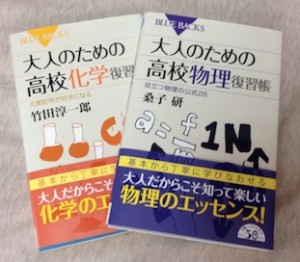
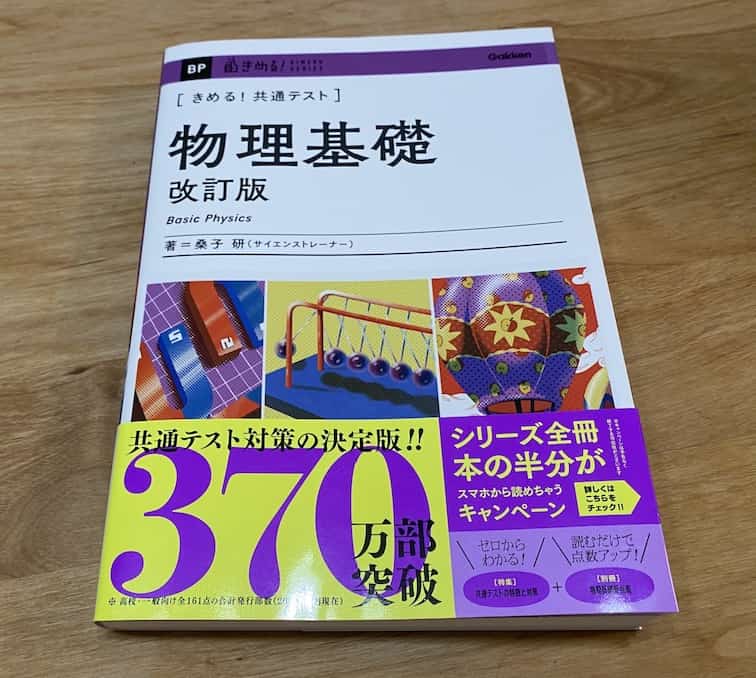
- 『きめる!共通テスト 物理基礎 改訂版』(学研)… 高校物理の参考書です。イラストを多くしてイメージが持てるように描きました。授業についていけない、物理が苦手、そんな生徒におすすめです。特設サイトはこちら。
各種SNS(更新情報をお届け!)
【日本語】X(Twitter)/instagram/Facebook 【英語】BlueSky/Threads
Explore
- 楽しい実験…お子さんと一緒に夢中になれるイチオシの科学実験を多数紹介しています。また、高校物理の理解を深めるための動画教材も用意しました。
- 理科の教材… 理科教師をバックアップ!授業の質を高め、準備を効率化するための選りすぐりの教材を紹介しています。
- Youtube…科学実験等の動画を配信しています。
- 科学ラジオ …科学トピックをほぼ毎日配信中!AI技術を駆使して作成した「耳で楽しむ科学」をお届けします。
- 講演 …全国各地で実験講習会・サイエンスショー等を行っています。
- About …「科学のネタ帳」のコンセプトや、運営者である桑子研のプロフィール・想いをまとめています。
- お問い合わせ …実験教室のご依頼、執筆・講演の相談、科学監修等はこちらのフォームからお寄せください。