Making the Invisible Visible! Discover the Secrets of Air Pressure with a Vacuum Chamber (Using a Bread Case!)
I’m Ken Kuwako, a Science Trainer. Every day is an experiment.
Have you ever heard the story about a bag of potato chips puffing up and almost bursting when you take it up a high mountain? This phenomenon is actually the work of “the power of air (Atmospheric Pressure)”, a force we completely ignore in our daily lives.
Just as fish don’t feel the weight of water, we live without noticing the pressure of the air around us. But this force is definitely real. Today, I’m going to introduce an exciting experiment that visualizes this “invisible force” and uncovers why snack bags inflate on mountaintops.
Recreate a “High-Altitude Location” Right Here on the Ground!
My colleague, Mr. K, taught me this ingenious method. The device we used is, surprisingly, a household “vacuum bread case.” While it’s originally designed to protect bread from moisture, it’s actually a perfect, readily available tool for a science experiment. I even found it on Amazon.
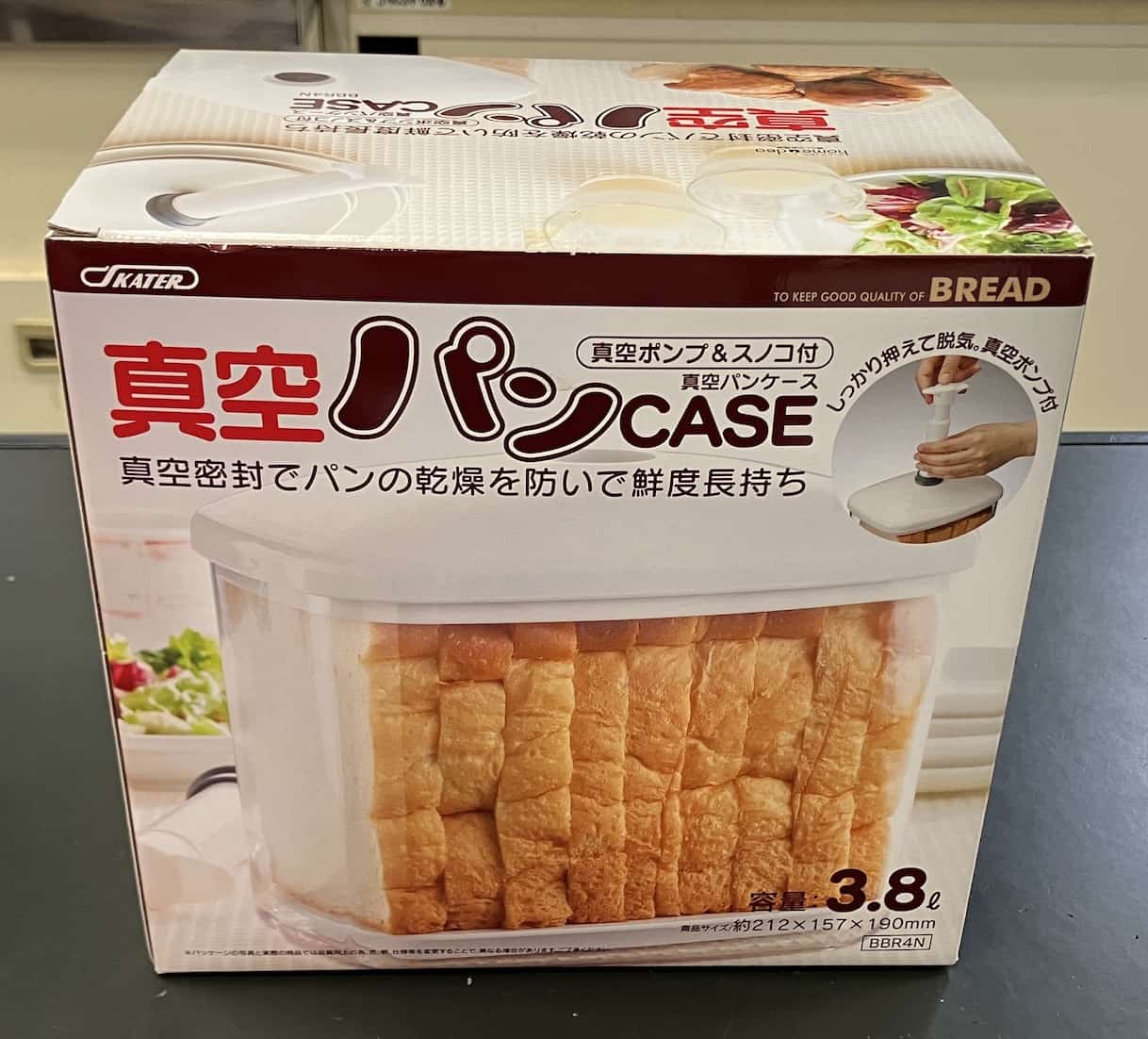
Using this container and a pump, we draw the air out to create a “thin air condition (low atmospheric pressure).” This artificially simulates a high-altitude environment, or perhaps even a condition close to outer space!
Let’s See the Invisible “Weight of Air”
First, we put an “aneroid barometer” inside the case and used the pump to remove the air.
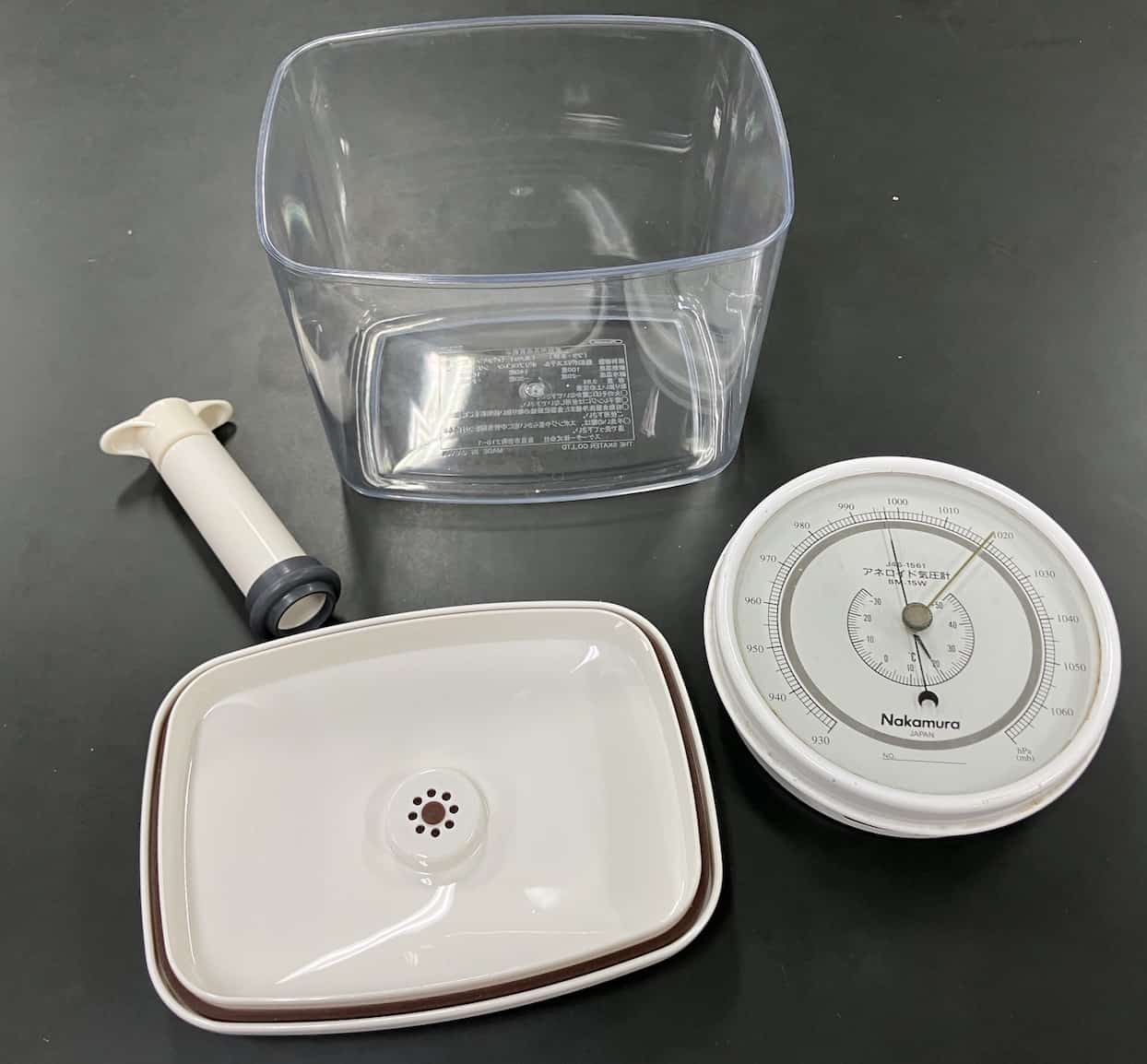
Aneroid Barometer
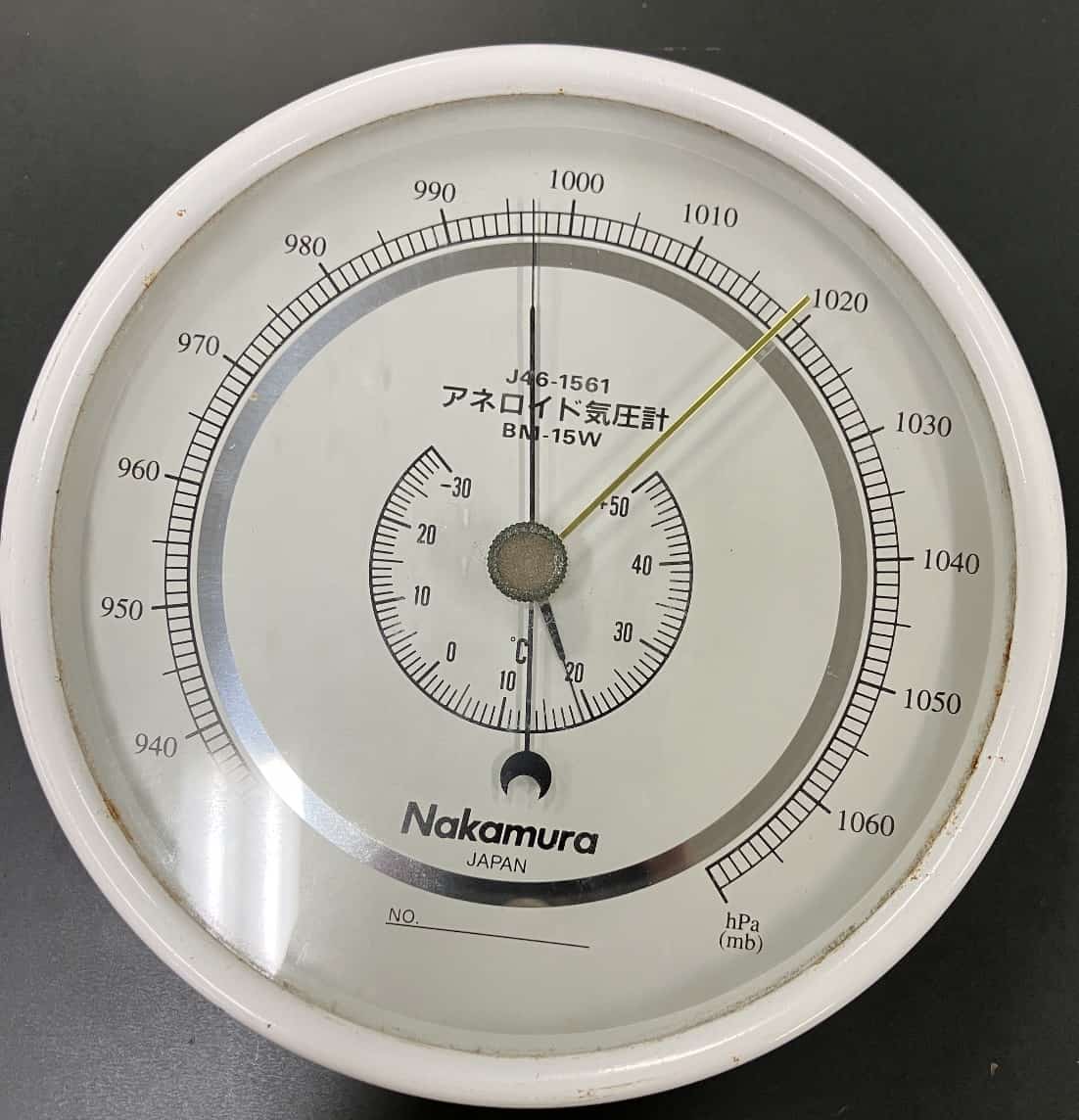
Atmospheric pressure literally means “the pressure of air.” It is the constant force pushing down on us, caused by the weight of the “column of air” extending from above our heads all the way up to the edge of outer space.
When we started the experiment and began removing the air from the case… the barometer’s needle started rapidly dropping!
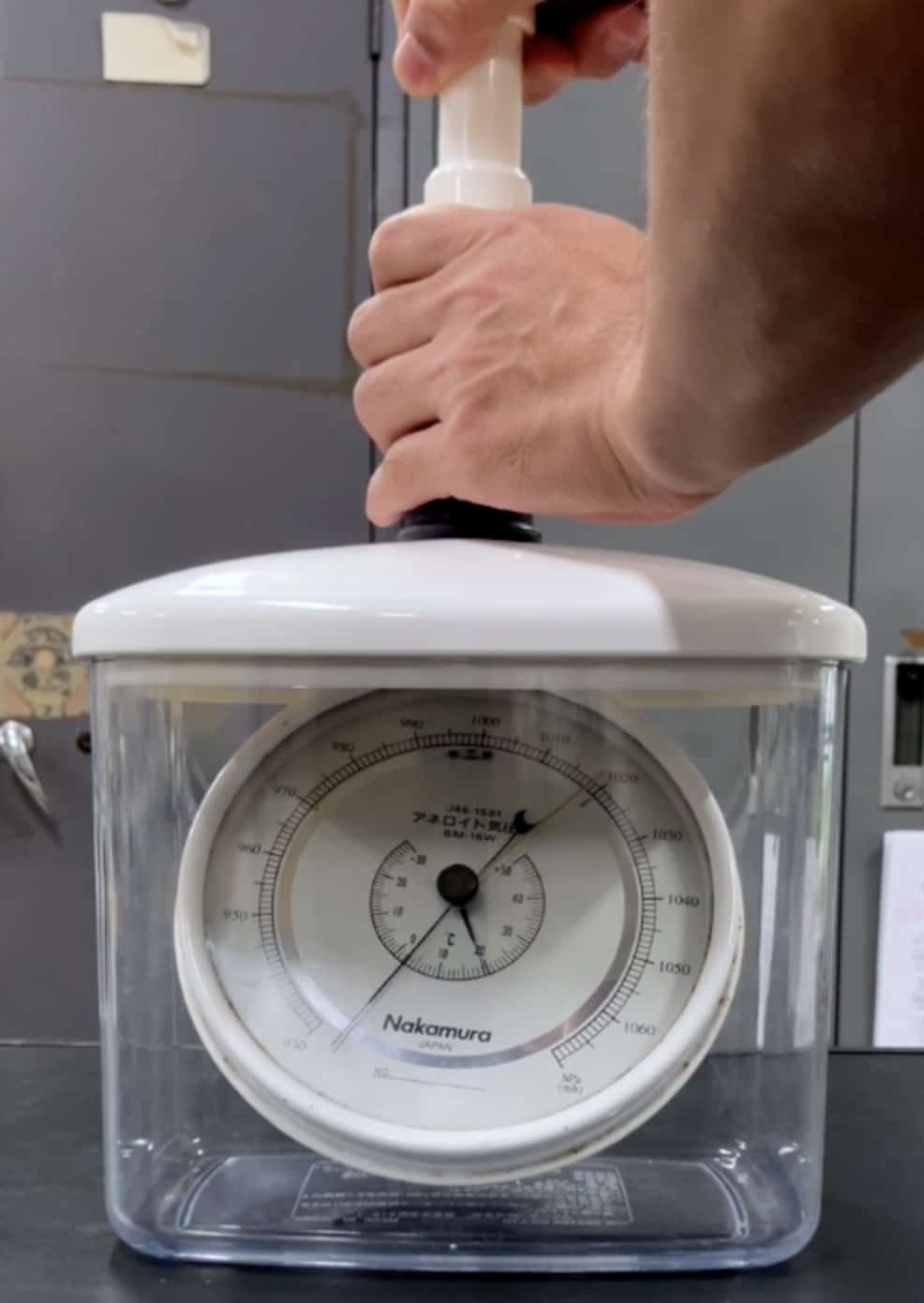
As the amount of air inside the case decreases, its “weight” naturally decreases as well. Though invisible to the naked eye, the movement of the needle makes it clear that “the air is definitely thinning out, and the pressure is dropping.” It’s a fascinating moment of realization!
Why Do Snack Bags Inflate? – The “Air Tug-of-War”
Next, we introduced the star of the show: a sealed snack bag (like individually wrapped cookies) into the vacuum case and lowered the pressure in the same way.
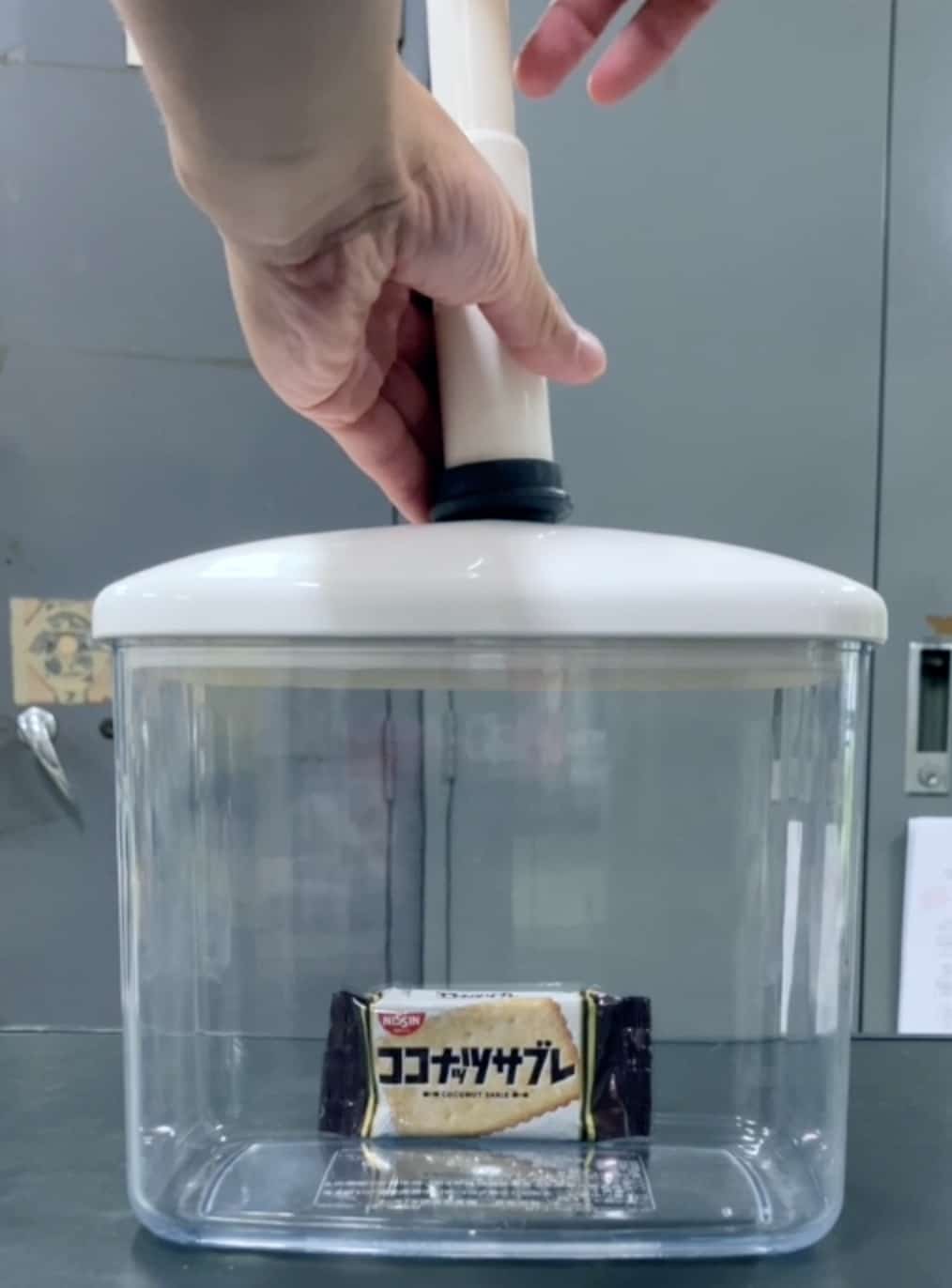
Before Vacuuming
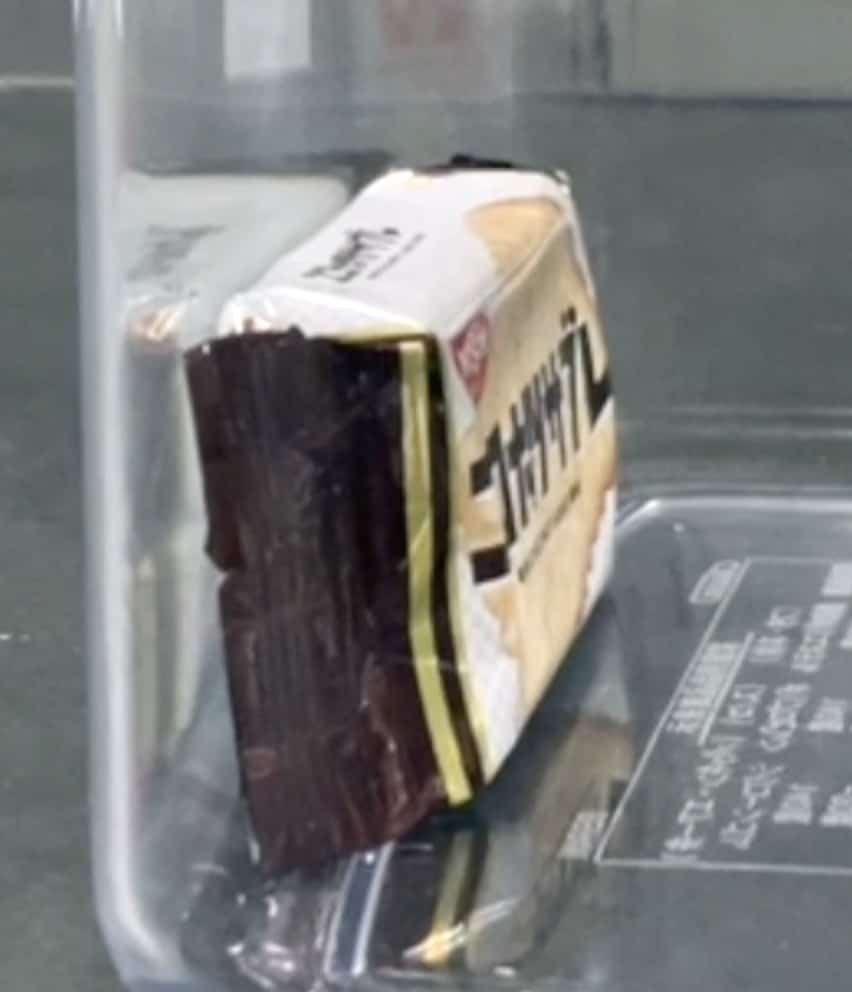
After Vacuuming
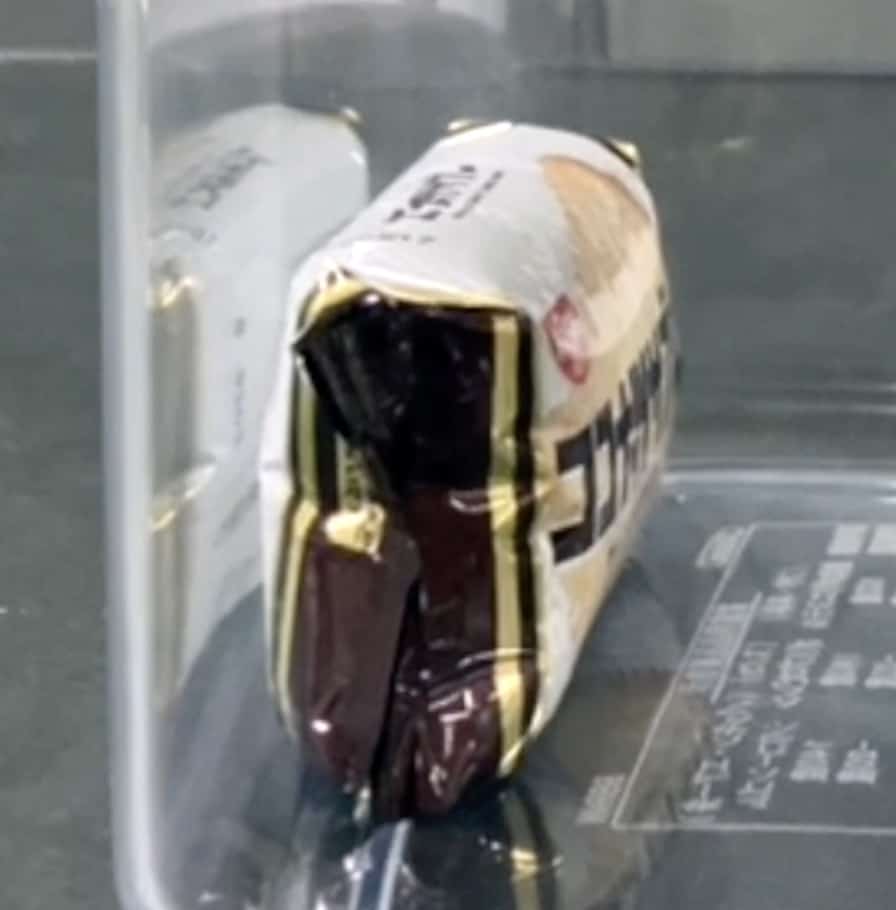
And then… the bag started puffing up until it was tight! It inflated just like a balloon. So, why does this happen?
Normally, here on the ground (at 1 atmosphere of pressure), the snack bag maintains its shape because the “force of the air inside the bag pushing out” is perfectly balanced by the “force of the outside air (atmospheric pressure) pushing in.” Imagine a tug-of-war where both sides are pulling with equal strength.
However, when we remove the surrounding air with the vacuum case, only the outside pushing force (atmospheric pressure) weakens drastically. What happens then? That’s right—since the force of the air pushing out from the inside remains the same, the internal force “wins” the tug-of-war, causing the bag to inflate into a large balloon.
The Mountain, Space, and Your Body
This is exactly the same principle as the “phenomenon of snack bags inflating on a mountain.”
The higher the altitude, the shorter (thinner) the column of air above your head becomes. In other words, the atmospheric pressure gets lower. That’s why when you take a tightly sealed bag of snacks, packed at sea level, up a mountain, the outside force weakens, and the bag spontaneously inflates.
This experiment is a fascinating way to safely recreate a high-altitude environment without ever leaving the ground.
Pushing this principle to its extreme, in outer space (a near-vacuum, where pressure is zero), a snack bag would instantly burst.
For a more everyday example, think about flying. When the plane takes off and climbs to cruising altitude, don’t your ears pop or feel slightly plugged? That is proof that your body is sensing the pressure difference between 1 atmosphere on the ground and the slightly reduced, adjusted pressure inside the cabin. We are protected and supported by the Earth’s “weight of air” more than we realize.
Inquiries and Requests
Bring the wonder and fun of science closer to you! We’ve compiled easy-to-understand tips and exciting experiments you can do at home. Feel free to search around! ・The content of our Science Idea Book has been published as a book. For details, click here ・To learn more about the administrator, Ken Kuwako, click here ・For various requests (writing, lectures, experimental classes, TV supervision/appearances, etc.), click here ・Updates on our articles are shared on X!
 The Kagaku no Neta Channel delivers experimental videos!
9月のイチオシ実験!
テレビ番組監修・イベント等のお知らせ
- 9月25日(金)21:00〜 かまいたちの瞬間回答!にて、科学監修を行いました。
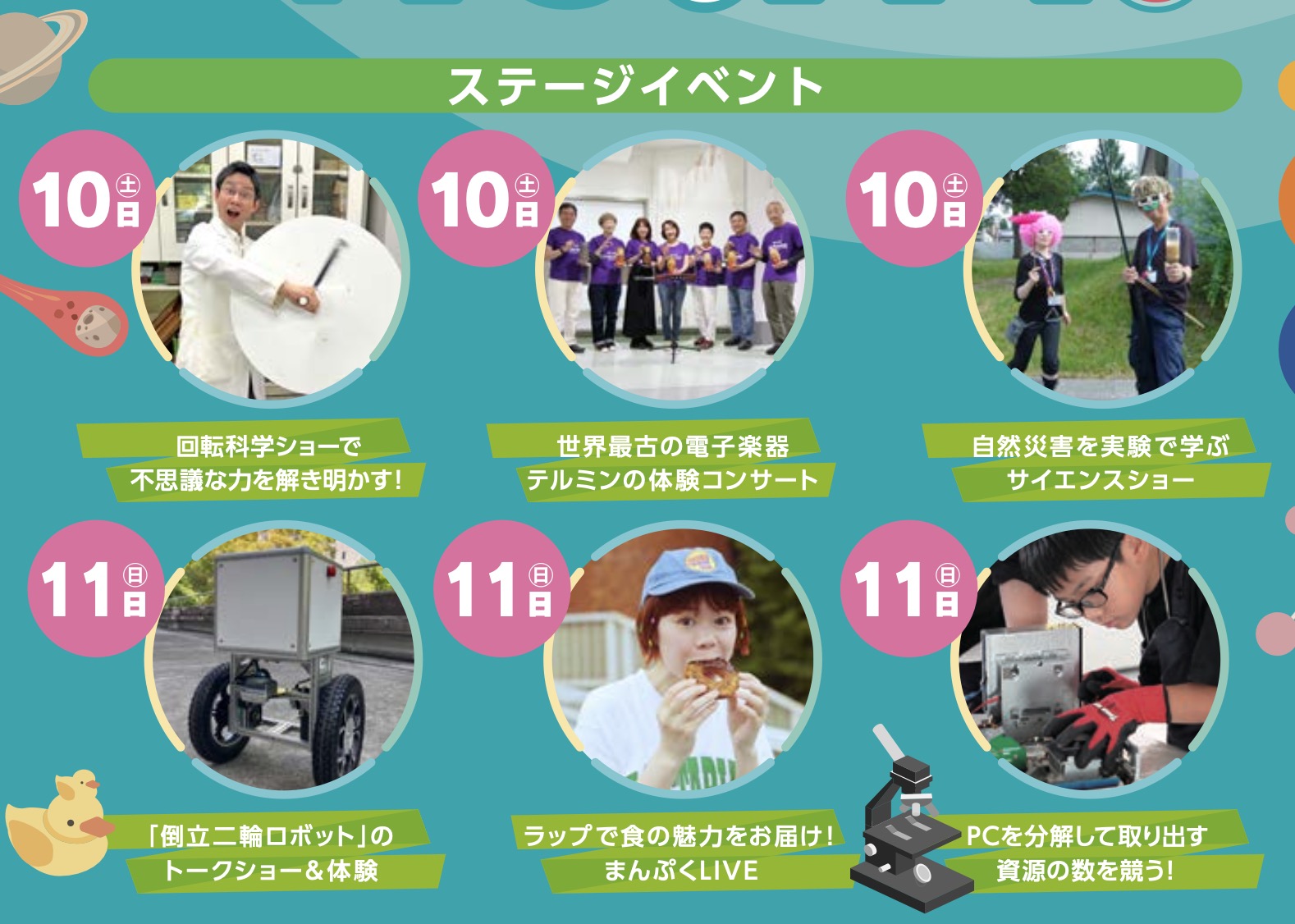
- 10月10日(土)11:15~12:00 千葉市科学フェスタ2026「桑子先生の回転科学ショー」にてサイエンスショーを行います。
- 12月26日(土) ナリカサイエンスアカデミー(教員向け実験講習会)開催
書籍のお知らせ
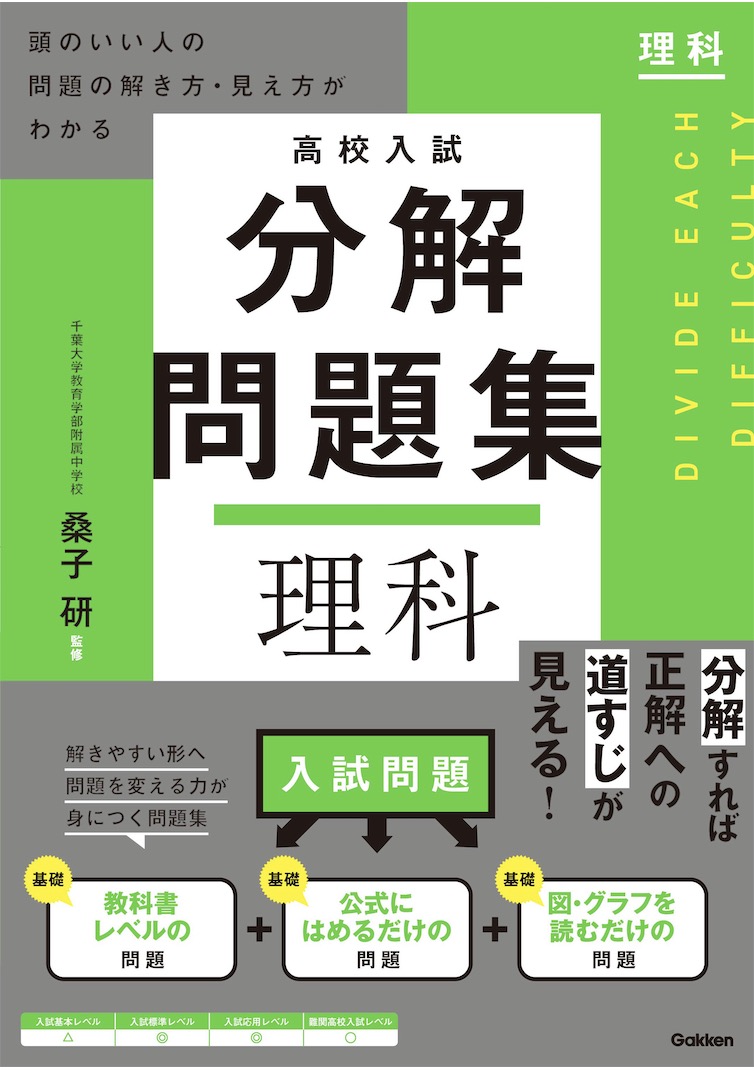
- 『高校入試 分解問題集 理科』(学研)…難しい問題も小さな問題に分解することで、問題を解くことができます。そんな分解の技術が身につくように深く関わりを持って作りました。
 『大人のための高校物理復習帳』(講談社)…一般向けに日常の物理について公式を元に紐解きました。特設サイトでは実験を多数紹介しています。※増刷がかかり6刷となりました(2026/02/01)

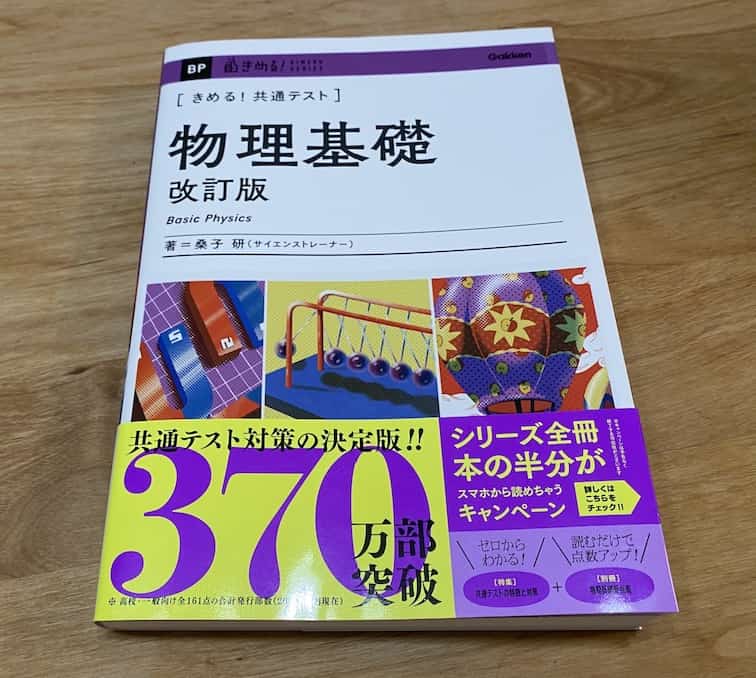
- 『きめる!共通テスト 物理基礎 改訂版』(学研)… 高校物理の参考書です。イラストを多くしてイメージが持てるように描きました。授業についていけない、物理が苦手、そんな生徒におすすめです。特設サイトはこちら。
各種SNS(更新情報をお届け!)
【日本語】X(Twitter)/instagram/Facebook 【英語】BlueSky/Threads
Explore
- 楽しい実験…お子さんと一緒に夢中になれるイチオシの科学実験を多数紹介しています。また、高校物理の理解を深めるための動画教材も用意しました。
- 理科の教材… 理科教師をバックアップ!授業の質を高め、準備を効率化するための選りすぐりの教材を紹介しています。
- Youtube…科学実験等の動画を配信しています。
- 科学ラジオ …科学トピックをほぼ毎日配信中!AI技術を駆使して作成した「耳で楽しむ科学」をお届けします。
- 講演 …全国各地で実験講習会・サイエンスショー等を行っています。
- About …「科学のネタ帳」のコンセプトや、運営者である桑子研のプロフィール・想いをまとめています。
- お問い合わせ …実験教室のご依頼、執筆・講演の相談、科学監修等はこちらのフォームからお寄せください。