
No Installation Needed! ‘CR-WEB’ (Narika) — The Perfect Tool for Sound Experiments, Even on School PCs
Don’t you find that sound unpleasant? Experience the mystery of “beats” with this free smartphone app!
Imagine an orchestra before a concert or a band during practice. You hear various instruments playing their own notes, and it can sound like a chaotic cacophony, right? Well, hidden within that sound is a fascinating scientific phenomenon.
This time, I’d like to introduce a magical web app that lets you easily experience this “mystery of sound” on your smartphone or tablet. It’s the “Low-Frequency Oscillator App CR-WEB,” available on the Narika website!
https://www.rika.com/web-app/cr-web-detail

What are “beats”? The collision of sound waves
What’s great about this app is that you can freely produce sounds of different pitches (frequencies) from the left and right speakers. The buttons are also designed to be large, making it easy to operate on a tablet.
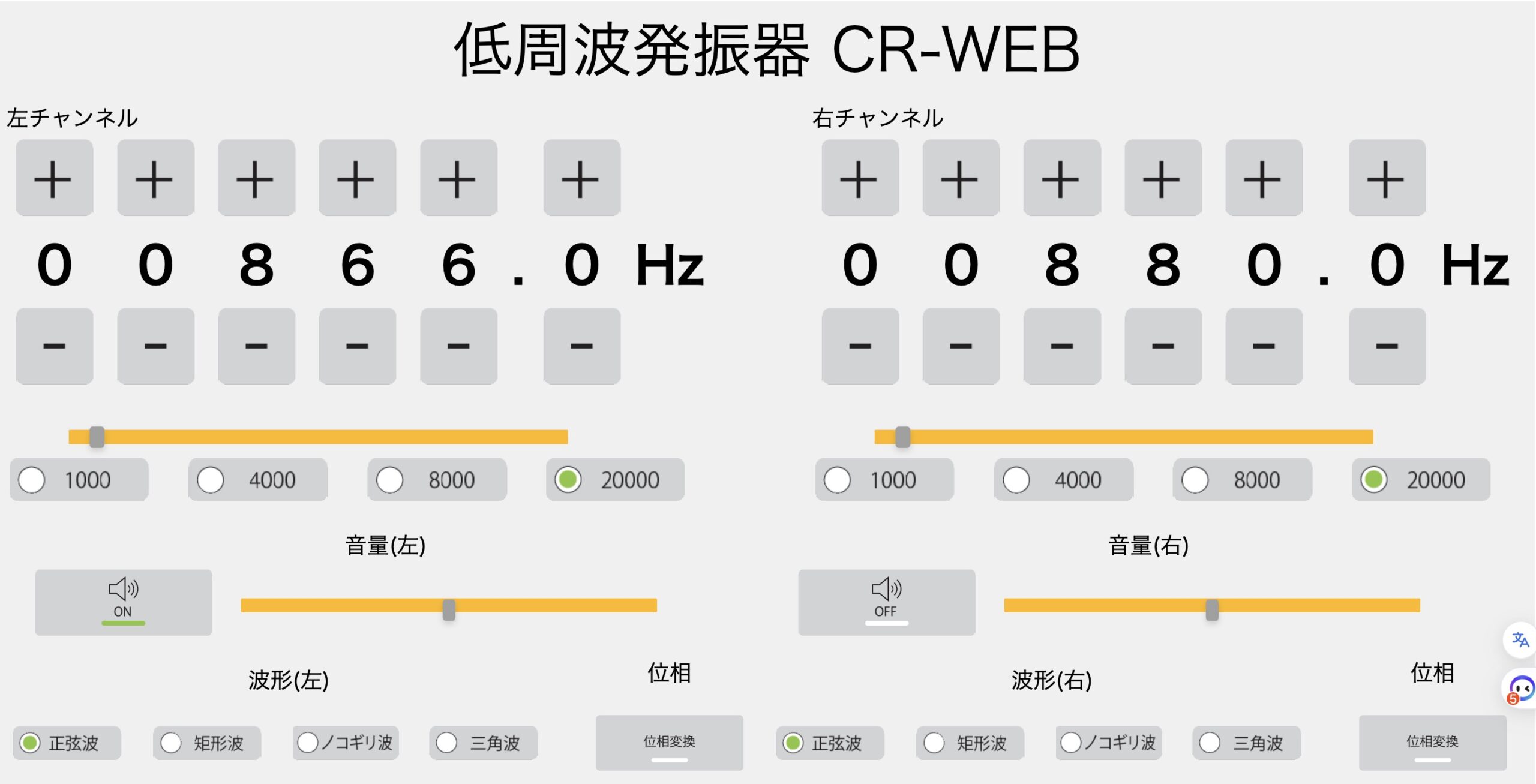
For example, let’s try playing a “1000 Hz” sound from the left and a “1001 Hz” sound from the right, just slightly different. What do you hear? Doesn’t the sound seem to get louder and softer periodically, making a “womp, womp…” sound?
This is a phenomenon in physics called beats.
Sound has the properties of a wave. When two waves with slightly different frequencies overlap, the parts where the peaks and peaks meet reinforce each other (the sound gets louder), and the parts where the peaks and troughs meet cancel each other out (the sound gets softer). This wave interference is what we perceive as the periodic change in the loudness of the sound, or beats.
These beats are actually super useful for tuning musical instruments. You play the instrument you want to tune at the same time as a reference sound (like a tuning fork) and listen for the moment the beats disappear. When the beats vanish, it’s proof that the two frequencies are perfectly matched. It’s a fantastic example of using the science of sound with our own ears.
What’s your ear age? Try the audible range check!
Another fun use for this app is checking your own audible range. Generally, the human ear can hear sounds in a range from a low of 20 Hz to a high of 20,000 Hz.
However, we tend to lose the ability to hear high-frequency sounds as we age. The “mosquito tone,” which is said to be audible only to young people, uses this very principle.
Be sure to use this app to gradually increase the frequency and see how high a pitch you can hear. You can even try it with family and friends. You might be surprised by the results!
From Classroom Lessons to Personal Exploration
Since “CR-WEB” runs on a web browser, there’s no need to install a specific app. The biggest advantage is that it can be used on devices with usage restrictions, such as Chromebooks often distributed in schools. This makes it an incredibly powerful tool for teaching the properties of sound in physics experiments.
It’s a wonderful app that allows us to perceive the invisible existence of “sound” with our ears and with scientific knowledge. I encourage everyone to explore the mysterious world of sound!
9月のイチオシ実験!
テレビ番組監修・イベント等のお知らせ
- 9月25日(金)21:00〜 かまいたちの瞬間回答!にて、科学監修を行いました。
- 10月10日(土)11:15~12:00 千葉市科学フェスタ2026「桑子先生の回転科学ショー」にてサイエンスショーを行います。

- 12月26日(土) ナリカサイエンスアカデミー(教員向け実験講習会)開催
書籍のお知らせ
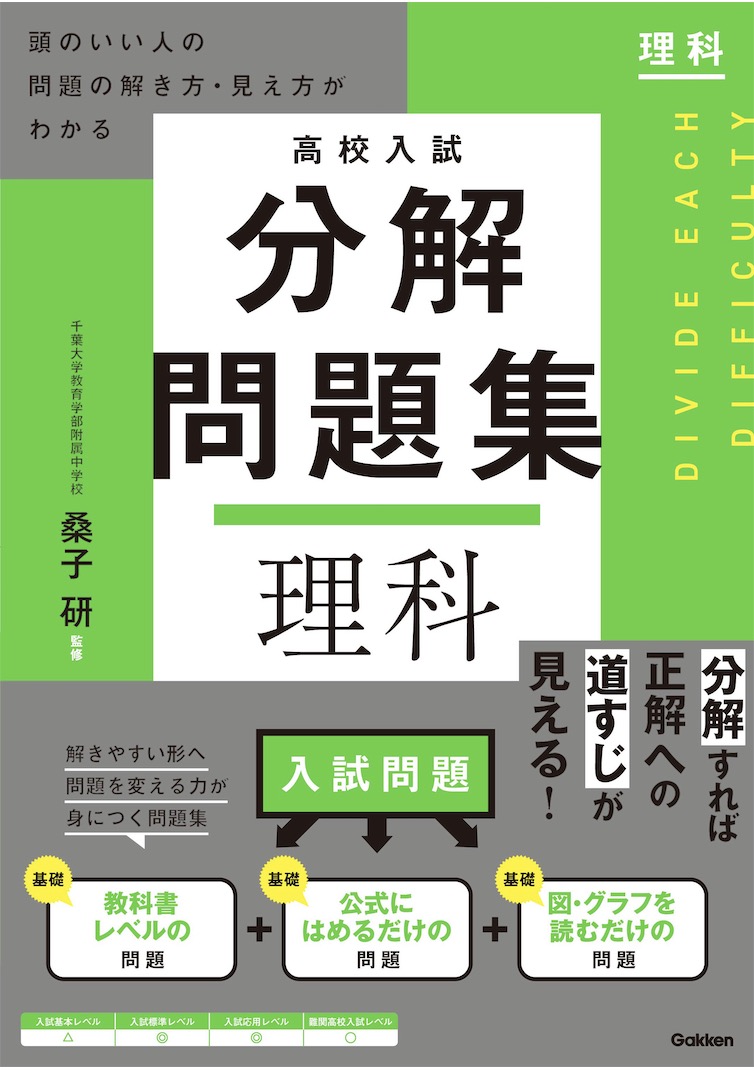
- 『高校入試 分解問題集 理科』(学研)…難しい問題も小さな問題に分解することで、問題を解くことができます。そんな分解の技術が身につくように深く関わりを持って作りました。
 『大人のための高校物理復習帳』(講談社)…一般向けに日常の物理について公式を元に紐解きました。特設サイトでは実験を多数紹介しています。※増刷がかかり6刷となりました(2026/02/01)

- 『きめる!共通テスト 物理基礎 改訂版』(学研)… 高校物理の参考書です。イラストを多くしてイメージが持てるように描きました。授業についていけない、物理が苦手、そんな生徒におすすめです。特設サイトはこちら。

各種SNS(更新情報をお届け!)
【日本語】X(Twitter)/instagram/Facebook 【英語】BlueSky/Threads
Explore
- 楽しい実験…お子さんと一緒に夢中になれるイチオシの科学実験を多数紹介しています。また、高校物理の理解を深めるための動画教材も用意しました。
- 理科の教材… 理科教師をバックアップ!授業の質を高め、準備を効率化するための選りすぐりの教材を紹介しています。
- Youtube…科学実験等の動画を配信しています。
- 科学ラジオ …科学トピックをほぼ毎日配信中!AI技術を駆使して作成した「耳で楽しむ科学」をお届けします。
- 講演 …全国各地で実験講習会・サイエンスショー等を行っています。
- About …「科学のネタ帳」のコンセプトや、運営者である桑子研のプロフィール・想いをまとめています。
- お問い合わせ …実験教室のご依頼、執筆・講演の相談、科学監修等はこちらのフォームからお寄せください。