Can you see it? Captured by a weather satellite! The Earth’s secrets hidden in the blank spaces.
I’m Ken Kuwako, a science trainer. Every day is an experiment.
【This article is also available as a radio broadcast!】
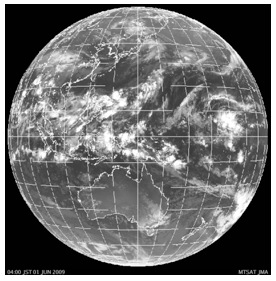
This is an infrared cloud image. Do you notice anything strange about it?
Even if this is your first time seeing this image, you’ll probably spot a few things that make you say, “Huh?” The first thing that catches the eye might be the long line of clouds clustered near the equator. This cloud band is sometimes called the “Intertropical Convergence Zone” because it looks like a belt around the Earth when viewed from space. But besides this cloud belt, the Earth holds even more fascinating secrets.
Have you ever noticed a “hidden message” that’s easy to overlook when you’re observing something? We tend to focus only on what stands out or what we’ve already decided “should” be there. But often, the most important information is hidden in the parts we don’t see.
For example, can you find a message in the following logo? This is the FedEx logo.

Look closely. Do you notice anything? An arrow pointing to the right “→” is actually hidden between the E and the X.

There are other designs with messages hidden in the blank space, too. The Hershey’s Kisses logo also has a hidden message.

Look very carefully. Did you get it? The answer for the Hershey’s Kiss is right here: a hidden Hershey’s Kiss shape is nestled between the K and the I.

I think these hidden messages were featured in a book somewhere, and if you can look at things objectively and without preconceived notions, you can spot them without just focusing on the letters. But we humans are so used to seeing things the way we expect them to be that it’s often difficult to notice them until someone points them out.
The truth about Earth hidden in the blank spaces
Now, let’s go back to the infrared cloud image we saw at the beginning.
The first thing you probably noticed is the large number of clouds near the equator. This is because the equator receives intense sunlight, which warms the ocean surface. This causes moisture-rich air to rise, making it easy for clouds to form. This rising air eventually brings a lot of rain, supporting the rich ecosystems of the tropics. This is one of the Earth’s dynamic weather systems, known as the “Intertropical Convergence Zone.”
Did you notice anything else?
In this image, did you realize that there are almost no clouds in the mid-latitude regions, a bit away from the equator (like around Japan and Australia)?
This happens because the warm air that rose near the equator cools down in the upper atmosphere, drops its rain, and then descends as dry air over the mid-latitudes. In these areas of descending air, clouds have a hard time forming, and there are many clear, sunny days. This is why many of the world’s deserts are found at these latitudes. For example, the Sahara Desert, the deserts of Australia, and the deserts in the southwestern United States are all formed by this same mechanism.
“Nothingness” might seem like meaningless information at first glance, but in fact, it’s where the Earth’s grand atmospheric circulation system is hidden. When you look at things, if you make a point to not only focus on what’s obviously there but also on the information that’s “not there,” you’ll surely be able to grasp the bigger picture more deeply and with more interest.
Inquiries and requests
Make the wonders and fun of science more accessible! We’ve put together fun science experiments you can do at home and easy-to-understand tips. Feel free to search around!
・About the operator, Ken Kuwako: here
・For various requests (writing, lectures, experiment classes, TV supervision, appearances, etc.): here
・Article updates are posted on X!
 The Science Channel is streaming experiment videos!
9月のイチオシ実験!
お弁当箱をプラバンがわりにしてキーホルダーを作ろう!
テレビ番組監修・イベント等のお知らせ
- 8月27日(木)科学監修番組放送予定
- 9月20日(日)ダビンチマスターズ出演予定
- 10月10日(土)11:15~12:00 千葉市科学フェスタ2026「桑子先生の回転科学ショー」にてサイエンスショーを行います。
- 12月26日(土) ナリカサイエンスアカデミー(教員向け実験講習会)開催
書籍のお知らせ
- 『高校入試 分解問題集 理科』(学研)…難しい問題も小さな問題に分解することで、問題を解くことができます。そんな分解の技術が身につくように深く関わりを持って作りました。
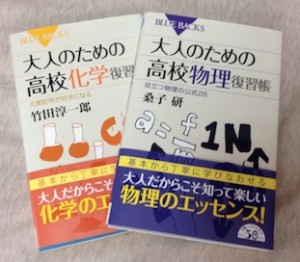
 『大人のための高校物理復習帳』(講談社)…一般向けに日常の物理について公式を元に紐解きました。特設サイトでは実験を多数紹介しています。※増刷がかかり6刷となりました(2026/02/01)
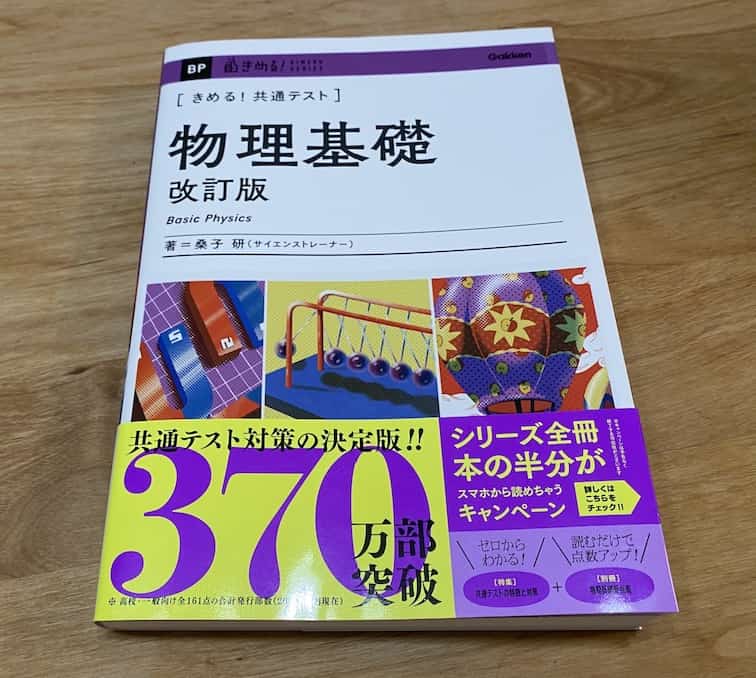
- 『きめる!共通テスト 物理基礎 改訂版』(学研)… 高校物理の参考書です。イラストを多くしてイメージが持てるように描きました。授業についていけない、物理が苦手、そんな生徒におすすめです。特設サイトはこちら。
各種SNS(更新情報をお届け!)
【日本語】X(Twitter)/instagram/Facebook 【英語】BlueSky/Threads
Explore
- 楽しい実験…お子さんと一緒に夢中になれるイチオシの科学実験を多数紹介しています。また、高校物理の理解を深めるための動画教材も用意しました。
- 理科の教材… 理科教師をバックアップ!授業の質を高め、準備を効率化するための選りすぐりの教材を紹介しています。
- Youtube…科学実験等の動画を配信しています。
- 科学ラジオ …科学トピックをほぼ毎日配信中!AI技術を駆使して作成した「耳で楽しむ科学」をお届けします。
- 講演 …全国各地で実験講習会・サイエンスショー等を行っています。
- About …「科学のネタ帳」のコンセプトや、運営者である桑子研のプロフィール・想いをまとめています。
- お問い合わせ …実験教室のご依頼、執筆・講演の相談、科学監修等はこちらのフォームからお寄せください。