From Dining Table to Lab! Discover the Hidden World of “Chirimon” in Tiny Dried Fish
I am Ken Kuwako, your science trainer. Every day is an experiment!
Did you know that Chirimen-jako (dried young sardines), a staple of the Japanese dining table, actually contains a tiny, compressed version of the vast ocean ecosystem? Today, I want to share a report from a recent session with my science club students about a “miniature ocean treasure hunt” that has even been featured in school textbooks. Your kitchen table is about to turn into an exciting laboratory!
Chirimen Monsters: A Tiny Aquarium on Your Plate
There is a growing trend known as searching for “Chirimen Monsters”—or “Chirimon” for short—which is even featured in biology classification units in Keirinkan textbooks. These monsters are the tiny creatures other than sardines that accidentally get mixed into the Chirimen-jako harvest. You can find a huge variety of life hidden inside, from baby shrimp and crabs to tiny octopuses, shellfish, and sometimes even relatives of the seahorse.
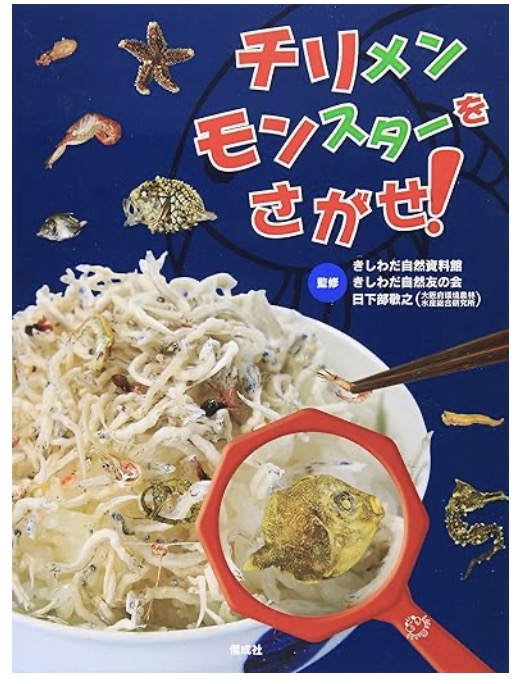
Normally, these are removed as “foreign objects,” but if you change your perspective, they become the ultimate teaching tool for learning about marine biodiversity. I grabbed a batch and challenged my science club students to identify what we found. This guidebook is a great companion for beginners:
The Secret is Being “Unsorted”
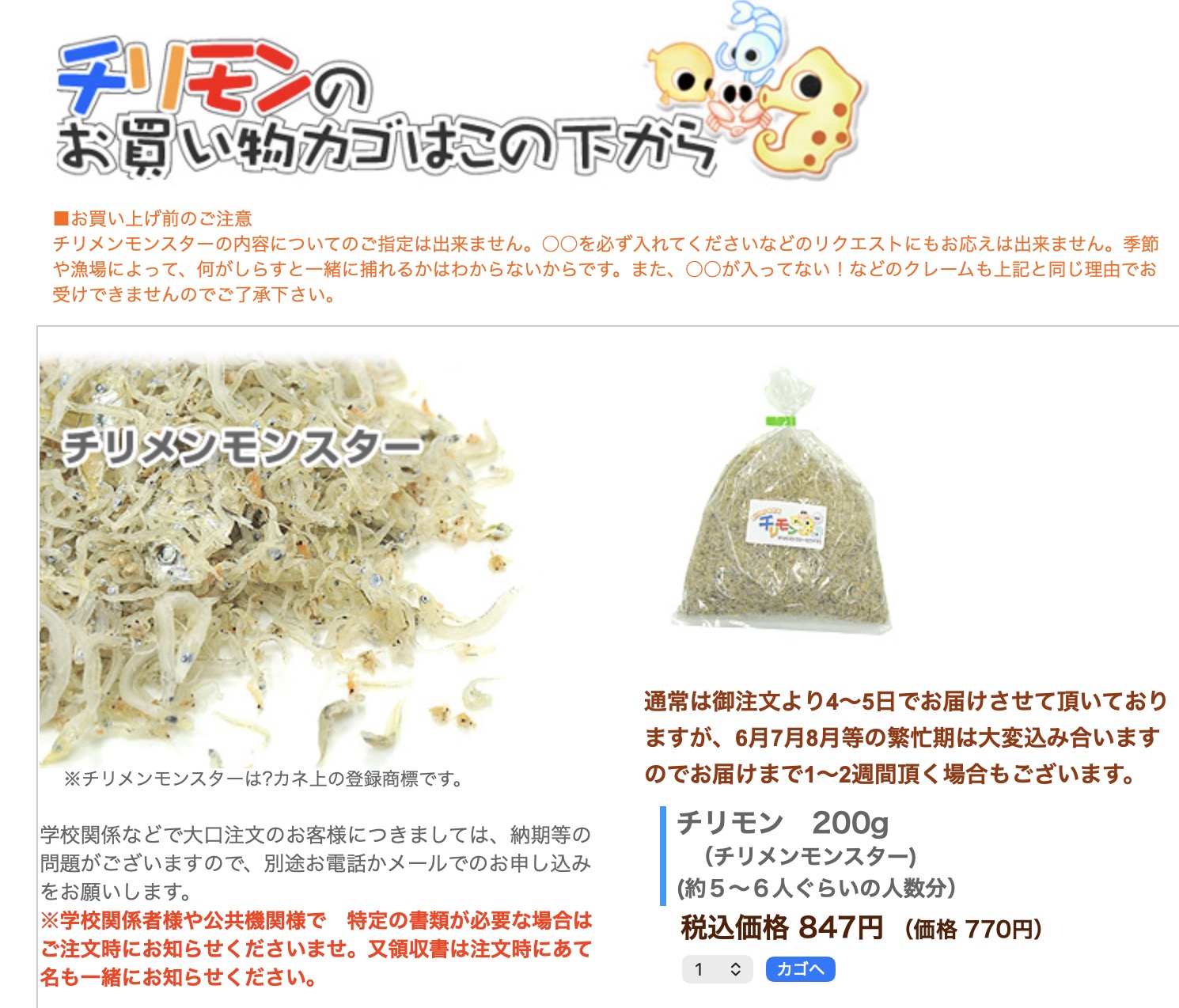
The standard Chirimen-jako you find at the supermarket is usually meticulously sorted to remove these “monsters” (mostly to avoid customer complaints). However, for us, the “impurities” are exactly what we want! To get the best results, I ordered “unsorted Chirimen-jako” from an educational supply company. This ensures a high encounter rate with various species.
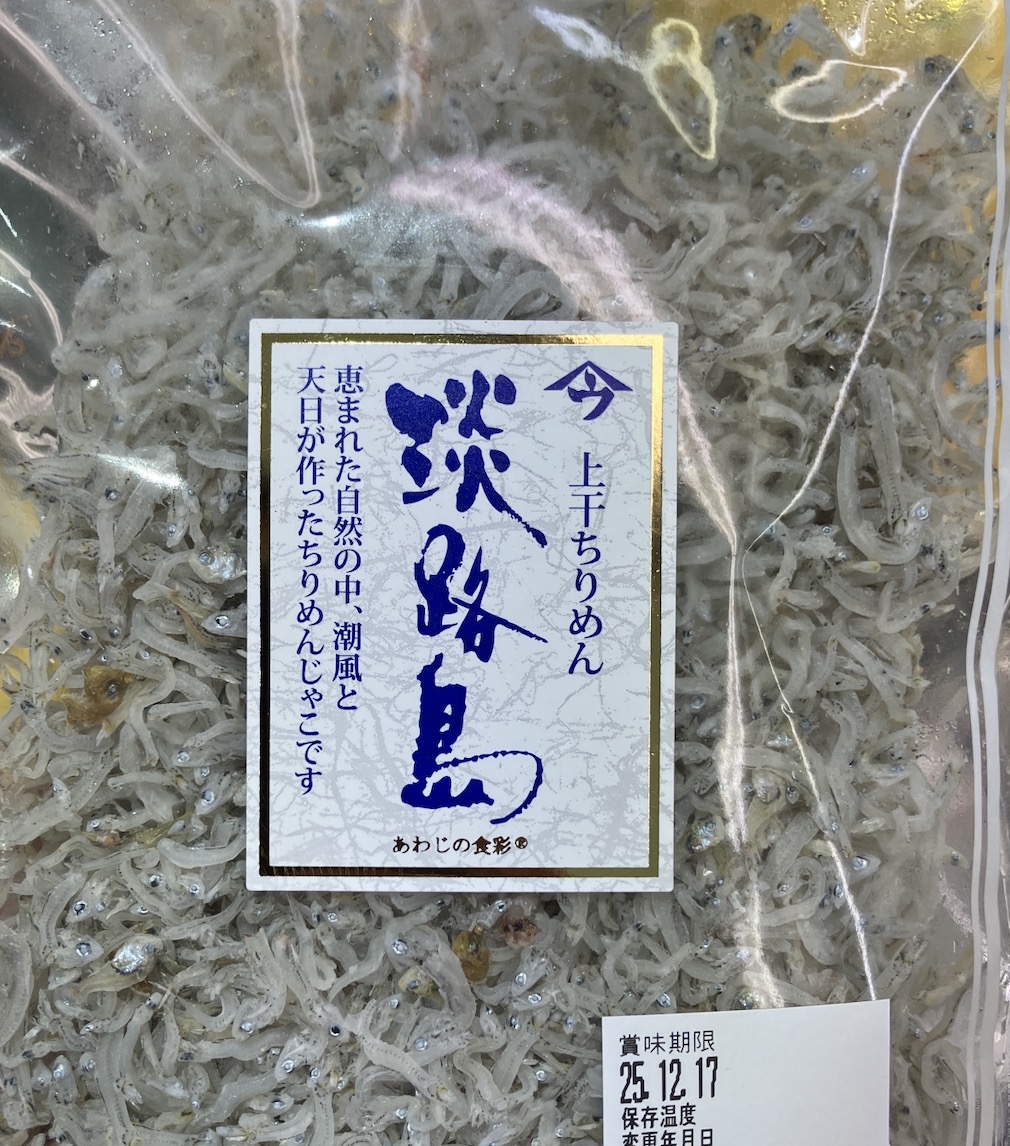
For comparison, here is a store-bought version. You can find some if you look closely—this specific brand from Awaji Island had a few.
And here is the “unsorted” batch from the educational supplier.
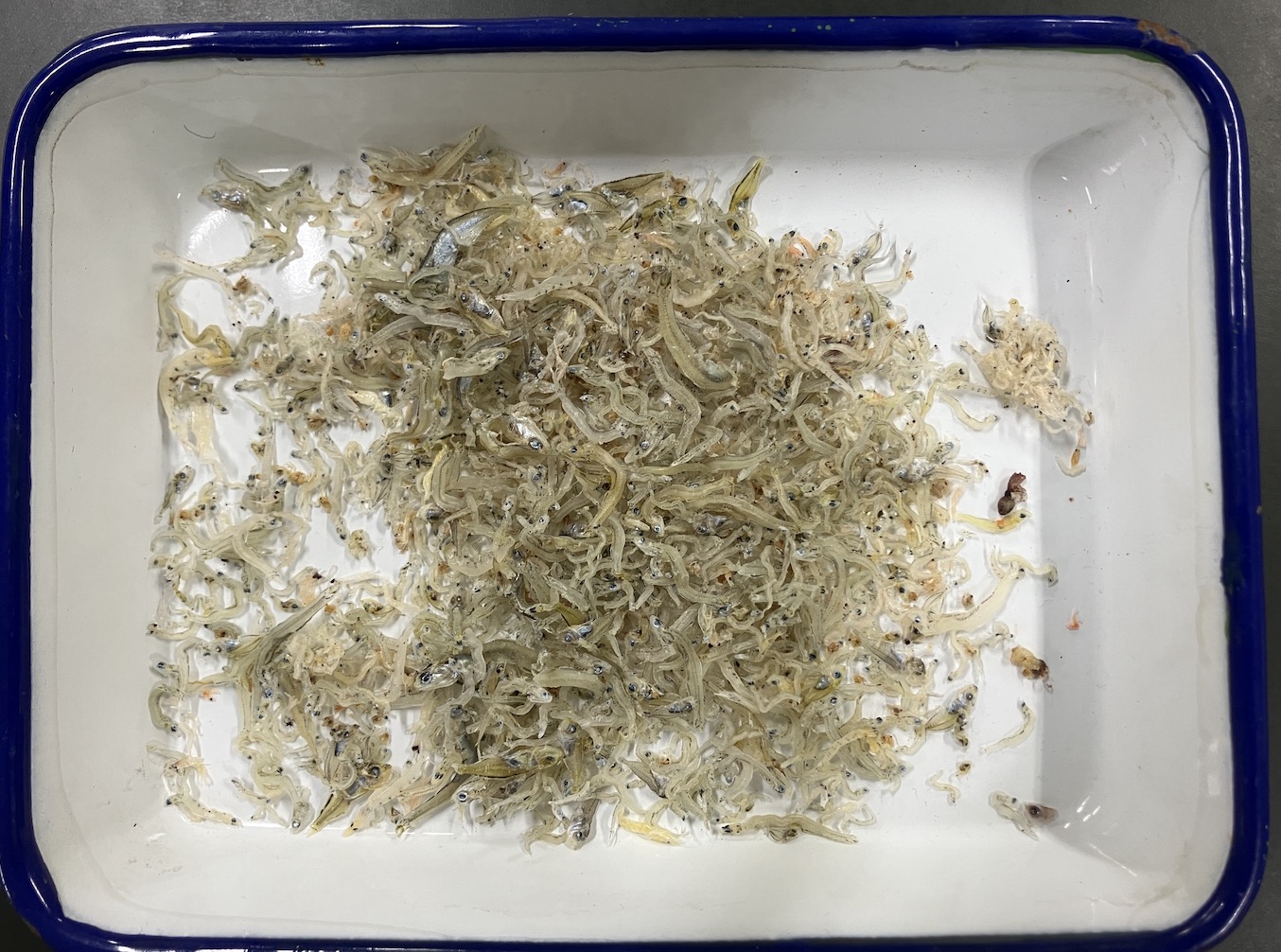
The difference is clear! This chaotic mix represents the true face of the ocean. Armed with tweezers, we began our treasure hunt.
Discovery! The Microscopic Residents of the Sea
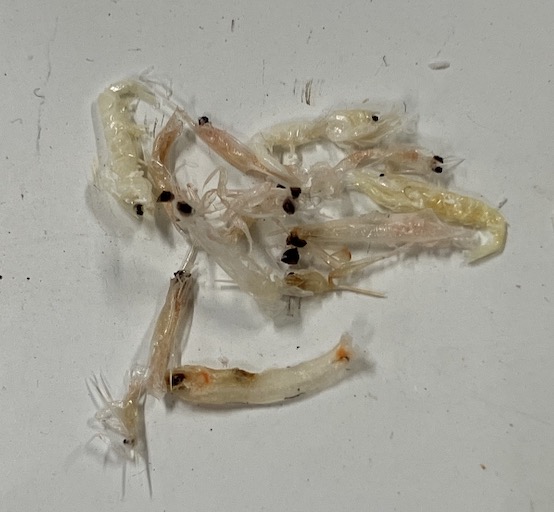
First, we easily spotted some tiny shrimp. They still have a beautiful hint of red.
Next, we found several fish with shapes clearly different from sardines.
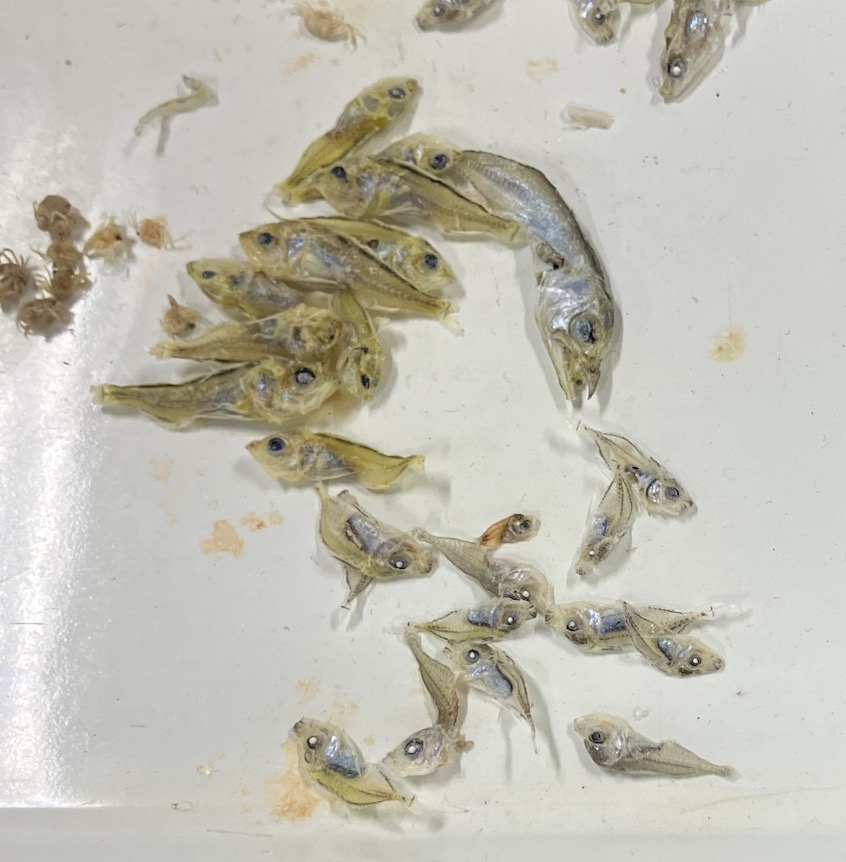
Pro tip: Use black paper for your observations. The white bodies of the creatures stand out vividly, making it much easier to see fine details like fin shapes.
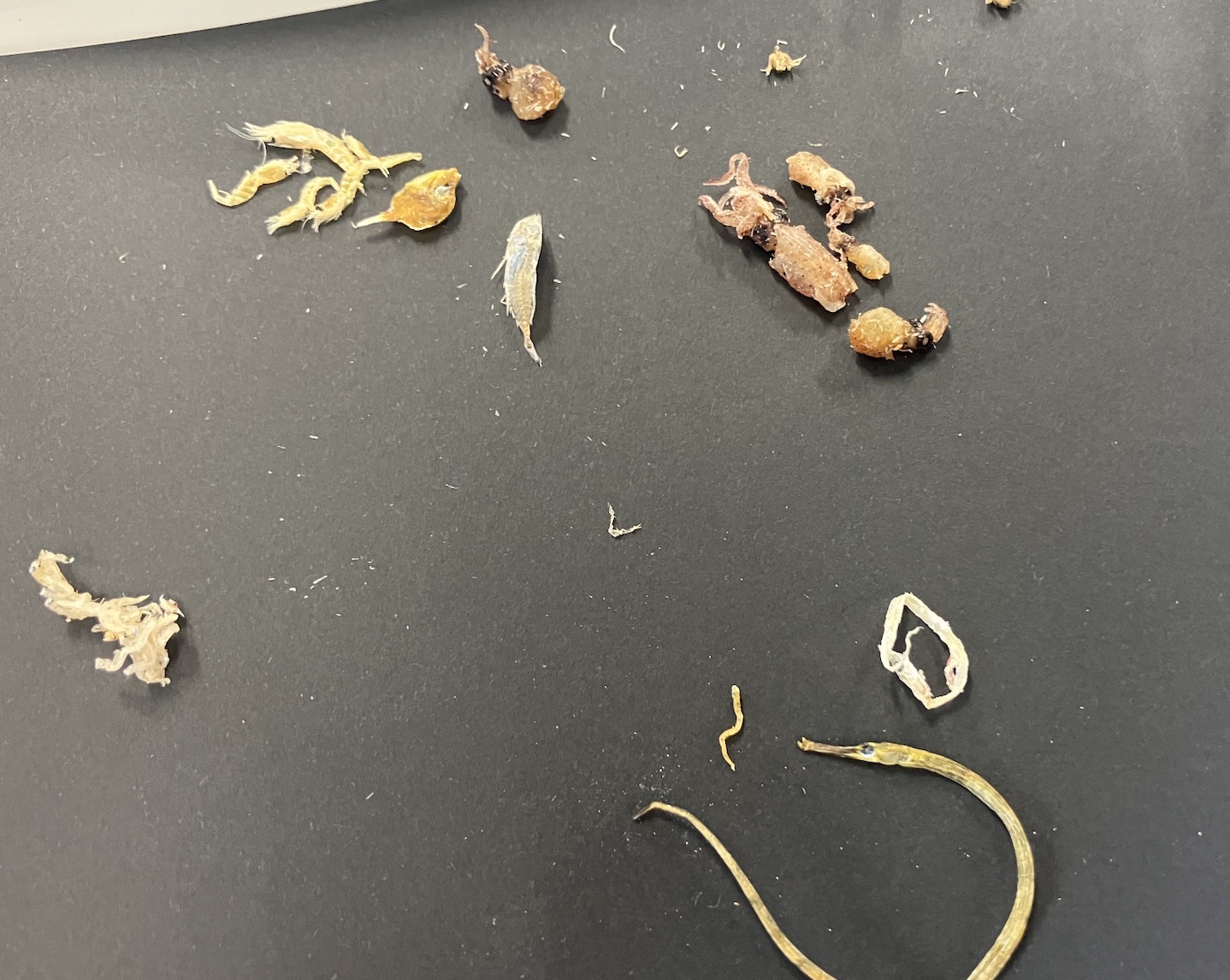
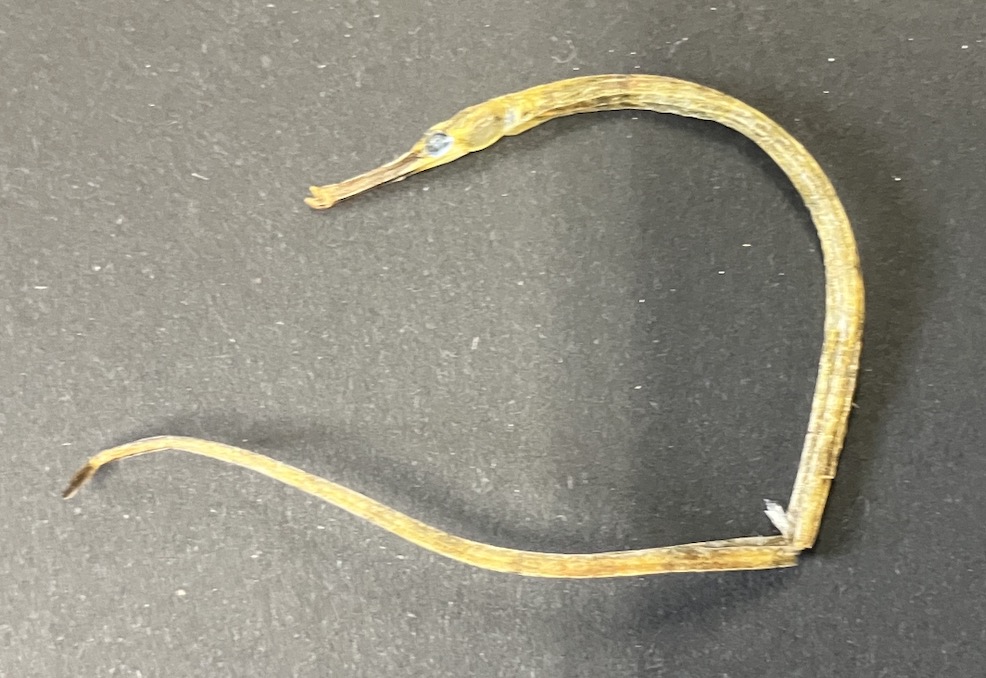
Oh! Look at this uniquely long, slender fish. It might be a pipefish or a relative of the seahorse.
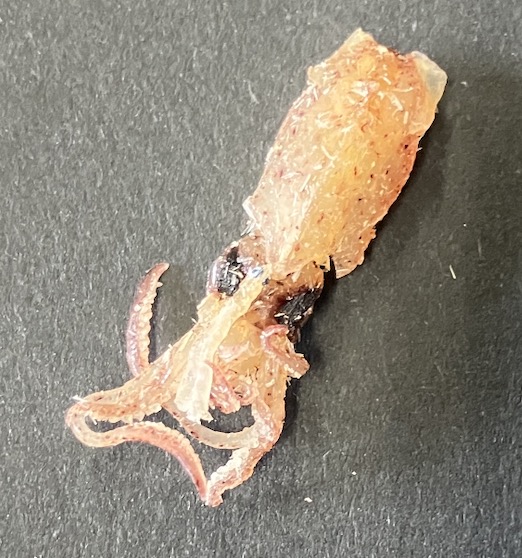
Here is a baby octopus (or perhaps a squid). It’s adorable how even at this tiny size, you can clearly see the tentacles and suckers.
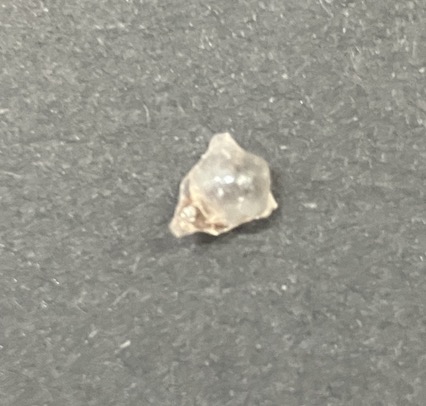
“What is this?” The students’ eyes light up the moment an unidentifiable creature appears.
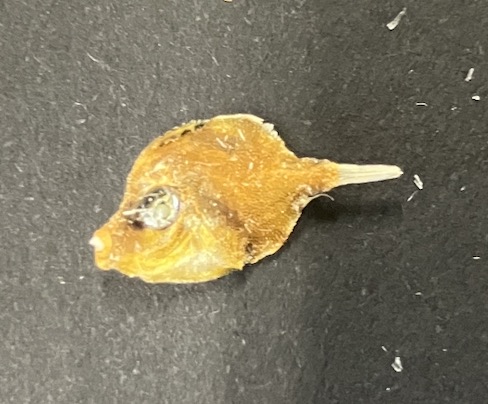
This looks like a larval bivalve (shellfish). It has a lovely translucent quality.
The Joy of Identification
Matching our finds with the guidebook to determine their names is the essence of scientific inquiry.
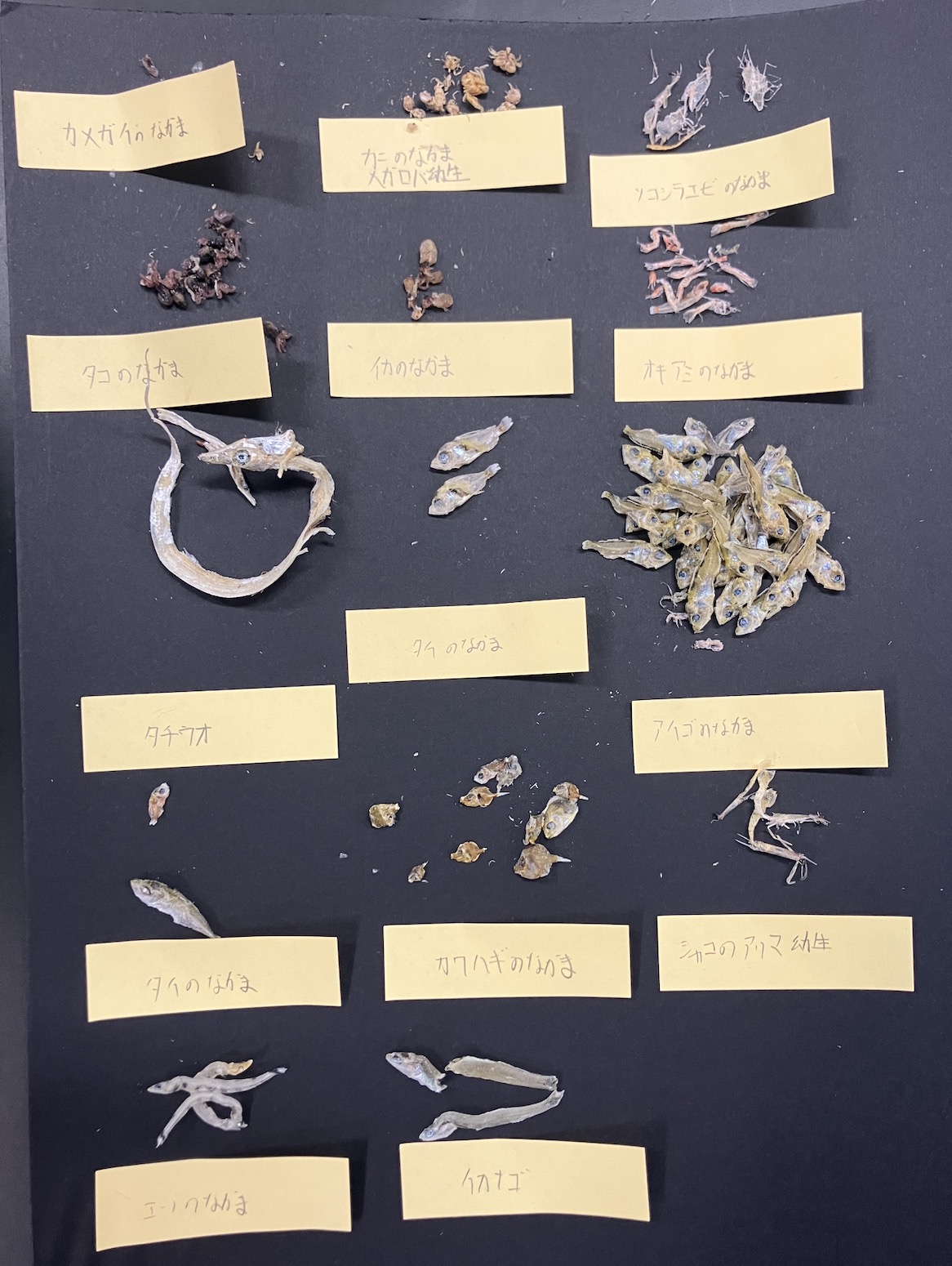
Upon closer inspection, this fish with distinct fins turned out to be a juvenile Rabbitfish (Aigo). While adults are known for having venomous spines, you can already see the beginnings of that trait in this tiny baby.
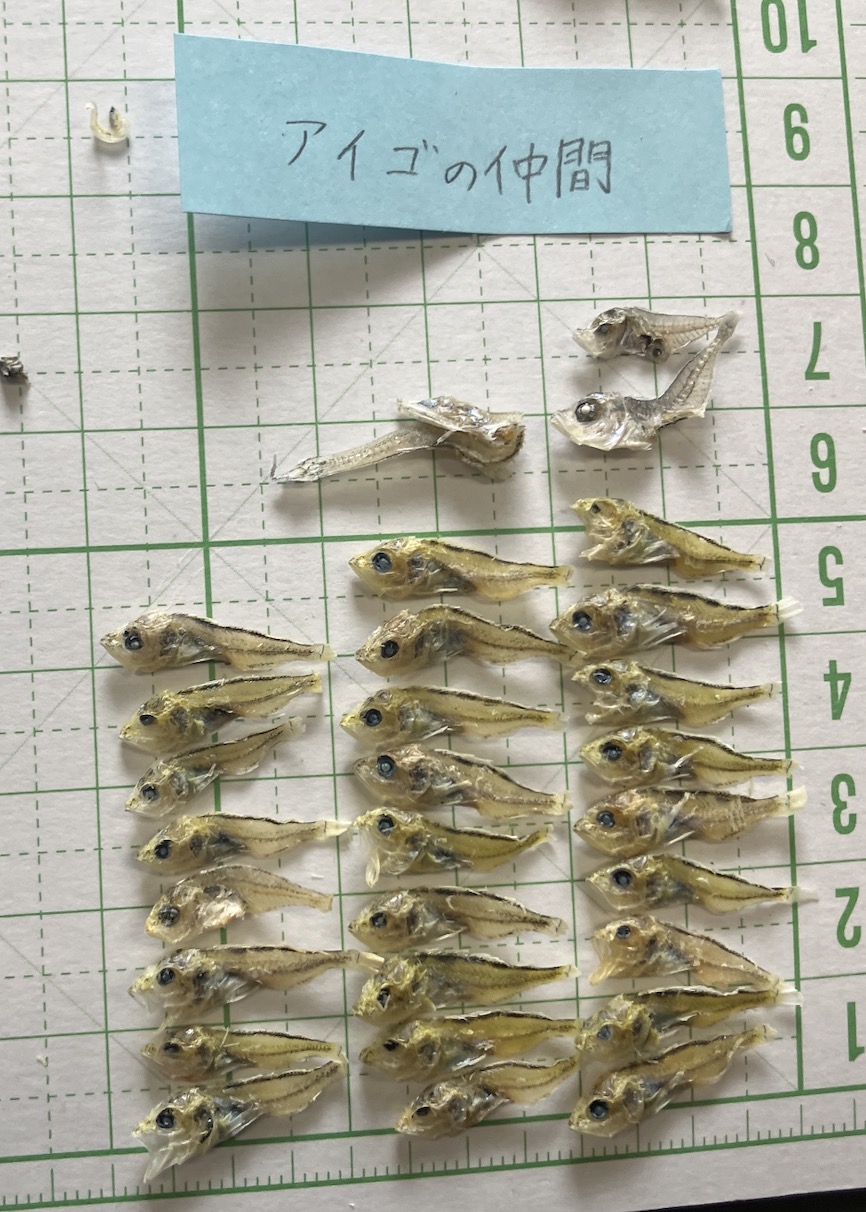
And as suspected, this one was indeed a member of the octopus family.
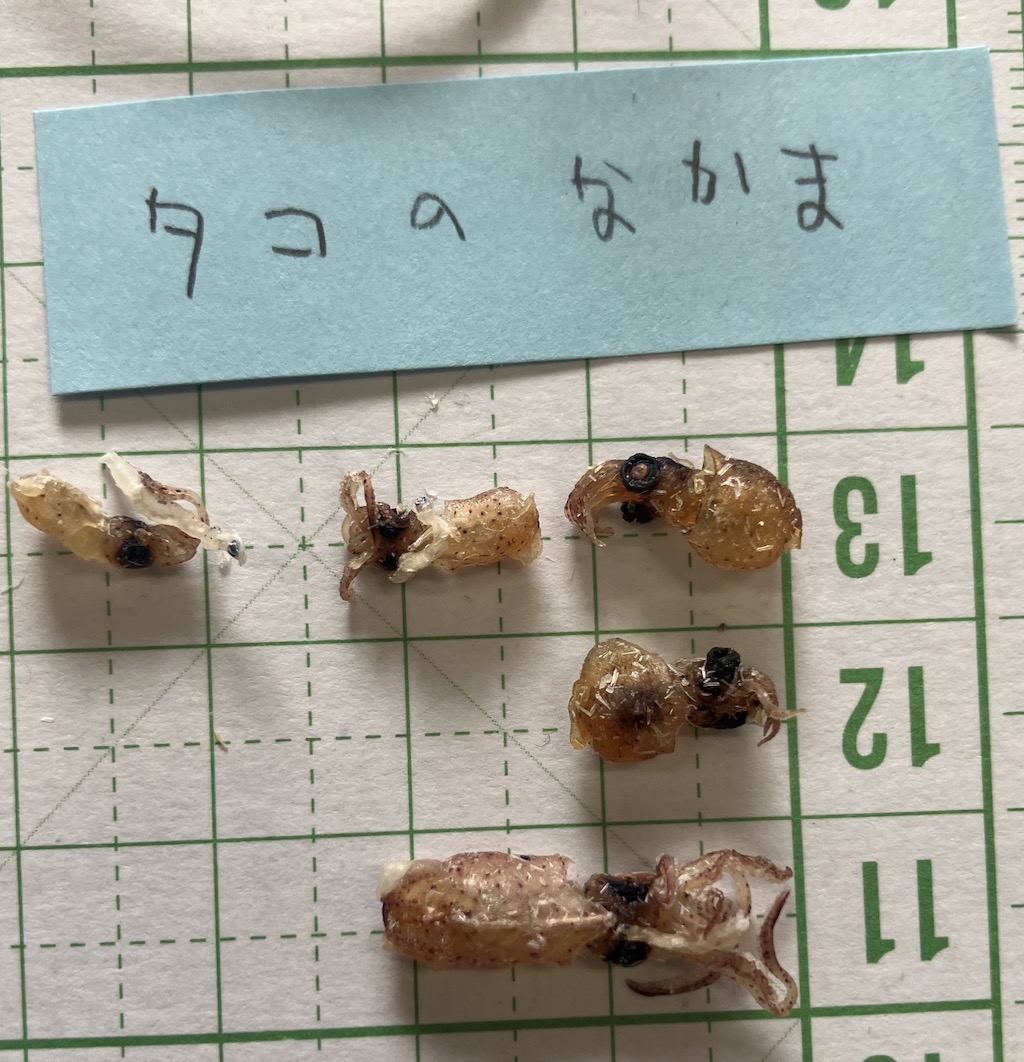
We even found a deep-sea shrimp! It’s astonishing to think that creatures from the deep ocean can end up mixed in with our everyday snacks.
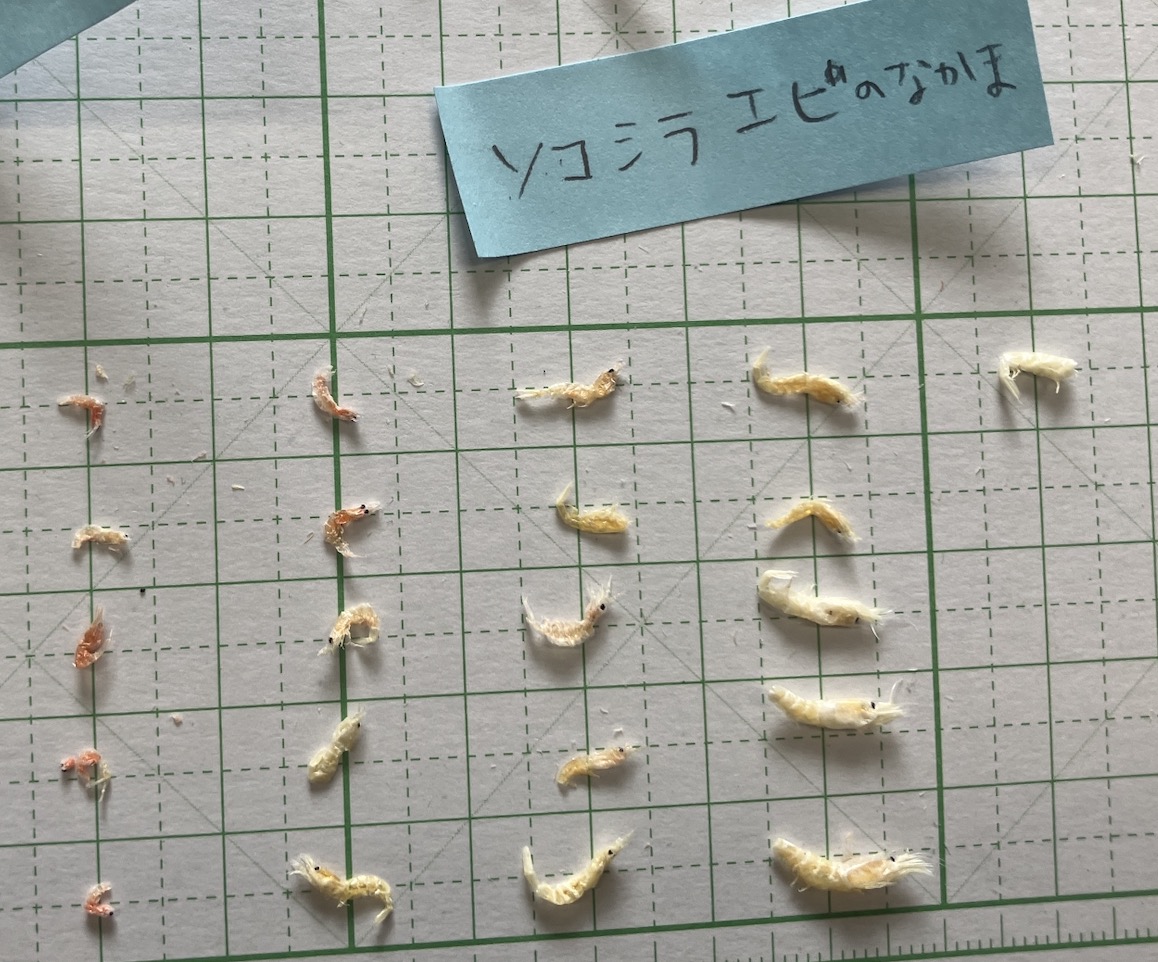
Alien Encounter? The Shocking “Zoea Larva”
Our biggest discovery of the day was this: a creature with long horns and a face like an alien from a sci-fi movie.
This is actually a crab in its larval stage, known as a “Zoea.”
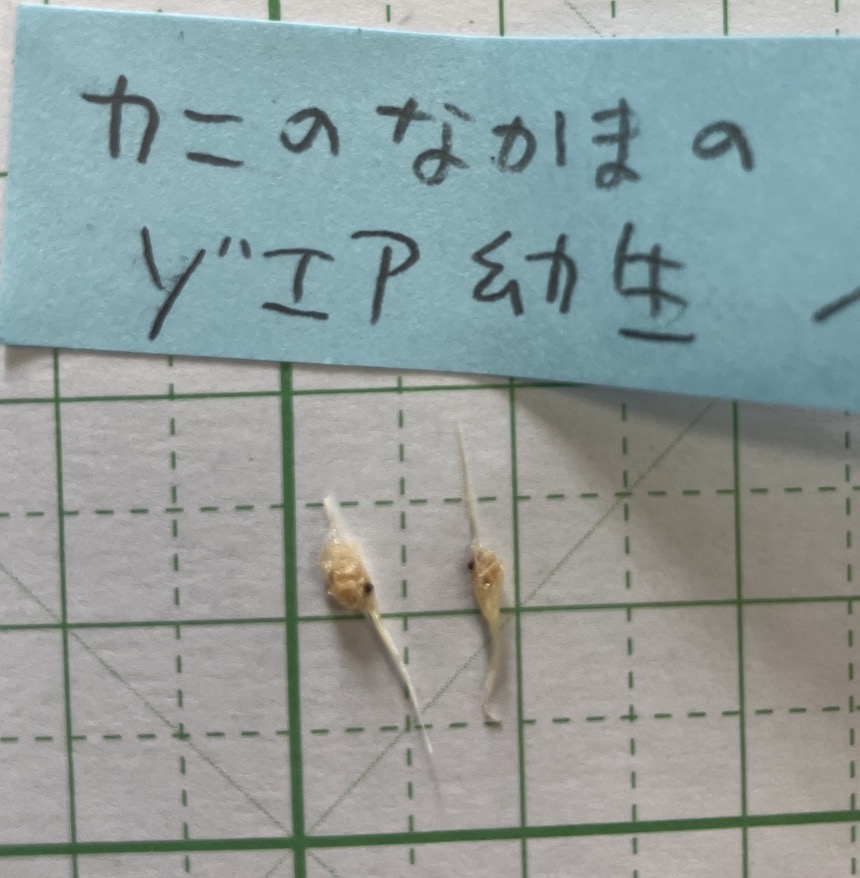
When we think of crabs, we imagine hard shells and sideways walking, but they start their lives as plankton drifting through the ocean in this bizarre form. From here, they transform into a “Megalopa” (looking a bit like a hermit crab) before undergoing a dramatic metamorphosis into the crabs we recognize.
It truly is the mystery of life. A single plate of Chirimen-jako can teach us everything from the food chain to the complex life cycles of marine animals. I highly recommend trying this “treasure hunt” with your children at home. You are guaranteed to find something amazing!
Inquiries and Requests
Let’s make the wonders of science a part of your daily life! I’ve put together many fun experiments you can do at home. Feel free to explore more:
My “Science Notebook” ideas are now a book! Details here.
Learn more about the creator, Ken Kuwako, here.
For writing, lectures, workshops, or media appearances, contact me here.
Follow me on X (Twitter) for the latest updates!
 Check out my experiment videos on the Science Material Channel!
テレビ番組監修・イベント等のお知らせ
- 10月27日(火) 23:56〜「ネイチャーティーチャー」(TBS)に出演予定
- 11月27日(金) テレビ監修番組放送予定
- 12月26日(土) ナリカサイエンスアカデミー(教員向け実験講習会)開催
10月のイチオシ実験!
書籍のお知らせ
- 『高校入試 分解問題集 理科』(学研)…難しい問題も小さな問題に分解することで、問題を解くことができます。そんな分解の技術が身につくように深く関わりを持って作りました。
 『大人のための高校物理復習帳』(講談社)…一般向けに日常の物理について公式を元に紐解きました。特設サイトでは実験を多数紹介しています。※増刷がかかり6刷となりました(2026/02/01)
- 『きめる!共通テスト 物理基礎 改訂版』(学研)… 高校物理の参考書です。イラストを多くしてイメージが持てるように描きました。授業についていけない、物理が苦手、そんな生徒におすすめです。特設サイトはこちら。
各種SNS(更新情報をお届け!)
【日本語】X(Twitter)/instagram/Facebook 【英語】BlueSky/Threads
Explore
- 楽しい実験…お子さんと一緒に夢中になれるイチオシの科学実験を多数紹介しています。また、高校物理の理解を深めるための動画教材も用意しました。
- 理科の教材… 理科教師をバックアップ!授業の質を高め、準備を効率化するための選りすぐりの教材を紹介しています。
- Youtube…科学実験等の動画を配信しています。
- 科学ラジオ …科学トピックをほぼ毎日配信中!AI技術を駆使して作成した「耳で楽しむ科学」をお届けします。
- 講演 …全国各地で実験講習会・サイエンスショー等を行っています。
- About …「科学のネタ帳」のコンセプトや、運営者である桑子研のプロフィール・想いをまとめています。
- お問い合わせ …実験教室のご依頼、執筆・講演の相談、科学監修等はこちらのフォームからお寄せください。